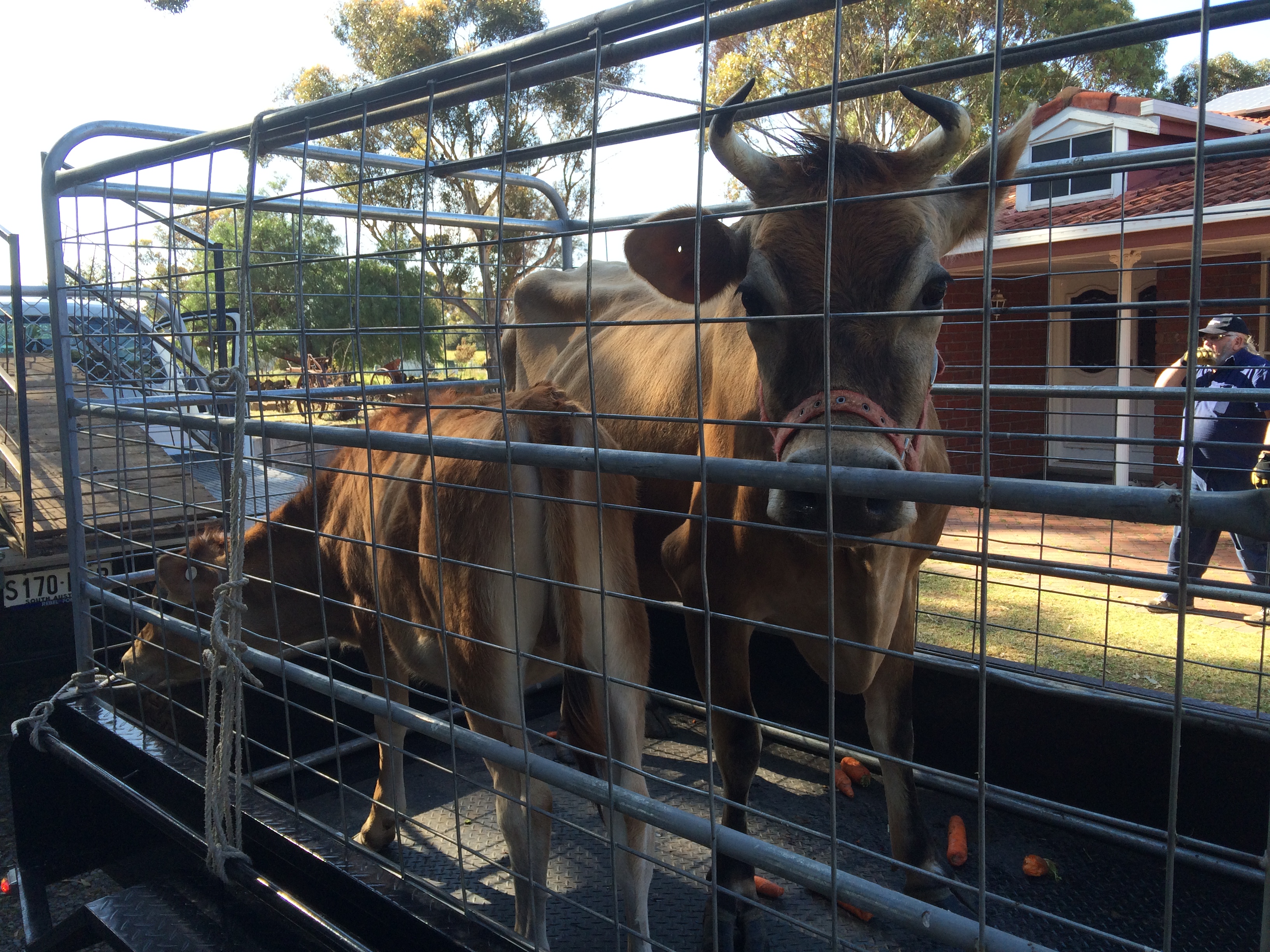
Goodbye Clarisse :(

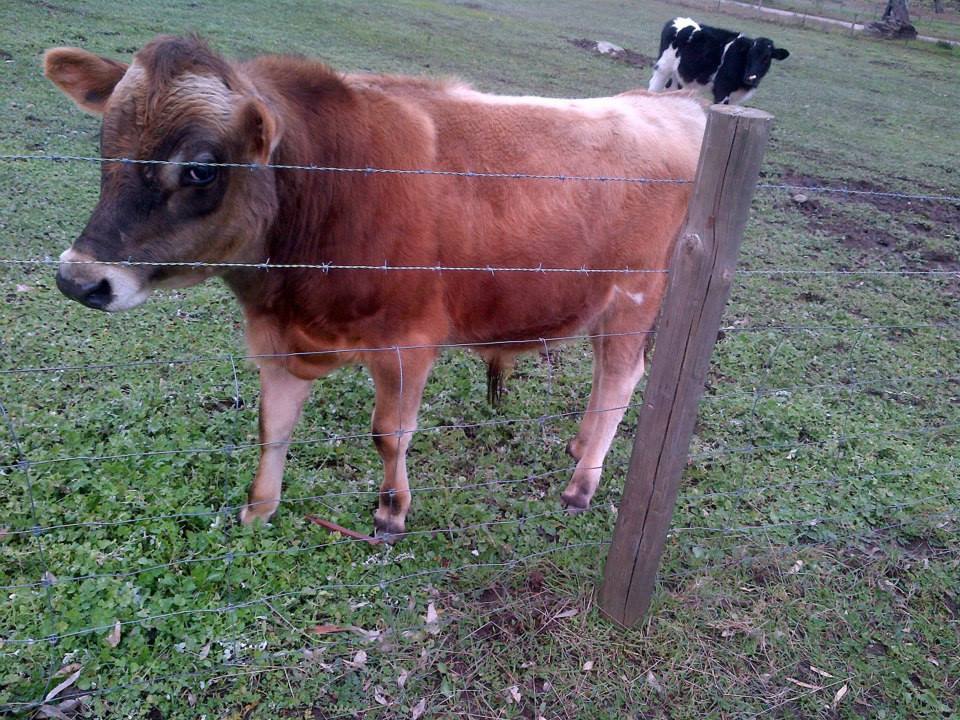
We said goodbye to our Jersey house cow, Clarisse, in October. 😦  We’d had her for more than two years, and struggled our way up the super steep learning curve that is keeping your own house cow.  It worked though!  We had to take her back to get her pregnant; we built her a milking shed; she lost her baby so we went and got her two to foster; her and I learned together how this whole milking things works; we made cheese from her milk and seriously the best coffee you’ve ever tasted! We even had a small mastitis scare, and I had to give her a course of antibiotics, involving a week of injections in the butt! (her butt, just to be clear)

The problem we faced was that we had no time.  I’m not exaggerating either – we have zero spare time nowadays.  We’re trying to stand a business up and get more land to expand, and we’re about as time-strapped as you can be.  I even gave up my veggie patch this year to free up some time.

We had been milking Clarisse weekly, both Saturday and Sunday, getting enough for the week.  We were at the stage where I’d not had time to milk her for five or six weeks though.  The calves were still taking milk, so she was full, but we weren’t using any of it.  Keeping that size animal with her food demands on a small property like ours for no return just isn’t viable. More than that though, she was made to give milk and her milk is amazing – it’s just wasteful to not milk her.

As much as we loved Clarisse (not dad, they hated each other), selling her was even harder than you’d think.  She wasn’t just a giant pet to us, even a pet with benefits, she represented a huge step in self-sufficiency.  With her we could provide pretty much any dairy need for the family.  It’s difficult to overstate just how important that was to us, and how hard it was giving it up.  However, you need to be practical about this stuff.  Not having her here means we can expand our pig paddocks a little and help bridge the gap until we get a bigger place.  It also means that somebody will be enjoying all of the benefits she can give.

Loaded and ready for the trip. :(

Loaded and ready for the trip. 😦

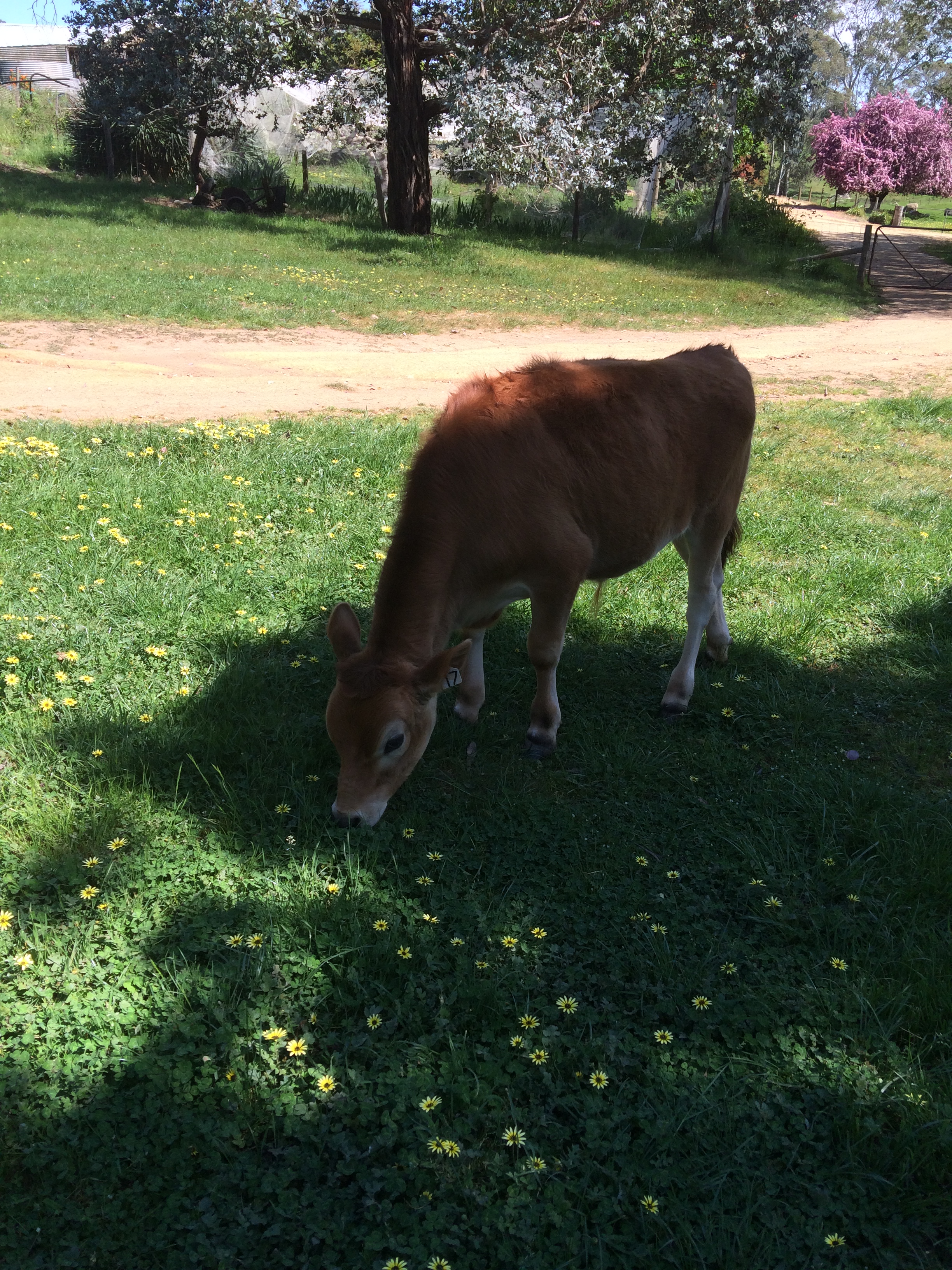
We sold her with Hannibal, the Jersey she was fostering.  He could’ve been weened, but I thought it’d help them both to stay together.  Lecter, the Friesian cross, moved up to our neighbour’s scrub lot to finish growing to a more edible size.  He’d never been fully accepted by Clarisse.  She fed him but never mothered him, so separating them wasn’t a huge deal.  He’s now up with a small herd of cows on a giant block and looks to be loving life.

The people who bought her have 365 acres up at Mount Crawford, right next to the reservoir.  The place has been in their family for almost a hundred years and it’s freaking gorgeous.  They’re cow people, and have had Jerseys before.  I couldn’t have dreamed up a better home for them to go to, and they seemed to settle in right away.

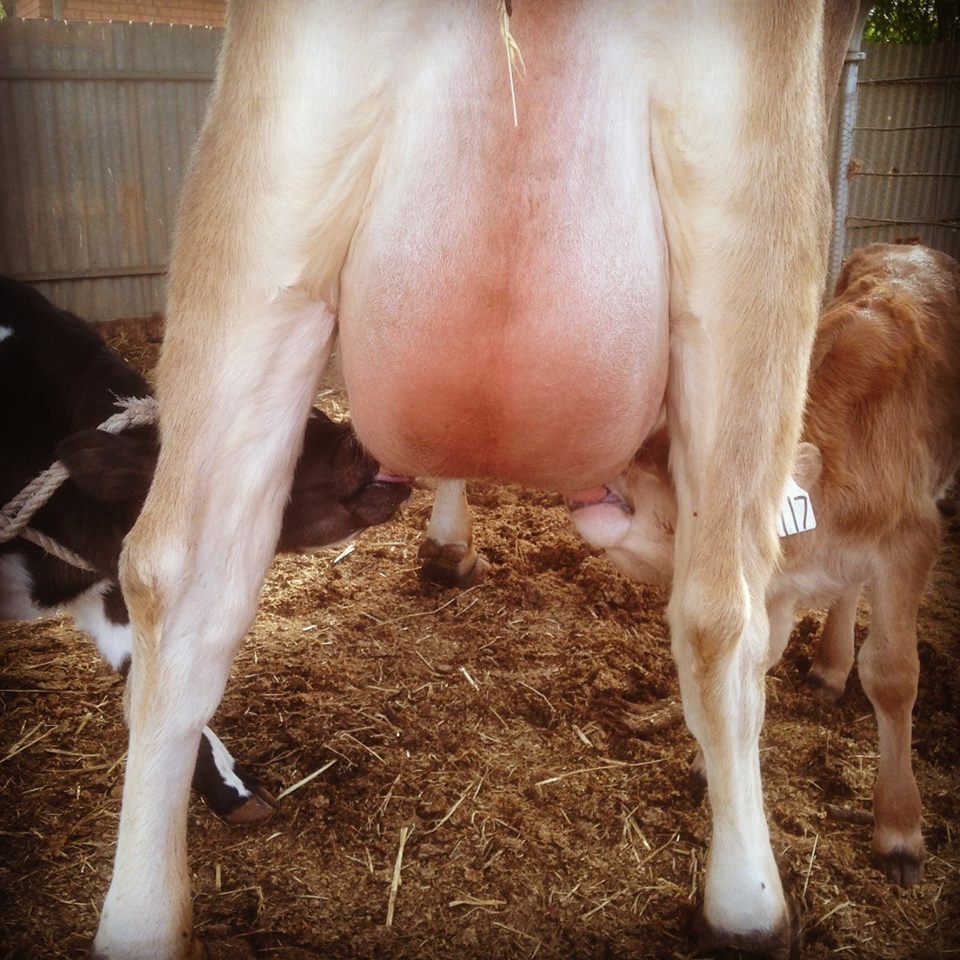
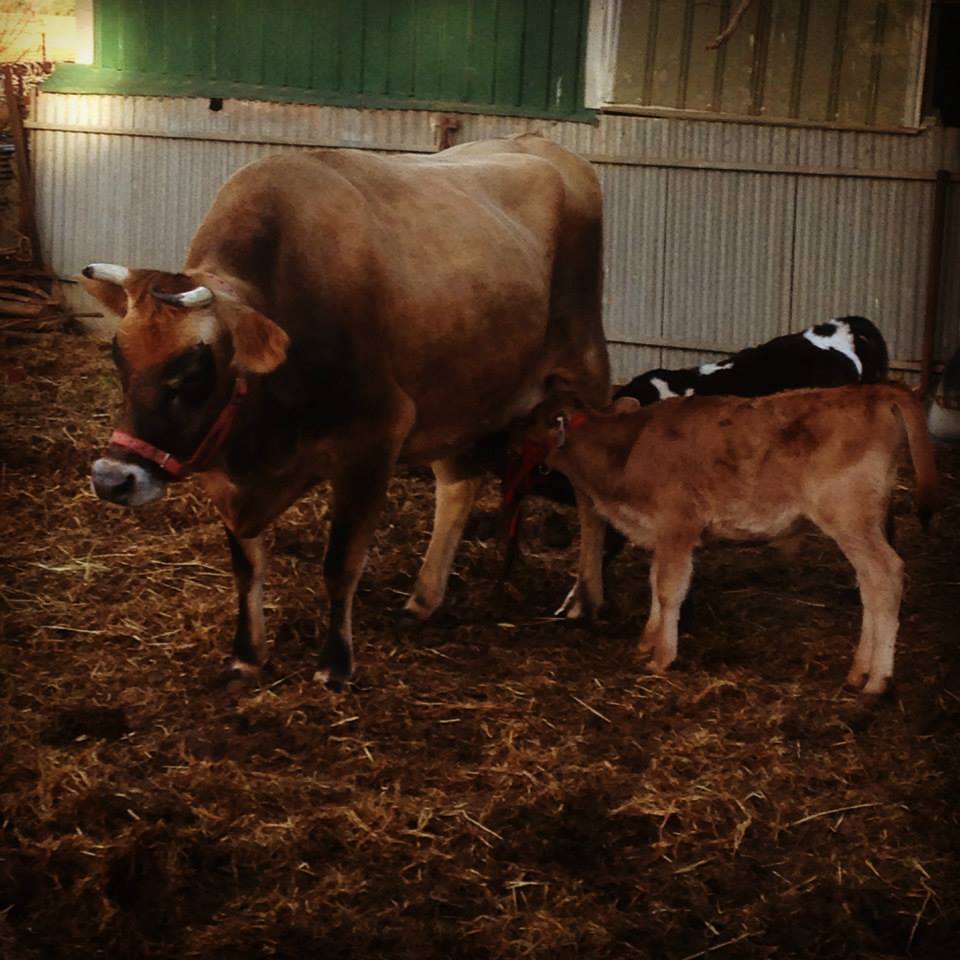
Hannibal wasted no time...

Hannibal wasted no time…

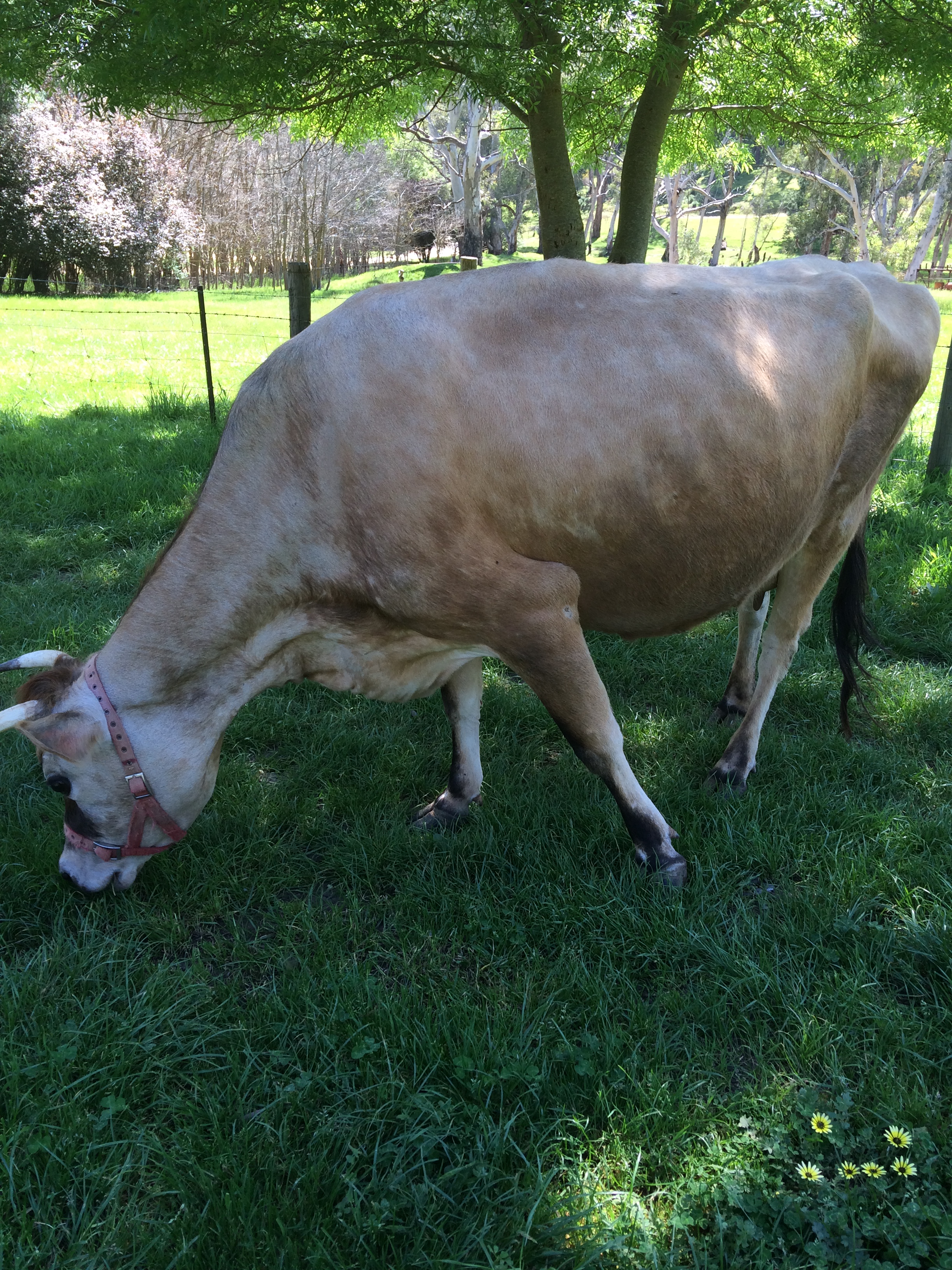
...and neither did Clarisse.

…and neither did Clarisse.

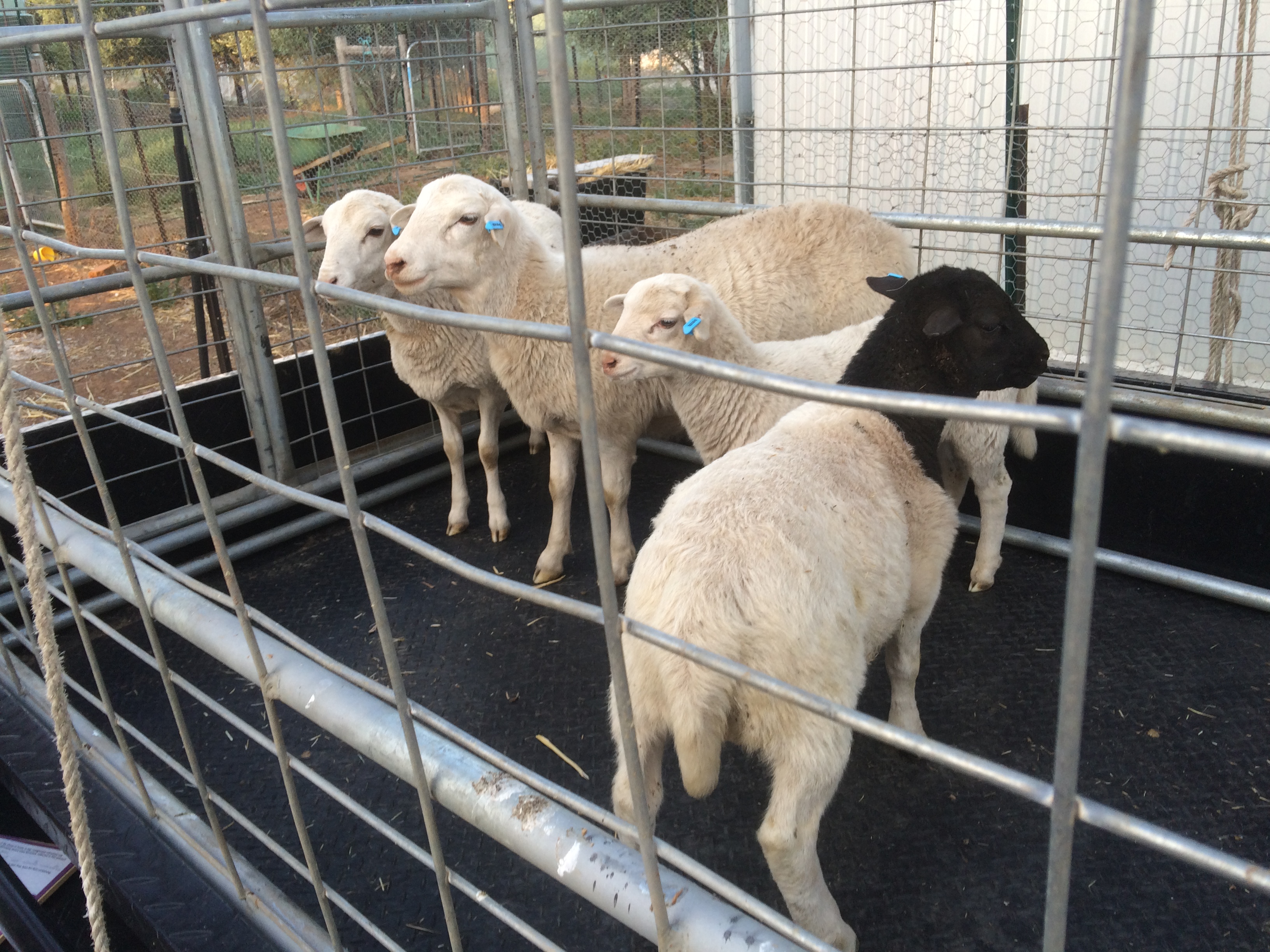
We’ll get another milking animal.  I’m not sure if it’ll be another cow or a couple of goats, but I’m leaning towards another cow.  That might not be for a few years, but it will definitely happen.  In the meantime, we’ve started to grow our breeding flock of sheep.  We picked up three gorgeous ewes and a sturdy ram lamb the day after dropping Clarisse and Hannibal to their new home.

Adding to our breeding flock. The black headed one is our new ram lamb.

Adding to our breeding flock. The black headed one is our new ram lamb.

Beef Bolar Pot Roast.

My absolute favourite way of cooking when I’m flat out busy with life is anything that gives me my protein and veg all in the one go with as few dishes to wash as humanly possible. One pot dishes, slow cooker meals, and nights where Neil cooks are the greatest. Pot roasts absolutely fall into this category! So easy, so tasty, and so few dishes!

Roast beef is not a dish I grew up eating. I didn’t understand how they worked and I didn’t understand the appeal. But when Neil gives you 150 kilos of beef and then expects you to cook with it you have to learn to adapt. Thankfully, Neil’s dad David understands all aspect of English cooking and I bug him with all my questions.

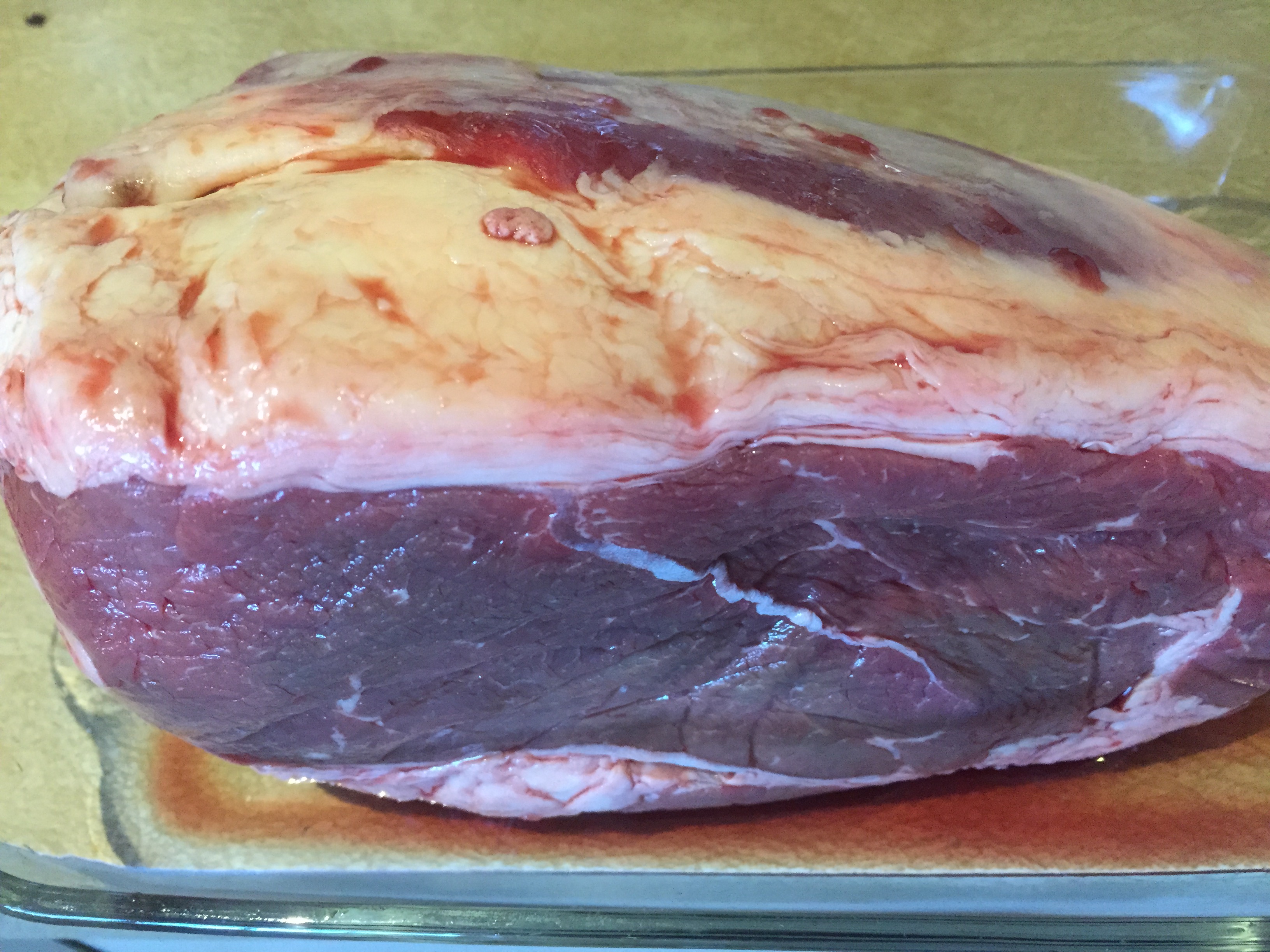
Bolar roast is a family favourite. It’s a lean cut but it does have a nice layer of fat right on top and we get it back as a roast. I used the term roast loosely, it’s more like a giant 2-3kg chunk of meat. Neil likes his roast beef rare. I have never managed to cook him a rare roast beef. I’m still learning. 🙂

A lean roast with a nice fat layer on top.

A lean roast with a nice fat layer on top.

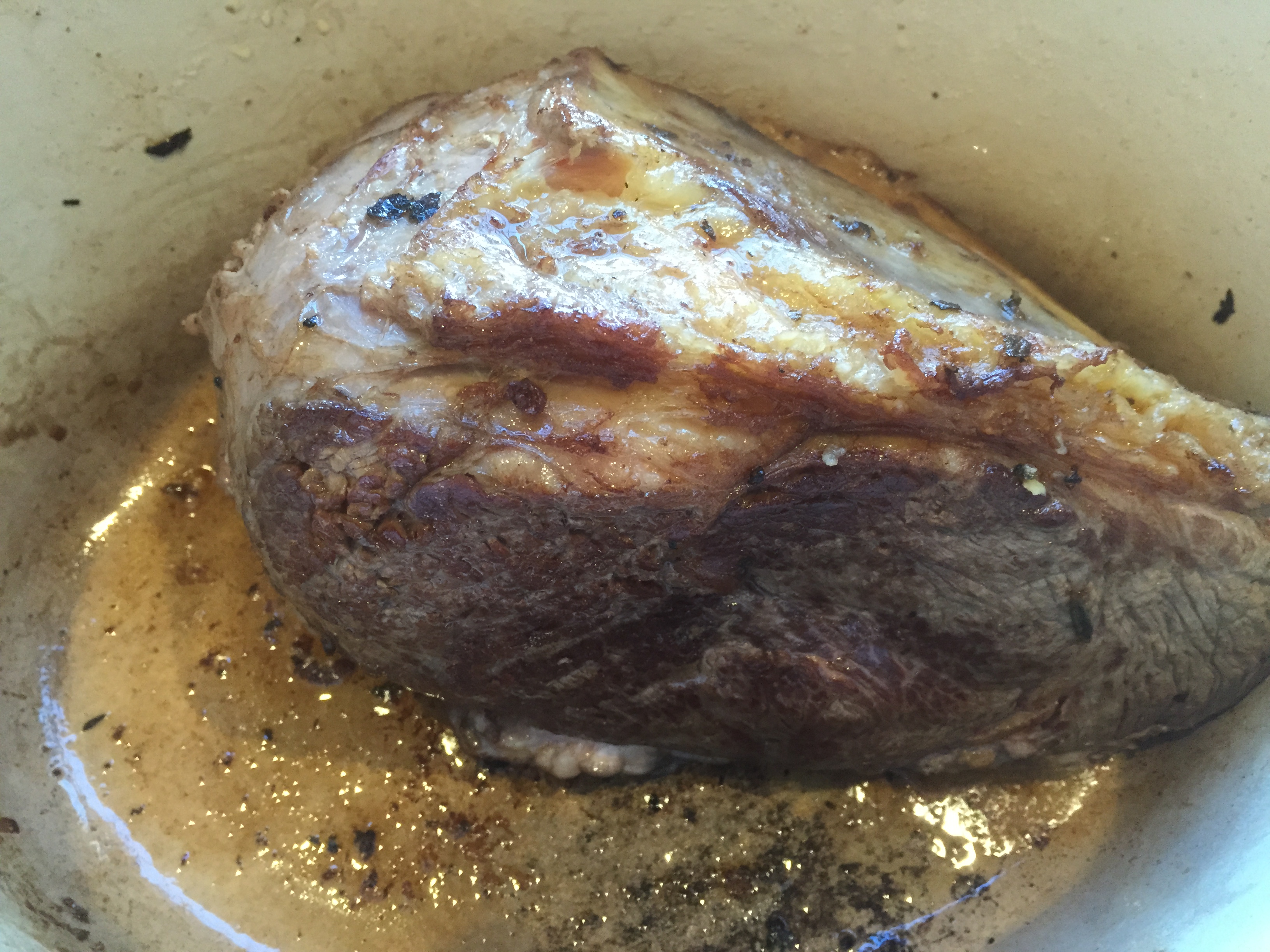
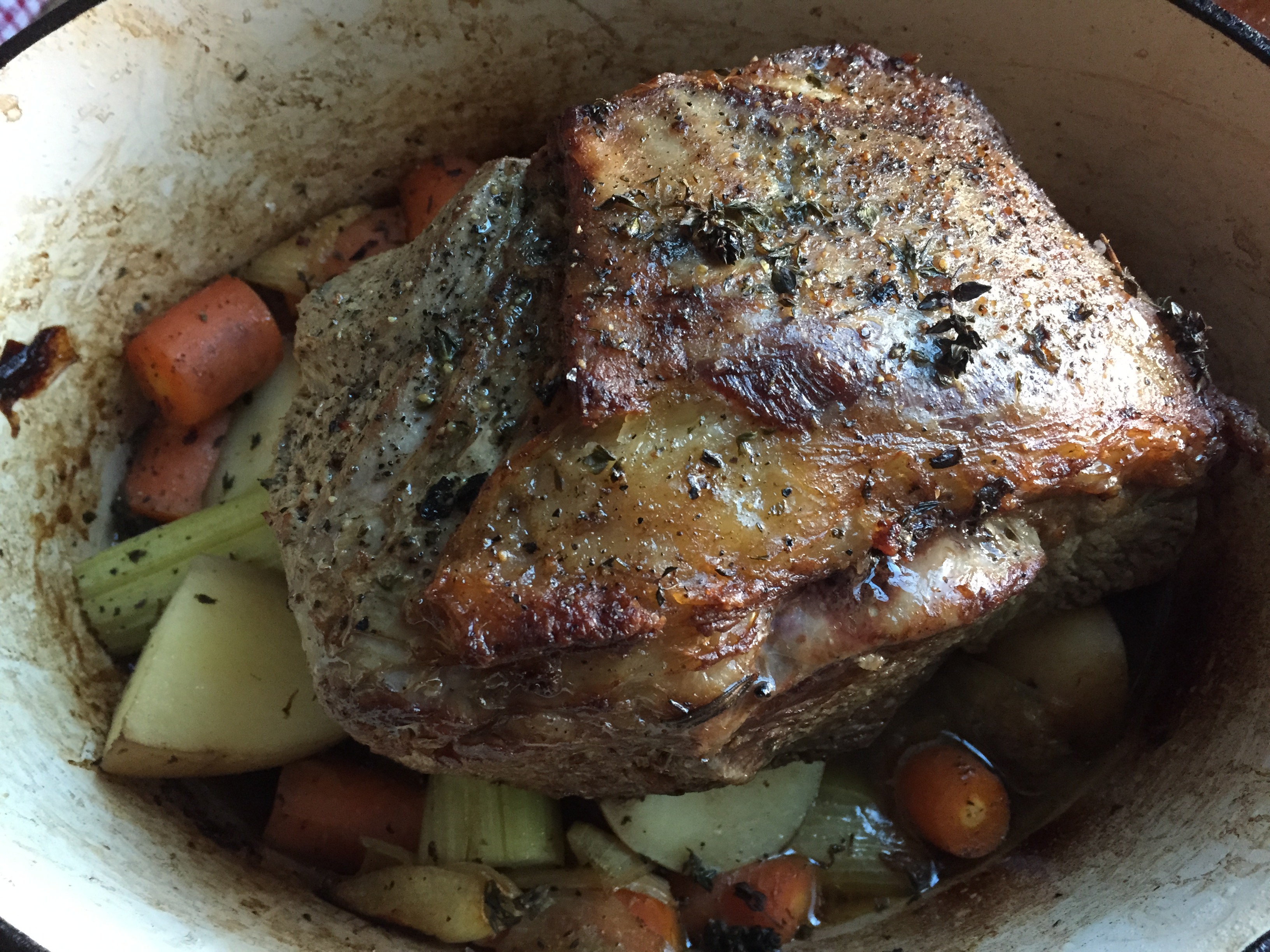
I like to use a big enamelled cast iron pot for our pot roast. It’s big enough to fit a giant roast as well as all the vegetables. I start by searing the sides of the roast in the pot and putting it aside while I lightly brown the vegetables in the same pot lifting up some of the goodness left behind by the beef.

Browned and ready to go!

Browned and ready to go!

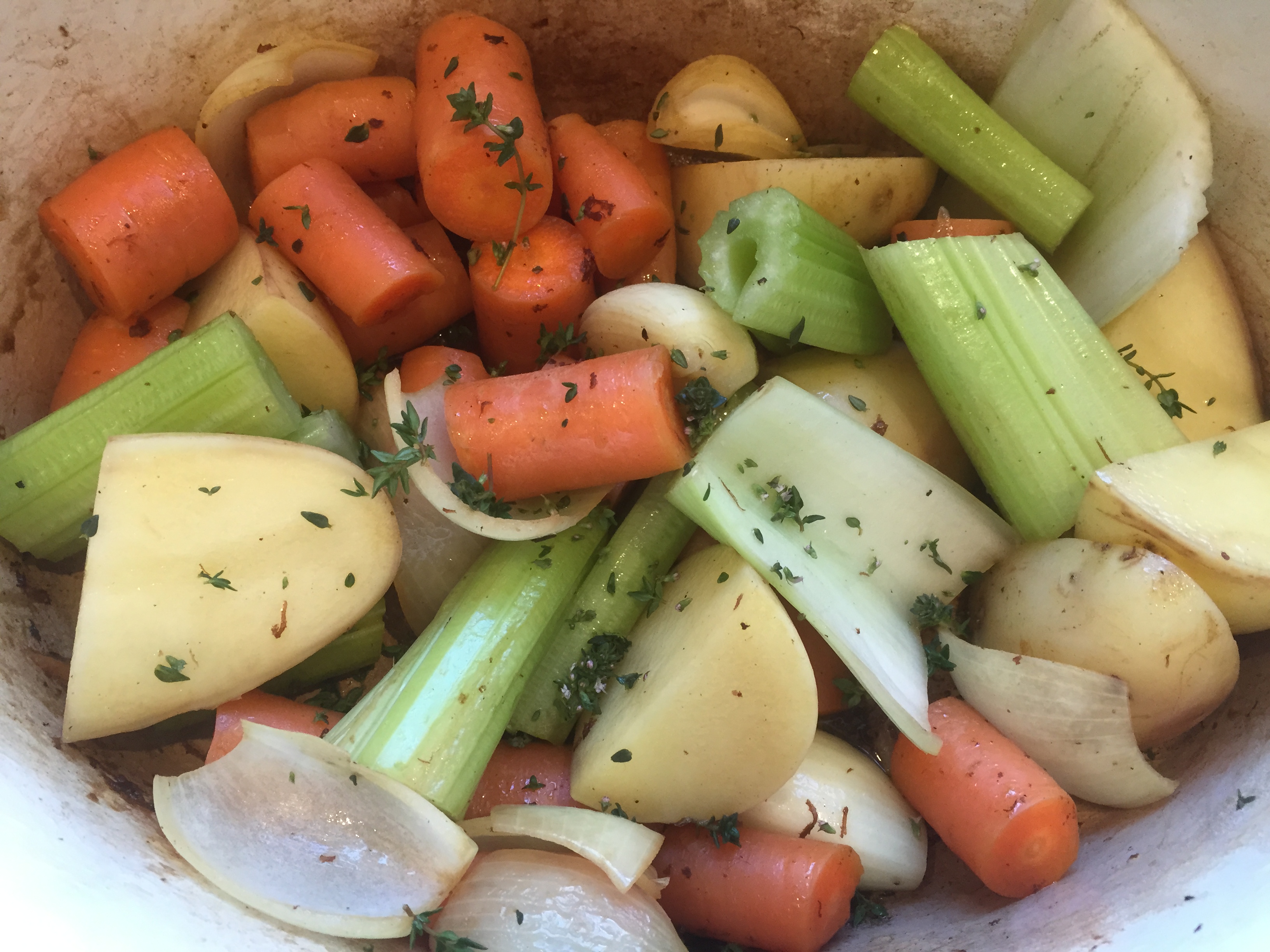
As always a mix of carrot, onion, celery, and as an added bonus potato!

As always a mix of carrot, onion, celery, and as an added bonus potato!

The best part of a pot roast is that all my vegetables can go into the one pot. I went a little light this time on the vegetables only because I was craving colcannon as a side. By the way colcannon is mashed potato with cabbage and bacon. Greatest. Thing. Ever.

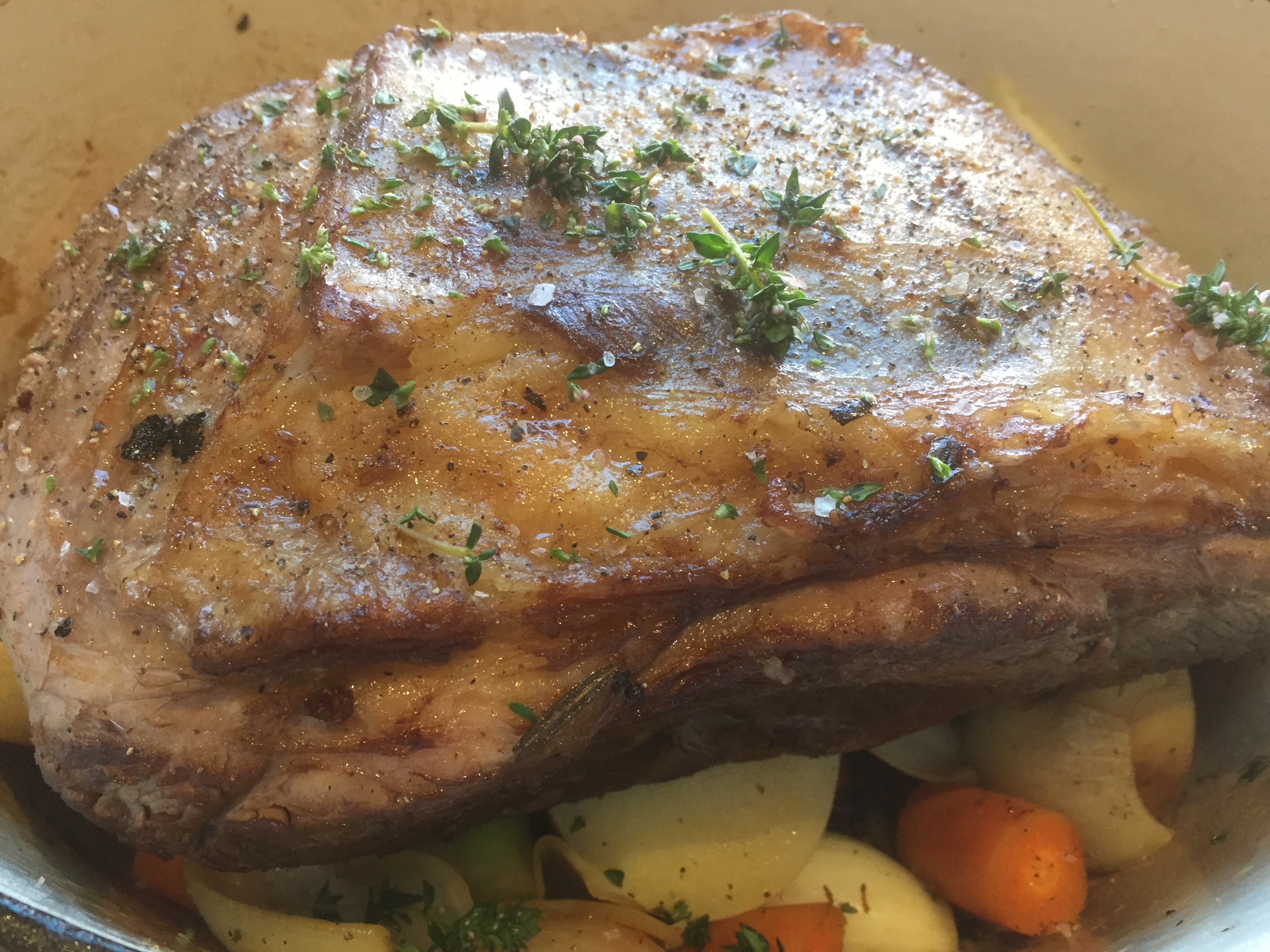
The vegetables make a nice bed for my beef to sit on and a little sprinkle of fresh thyme on top for funsies. It also tasty :P

The vegetables make a nice bed for my beef to sit on and a little sprinkle of fresh thyme on top for funsies. It also tasty 😛

I’ve decided that I love beef fat. It makes my mouth feel nice and warm and cozy and I want to eat all the beef fat. If you can get a roast with a nice layer of on top it’ll be perfect for this pot roast. You can sit the beef on top of the vegetables and as the beef cooks and the fat renders down all those vegetables soak up the tasty tasty fat.

I put this roast in at 3pm at 180C with the lid on and I was thinking it would take 2 hours and I would have dinner ready by 6:30ish with some resting time of about a half hour. Just in case you’re wondering that math does not work.

My roast at the two hour mark.

My roast at the two hour mark.

At the two hour mark my roast had a temperature reading of about 45C that’s lower than the temperature it should be for rare beef. It had to go back in the oven. That was fine. I did get my math wrong anyway and I had about an hour spare. I put it back in the oven with the lid off, lid off means you get crispy beef fat on top. Did I mention beef fat is my favourite??

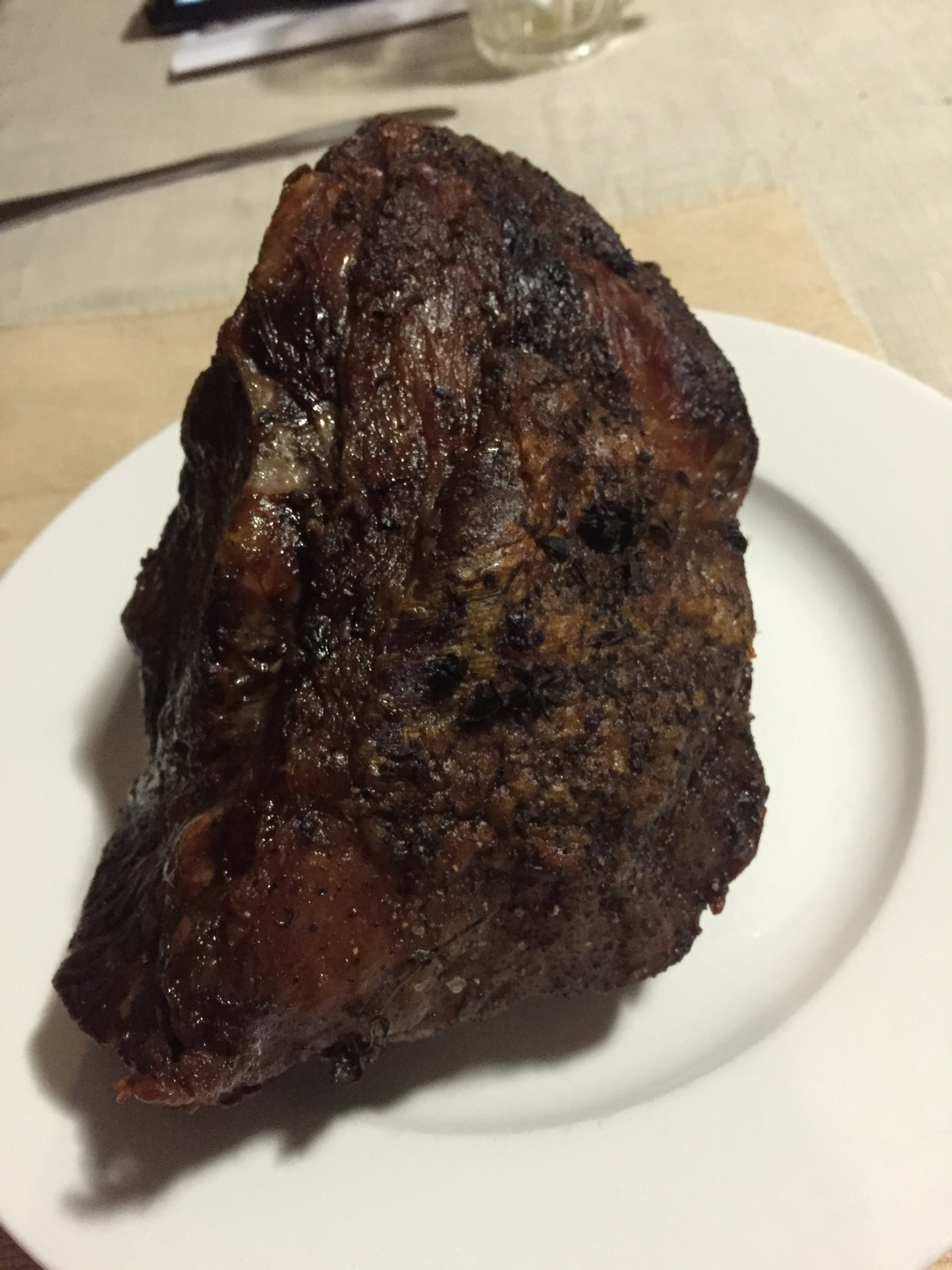
I may have cooked it for too long

I may have cooked it for too long

Now the rest of the cooking of this particular beef roast got a bit hazy. We were a little busy. My beef roast stayed in the oven uncovered for a little longer than an hour. By the time I remembered to check the temperature it had hit 80C and apparently that’s more than what’s needed for well done. Oops. No rare beef roast for Neil again 😛

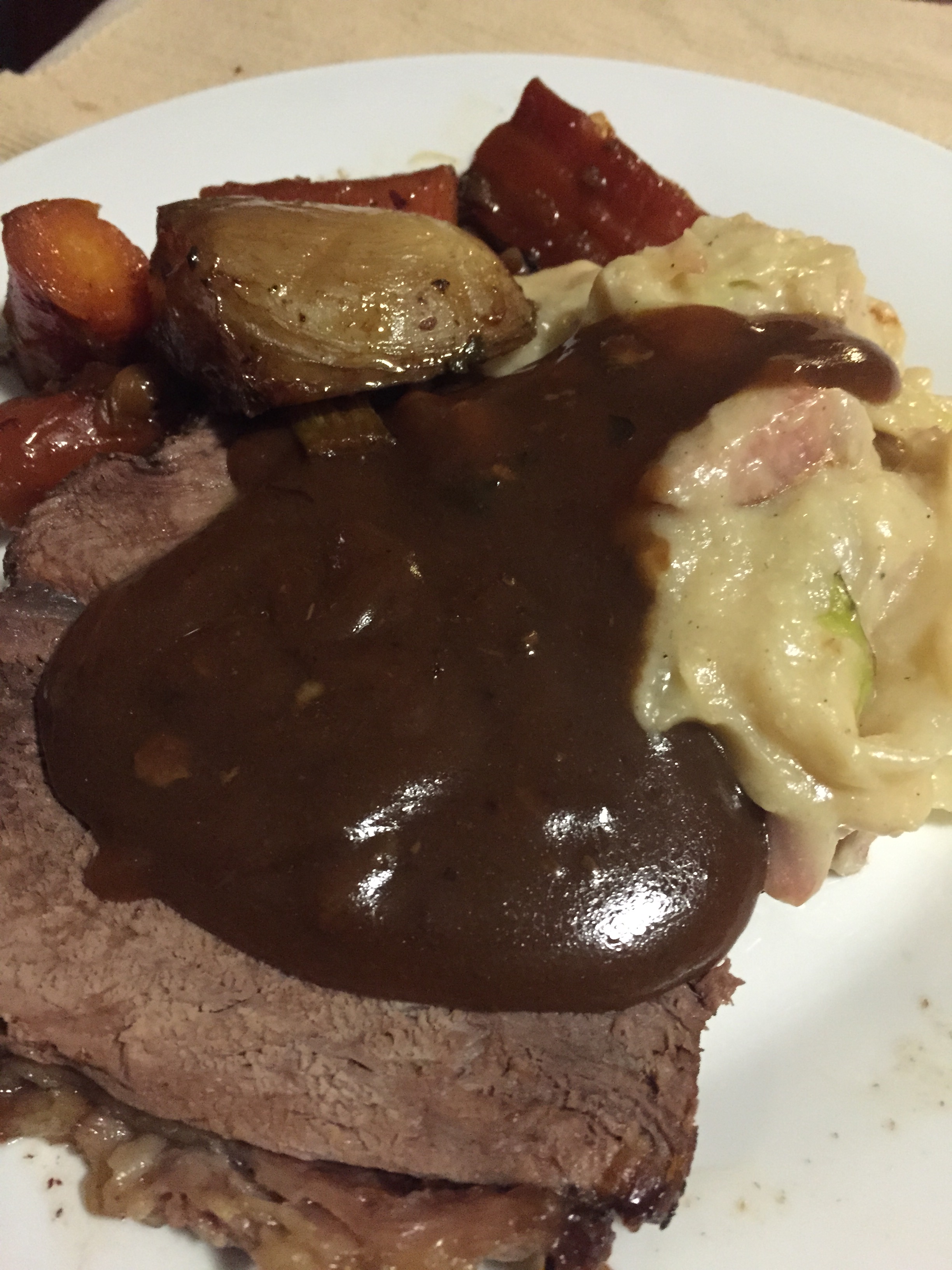
I grabbed it out and it rested for about an hour under alfoil and a tea towel. We fished the vegetables out of the pan and a gravy was made with the remaining goodness in the pot.

With colcannon and gravy. Yum!

With colcannon and gravy. Yum!

The beef was a little overdone but it was still tasty. You can’t overcook beef fat. 🙂

Next time I’ll try and remember to check it more often in the last part of cooking or at least get someone else to check it. 🙂


Creamy Bacon and Mushroom Pasta

It only makes sense that the first recipe on the blog is a bacon recipe. This is my go-to recipe when I need to have dinner on the table and motivation/inspiration levels are low. Thankfully the whole family loves it and it’s so easy to make. The ingredients tend to be whatever I have on hand and substitutions are easy. When we lived in the suburbs we would have UHT cream in the cupboard, frozen packs of store bought bacon, and a bag of frozen peas. If I’m lucky now I might have some milk and cream from Clarisse, we always have homemade bacon in the freezer, and if I had enough time during the year to tend to my crop of peas I’d have peas stashed away in the freezer.

Home-grown, home-made bacon is the best!

Home-grown, home-made bacon is the best!

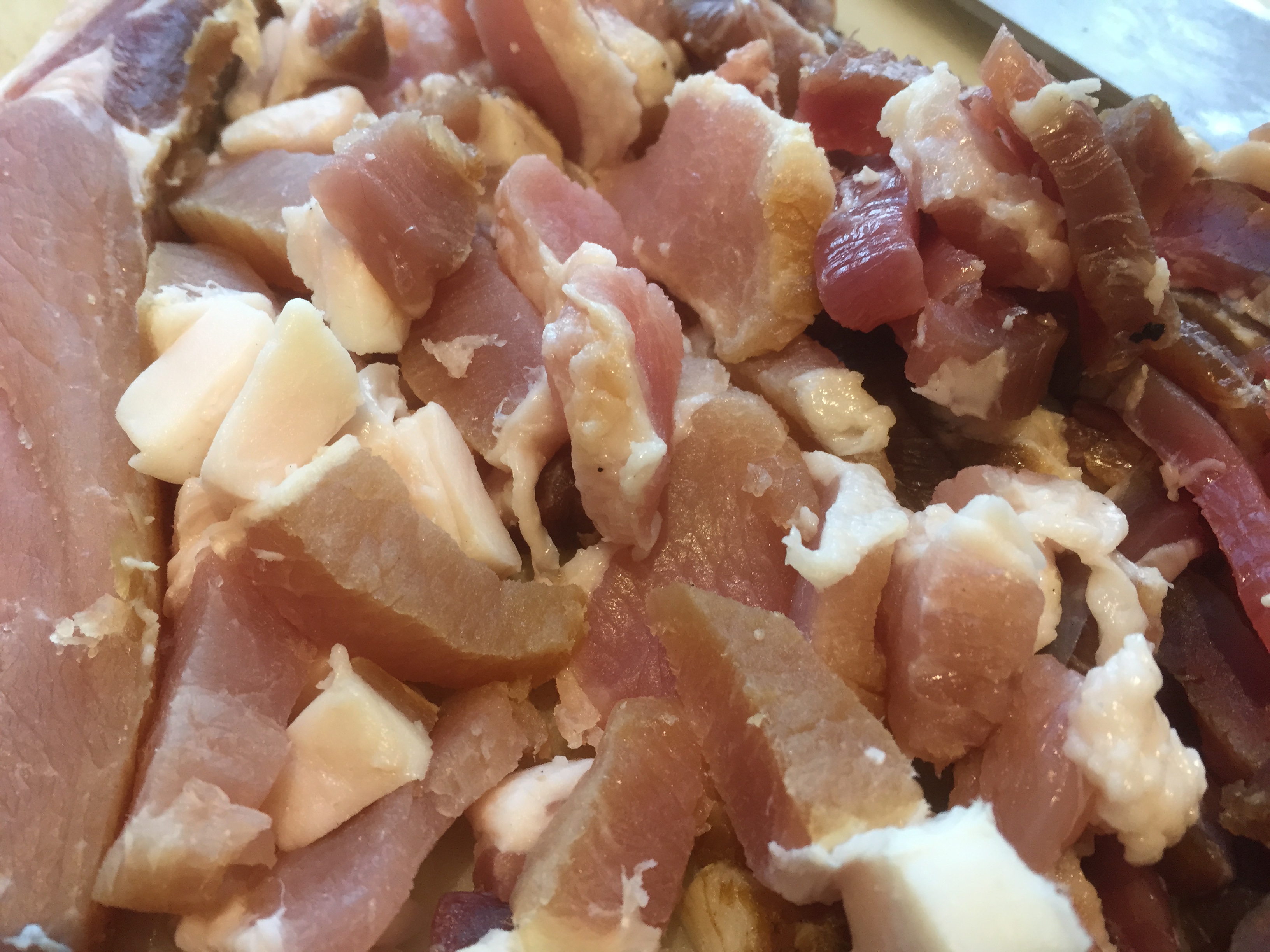
We have an abundance of bacon in our freezer, mostly in giant 1kg chunks. So our bacon is often cut into slightly smaller giant chunks. How you cut your bacon will depend on how you like your bacon. I like to use the streaky/belly bacon because the fat renders down and I’m always afraid the short back/eye bacon will be too dry.

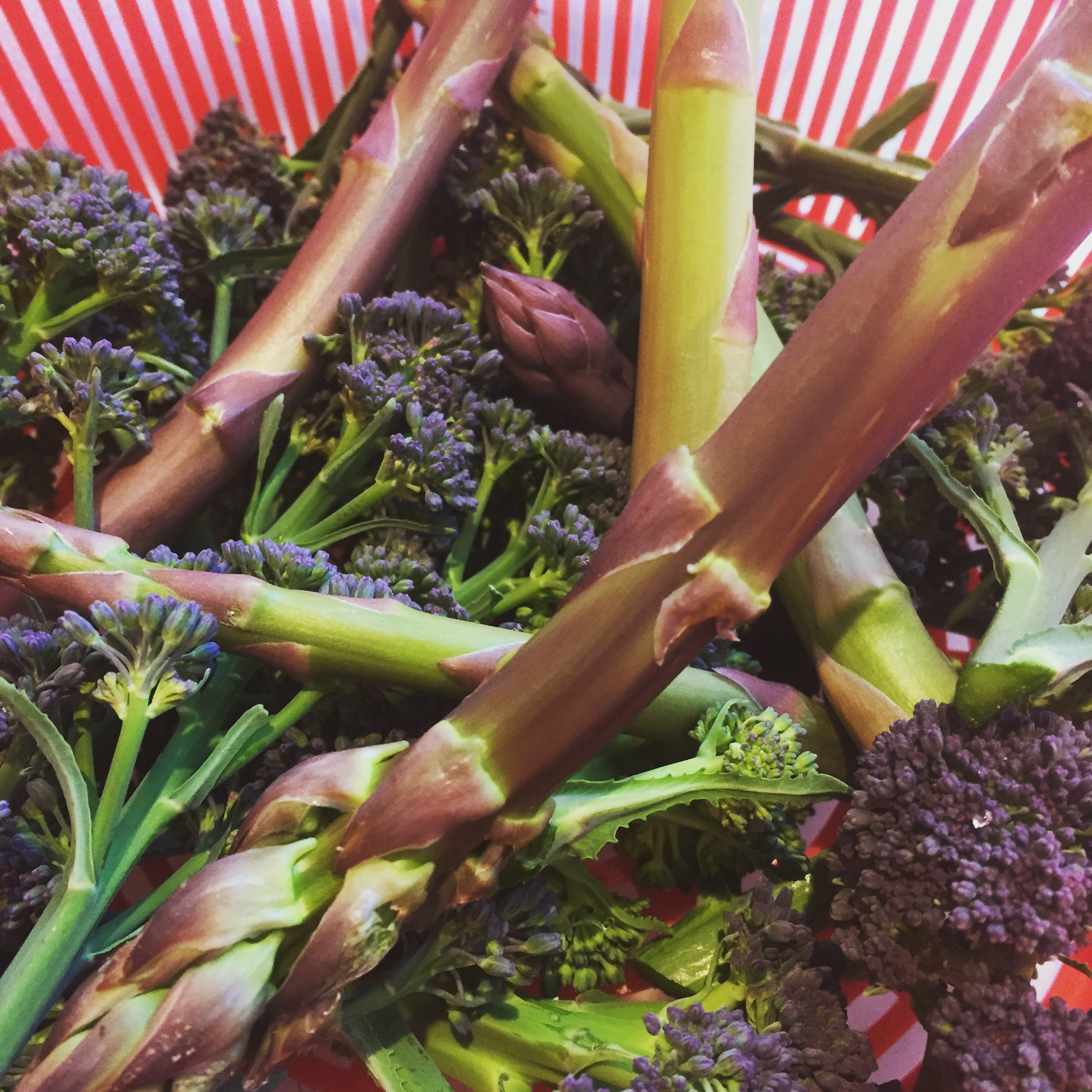
A garden harvest of purple sprouting broccoli and the first of our asparagus.

A garden harvest of purple sprouting broccoli and the first of our asparagus.

In the last couple of seasons our vegetable patch has been a bit woeful and neglected. However, I did manage to harvest my asparagus for the first time this year, and we’ve had awesome sprouting purple broccoli. The sprouting broccoli is my new favourite, I can keep cutting it and it keeps coming back. The bigger more traditional heads of broccoli are similar, if you cut the bigger head it’ll sprout from the sides but if you plant a dozen plants you end up with a dozen giant heads ready to be eaten at the same time. Not awesome unless you plan on freezing the broccoli. The pasta recipe is really a simple base for adding in whatever else you like and in the past I have added in things like tomatoes, leafy greens, and whatever else is on hand that looks to be a tasty addition.

Ingredients:

  • 300g Pasta
  • 300g Bacon
  • 300g Sliced mushrooms
  • Cream 300ml/Milk 400ml Or Just milk. Or just cream. Or whatever you have on hand and feel like throwing in to the pan
  • Flour 2 tablespoons
  • Butter/oil 50-100gms
  • Pepper to season
  • Parmesan – To serve

Optional additions

  • A handful of peas
  • Sundried tomatoes
  • A handful of broccoli/broccolini
  • Anything you think would be tasty

Method:

  • Cook your pasta according to the directions on the pack.
  • Brown the mushrooms in butter with a glug of oil at medium to high heat and set aside.
  • Cook the bacon in the same pan but only just cooked, pink uncooked bits will be fine. (I don’t add oil here, there should be enough oil coming out of the bacon that it shouldn’t matter but if you find it dry add a splash of oil)
  • Add flour and cook through. This is where the bacon will cook through completely and will brown up more. (This is the start of the sauce, the flour will thicken the sauce and you need to cook the flour so that the sauce doesn’t taste like flour)
  • Check your pasta. At this point if my pasta is almost ready I’ll throw the broccoli in and turn the heat off. If it’s not even close to ready I’ll turn the heat off to the pan with the bacon and wait till the pasta is closer to being ready before I continue. I like having the pasta cooked just as the sauce is ready so I can toss it all in together.
  • If you’ve turned the heat off to the bacon and you’re ready to continue, turn it back on low and gently warm it back up if it’s lost some heat.
  • Turn heat up to about med-med/high, add the cream/milk slowly to the bacon, incorporating it into the bacon and flour. (Start slow, it’ll help avoid any lumps in the sauce)
  • Let the sauce come up to boil and this is where the sauce thickens. If you’ve used a generous amount of flour it won’t take long and you can turn the heat down once it gets to the consistency that you like.
  • Add your mushrooms, peas, and pepper to taste. Drain the pasta and broccoli leaving a small amount of the cooking liquid behind. Add pasta and reserved cooking fluid to the sauce. Toss/stir through.
  • Divide into bowls and top with parmesan.
The finished product.

The finished product.

There’s often no leftovers but if Neil manages to secure come for lunch the next day it can be reheated in the microwave without any problems. Add a splash of water though, the pasta would have sucked up any fluid.


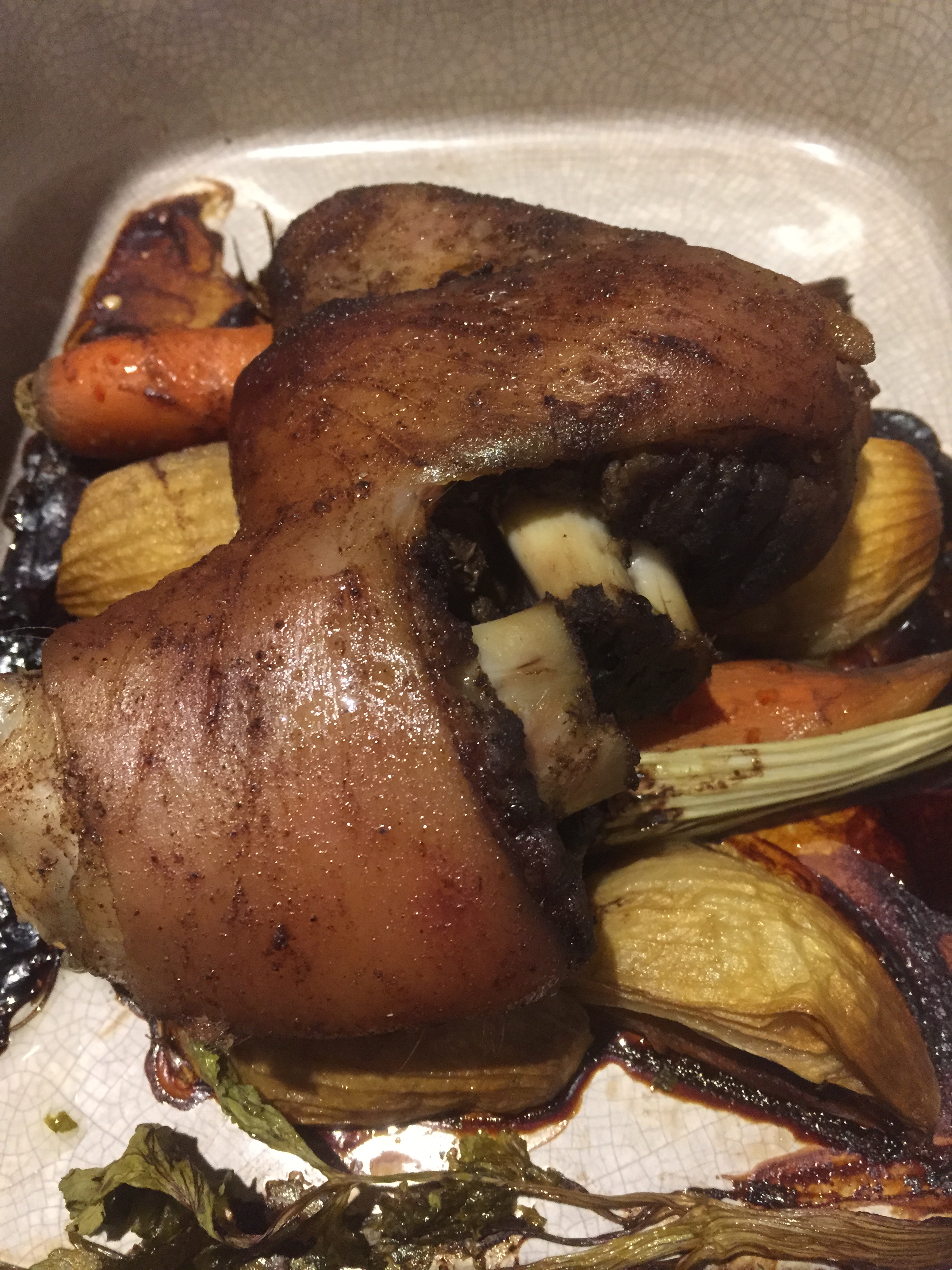
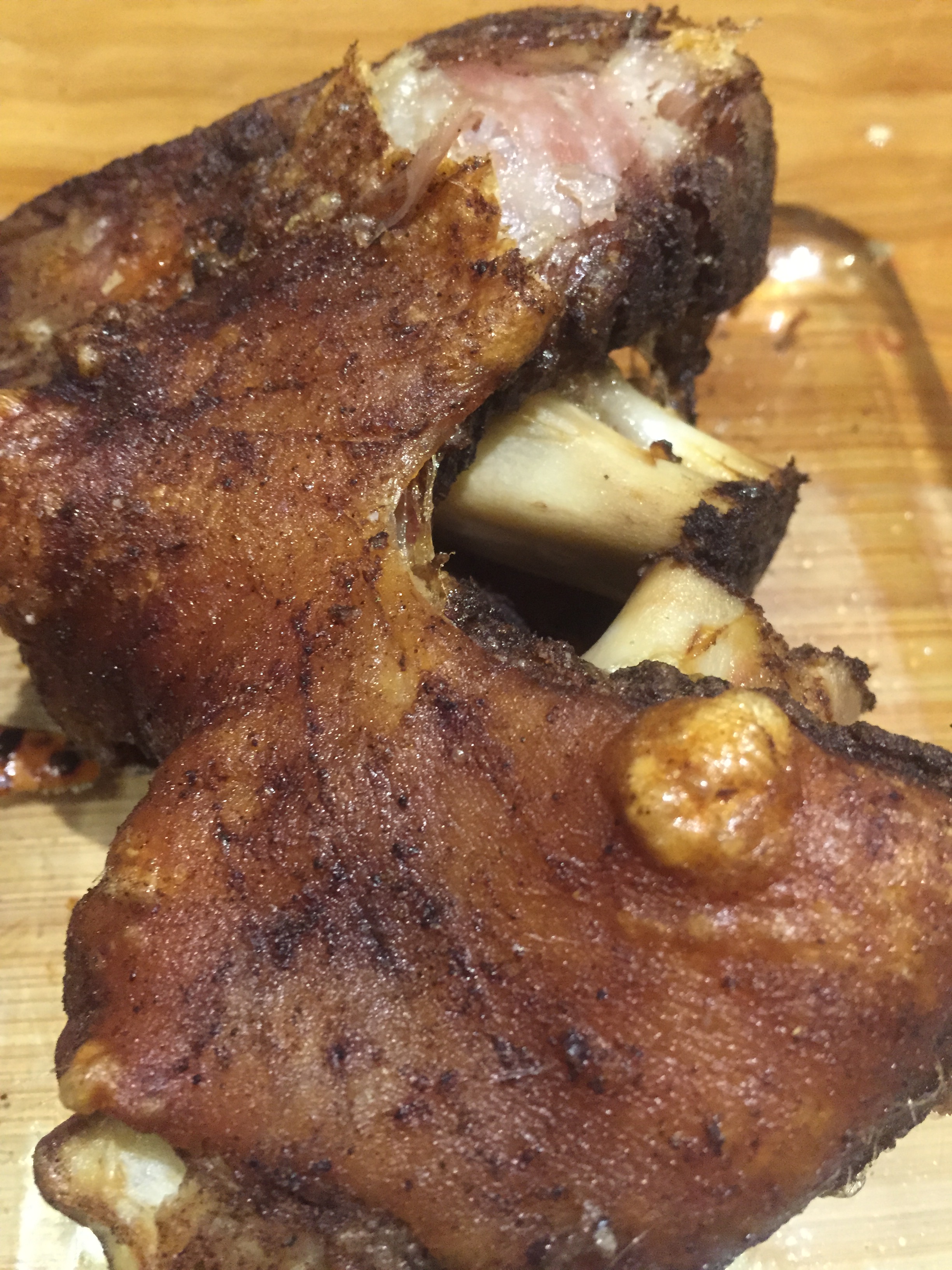
Asian Style Slow Cooked Pork Hock

The hock is one of the cuts of pork I often have no idea what to do with. As a result, I often end up throwing it in as part of my pork stock or it ends up being cured and smoked for pea and ham soup.

It’s such a meaty cut! When we are having a spit pig the best part of the day is towards the end when it’s been cooking all day and the hocks just happen to fall off.  The only way to save them is by eating them right away! 🙂

The crackling is a bit different though. It’s not as puffy as what you would normally get, it’s more of a thin crisp crackling and sometimes it doesn’t crackle at all but it’s still tasty! The fat in the hock has a tacky feeling, it sticks to your mouth and the meat is sweet and juicy.

But why am I waiting for a spit pig to eat the hock when I have a freezer full of them?! So, today’s food experiment is an Asian style slow cooked pork hock. A single pork hock should be enough for two people but honestly if it was just me and no one was watching I’d probably eat the whole thing. I have a problem! I know!

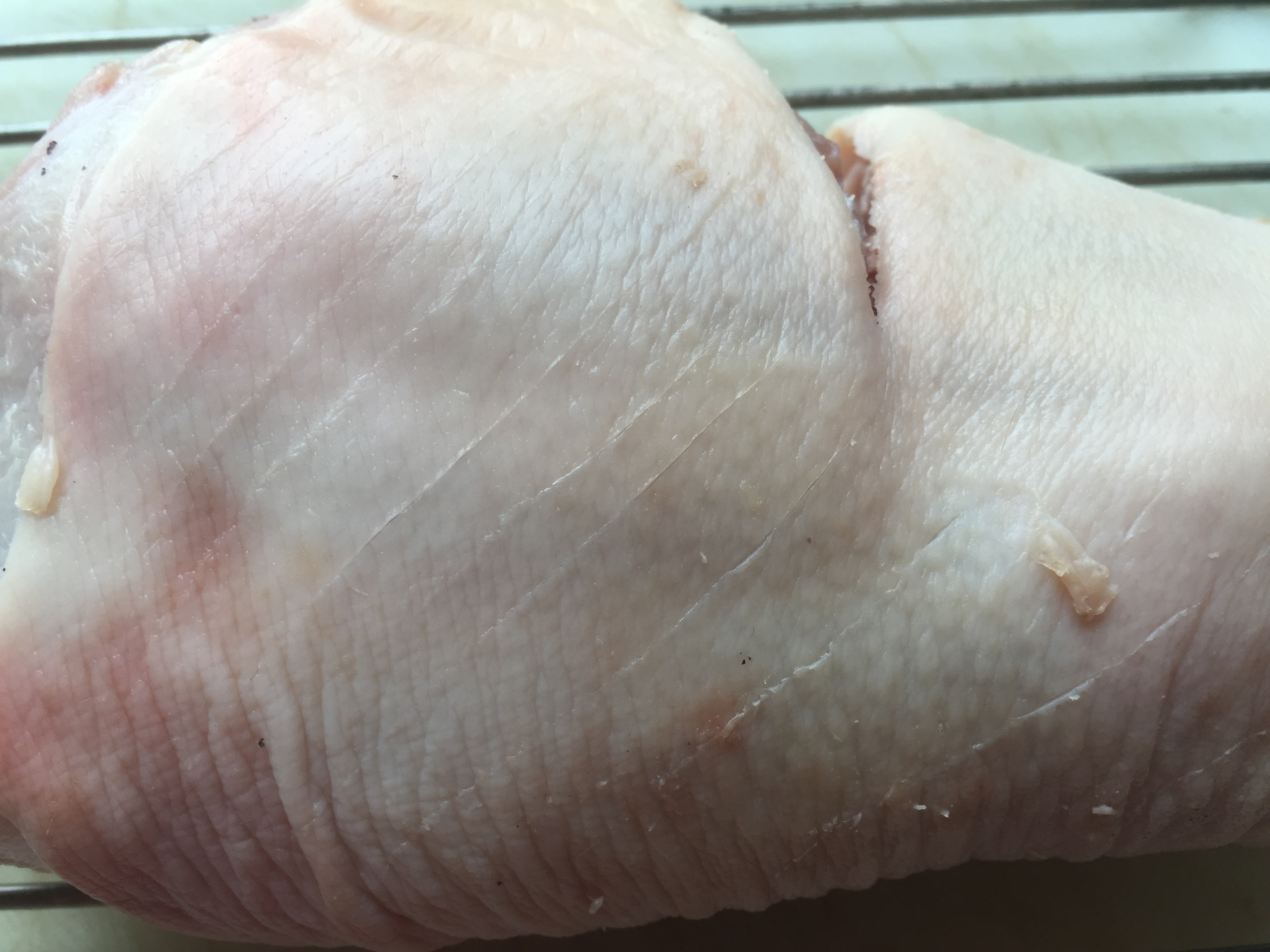
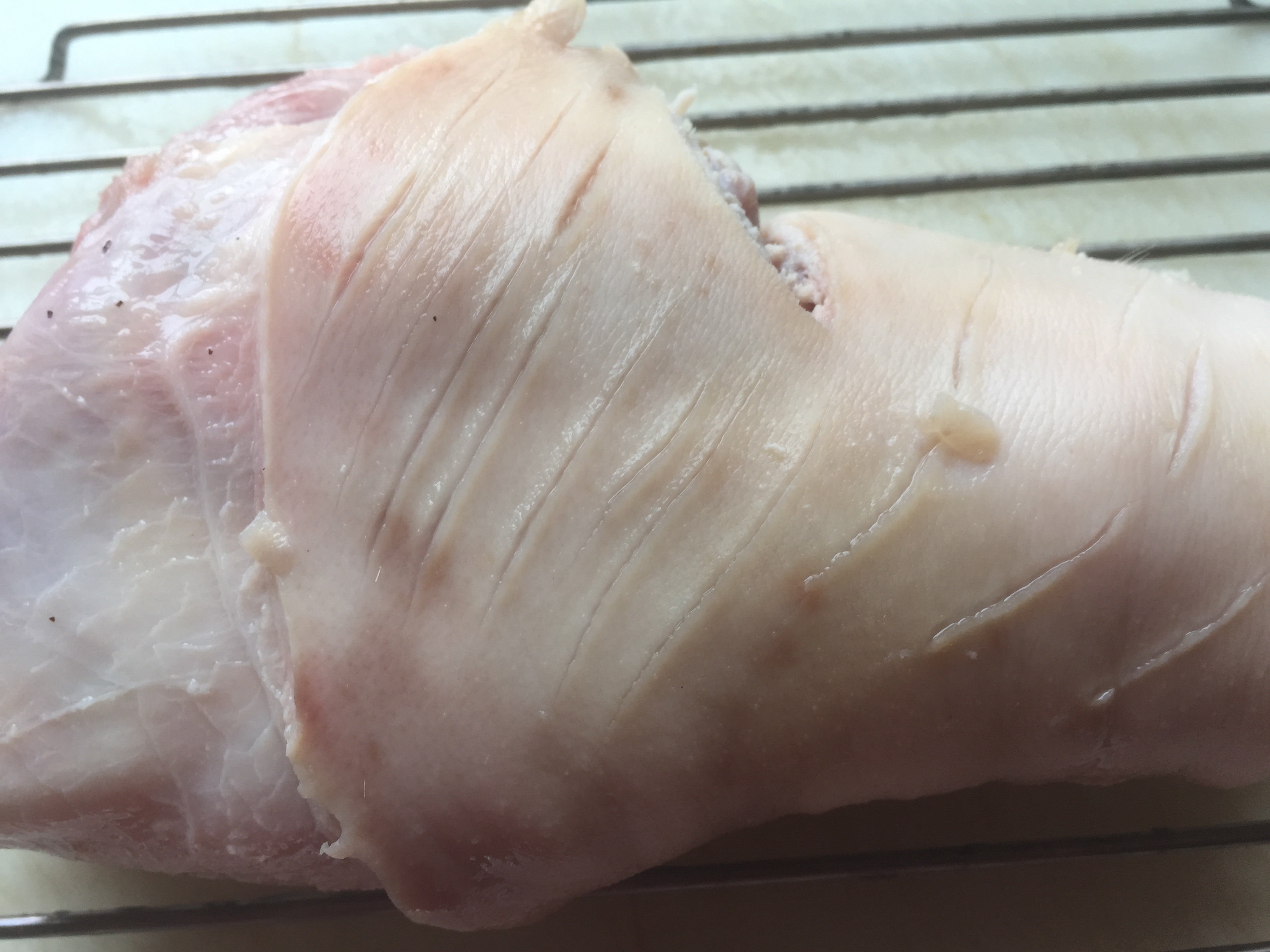
What I’m trying to do with this is recreate my spit pig meat falling of the bone pork hock without having to set up the spit for my single pork hock. I’ve set up my slow cooker instead. I didn’t have a rack small enough to fit so I’ve improvised with vegetables (carrot, celery, onion). I am a big fan of pork crackling so the day before the hock went into the slow cooker I slashed the skin with a Stanley knife and poured boiling hot water all over the skin, patted it dry and then rubbed in a liberal amount of salt. I’ve covered it with some paper towel and left it in the fridge overnight to dry out some more.

I’ve lightly scored the hock

I’ve lightly scored the hock


The skin shrinks back and the cuts in the skin open when you pour the boiling water over the hock.

The skin shrinks back and the cuts in the skin open when you pour the boiling water over the hock.

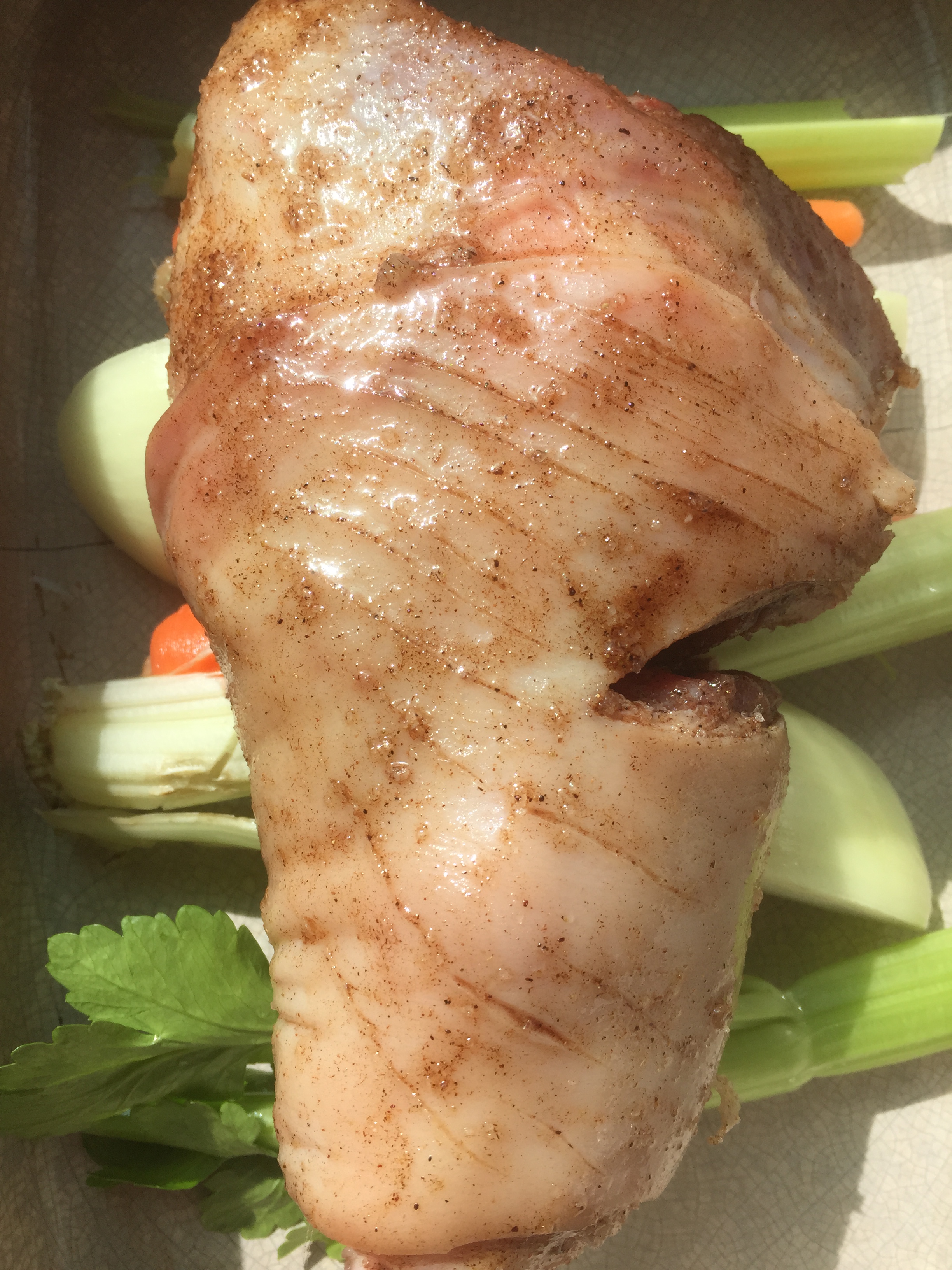
What makes this ‘Asian Style’ is that I coated the hock in olive oil and Chinese five spice before I put it into the slow cooker. It’s what I would normally do with pork belly minus the soy sauce and Chinese rice wine and sesame oil. Of course as I type this I’m thinking I probably should have coated the hock with all those things anyway. Next time!

Rubbed with Chinese Five Spice and sitting on the bed of vegetables in the slow cooker.

Rubbed with Chinese Five Spice and sitting on the bed of vegetables in the slow cooker.

Our slow cooker often saves me during the week when I know we’re going to have a busy day and no one is going to want to cook dinner. I can throw everything in and be fairly confident that it’ll all turn out alright. There have been times when the results have started to look a bit iffy half way through the day. Case in point being the first time I did a slow cooked pork shoulder. I put it on before I went to work at 6:30am and by the time I came home at 5:30pm Neil was preparing to call out for pizza. The skin had been salted and oiled before going into the slow cooker and by the time I got home the skin was looking distinctly unappetising. But I was determined to see it through to the end. I cranked the oven to the highest heat and let it come up to temperature and wacked my pork shoulder in (transferred carefully to an oven safe dish as the meat was falling apart). A half hour later and I had the best looking pork roast I’ve ever made in my life. So, if I follow the general idea of slow cooked pork shoulder and transfer that to my pork hock it should all work out right? Fingers crossed!

The end of the slow cooker process

The end of the slow cooker process

The hock went in about 9:30am and came out about 5:30pm. You can see from the photos above the meat shrinks back a fair bit and the skin looks gelatinous. When I do a bigger cut of meat I don’t normally add any fluid to the bottom of the slow cooker but I think next time with the hocks I might add a little pork stock, half a cup maybe.

Done and delicious!

Done and delicious!

About a half hour before I was ready to take the hock out of the slow cooker I cranked the oven as high as it would go. This was going to be different for everyone mostly because my oven right now is at the end of its useable life and it’s temperamental at best. But! Oven as high as it’ll go but probably 220C. Let it get up to temperature and transfer the hock to an oven safe dish and put it in the oven for about a half hour. You can see from my picture that I didn’t get bubbling crackling all over like I had hoped and you can also see that there is a bit missing from the top corner because Neil managed to snag proper crackled crackling before I could take a picture. The skin is crisp though and it’s super tasty. The meat pulls apart easily and is more of a dark colour, almost like chicken thigh type dark meat.

Things I would change for next time:

  • Do more than one hock (who’s crazy idea was it to just make one hock for a bunch of Athertons? Crazy!)
  • Drying out overnight put it on a rack and let the air flow right around the whole hock
  • Add some fluid to the slow cooker that way you have some type of gravy. Gravy makes everything better!

Babies!

September is apparently a good time for babies, because we ended up with four lots across three species!

Now that we started at the market , we’re experiencing a bit of a pork shortage .  Having a demand that outstrips supply is a good problem to have for a new business, but it’s still definitely a problem.

At the same time we want to phase into an all heritage breed breeding program.  The white pigs have done well for us, and I really do love them.  I’ll not be getting rid of the white sows we have either, but will phase into black pigs.  The change is more because I think the meat is genuinely better, and the pigs suit our model well.  They’re slower-growing, and handle an outdoor life better.

To address both our shortage and our need for breeding stock, we decided to buy some piglets.  We want to get them young so they grow up with us and become as tame as our other pigs.  We also had to make sure we got them from free-ranged sources.  That’s not just because that’s how we believe they should be bred – we’ve bought pigs for breeding from non-free-ranged sources before.  It’s also because we wanted to get entire litters if we could, which would allow us to be selective about which we keep as breeders.  The rest would end up at the market, where I’m determined to sell only free-ranged, ethically-raised beasts.

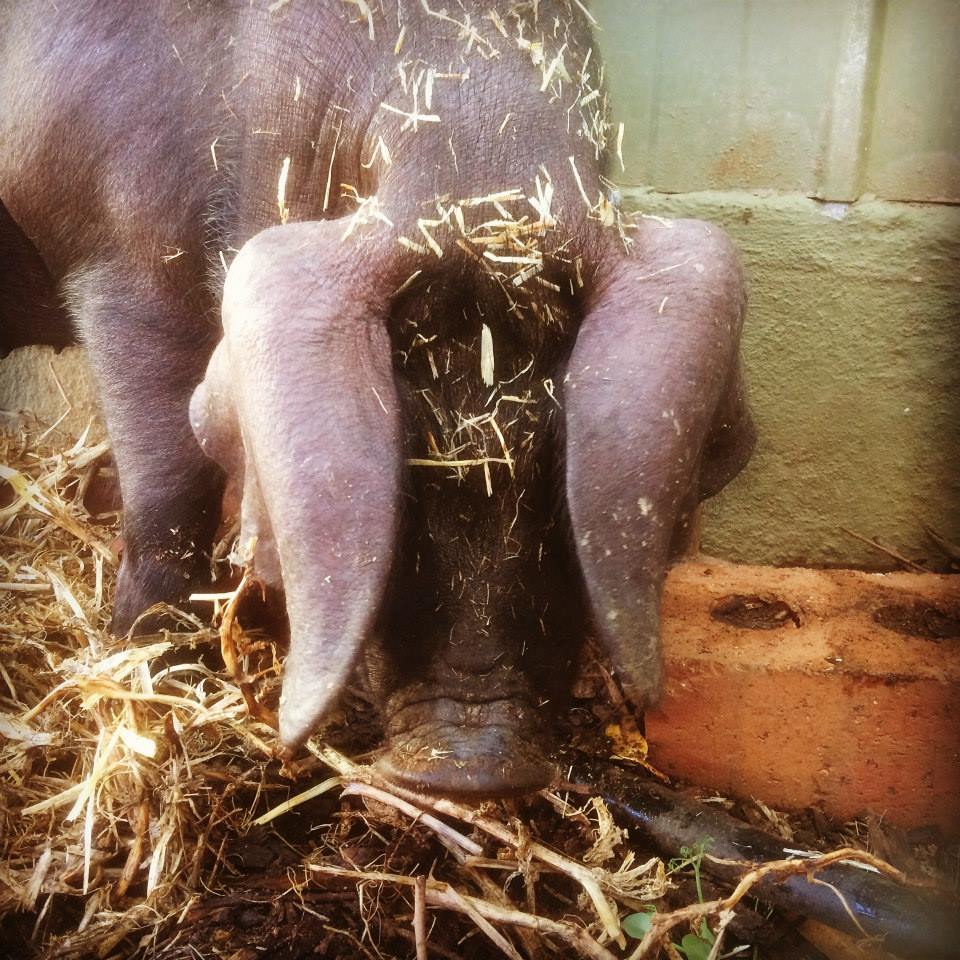
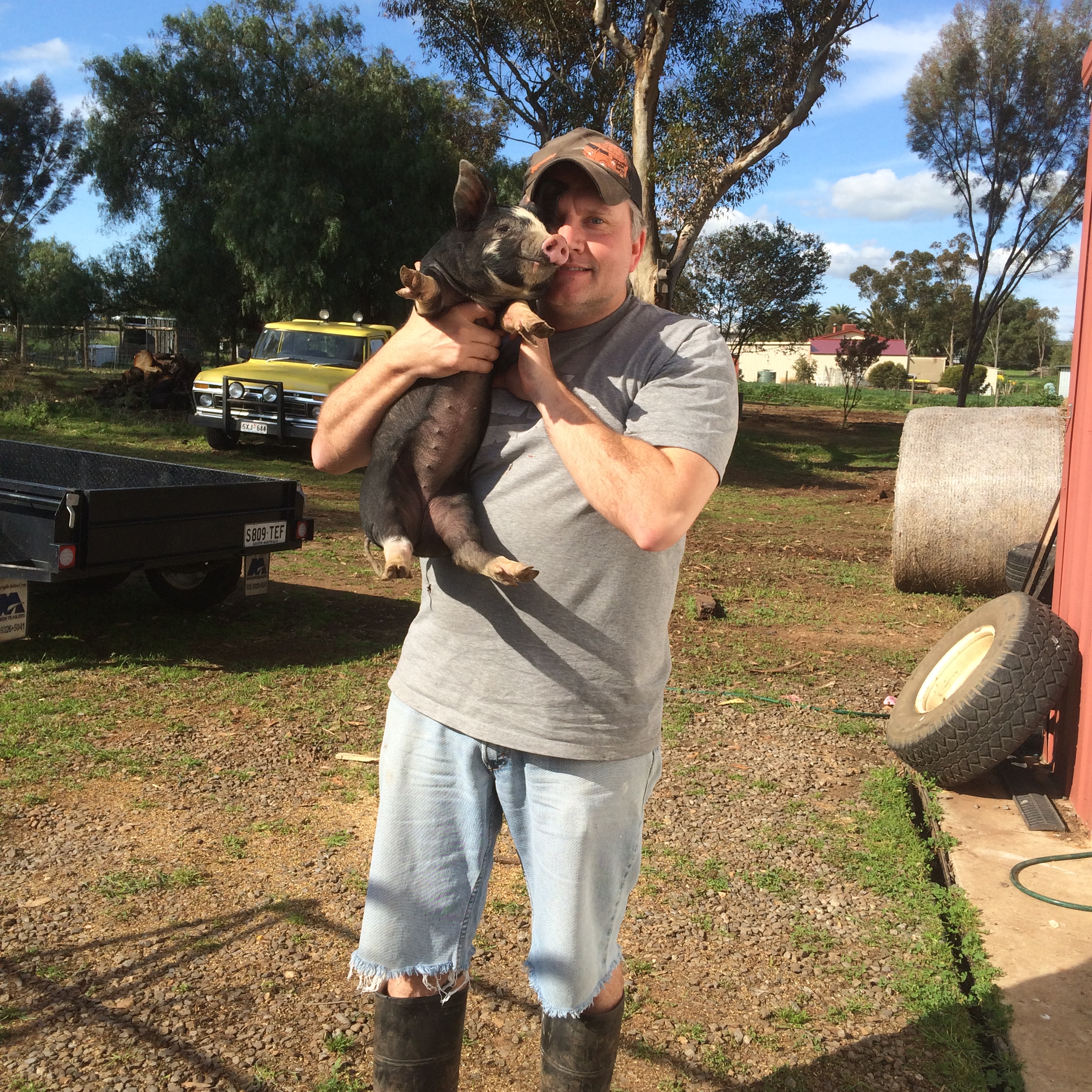
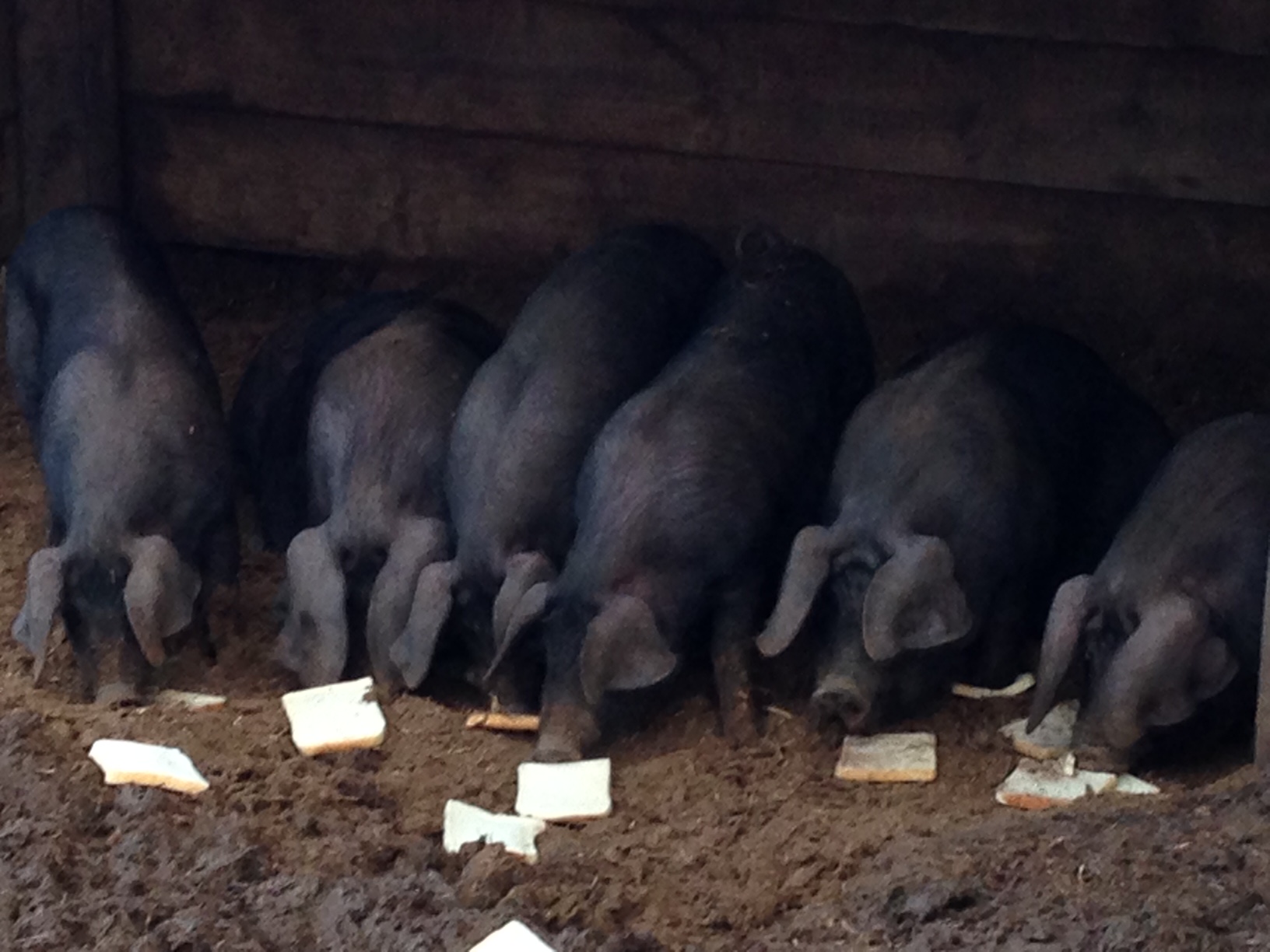
We got some Large Blacks from a local broad-acre farmer.  He has a 100 sow intensive piggery only a few minutes from our place, and tried a registered large black herd as an experiment.  Unlike his piggery, these were all bred outdoors and I met them not long after he got them.  I think they’re too much work for him, especially when compared to the intensively farmed pigs, and he was getting rid of most of them.  We ended up getting three lots of them weirdly enough.  We grabbed a couple of gilts from him purely for breeding, and then went back a couple of weeks later to grab whatever else we could.  We ended up with a total of eight – three gilts and five barrows.  A couple of weeks after that we got a call from a guy who had bought two gilts from the same guy, but who now had to get rid of them.  We graciously took them off his hands. 🙂

The Large Blacks are beautiful and completely different to what we’re used to.  They’re a little lazy, which is good and bad.  It means they’re more docile and easier to handle, but also means they run to fat.  We’ll have to change our feed ration a little.

This is Kit, our new Large Black gilt.

This is Kit, our new Large Black gilt.

At around the same time, we saw a litter of Berkshires advertised.  I rang shortly after the advert was put up, and the conversation went like this:

Me: “You have a litter of Berkshires advertised.  How many do you have?”

Him: <laughs> “How many do you want?”

Me: “All of them.”

Him: <silence>


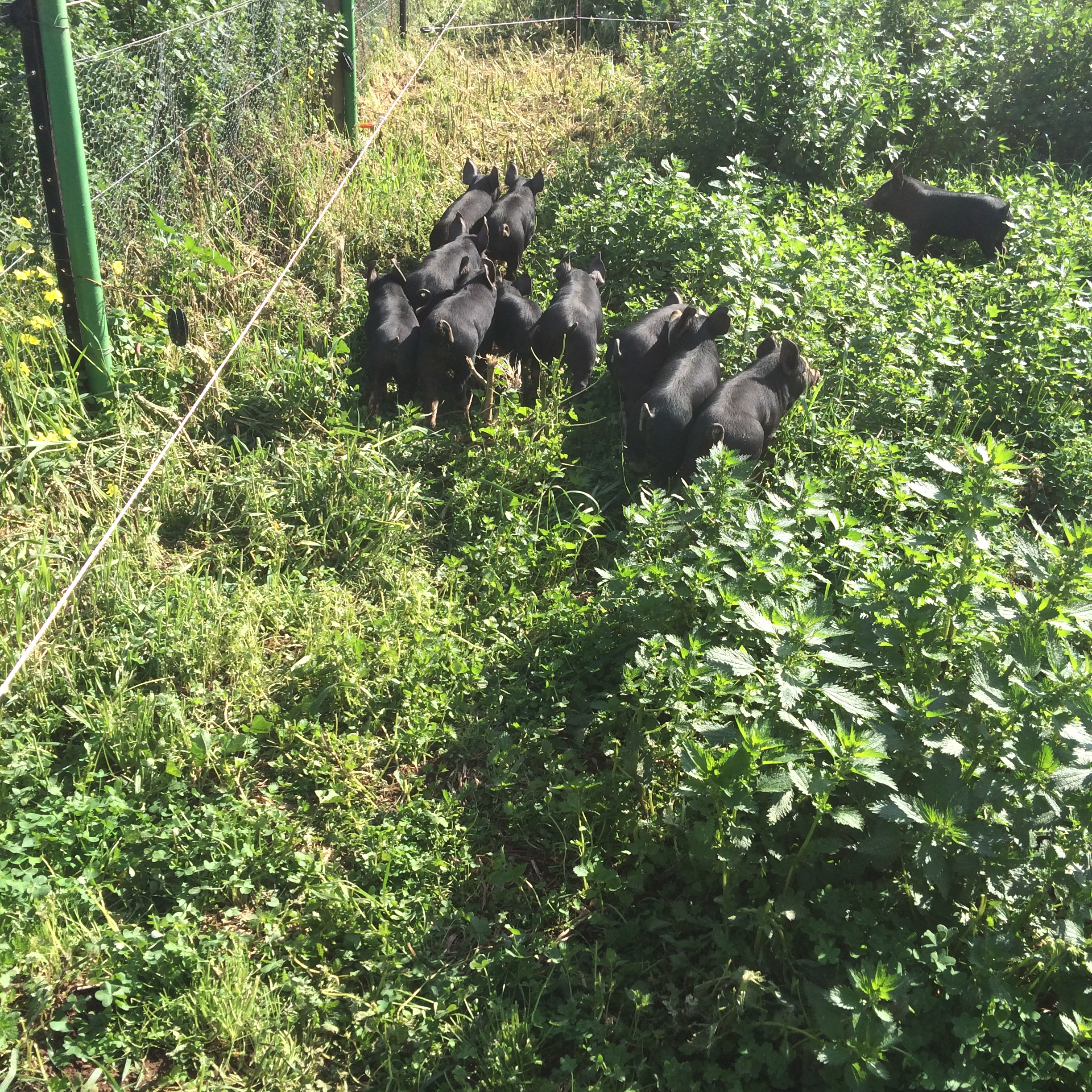
As it turns out, they had 13, of which they weaned 11.  He castrates his own, so we got only gilts and barrows.  We had to wait five weeks until they were weaned, but we got all of them and I made two-thirds of my giant veggie patch a weaner paddock.

This is the best picture I could get of the Berkshire litter.  They wouldn't stand still for me!

This is the best picture I could get of the Berkshire litter. They wouldn’t stand still for me!

Berkshire loves!

Berkshire loves!

Like the Large Blacks, the Berkshires are much more docile than we’re used to.  They’re also more active though, and don’t seem to have the fat problem.

We’ll pick at least three gilts from both the Berkshires and Large Blacks as breeders.  They’re probably 8 months from being breeding age, and will give us a nice little herd.  That’ll give us time to find a boar too, preferably a Berkshire I think.

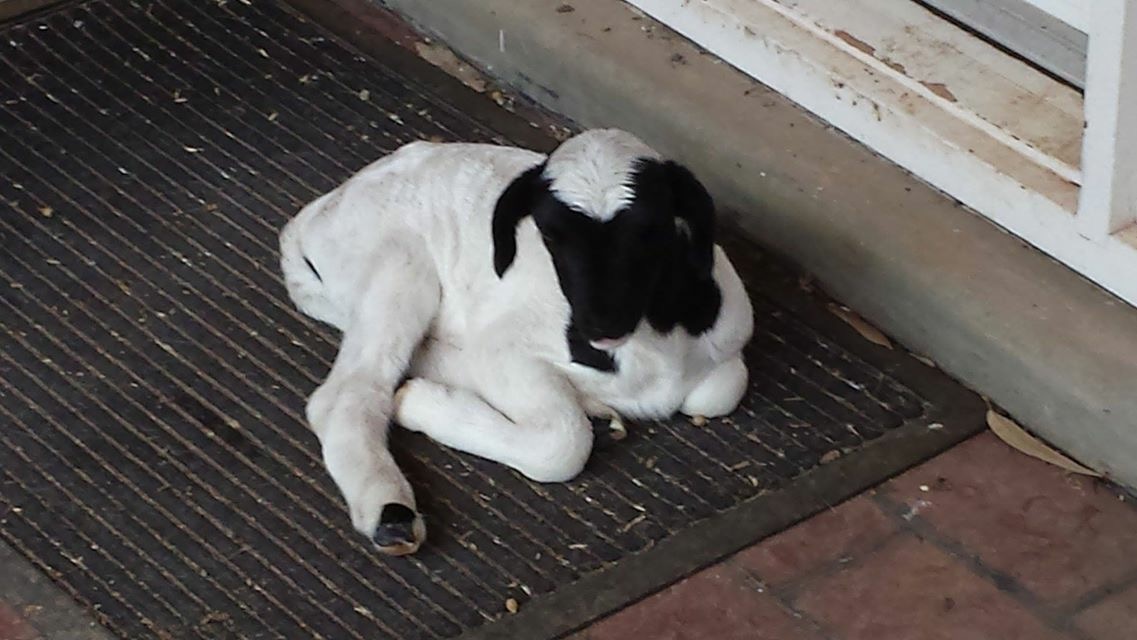
We’re not only experiencing a pork shortage either.  We’re keen to sell lamb and beef at the market, though only have room to grow sheep on out of those two.  We’ve bought in lambs to feed up, and came across a small flock from a breeder who is downsizing.  We got a few weathers and two ewes, at least one of which was pregnant.  She was a new mum and quite small, so we weren’t sure how she’d go.  We also have little experience with breeding sheep.  Luckily, the mum managed on her own, and we got a gorgeous little black-and-white ewe lamb.

Rosie Lamb!

Rosie Lamb!

Peyton named her Rosalind and she’s full of character.  We found that she wasn’t feeding from her mum after about 12 hours, and was cold and weak.  Research said that about 20% of lambs are lost in the first 10 days, mostly to exposure and hunger.  We were keen to avoid that, and so brought her in for a couple of nights to bottle feed.  We still supplement her feed a little, but she gets most of her feeds from mum.  She’s super-tame now though, and I tend to get lamb loves both when I leave for work and when I come home.  It’s kind of cool. 🙂  Little Rosie also likes to sleep on our front door mat, which really pisses her mum off.  Mum is half-tame but not a big fan of being close to us.  While Rosie is asleep on the mat her mum will stand off the porch and yell at her.

Asleep on the mat and ignoring mum.

Asleep on the mat and ignoring mum.

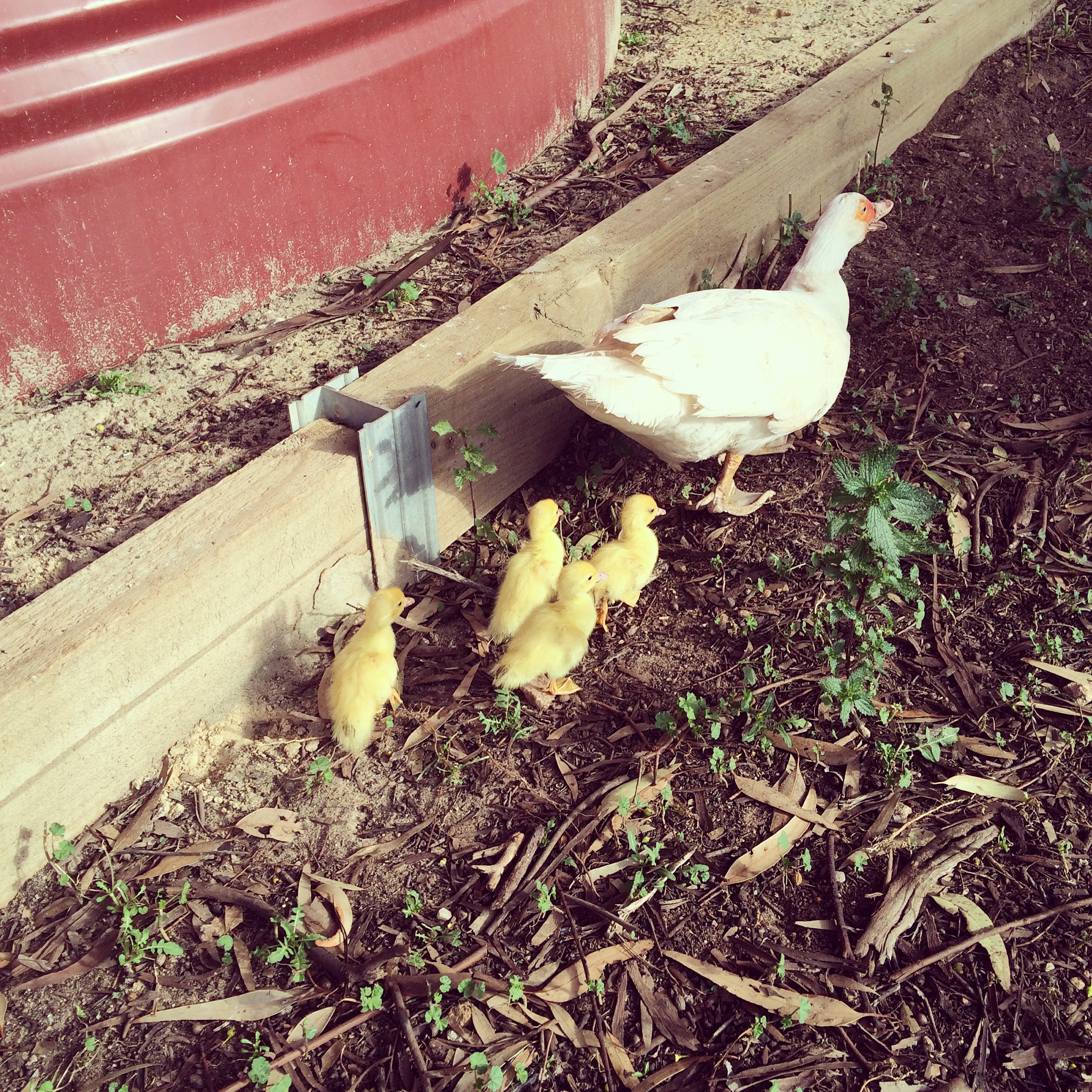
Our last baby event for the month was ducklings.  One of the mums had started to nest under an old fixed scoop attachment we have for our tractor.  She’d stay under there when all of the other ducks were put away of a night time, and only come out when we were done.  She was sneaky about it, and we missed the fact that she was nesting there for a week or so.  We just let her go and she hatched 4 babies.  She lost one after a couple of days, which I think was the neighbour’s cat.  We now lock them away on their own of a night time, and the remaining three should all make it.  We’re quickly finding ourselves with too many poultry, and were purposely not incubating any eggs for a while.  Apparently this duck had other ideas though. 🙂

Mumma duck getting her brood away from the guy with the camera.

Mumma duck getting her brood away from the guy with the camera.

We’re Famous! …Kind of! :)

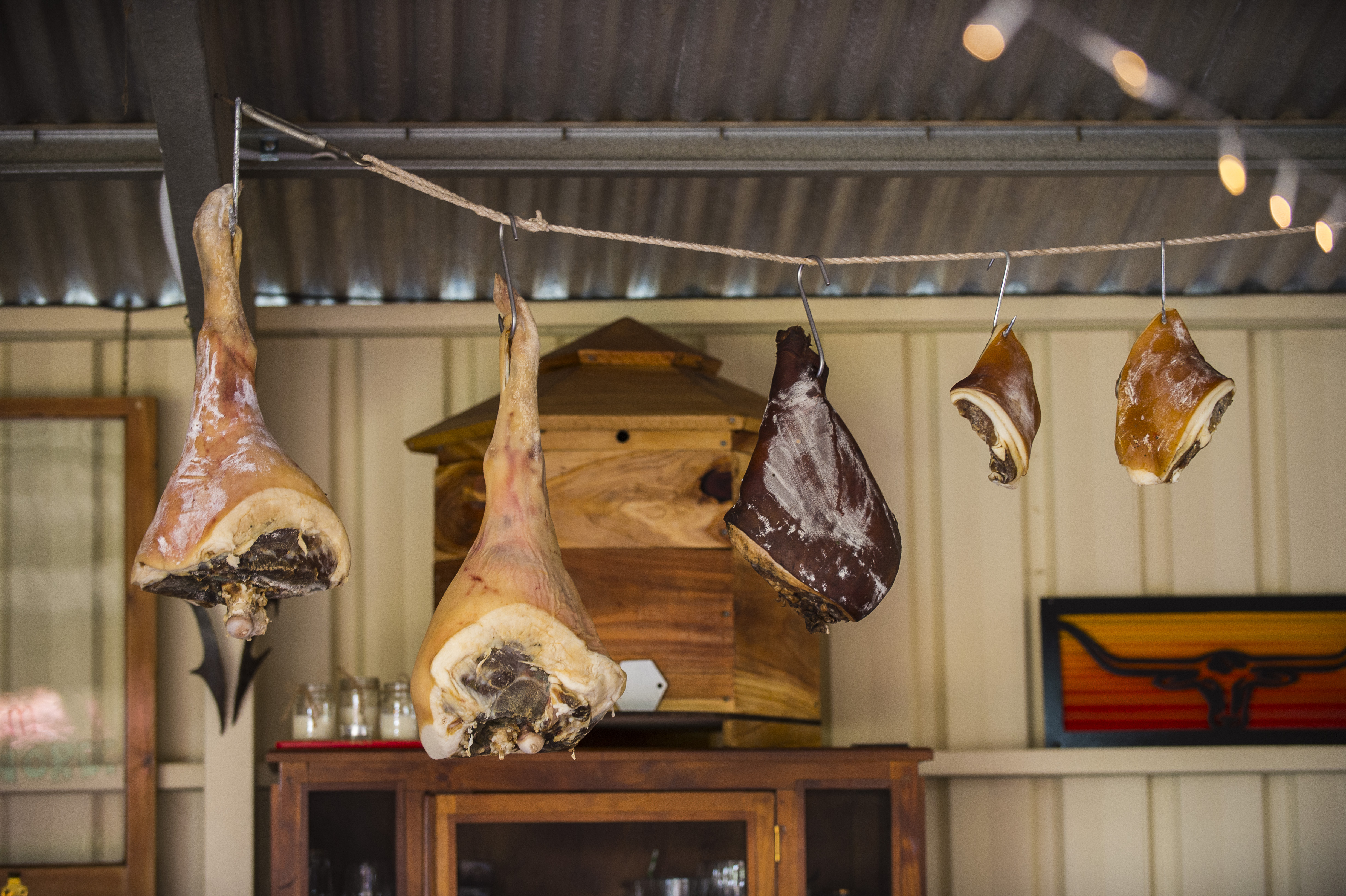
Our home-grown, home-made small goods. Photo: John Krüger

Our home-grown, home-made small goods. Photo: John Krüger

We have an amazing symbiotic relationship going with Pirate Life Brewing.  We’ve taken every bit of waste brewing grain they’ve ever produced, mostly to feed our pigs, but also to help out our neighbours with their cattle and sheep.  Ideally we’d use it all for the pigs, but sometimes there’s more than we can use, and we like to share the love. J This means they don’t have to dump it, we get free feed for the pigs, and there is tonnes and tonnes of material that doesn’t go to land-fill.

From our relationship with the Pirate Life boys, we were introduced to Grant Schooling, the head chef at The Gilbert Street Hotel.  Grant has a strong interest in sustainably farmed and local produce, and this interest is completely aligned with ours when it comes to the care of the animals we use for meat.

Grant’s drive to encourage people to eat produce from sustainably farmed sources like our place leads him into the spotlight sometimes, and in July/August we were dragged along into a spread in Aspire Magazine. 🙂  According to the blurb on their website, they are:

“Aspire South Australia is an independent, glossy magazine distributed free throughout metro-SA. We celebrate all-things South Australian. We care about culture, community and a damn good yarn. We embrace the weird and are more interested in what goes on in local communities, laneways and over the back fence than celebrity. We have a big fat crush on SA’s emerging talent, our creative types, people who make a difference and anything that can be labelled ‘grassroots’. Aspire is in the know, a little bit opinionated, curious about everything and in love with the unusual. We speak from the heart, though sometimes with our tongue in our cheek. Come with us as we celebrate SA!”

They were doing a story on Grant and the hotel, and specifically on people who farm like us.  The spread turned out amazingly well, and can be found here.  EDIT: Actually, not it can’t.  For some reason it’s moved in the couple of months since we wrote this.  There’s a cut down version with a different date here.

John Kruger was the photographer, and kindly allowed us to use his awesome shots.

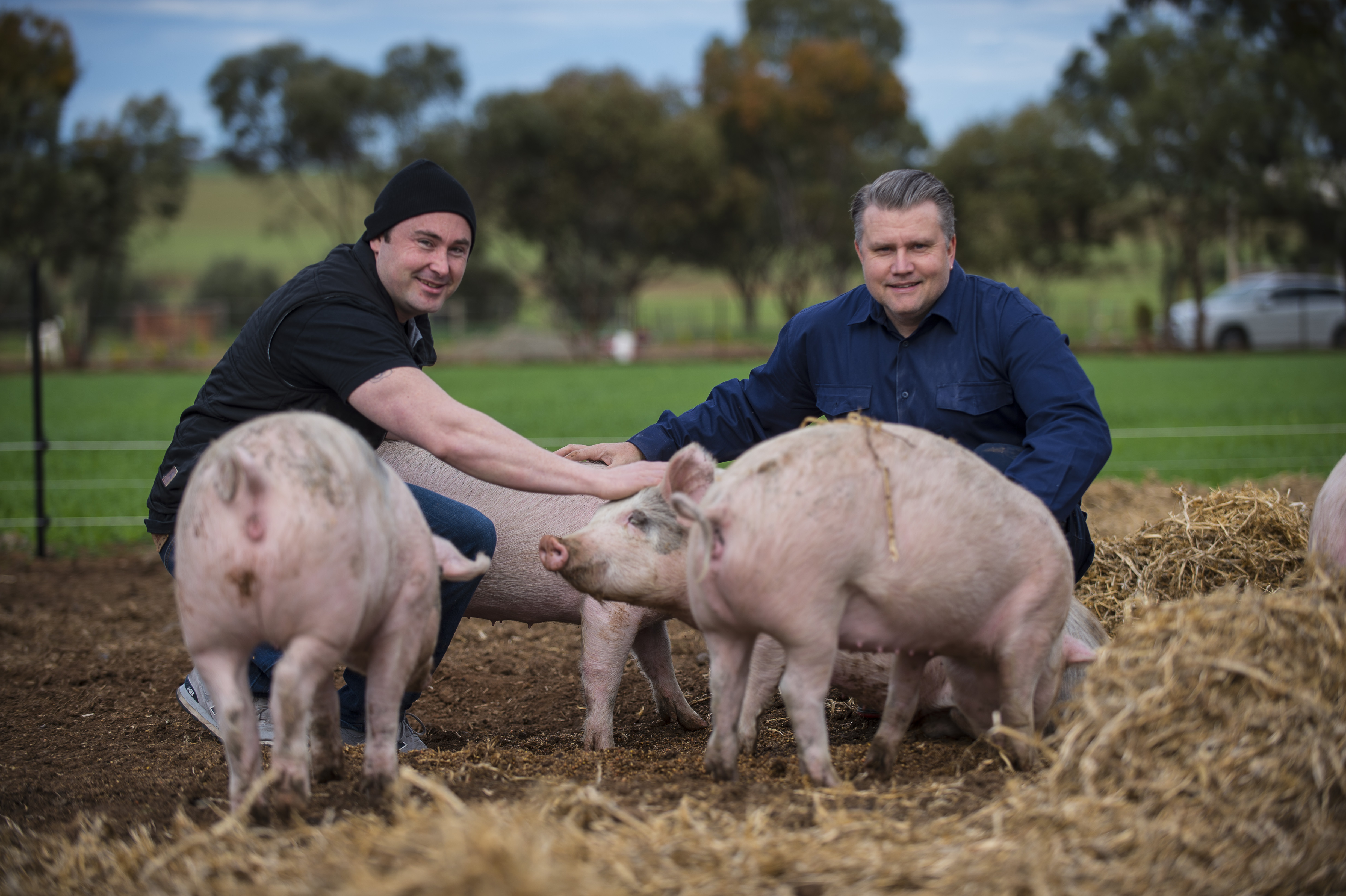
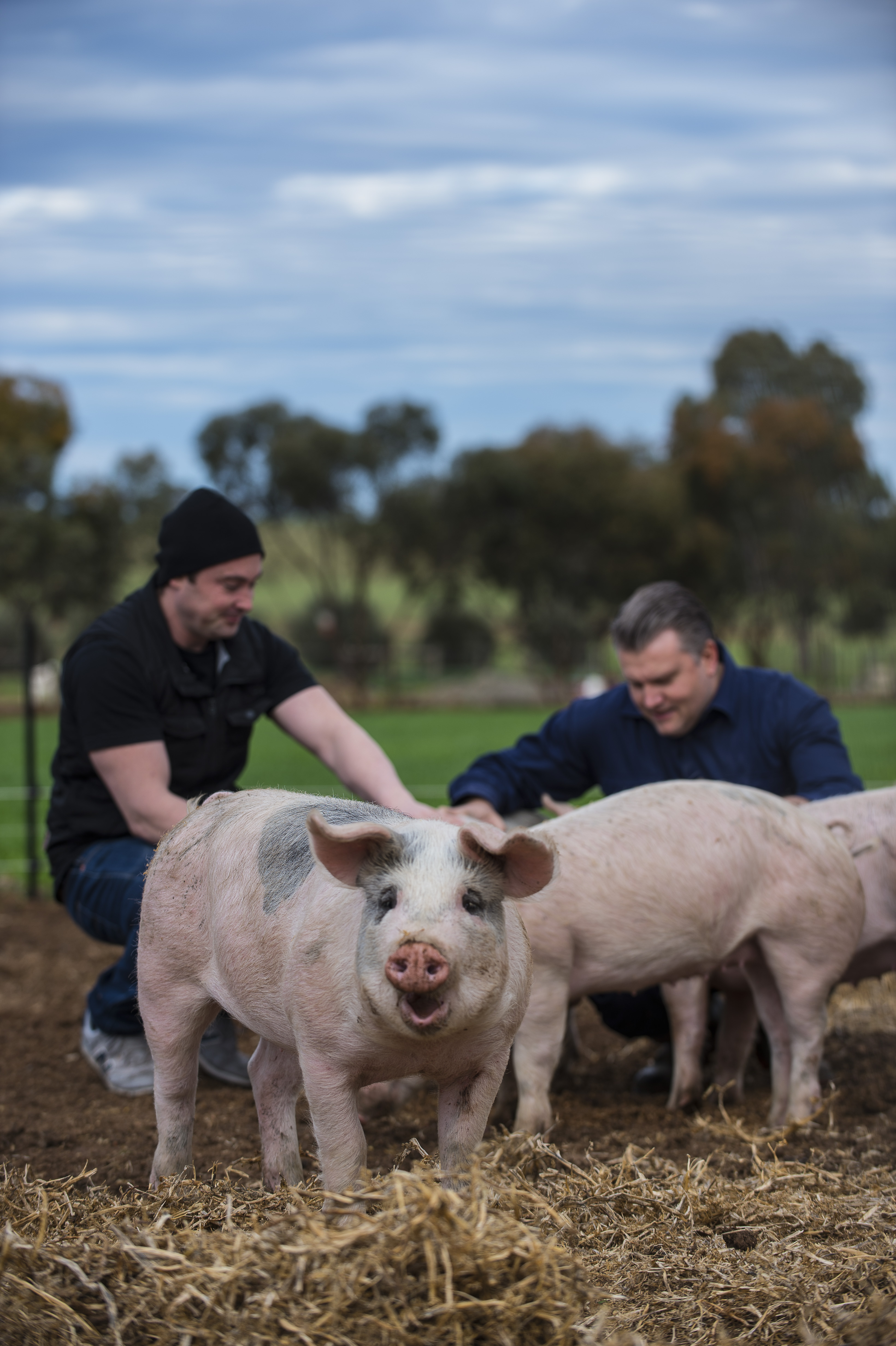
Grant and I communing with the pigs. Photo: John Krüger

Grant and I communing with the pigs. Photo: John Krüger

Piglets! Linhda hates those clothes on me, and I didn't realise why until I saw this picture. :) Photo: John Krüger

Piglets! Linhda hates those clothes on me, and I didn’t realise why until I saw this picture. 🙂 Photo: John Krüger

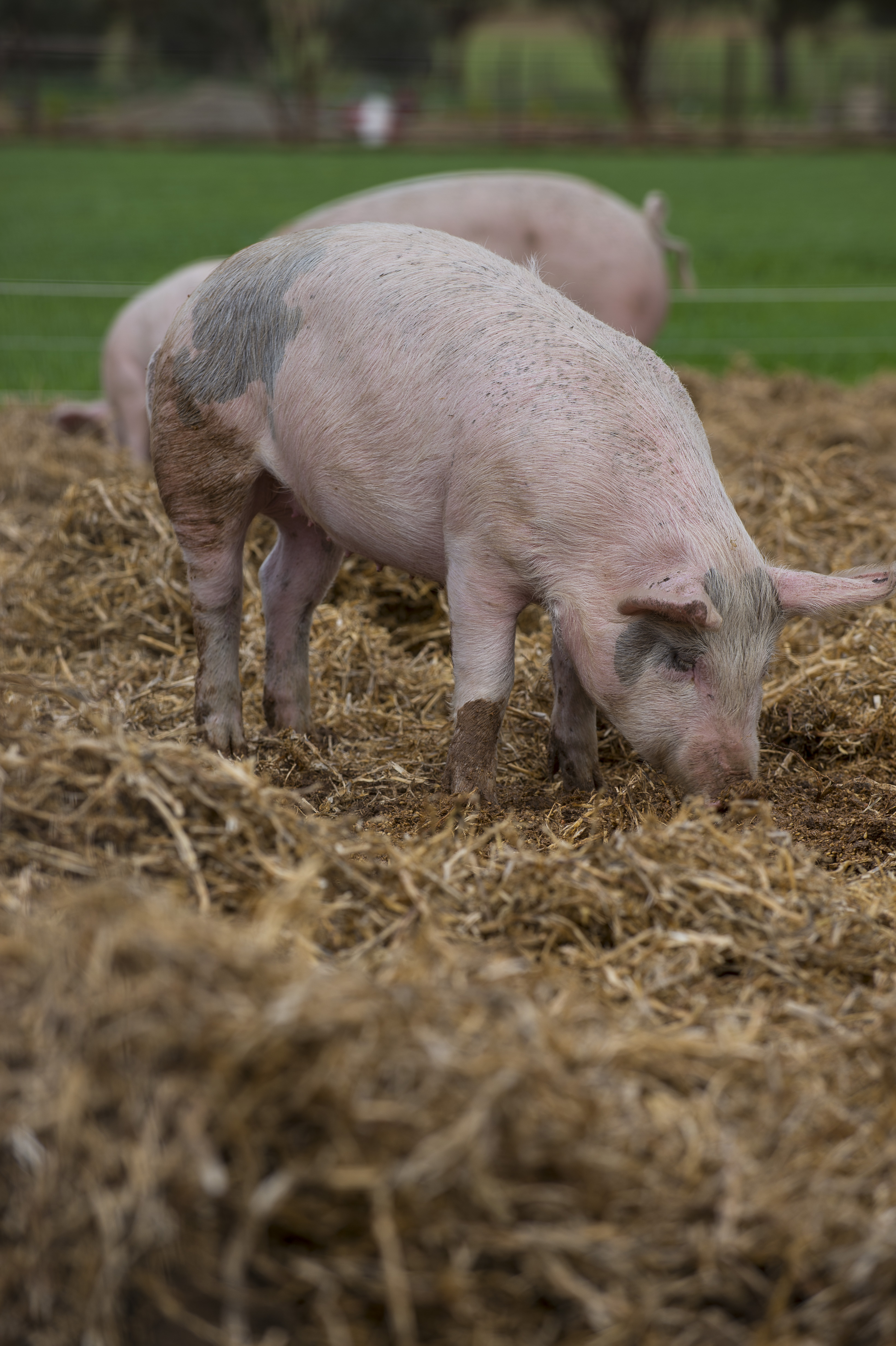
Happy pig is happy. Her name was Sparrow, and she's currently bacon to sell at the market. :) Photo: John Krüger

Happy pig is happy. Her name was Sparrow, and she’s currently bacon to sell at the market. 🙂 Photo: John Krüger

Beautiful Blue Merle. Photo: John Krüger

Beautiful Blue Merle. Photo: John Krüger

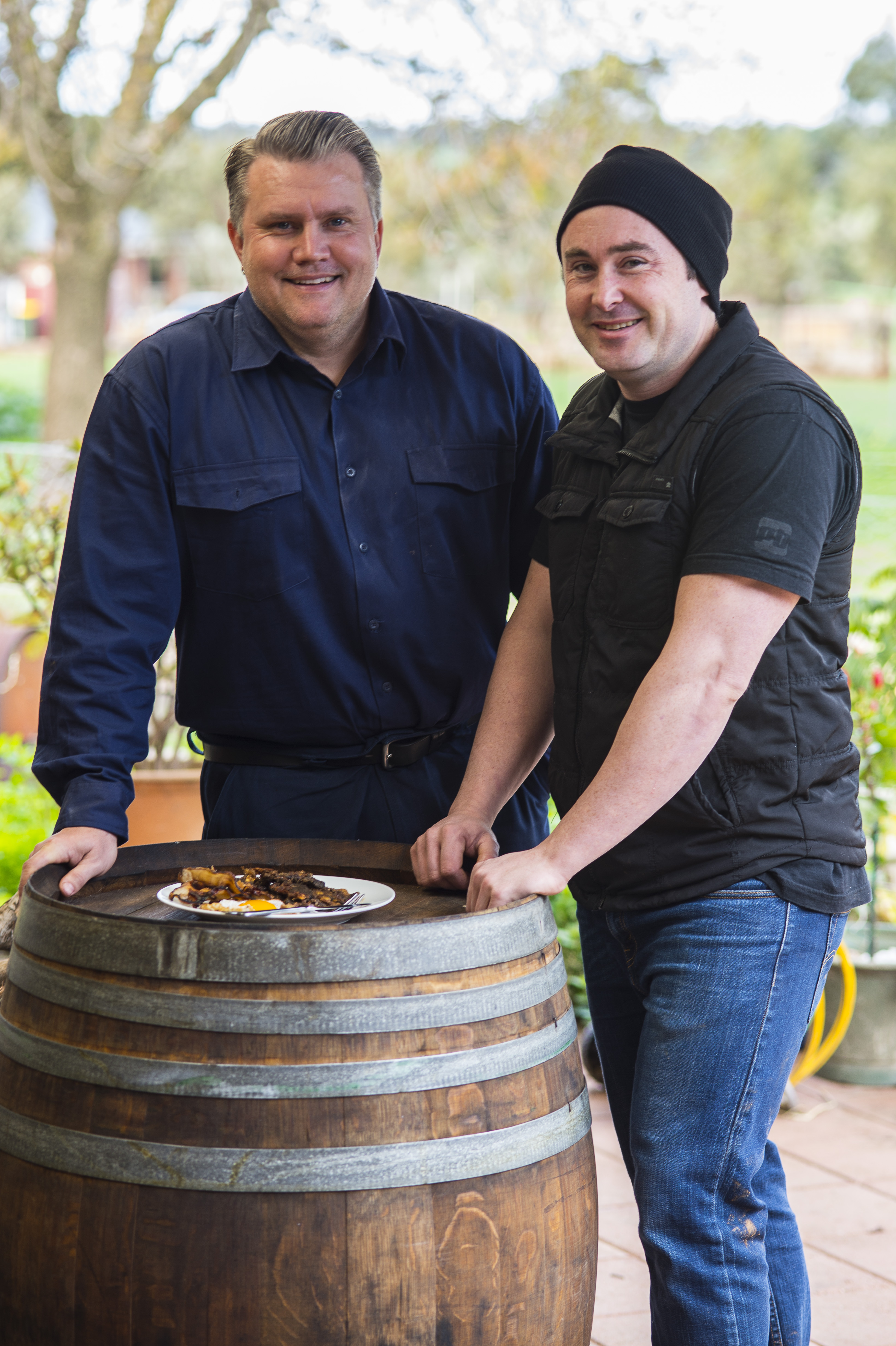
Grant and I bonding over my brawn and some duck eggs.

Grant and I bonding over my brawn and some duck eggs.

As cool as the story is, and it’s hard to understate the benefit of that kind of exposure for small setups like ours, I think the coolest thing is that they used my brawn recipe! The several pages after the story are recipes based on our pork, and while the professional Chef, Grant, was asked to supply most of those, I was asked for one. I was keen to include the brawn, partly because it’s not something that most people come across, but mostly because it helps promote an approach that uses the entire animal. I was pleasantly surprised that it made it into the magazine, and suspect that Grant had something to do with that. J

My Brawn!!!! Photo: John Krüger

My Brawn!!!! Photo: John Krüger

A Pork Shortage?!?!?!?!?

The problem we’re going to face now that we sell at a market is we may run out of pigs.  Scratch that.  We will definitely run out of pigs.  While having that kind of demand is a nice problem to have, it’s still a very real issue for a fledgling business trying to establish a customer-base.  At the same time, we have a gap in our production as the last couple of sows we wanted to get pregnant ended up not taking.  We’re also looking at transitioning to an all heritage-breed breeding program, which is just one other complexity to throw into that already complex mix. 

What we’ve done to help remedy all of those things is buy in some pigs.  We have bought in 9 Large Blacks from a registered herd near us that is being disbanded.  With one exception, these are all small pigs that we’ll raise.  Three of those are gilts and will become part of our breeding program, and five are barrows that will become bacon.  The 9th, which is the exception I mentioned, is an older sow that we’ll breed from in the short-term.  She probably would’ve been chopped had we not taken her, and she still has a number of litters in her.  I’m keen to see how she goes. 

The other thing we’ve done is buy an entire litter of Berkshires.  A registered breeder not that far from us advertised them the day after they were born, with a pick-up date of 5 weeks later at weaning.  I rang and bought the lot.  He’ll castrate the boys, and we’ll use at least 3 of the girls in our breeding program. 

All of these purchases will help bridge our gap in production, while still being ethically raised and free-ranged pork, and at the same time will transition us to an entirely heritage-breed farm.  We still have to find a suitable boar, and we’re not exactly sure what breed to use.  What we’ll probably do is have the vet show us how to AI, buy in some semen to try the various combinations, and use that to help us decide.  In the meantime, poor old Boris’ days may be a little numbered. 

The related problem is sourcing beef and lambs that have been raised the way we’d raise them.  We don’t currently have the space to do them ourselves, though we can keep a handful of lambs in our front yard to help keep the grass and weeds down.  The beef is actually relatively easy, as we have two trusted sources for that – one is a mate who runs a herd of 650 black angus in the south-east of the state, and one is our neighbour who feeds on 10 to 15 at a time on his scrub lot right near home.  Both raise proper free-ranged, grass-fed beef, and the product from both is amazing.  

Lambs are the more pressing problem.  We were lucky to find a guy who breeds and raises them organically, and we got a handful from him.  We’ll have to stay on the lookout for more, and like I said, we actually have scope to keep them at home for a while, with the added benefit that they’re eating down weeds and grass I don’t have time to deal with.  Also gum leaves.  The silly animals love to munch on gum leaves. 

Our best-case end-state will be to have enough land to do it all ourselves.  We could expand the pig production and have a small breeding flock of sheep.  I’d like enough land to feed-on our own cattle, but the two sources we have are the real-deal so that’s the lowest on my priority list.  Even with that, I don’t think we’ll ever breed cattle.  Breeding pigs is challenging, but we have the infrastructure and know-how, and it’s kind of fun.  Breeding sheep is pretty easy, and sheep are simple to handle and manage.  Cattle, and more specifically bulls, are a whole other kettle of very large fish.  I think we’ll stick to buying them from people we know and trust, and if we have room we’ll just buy them as weaners and feed them on ourselves.  Trying to manage a bull is probably more than we want to take on.

The true start of our all heritage-breed breeding program!

The true start of our all heritage-breed breeding program!

It’s Market Time Baby!!!!!

July saw us change our business model a bit and include a local market!  Up to then we’d been selling exclusively in bulk – whole/half pigs, and quarter/half/whole cows.  The constraint we face is that we legally can’t add value to the meat, not to even repackage it, as we don’t have an accredited facility.  We came up with the idea of using the butcher/abattoir facility, which is accredited, and pre-packing meat there.  We also checked out their ham and bacon to see if it’s good (it really is!), so we could have them make those products.

That all means that we can’t go to a market and sell stuff on demand.  For example, I can’t sell somebody x number of chops or y kilograms of mince.  We can pre-pack the meat though and sell those packages.  The trick is packing them in weights or lots that people will want.  That’s less of a problem with bacon, as people want that no matter how much there is.  🙂

Our butcher was super, super supportive, and had no problem with us taking up a corner of one of their rooms for a couple of hours a week.  It’s probably worth noting here that building that kind of relationship with the butcher/abattoir has been key to what we do, be it bulk-sales or market-sales.  Those guys are an absolute font of knowledge on all things meat, and just their input to our packaging and the kinds of cuts we can offer has been invaluable.  They’ve also proven to be an amazing Quality Control for us, as they’ve processed every sheep, goat, cow, and pig we’ve ever eaten or sold, and so give us great feedback on things like carcass quality and fat content.  Hell, they’ve even helped me refine my brawn recipe! 🙂

While the facility and subsequent ability to pre-package meat was our biggest hurdle, it was by no means our last.  We had to work out how we package things – Styrofoam vs. PET (for the record, we can’t get PET just yet), do we or don’t we vac-seal meat (it apparently causes an odour in raw pork), how do we organise stickers (the professionally printed stickers we wanted were $1 each and we’d want two per pack!!!!)?  We also had to work out price lists, signage, portable display fridge, tables, flyers – even the ability to laminate our weekly price list had to be taken into account.  Seriously, this market stuff is a full-time job!

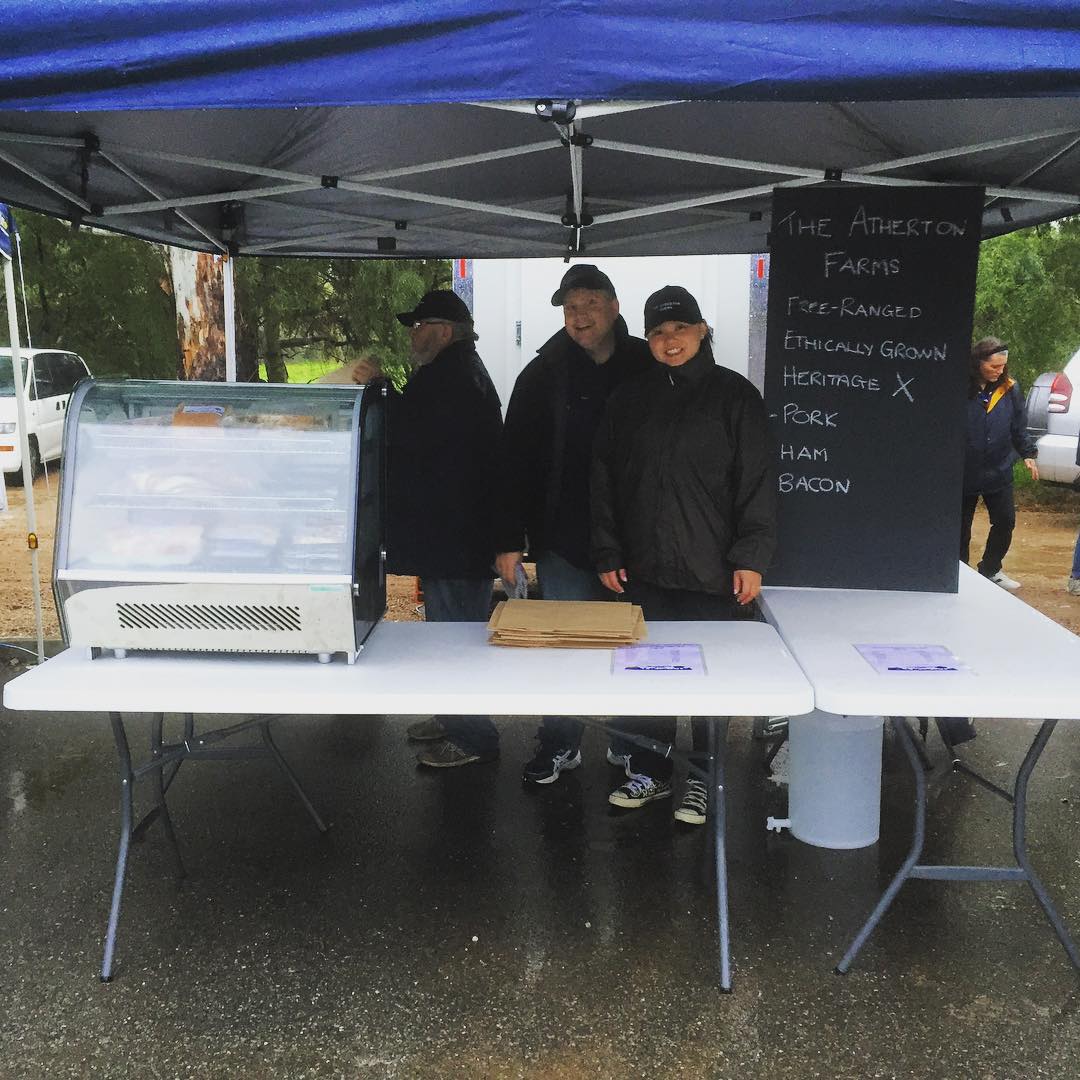
What we’ve ended up doing is only vac-sealing the bacon and ham, as it really does add to the longevity of it outside the freezer.  We use Styrofoam trays and cling wrap for the fresh cuts, but are sourcing PET (recyclable) options.  Right now it doesn’t look like we can get them anywhere, but have found two places that have them coming soon.  We use brown paper bags as carry bags.  I found a way to buy blank stickers and print our own – one with our logo on it, and one with the weight/cut/price/date of the meat.  We give everybody a flyer that explains why we do what we do, and with the details of our large social-media presence.  We bought a market-style gazebo and portable fridge, and though expensive, they’re really our only big capital outlays for this.  Dad made a blackboard for signage.  Oh, and we bought a laminator. 🙂

After this was all sorted, and we could get the pigs booked in so we had meat to sell, our first market was on August 1st.  It’s part of the Farm Direct markets, and the one we attend is at The Old Spot Hotel in Salisbury, starting at 8 and finishing at 1, though those times do seem a bit fluid. 🙂
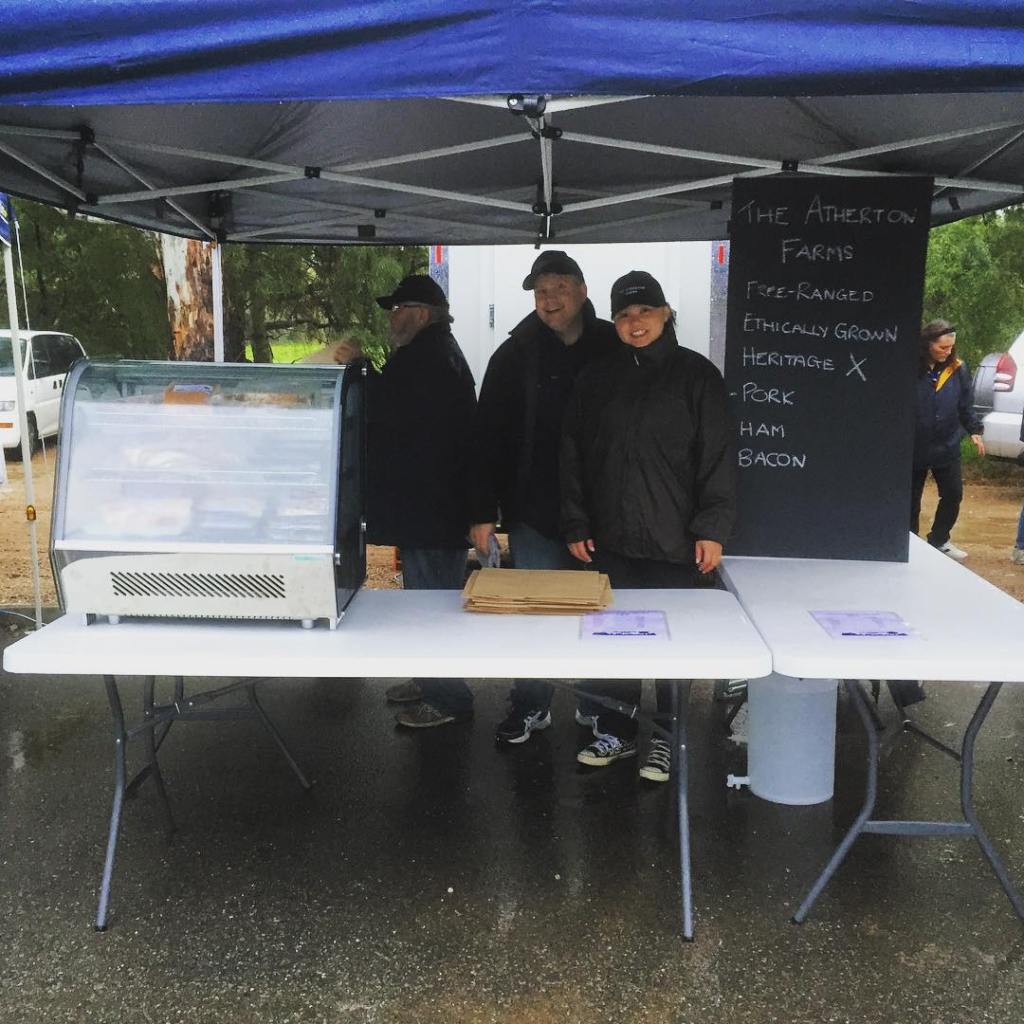
Who is that good looking couple?!

Who is that good looking couple?!


The weather for that first market was awful, with almost constant rain.  The ladies next to us, who normally sell out of their delicious bread by 11am every Saturday, finally threw in the towel at midday with half of their wares unsold.  However, we sold an entire pig, sold out of bacon, and probably sold a third of our ham.  It was a huge success, and better than we’d ever dreamed of!

The lessons we’ve learned are:

  • People like bacon.  Who knew?
  • Don’t bother with much ham – concentrate on bacon.
  • We need better signage, and have a sign that attaches to our gazebo on back-order.
  • Get more bacon.
  • Not everybody likes/wants pork, but those same people will still stop for a chat and tell us the meat they do like.  Often, that includes bacon.
  • Lastly, bring more bacon.

As a result, the week following the first market saw us taking a pig to the abattoir to be entirely baconed (yes, bacon can be used as a verb).  We’re actually having one loin done as kassler chops and the belly as speck, but the rest will be bacon and they’re all really just variations on a theme.

We’re also going to start rotating lamb and beef into our offerings.  The market has pretty much everything that people need for their weekly shopping, minus cleaning goods, and if we’re able to offer a rotating pork/lamb/beef option, along with lots of bacon of course, then they can see us as their source of weekly meat.  The problem there will be selling fresh vs. frozen.  Up to now, we sell almost an entire pig as fresh pork on the Saturday, and we may be able to do the same with a couple of lambs; however, I doubt we’ll do it with an entire cow.  Our only option will be to bring it back as a frozen offering, which is clearly less appealing, and not something we can really display to good effect.  That’s something we’re thinking through right now, and might be a great opportunity to combine the bulk and market sides of the business (e.g. sell half as bulk beef and half at the market).  Either way, I suspect we’ll be selling frozen beef at some time, and sometime soon too as we have a cow booked at the abattoir for next week. 🙂

Another thing we’ve learned is that we need our own accredited facility.  While the butcher has been amazing to us, we have no commercial arrangement with him, and so no absolute guarantee that we can keep doing what we’re doing.  With that in mind, the best way to mitigate that risk is to build and accredit our own boning room (I can’t even write “boning room” without sniggering to myself).  We have scoped that out, and actually have a great area in the middle of our big shed that is fully lined with insulated panelling, and has the required drain etc.  We’re going to start looking at converting that as soon as we can.  Once we have that set up, it should be a relatively short step to being able to make our own bacon and sausages.  Fingers crossed…

The final result of this is that the market is going to become a basic part of our business model.  It wasn’t ever anything we thought about initially, but neither was selling to restaurants and we have two of them regularly buying from us now!  We’ll continue to sell in bulk, and the market actually gives us a good pick-up point for that.  The split between bulk and market sales really spreads our risk, and helps ensure the longevity of the business.  The only change we might make is to branch out to a second market, again to spread the risk, and see if we can’t hit two a week.  Our problem now will be growing enough pigs.  I mean that quite literally too – the biggest risk we’re facing is running out of pigs.
Farm Tragedy :(

Clarisse, our Jersey house cow, has been with us for about 18 months now. She was supposed to be pregnant when we got her, but it either didn’t take or she slipped the baby early. We took her back to the people we bought her from in July last year, as they had a young full-blood Jersey bull. He apparently did his job well, and we got her back in September, sure she was pregnant.

Clarisse's baby daddy. He was only young and small, being about 10 months old her, but he certainly knew his job.  If you know what I mean...

Clarisse’s baby daddy. He was only young and small, being about 10 months old her, but he certainly knew his job. If you know what I mean…

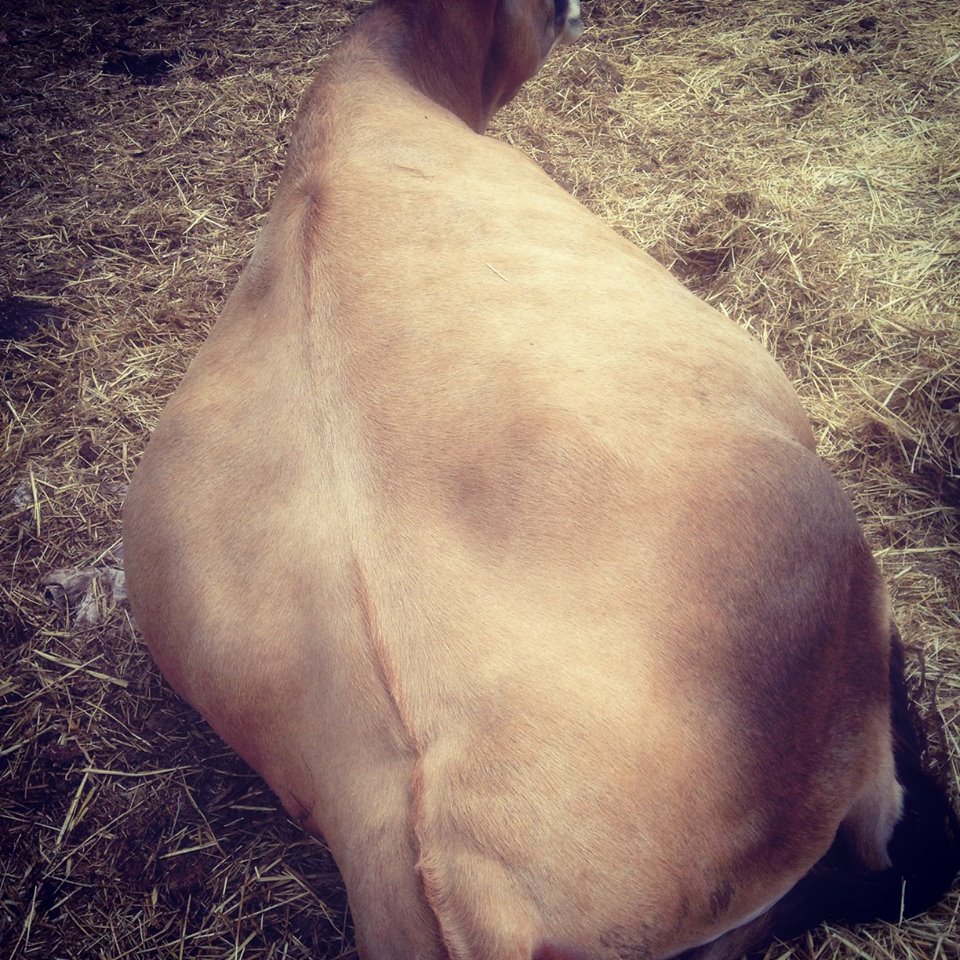
It was tough to tell, but we figured she’d be due in mid-May. By the beginning of May she looked like this:

Baby got back!

Baby got back!

Of course, as always happens with these things, she dropped while I was away for work. Unfortunately, she either had a stillborn or the baby died soon after birth. 😦 What makes this even more tragic for us is the fact that the baby was a girl. Jerseys aren’t great commercially, as they don’t produce the quantity of milk of breeds like Fresians, but their milk has a higher butter fat content, making them perfect for house cows. A full-blood Jersey heifer is worth $900 to $1000, so losing that little girl hurt in more ways than one.

The main reason for getting her pregnant really wasn’t the baby, even one that would realise us some cash further down the track, but rather so that she’d produce milk. In theory, we could just start milking her and she’d keep producing. My work travel was due to finish in a month or so of this happening, but I didn’t want to ask anybody else to milk her, even for that time. She’s a handful but fairly good for me, and it should be me who milks her as I’m the one who forced a house cow on the rest of the family. With that in mind, we contacted a mate of ours who breeds cattle and whose brother has a dairy. They kindly helped us out and supplied us two day-old bobby calves.

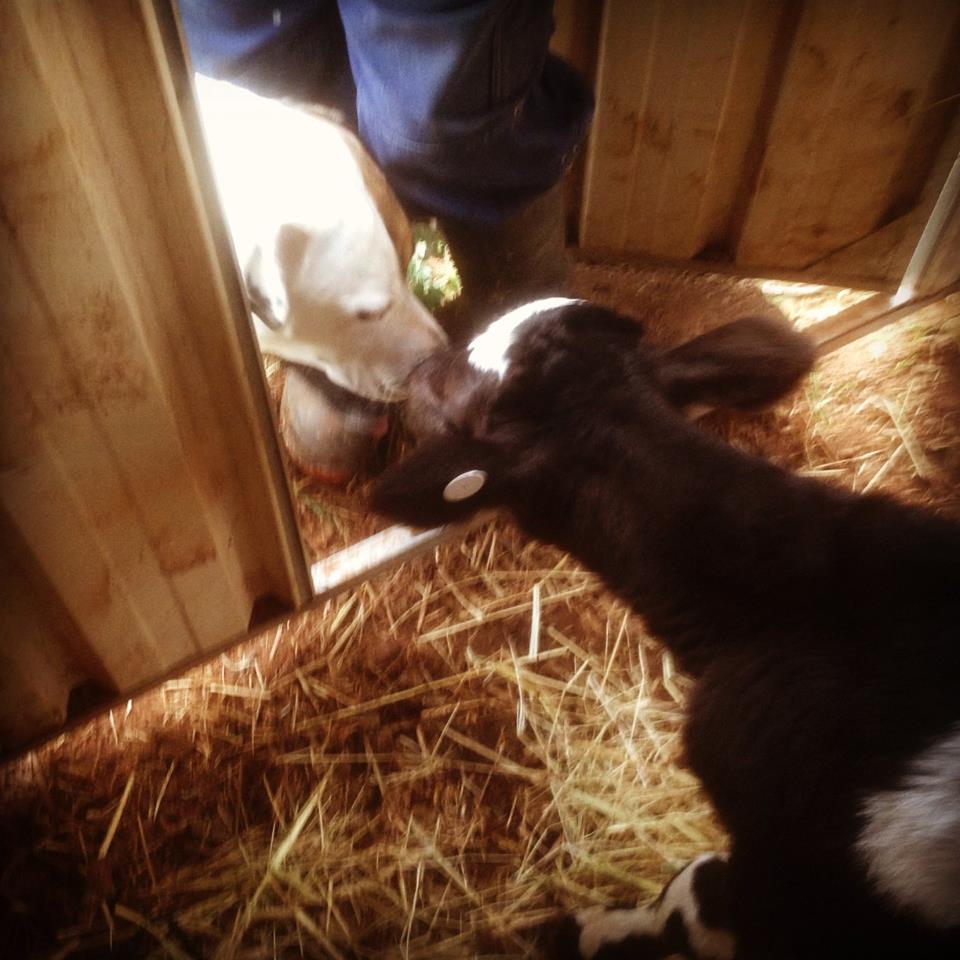
Hannibal is the Jersey and Lecter is the Fresian-cross.  Get it?

Hannibal is the Jersey and Lecter is the Fresian-cross. Get it?

One of the calves is a Jersey, and Clarisse loves him. The other, on the other hand, is a Fresian-cross, and she’s less than happy with him. She clearly doesn’t have the cognitive ability to recognize the Jersey as something that looks like her. However, she did bond with her dead baby, and so sees the little Jersey bobby as her baby. At the same time, she sees the Fresian as an interloper. The fact that he’s bigger and butts the hell out of her udders doesn’t help things either. 🙂

Hannibal meeting Bruce.  Neither is really that sure.

Hannibal meeting Bruce. Neither is really that sure.

Lecter meeting Bruce. Lecter is much more sure of himself.

Lecter meeting Bruce. Lecter is much more sure of himself.

For the first week-or-so, we had a routine where we’d lock the babies away of a night, tie Clarisse up in the morning with a treat while they fed, then we’d lock them away again, I’d hand-milk her, and we’d repeat the process again in the late afternoon. This worked well, though we learned to let the Jersey attach first and we had to growl at her if she kicked out at the Fresian.

Both babies feed for the first time.

Both babies feed for the first time.

After another week-or-so, we were able to just let the babies out and she’d feed them, after I took a bit of her milk for myself of course. She still wasn’t accepting of the Fresian, and we’d have to tie her up in the evening to ensure he got a feed.

This might not look like much, but this was the first time that Clarisse fed both babies without us having to tie her up and keep an eye on her.  Success!

This might not look like much, but this was the first time that Clarisse fed both babies without us having to tie her up and keep an eye on her. Success!

Now we’re at the stage where we’re just leaving the babies out, day and night. She definitely mothers and cares for the Jersey and not the Fresian, but she’s letting them both feed.

We finished up her milking shed with a stall on one side and a little holding yard/shelter on the other. We’ll eventually get an automatic milker, but right now I’m only taking a litre or two as we need it and that’s easy enough by hand.

The new milking stall. It even works!

The new milking stall. It even works!

Getting 4 or 5 litres of milk a week isn’t exactly the pinnacle of self-sufficiency; however, it’s hard to understate just how freaking cool this is. We will eventually be getting more than enough milk for all of our dairy needs – cheese, yoghurt, cream, butter – and entirely from our own property. Not only that, but home-grown, full-cream milk is delicious! Seriously, it makes the store-bought stuff look like coloured water. And the coffee! Best. Coffee. EVER!!!!!!

The first coffee using Clarisse's milk.  Amazing!

The first coffee using Clarisse’s milk. Amazing!

April in Review…

I’ve been terrible at keeping up with the blog and April was super full. I figure I’ll just do a month-in-review post to catch up on everything. We did a heap of smaller stuff with the pigs and fences etc., but I’ll stick to the big stuff. Here goes…

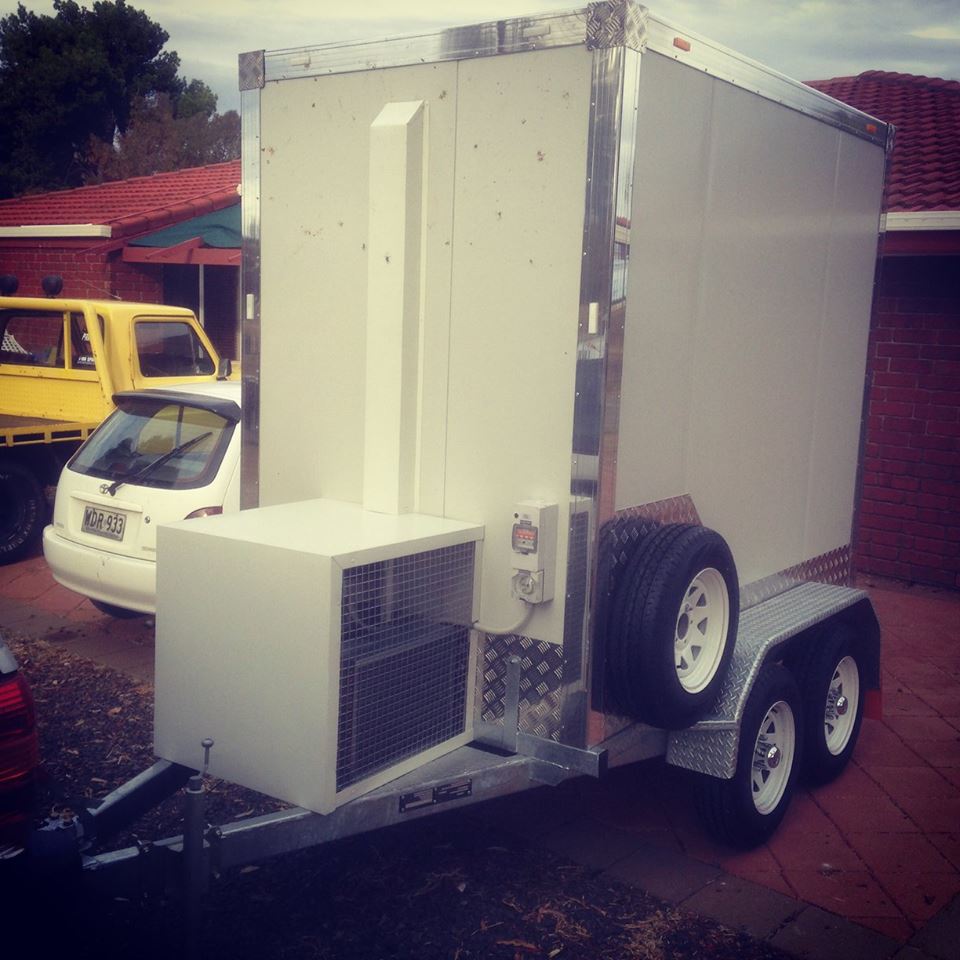
We got our new cool room trailer and it’s a beast! It should be big enough for any of our future meat delivery needs, and hopefully we have many of those needs.

Our beastly cool room trailer.

Our beastly cool room trailer.

Clarisse was still hugely pregnant.

A very pregnant Clarisse.

A very pregnant Clarisse.

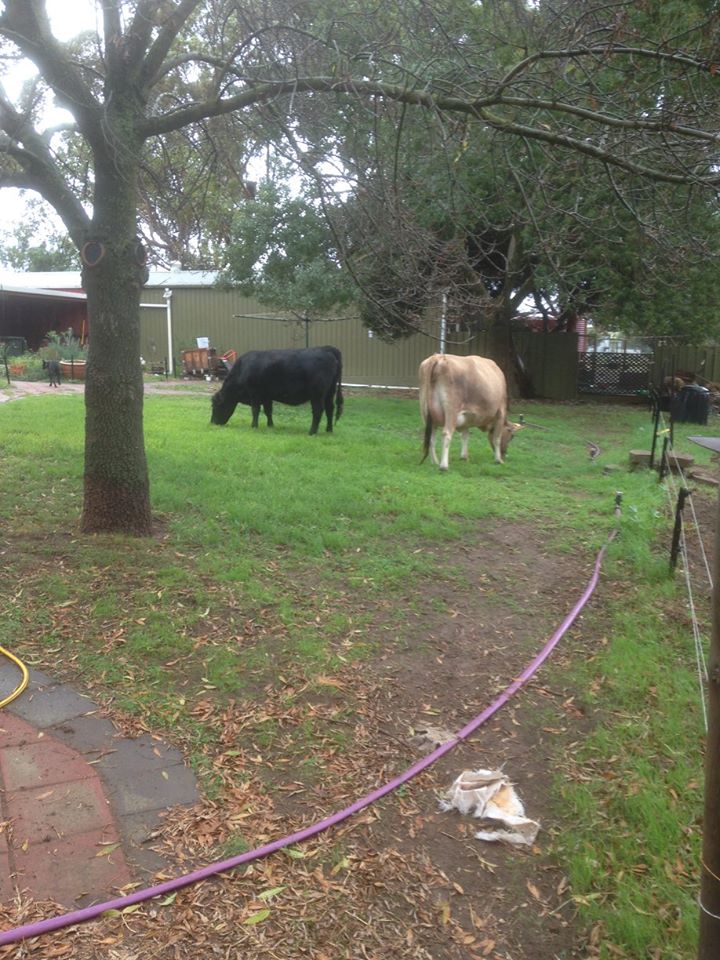
Yes, that's two cows eating the lawn in my back garden. No, they're not supposed to be there.

Yes, that’s two cows eating the lawn in my back garden. No, they’re not supposed to be there.

Stumpy had a litter of piglets!

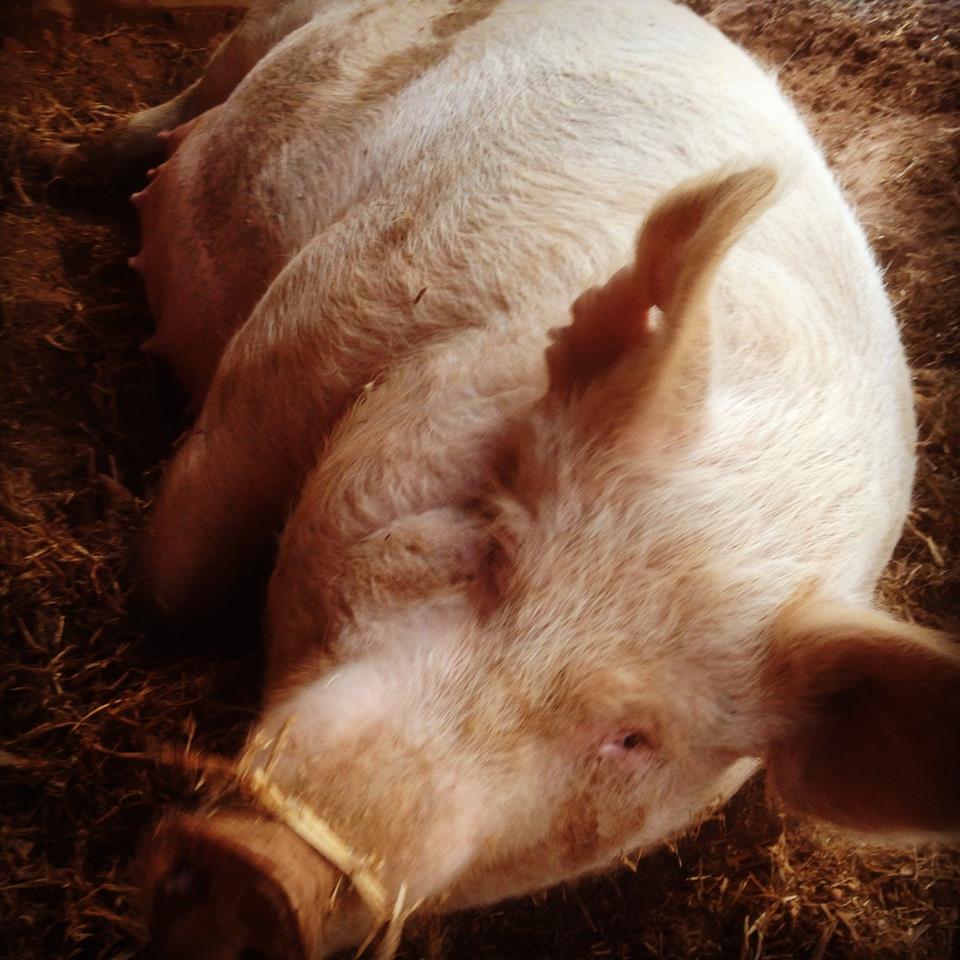
A very pregnant Stumpy.

A very pregnant Stumpy.

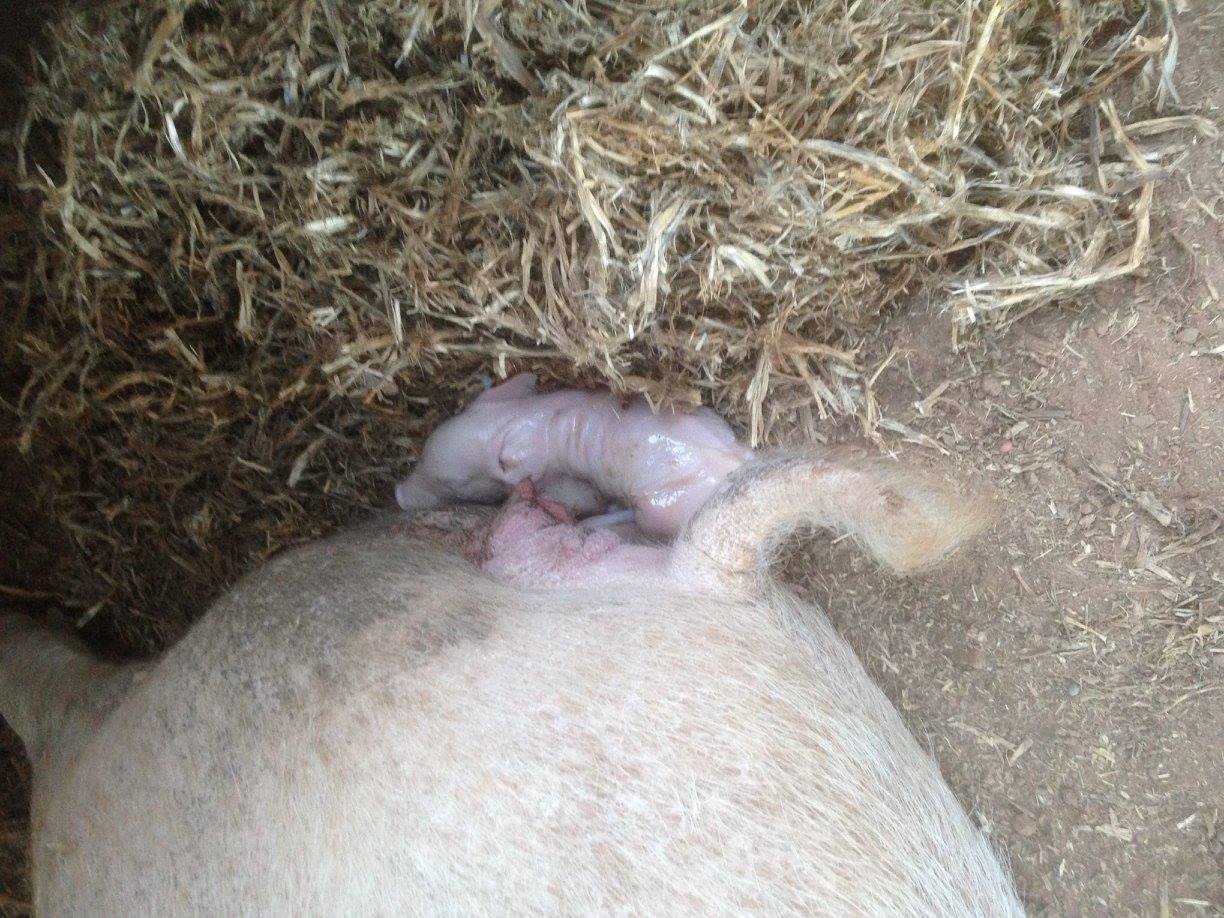
She had 7, and we were lucky enough to be there for most of them. She was really quite large, and I’d been guessing she’d have more. She also struggled a little. While she got through them all with no assistance, it did take a while. Still, all 7 survived and she’s a great mum.

Baby number 1!

Baby number 1!

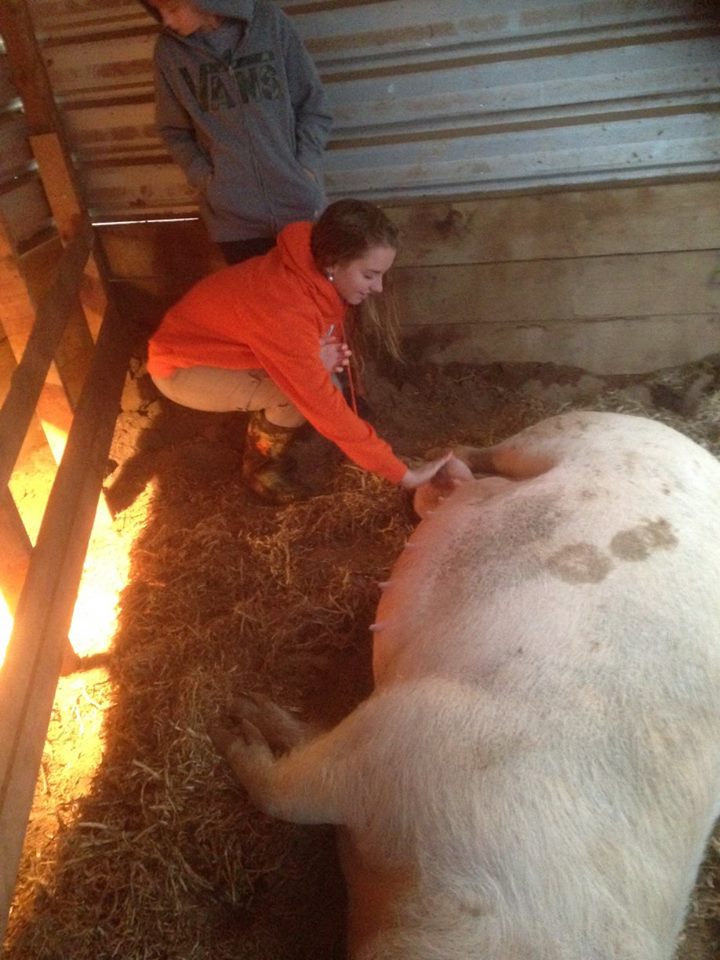
Gemma loving up on the new babies.

Gemma loving up on the new babies.

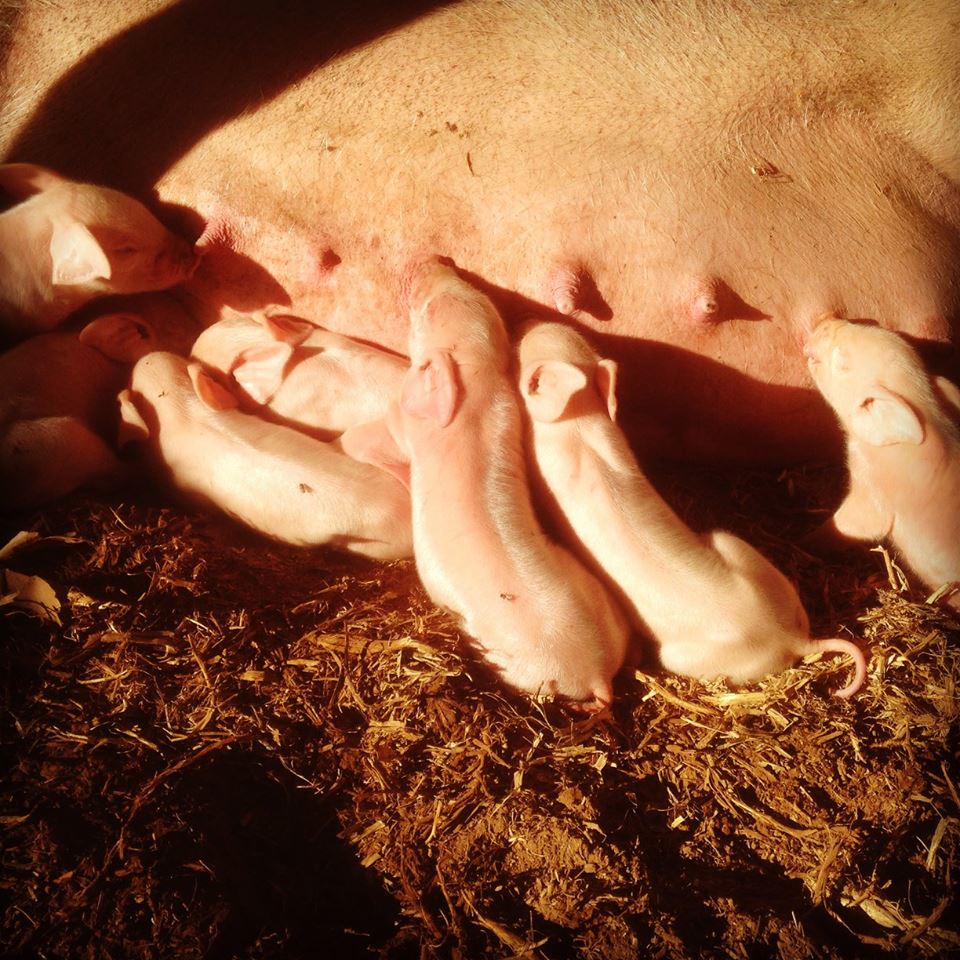
Early morning piglet dining on day 1.

Early morning piglet dining on day 1.

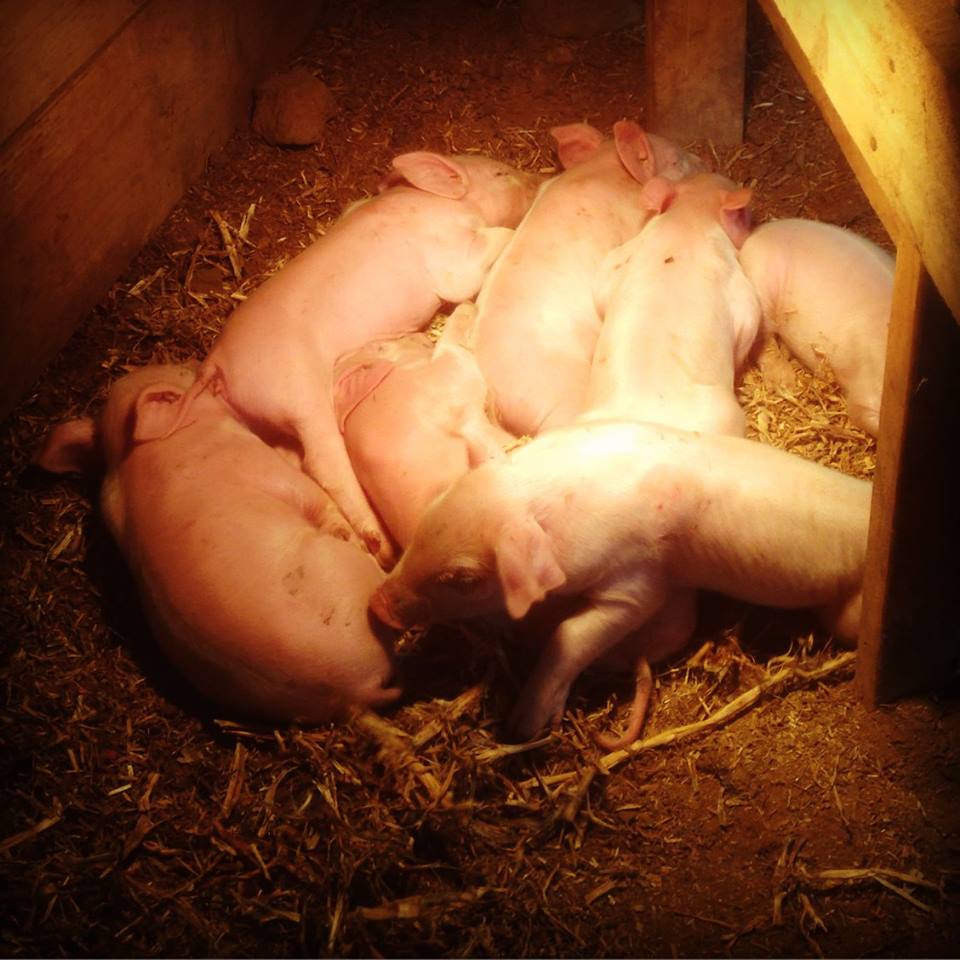
The babies loving the heat lamp.

The babies loving the heat lamp.

We spoke to the vet about Stumpy and her struggles. Apparently it’s just the way it is with some sows, and we’ll just have to keep a closer eye on her during farrowing. We can do that.

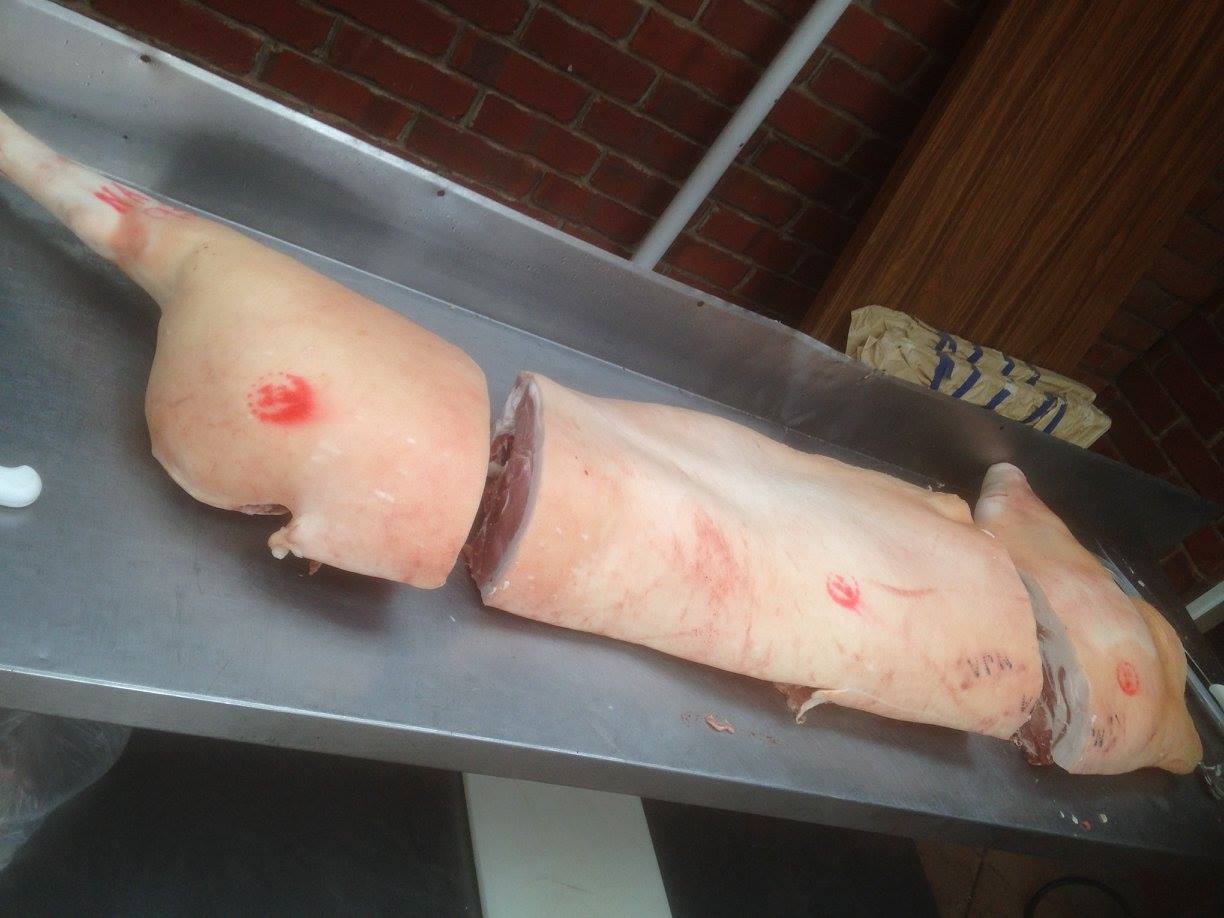
We got a baconer done in the middle of the month.

Our baconer getting portioned up - legs for prosciutto, loin and belly for bacon, shoulder for sausages.

Our baconer getting portioned up – legs for prosciutto, loin and belly for bacon, shoulder for sausages.

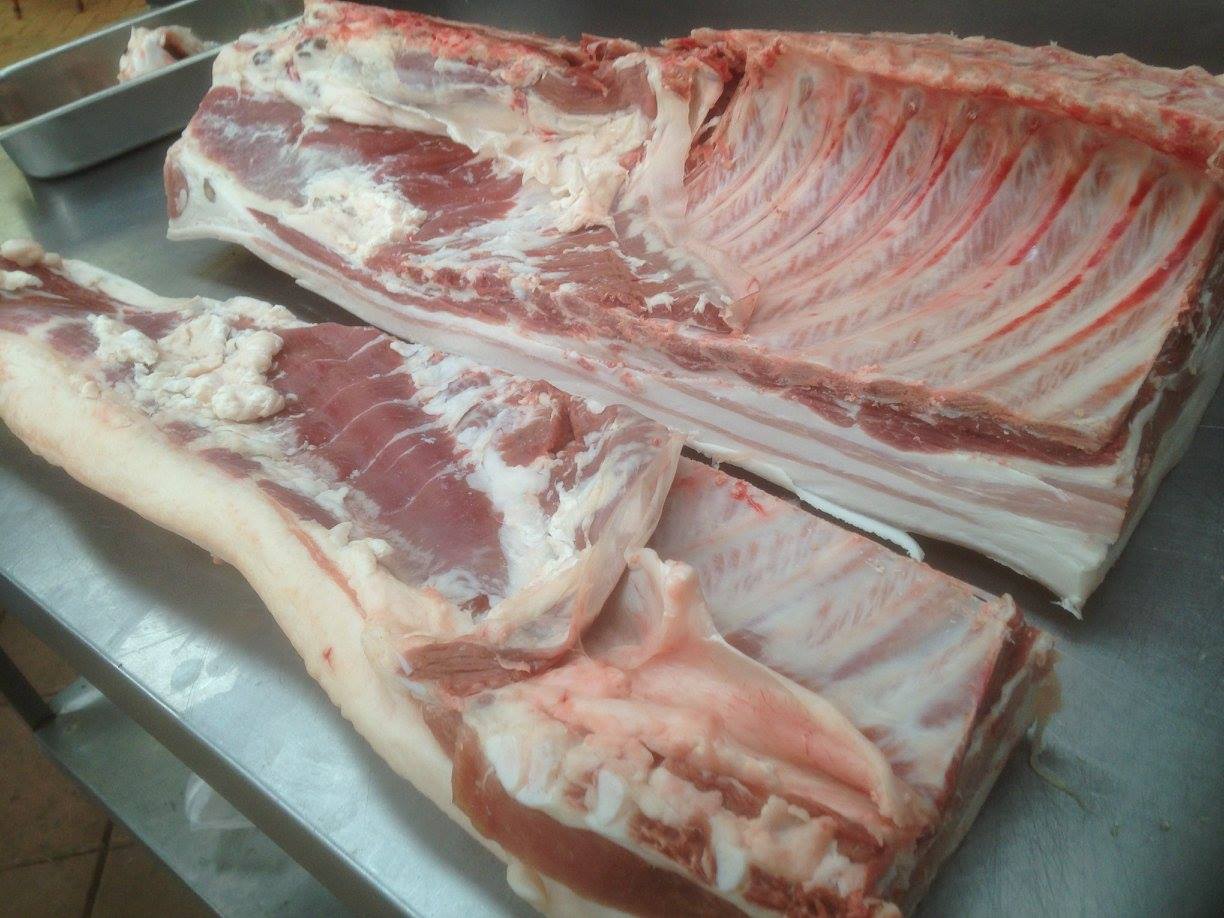
Separating belly and loin.

Separating belly and loin.

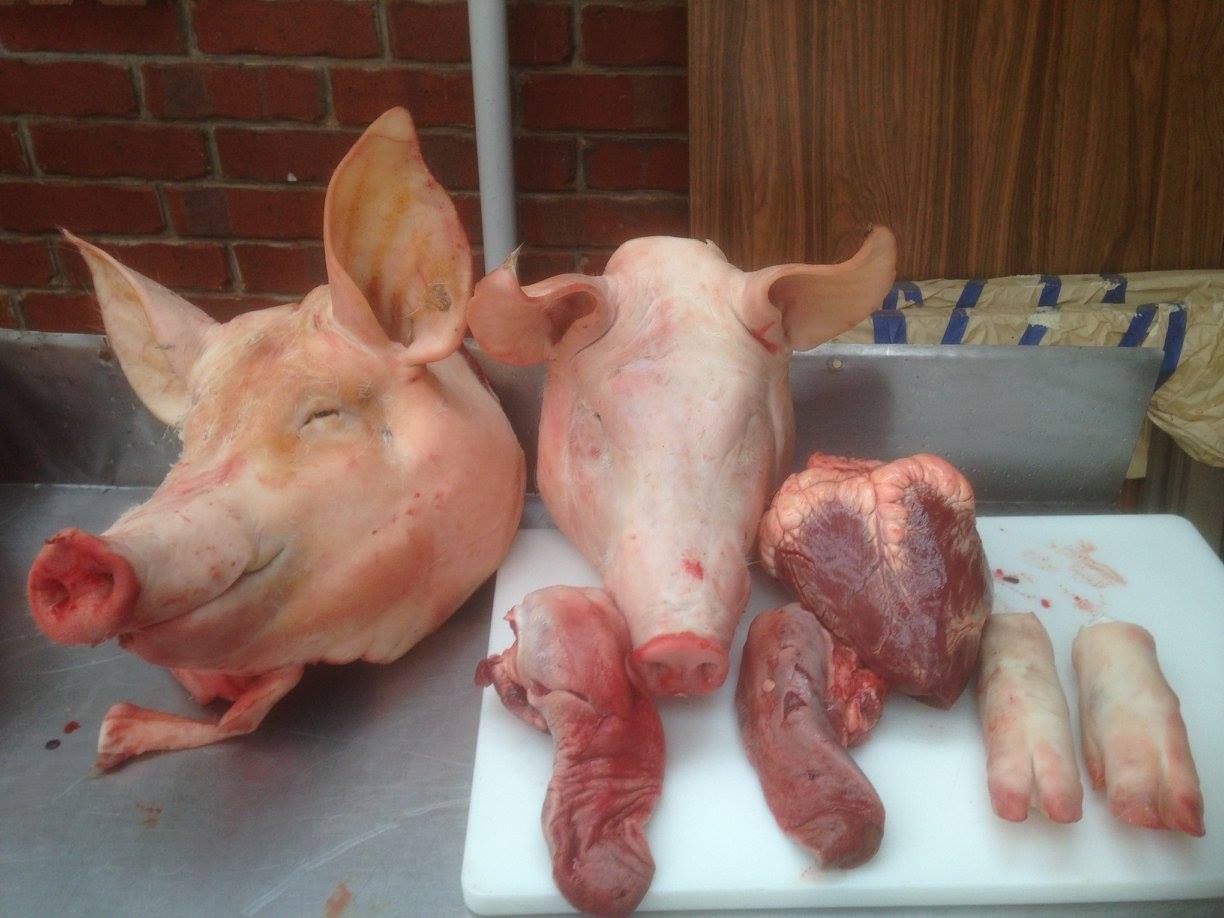
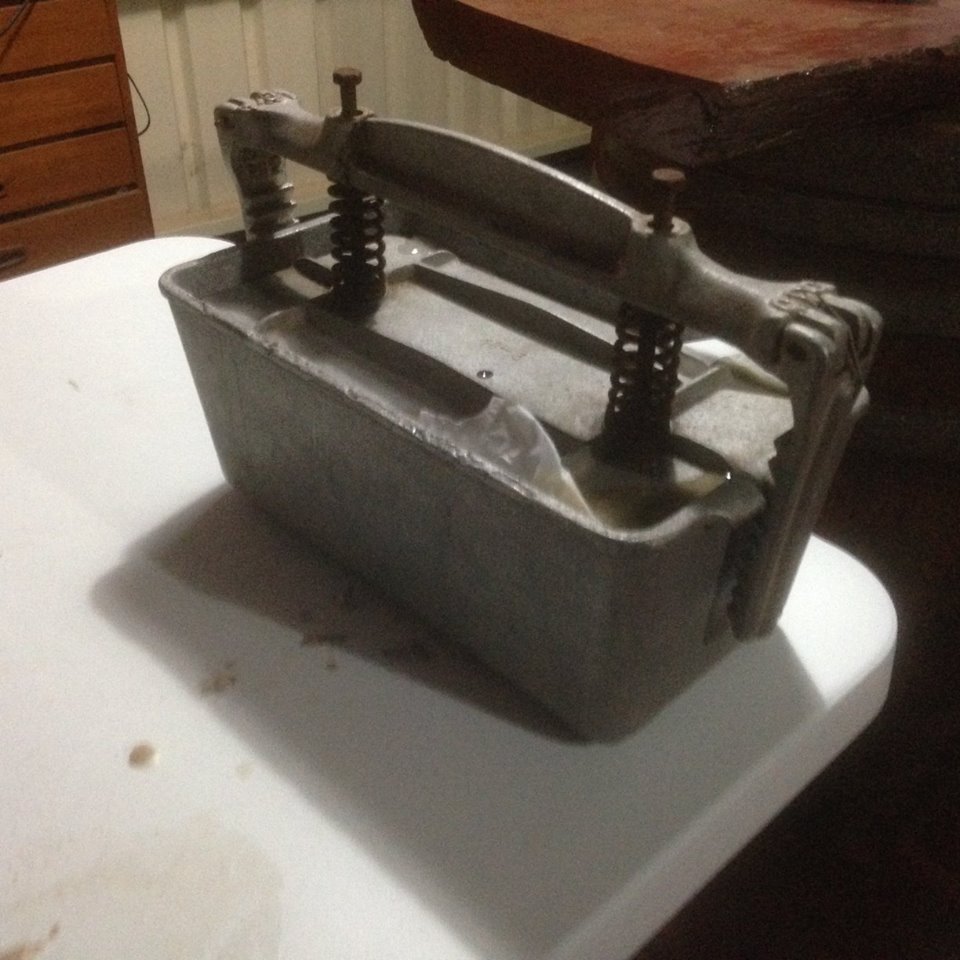
We did brawn again, and it was freaking amazing! The trick is heavier seasoning. We also go to use some legit terrines that Farmer John gave us. Those things are awesome!

The fixings for brawn. I used a beef heart this time, and think it adds some nice depth to the flavour.

The fixings for brawn. I used a beef heart this time, and think it adds some nice depth to the flavour.

The terrine from Farmer John. It has a press with ratchet sides. Seriously, worked a treat!

The terrine from Farmer John. It has a press with ratchet sides. Seriously, worked a treat!

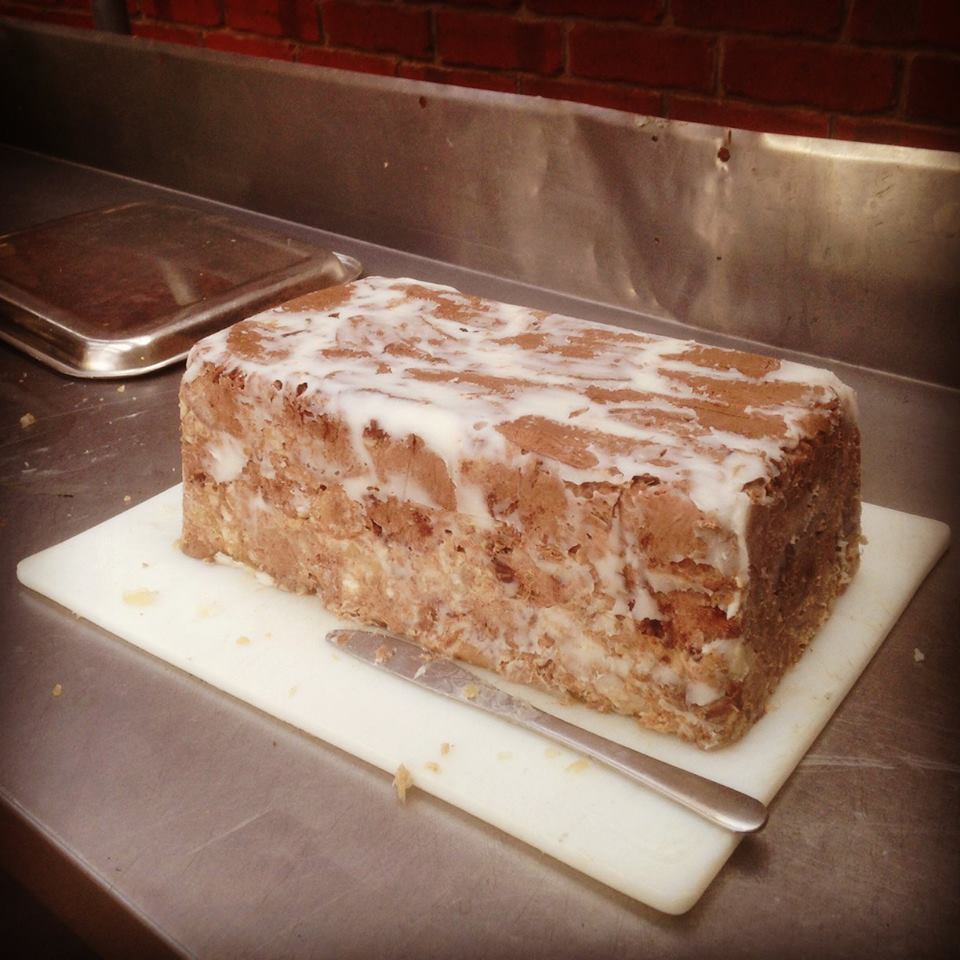
A brick 'o brawn! This was 6kg, which represents 10 to 12kg of the animal when you take bone into account. That's meat that is normally thrown away.

A brick ‘o brawn! This was 6kg, which represents 10 to 12kg of the animal when you take bone into account. That’s meat that is normally thrown away.

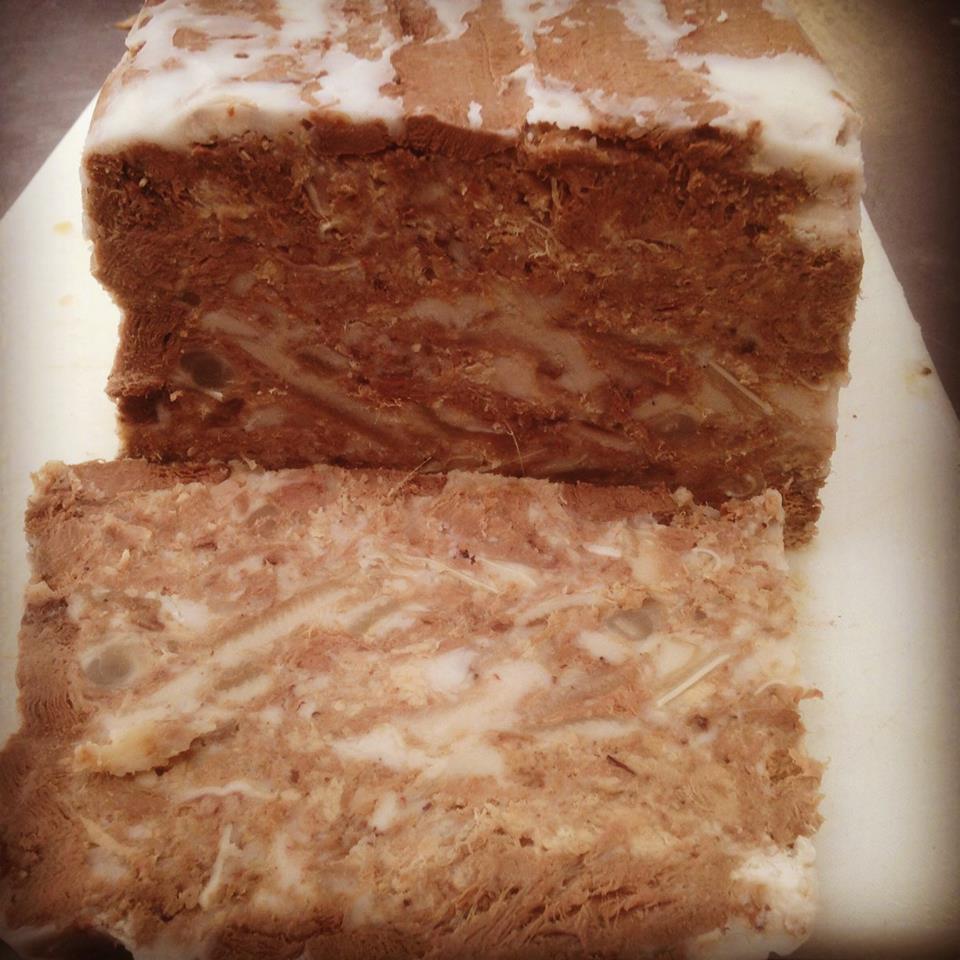
Look at that delicious cross-section!

Look at that delicious cross-section!

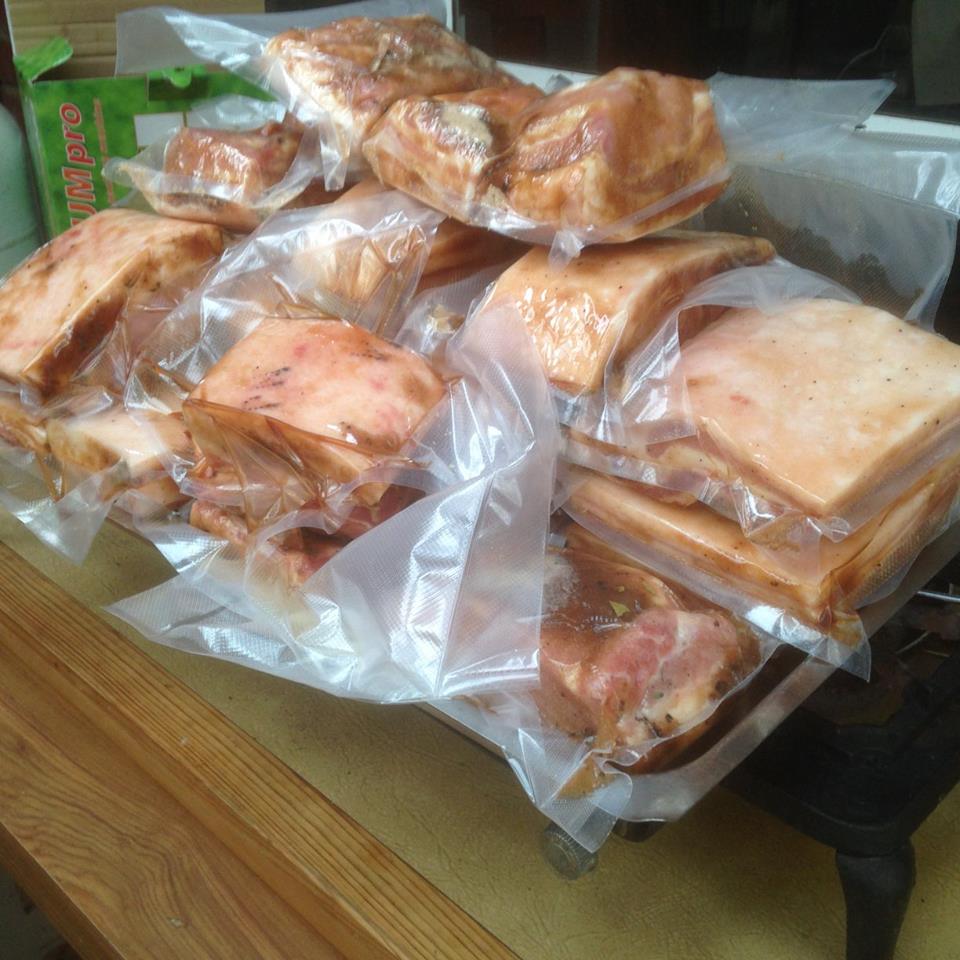
We also did about 30kg of bacon, 20kg of sausage, and 18kg total of prosciutto.

This is 30kg of bacon baconing.

This is 30kg of bacon baconing.

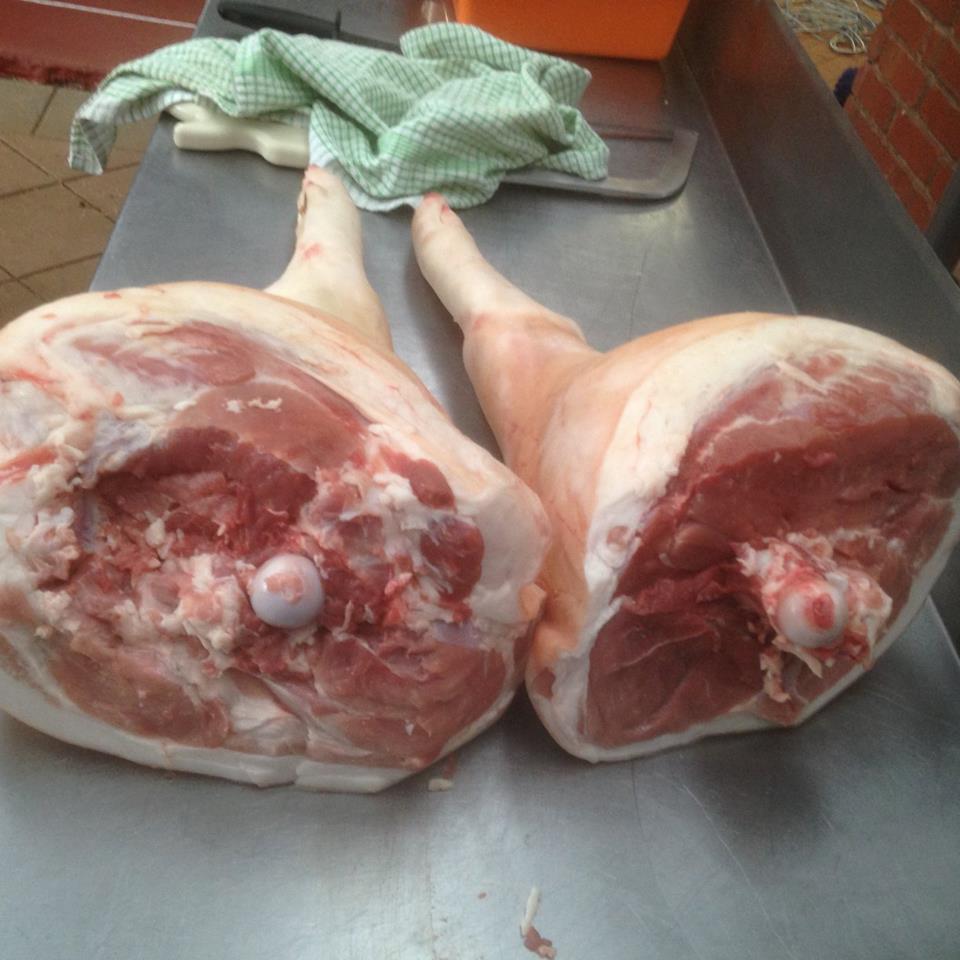
Legs ready to be made into prosciutto. I messed up a little with the one on the left and trimmed it down a little low.

Legs ready to be made into prosciutto. I messed up a little with the one on the left and trimmed it down a little low.

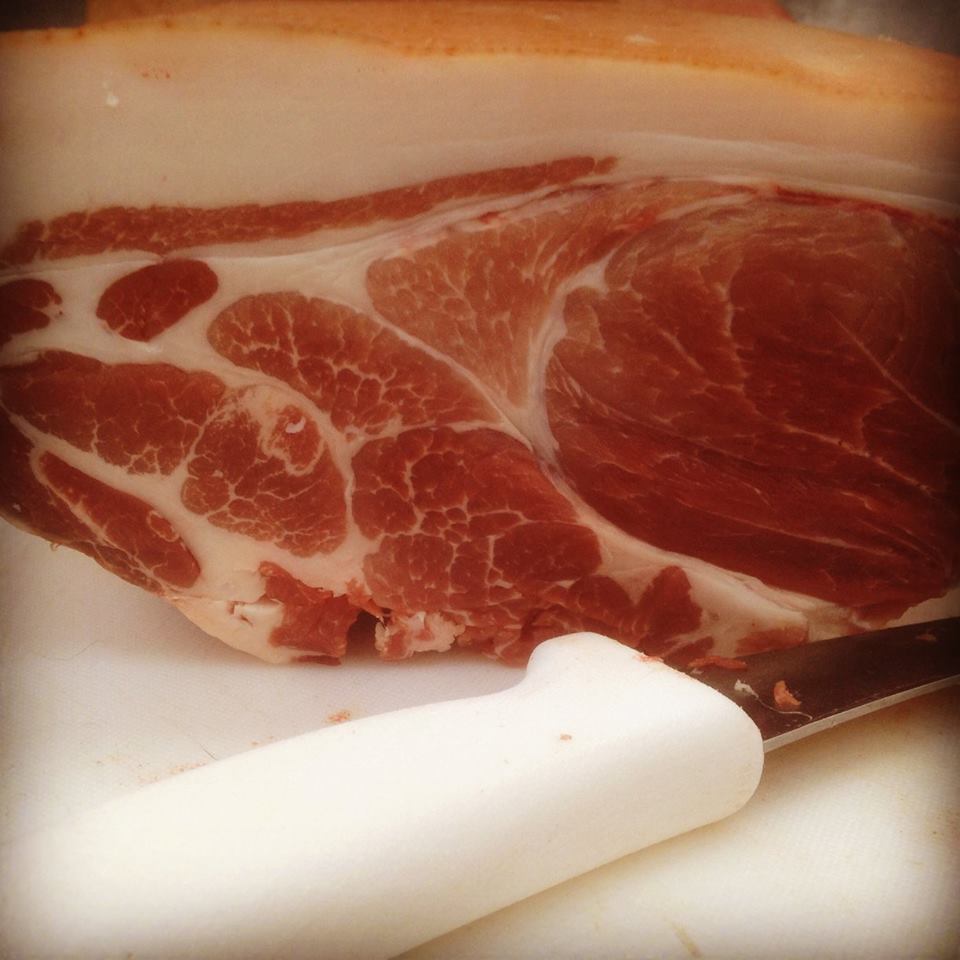
Look at the colour and marbling. You will *never* get meat like this from intensively-farmed pork.

Look at the colour and marbling. You will *never* get meat like this from intensively-farmed pork.

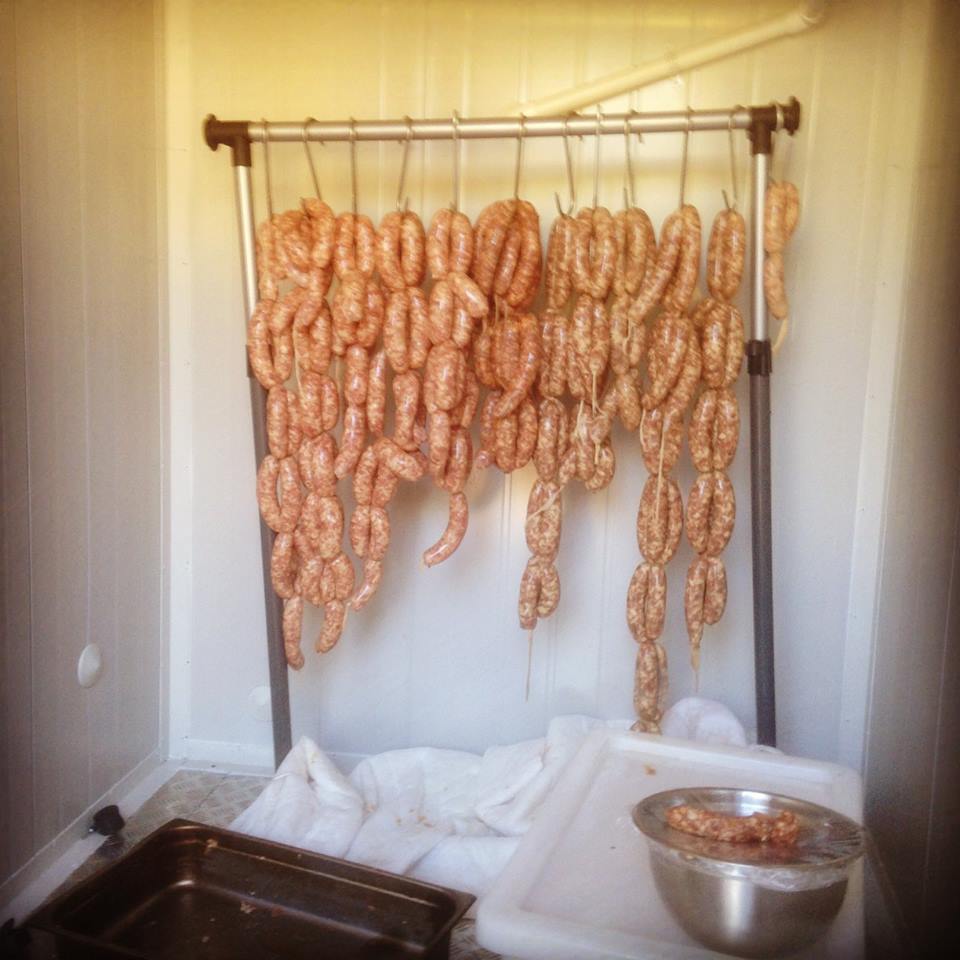
20kg of sausages.

20kg of sausages.

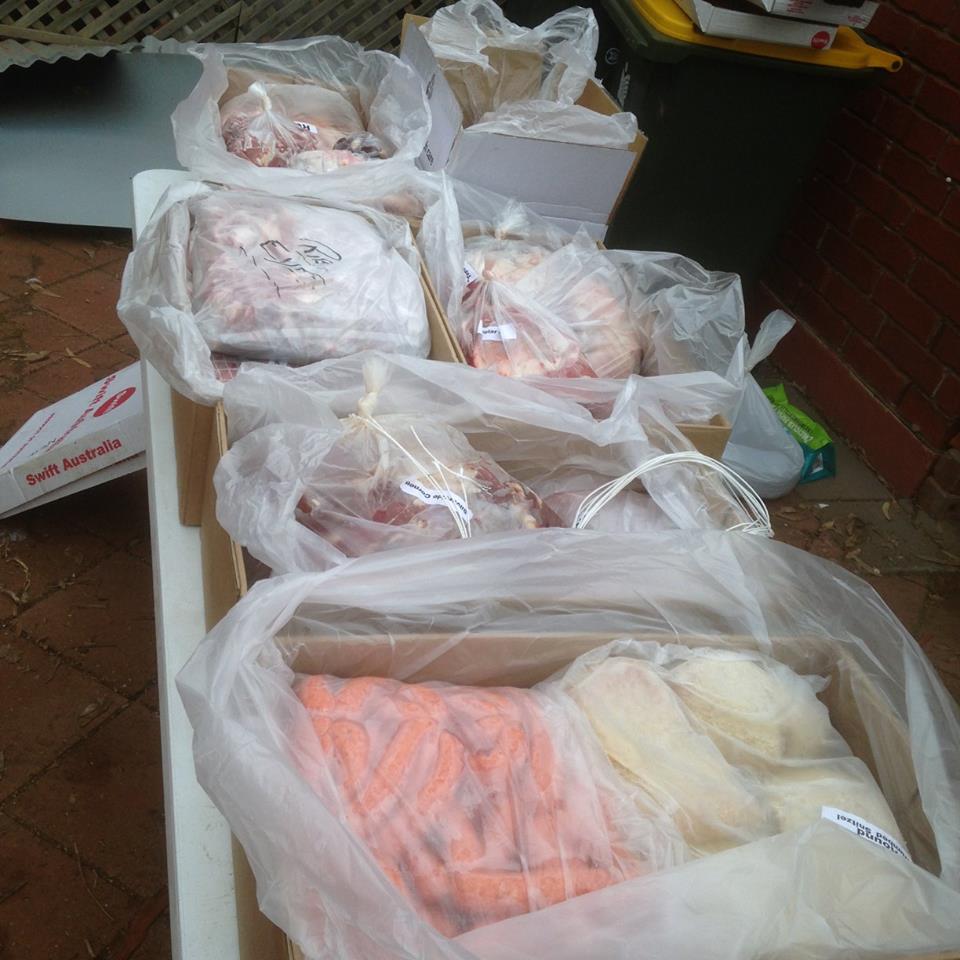
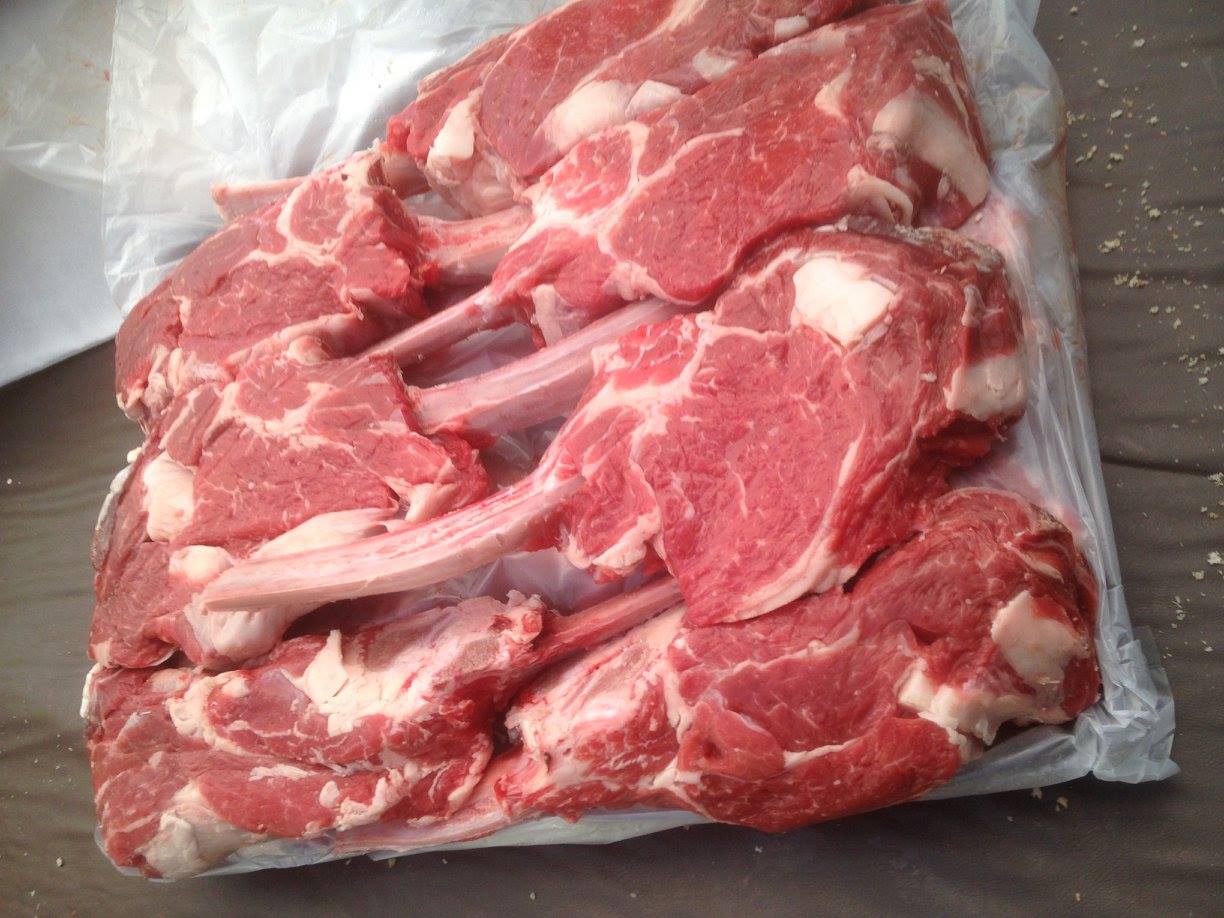
We got one of the black angus done before the wedding too. We supplied all of the meat for the big day, and that included big roast cuts of beef. That was 10kg of beef and the cow dressed out to 193kg. That did leave a lot for us… 🙂

193kg of black angus goodness.

193kg of black angus goodness.

Best. Rib Eyes. EVER!

Best. Rib Eyes. EVER!

The biggest thing we did, of course, was get married! We thought it’d go pretty well, but it ended up better than we ever expected. Seriously, it was the best wedding we’ve ever had.

Naaaawwww, aren't we cute?!

Naaaawwww, aren’t we cute?!