Gardening Math: Rain = Weeds

We got 46mm of rain over the first weekend of June.  We needed to fix the overflow pipes off of our tanks as that big fall filled them. All of this rain has taught us two things.  Firstly, we need more tanks.  We could probably triple or quadruple the water storage we have and still fill it.  Secondly, this much rain means weeds. Lots, and lots, and lots of weeds.  We spent every spare farming moment in June, and the following months, weeding.

The weeding sucks, but a well-weeded veggie patch really is a thing of beauty…

Everything relatively weedless... for once...

Everything relatively weedless… for once…

The Patch coming along nicely through Winter.

The Patch coming along nicely through Winter.

The obvious upside of that much rain was the veggie patch and crop were pretty happy.  The biggest irony we found was that hay was in short supply all of a sudden, and the half-tonne rolls that used to cost $50 or $60 were suddenly $150.  We managed to get some hay from a couple of seasons ago relatively cheap, but we decided to get one of the cows done.

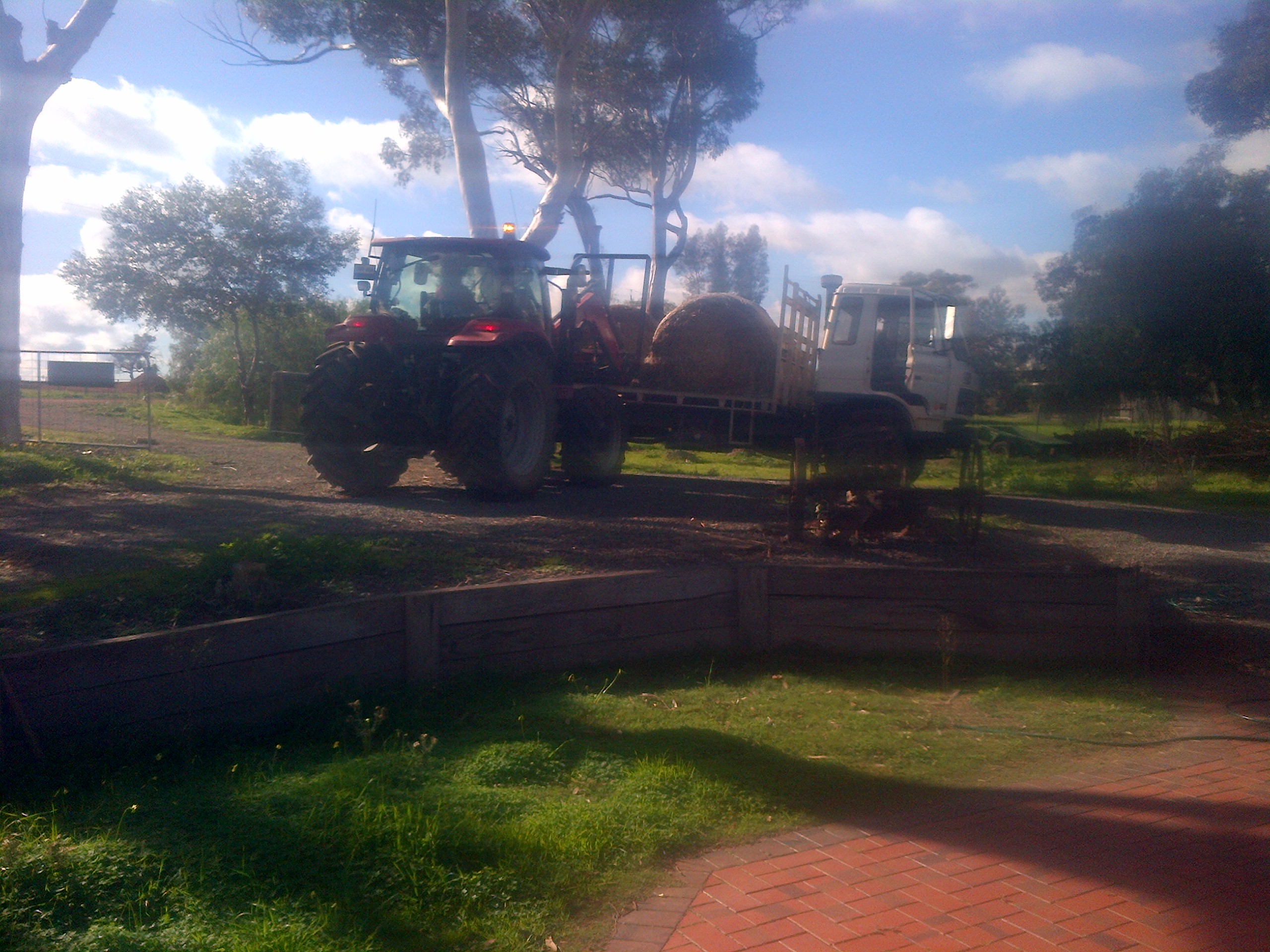
Farmer John hooked us up with some local cheaper hay. He has the best farm toys.

Farmer John hooked us up with some local cheaper hay. He has the best farm toys.

We took the older of the cows, Fillet, to “The Other Farm” at the end of the month. He was around 14 months old, which is at least 2 months, and probably 4 months, earlier than we wanted.  However, with feed as expensive as it was, and with another cow and a pig almost ready, it was sensible to have him done early.

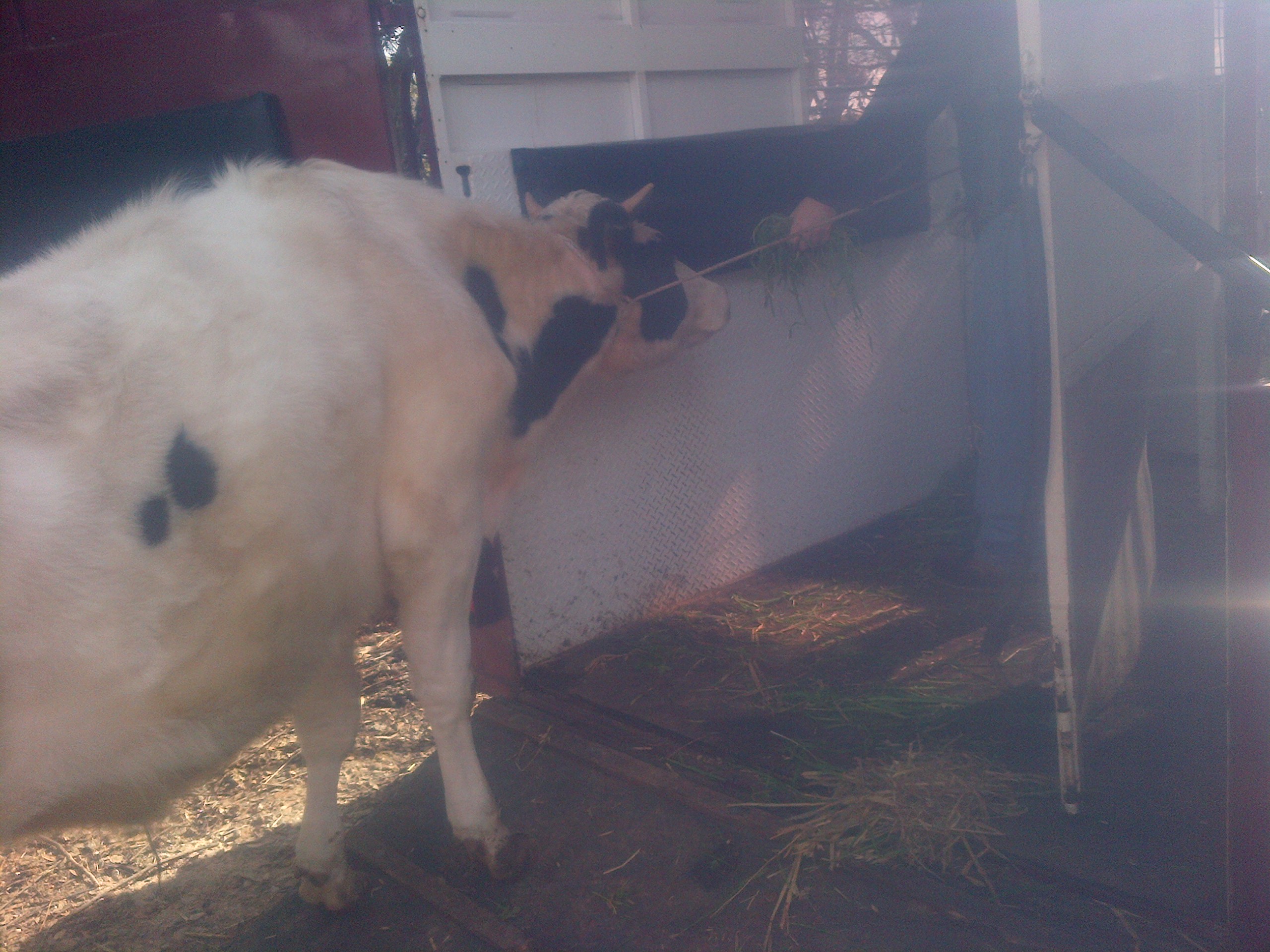
Our stock trailer isn’t suitable for cows, being too low. With that in mind, we hired a horse float, which worked really well.  It took maybe 10 minutes to get him in. At first I tried coaxing him in with grass, but that was never going to work. Next I tried coaxing him with grass with a rope around his neck as I pulled him up.  That worked a treat.

"Coaxing" Fillet into the float.

“Coaxing” Fillet into the float.

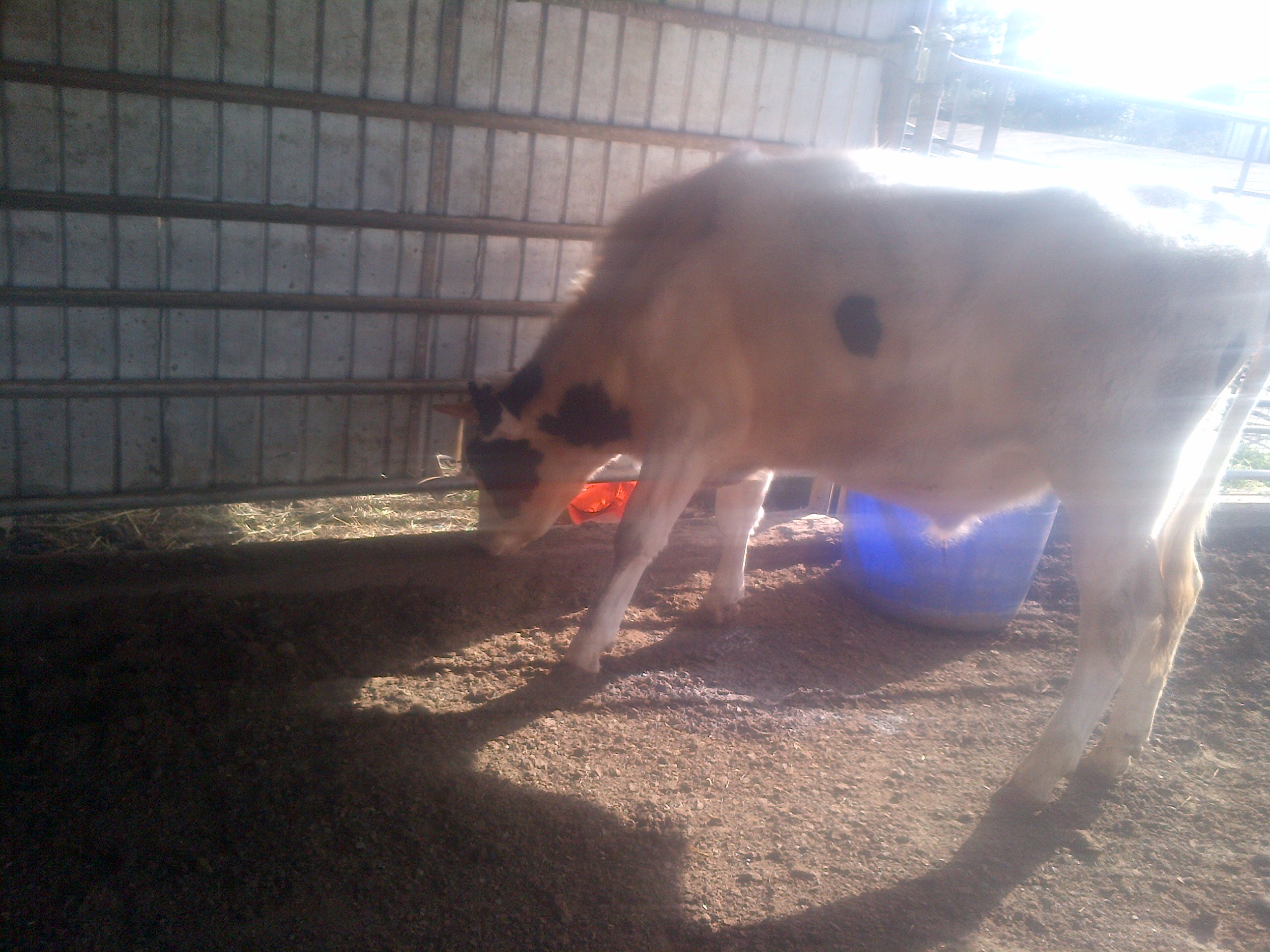
Fillet at "The Other Farm"

Fillet at “The Other Farm”

A big part of our farm time in June was taken up with building a track down the eastern edge of our property.  The neighbours behind us have a right-of-way over our block. There are two tracks, one that runs down my eastern border and another that runs along their southern border; however, the last known owner of those tracks died 120 years ago.  The only other person who lives back there has a right-of-way over those tracks, and kicks up a stink if anybody else uses them.  There are two blocks and two tracks, but for some reason that neighbour refuses to share, despite the fact that he really has no say over who uses them. Don’t get me started…

Anyway, we have a right-of-way running along our eastern border, but it was taken up almost entirely with a row of trees.  There was a double fence, though the outside one had parts that were literally over 120 years old and it was unserviceable.  The inside fence was relatively new, and had to come down and move a couple of feet inwards.  The row of trees, which numbered a couple-of-dozen gums of maybe 10 years old and probably 5 or 6 smaller ones, also had to come down.

In reality, all of that work was our neighbour’s to manage, but we helped out.  We took down the trees over a weekend, and started to pull down the fence.

Starting on the fence and track.

Starting on the fence and track.

Most of the trees gone.

Most of the trees gone.

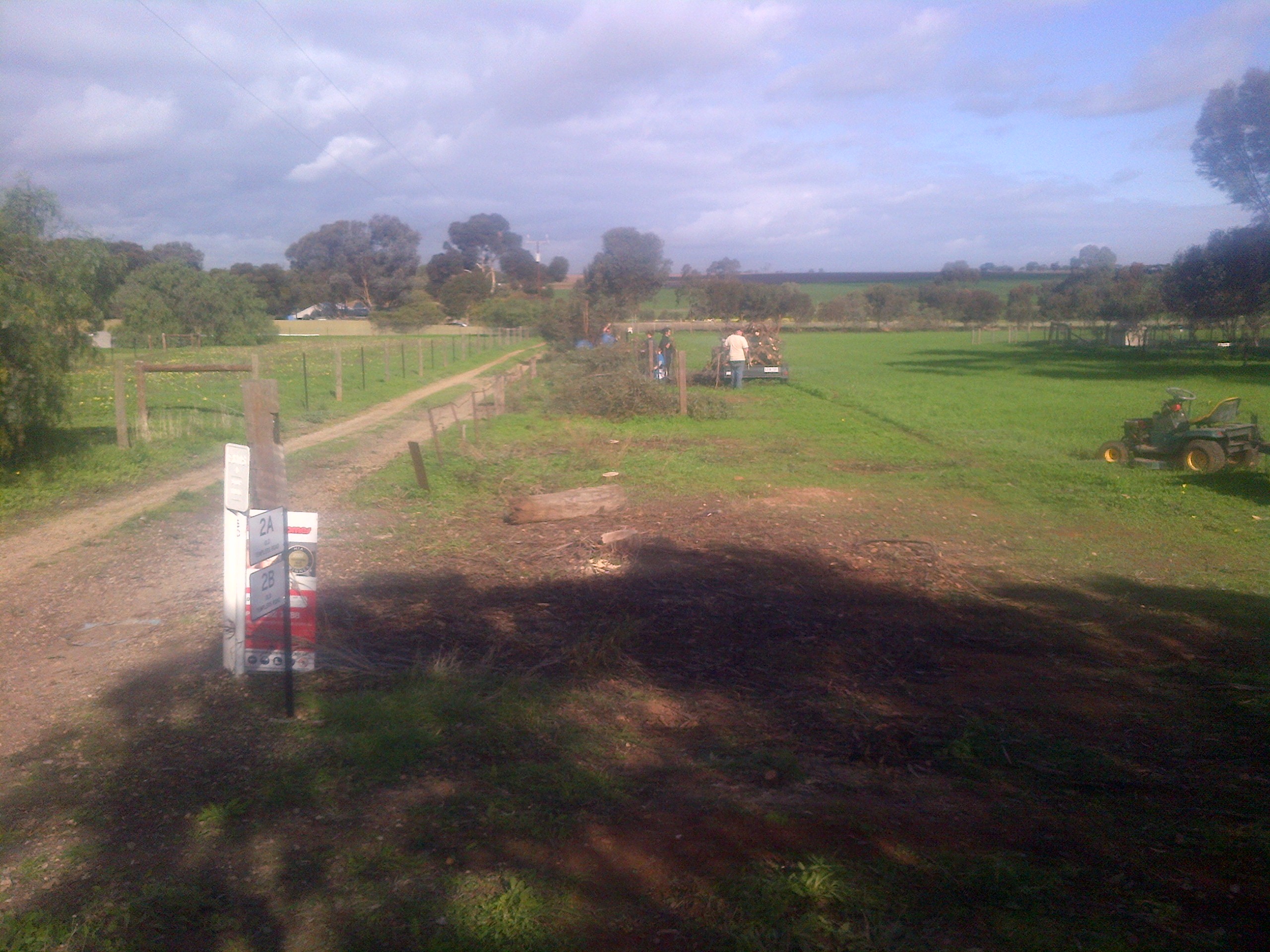
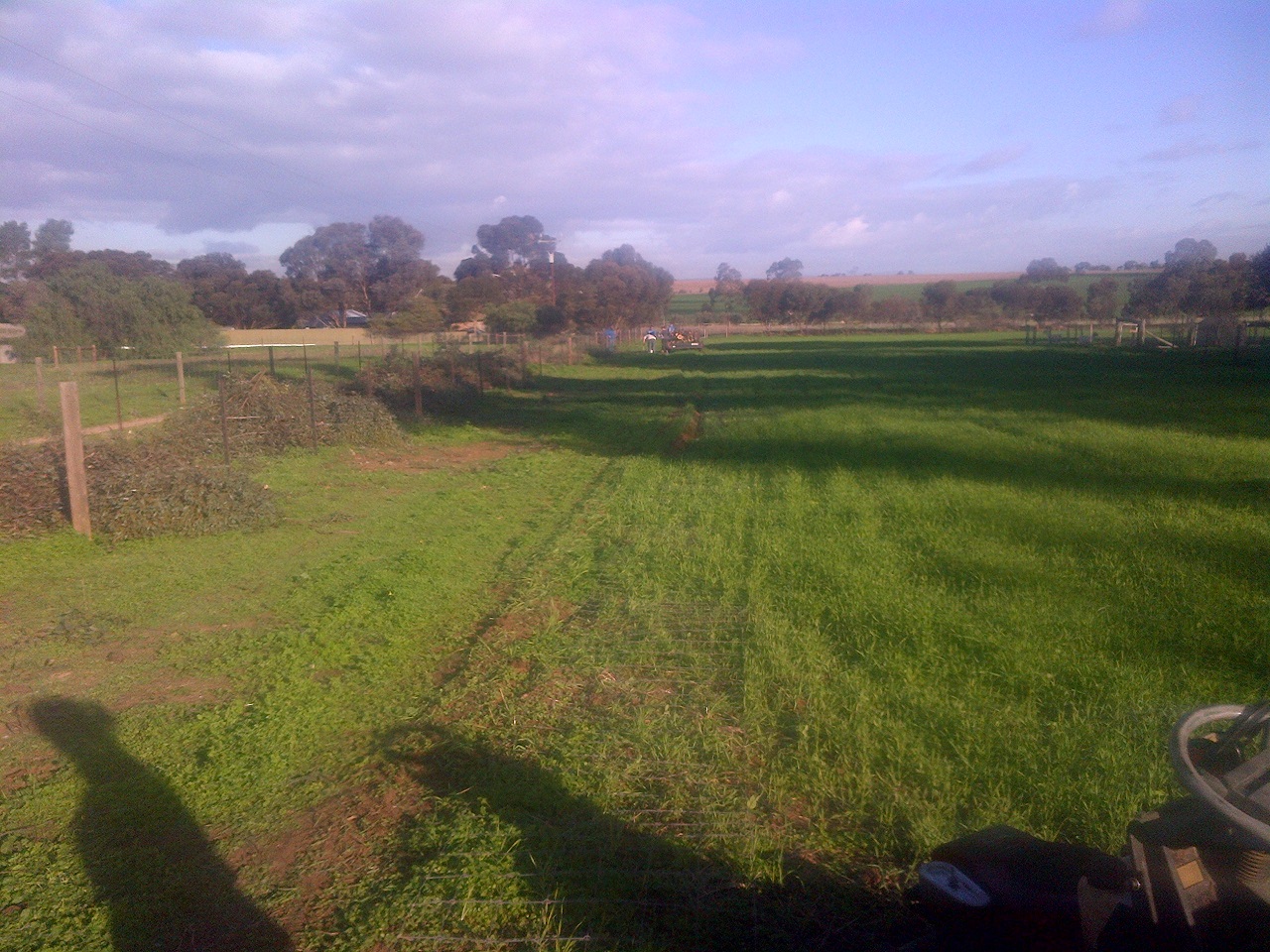
View back towards the front of the property.

View back towards the front of the property.

Proof that Linhda has driven a farm vehicle.

Proof that Linhda has driven a farm vehicle.

Trees gone!

Trees gone!

Our neighbour’s father came the following weekend to take down the rest of the fence using one of his work vehicles.  However, we’d had a half-inch of rain the night before, and we spent 3 or 4 hours getting him unbogged.

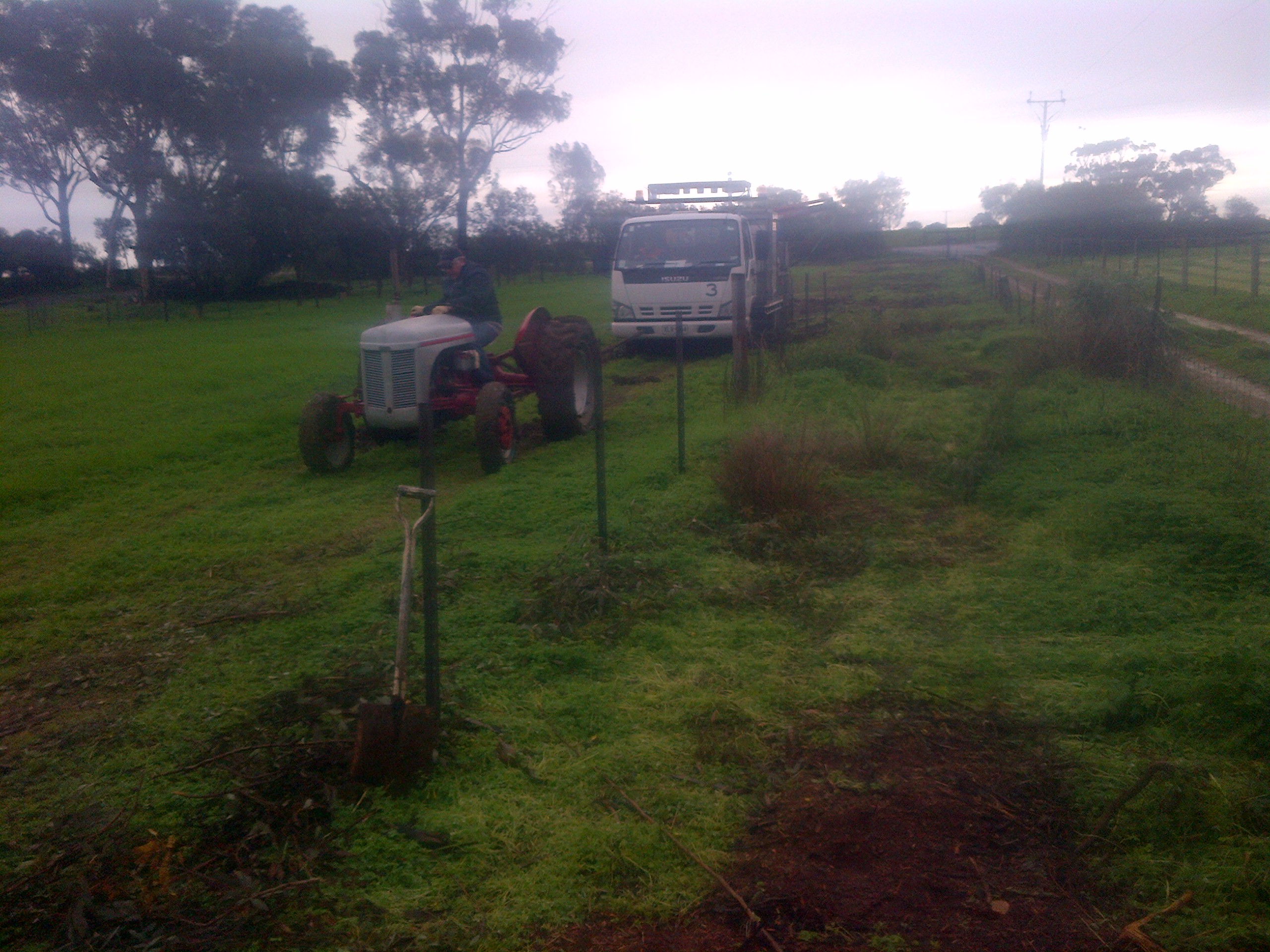
Using Sheldon to drag Larry out of his first bog...

Using Sheldon to drag Larry out of his first bog…

... and second bog...

… and second bog…

... and about his 10th bog...

… and about his 10th bog…

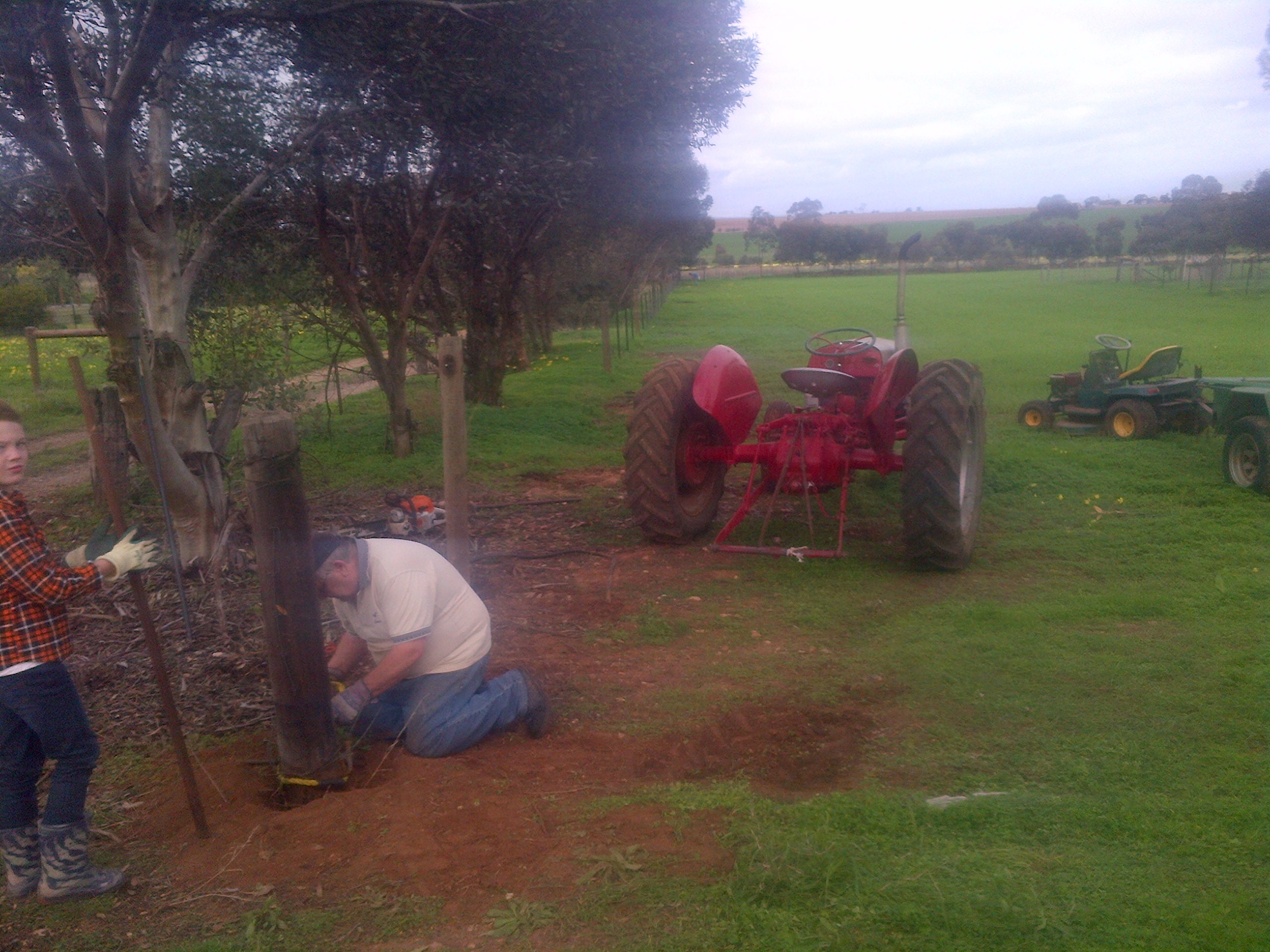
Ironically, we used our tractor and my mattock to get the rest of the fence down, and it took maybe half the time we spent getting the truck unbogged.

As always, we reused everything that we possibly could.  We got maybe 5 tonnes of wood from the trees, along with some ancient strainers from the old fence that burned beautifully. We also managed to salvage a heap of droppers from the old fence, and we reused all of the materials from the inner fence to reinstate it in July.

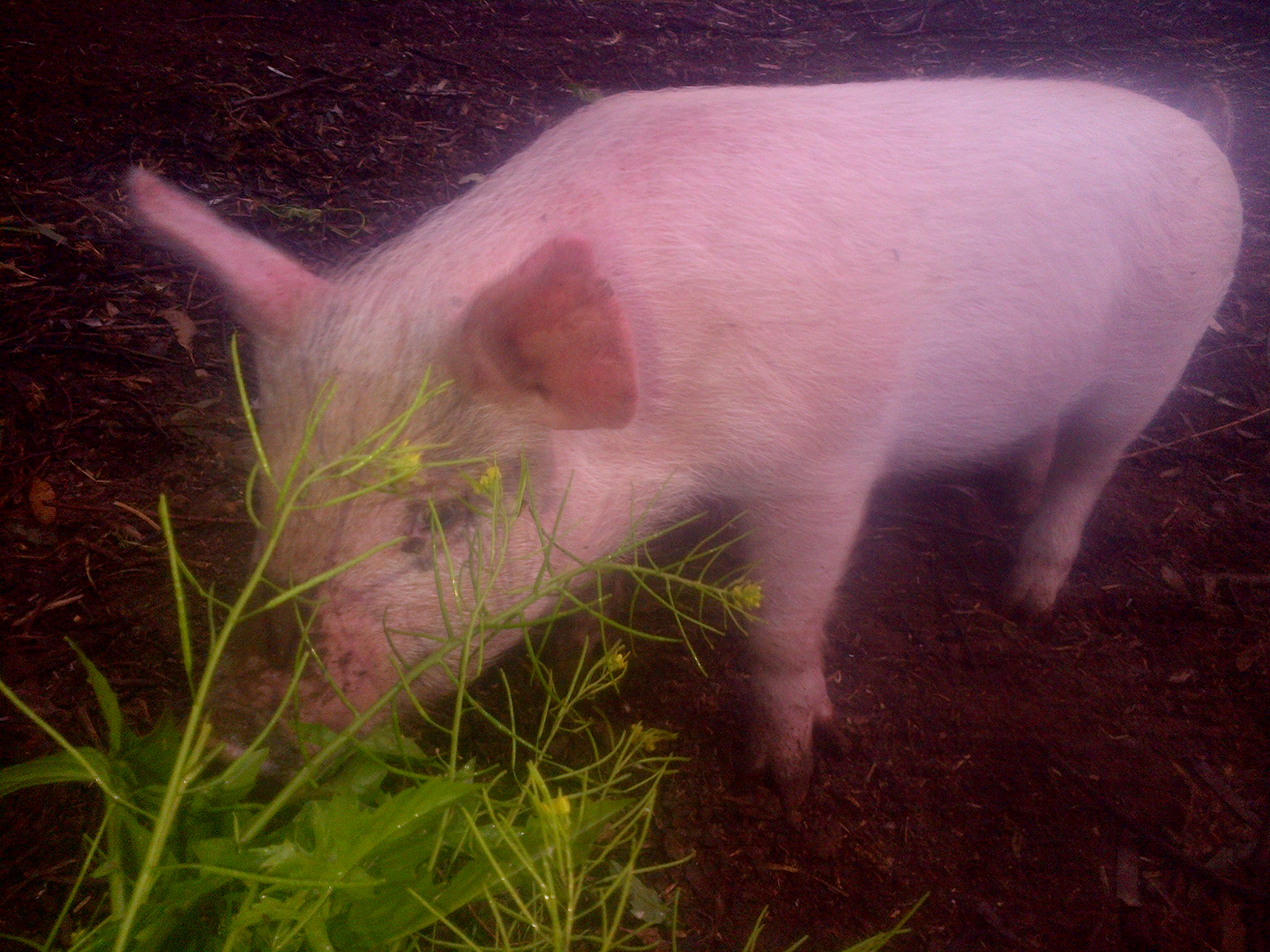
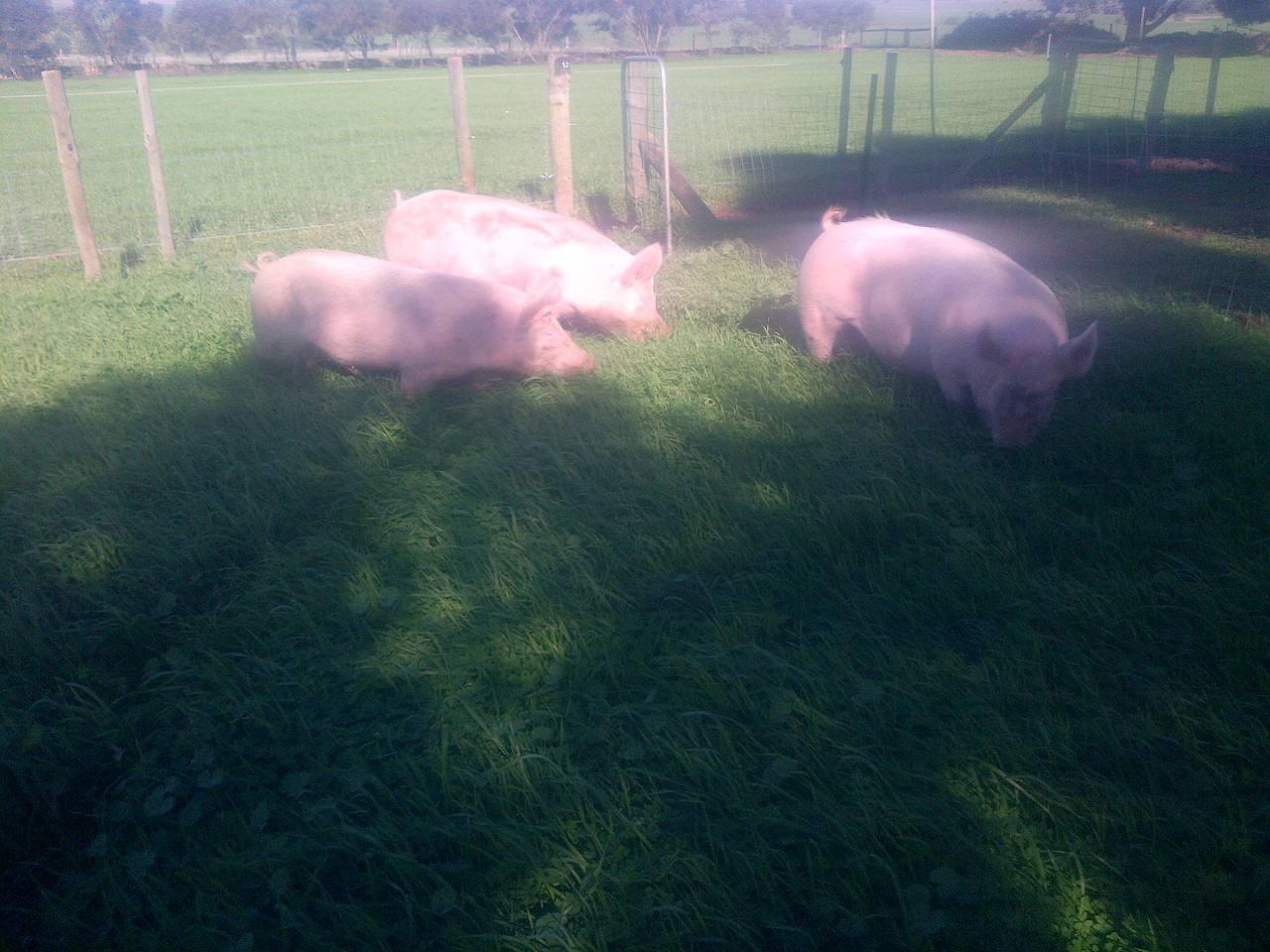
We also had a couple of pig developments in June. Firstly, we picked up a baby to use as a spit-pig for Linhda’s and Gemma’s birthday in September.  As always, it was fascinating seeing how other people manage their pigs. I’ll not go into gory details, but it wasn’t even close to the way we do it.  Secondly, we’re 100% sure that Smoked is pregnant!  Yay!!!!

George!

George!

The Babies in one of the spare runs where we grew some greenery.

The Babies in one of the spare runs where we grew some greenery.

Smoke Pig pregnant!

Smoke Pig pregnant!

We ended up harvesting our pumpkins towards the end of the month. My plan had them being finished around February, which is what our previous experience would have us expect. However, they just kept growing.  Even in June there was still new growth, flowers, and little pumpkins. We were at the stage were we wanted the bed though, so I harvested them and ripped up the plants.

Pumpkins!

Pumpkins!

Despite the weeding and big jobs like the installation of a 150m long track, I also managed an inside job.  I painted the dining room and sealed the slate.  My plan is to get the entire inside repainted and the slate fixed up, but that obviously comes second to the farm work. To be honest, I’d not do it at all, but Linhda makes me…

All-in-all, June was a great month.  We had more rain than we could’ve hoped for, the crop and veggie patch looked amazing, and we looked to have more pork and beef than we could ever use. I used to hate Winter, but am fairly sure it’s my favourite farm season.

This is the downside of free-ranging poultry...

This is the downside of free-ranging poultry…

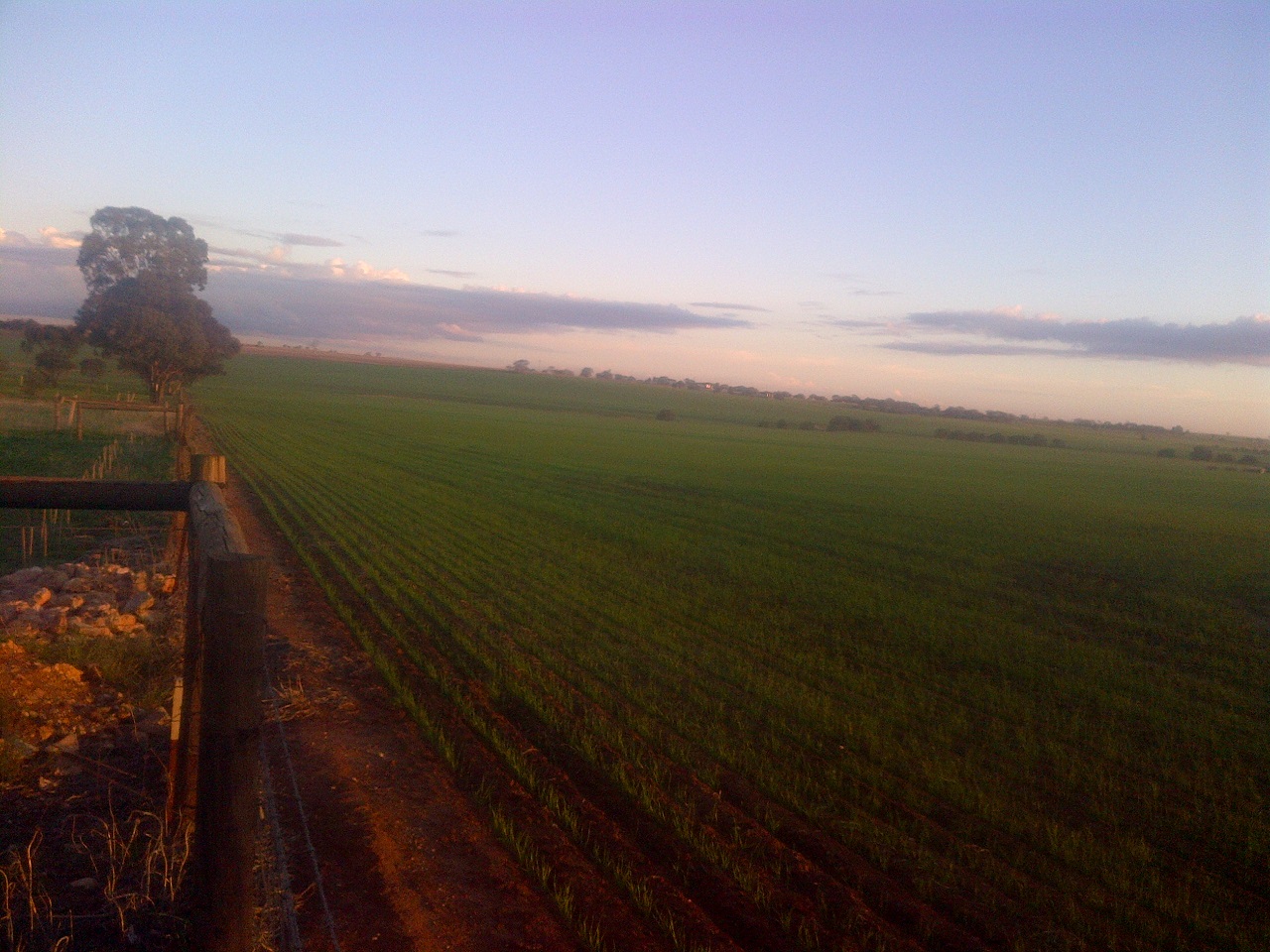
This is the view from the south-western corner of our property and looking southish.

This is the view from the south-western corner of our property and looking southish.

It Doesn’t Rain, It Pours!

After feeling like we were treading water for a couple of months, waiting for the rain we needed to get things rolling, “things” being the veggies and crop mostly, May was everything we needed.  Most of the good rain came at the end of the month, but there was enough at the start and during to get us going.

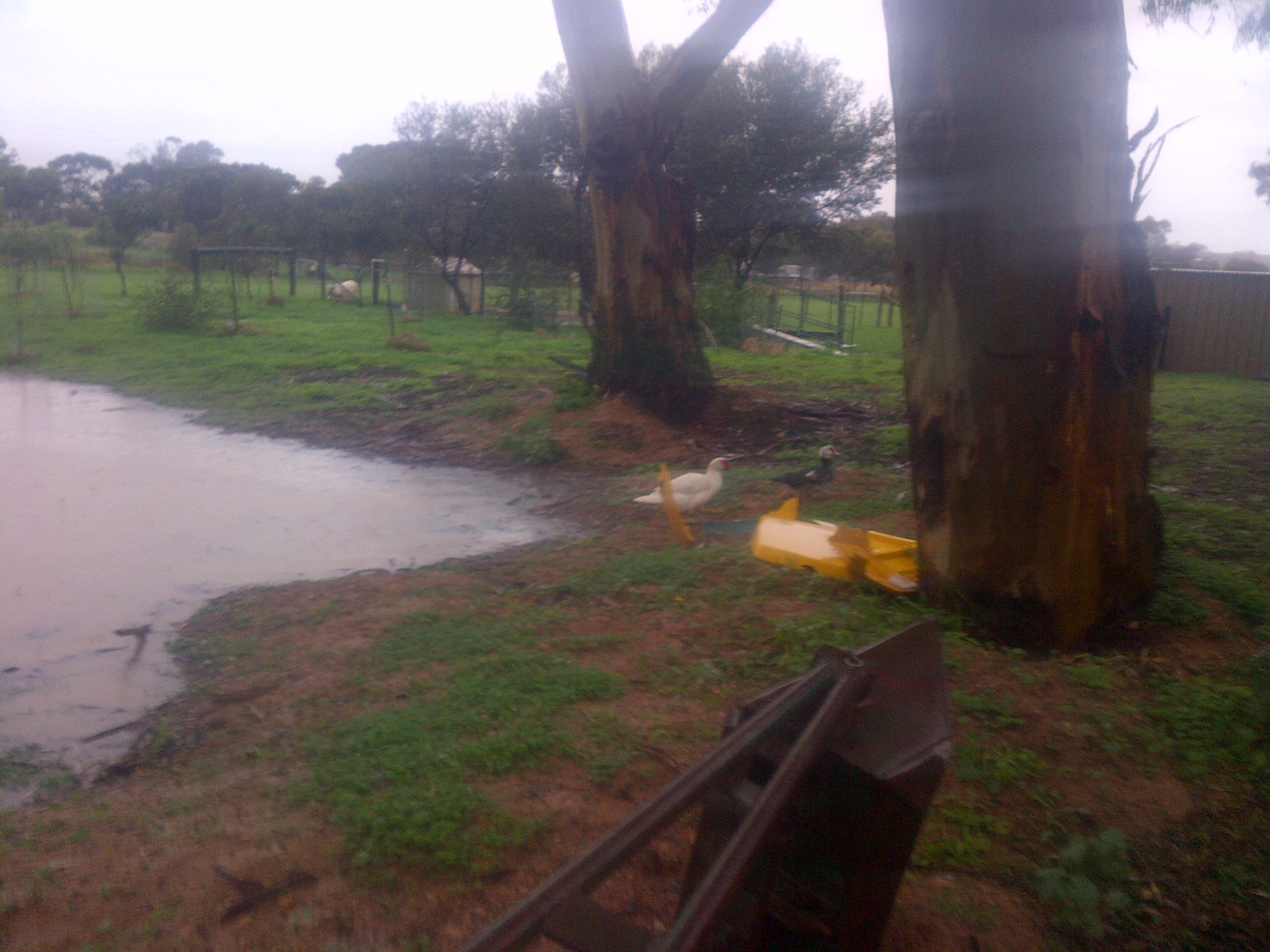
Nothing for a long time, and then enough rain to make a temporary pond. At least the ducks were impressed.

Nothing for a long time, and then enough rain to make a temporary pond. At least the ducks were impressed.

Over the month we managed to finish planting out The Patch.  This involved finishing up with some carrots, parsnips, cauliflower, broccoli, artichokes, various herbs and a couple of strawberry plants.

At the same time, the onions and garlic planted was all up and looking awesome.

We also planted out some berries.  Only one had made it through the hottest January in recorded history, so we got 10 more – two each of loganberry, black berry, blue berry, boysenberry, and raspberry.  Planting them in May will give them a full two extra months to get established before hitting the hot weather. This is also apparently due to be quite a wet Winter, so we might be good.

Trying the berries earlier this year to avoid South Australia's insane summers.

Trying the berries earlier this year to avoid South Australia’s insane summers.

The weather ended up being perfect the crop too, and we got it in a couple of weeks earlier than last year.  This year we went for our own blend for grazing. Our original plan had been to try and feed a small stock of meat animals, probably sheep, mostly off of what we could grow ourselves. We learned early on that our two acre crop is never going to produce enough for that, and so changed tack a little.  Now we’ll try and grow enough of a grazing crop for our milk animal, and depend on selling pigs to cover the cost of feeding the meat animals.

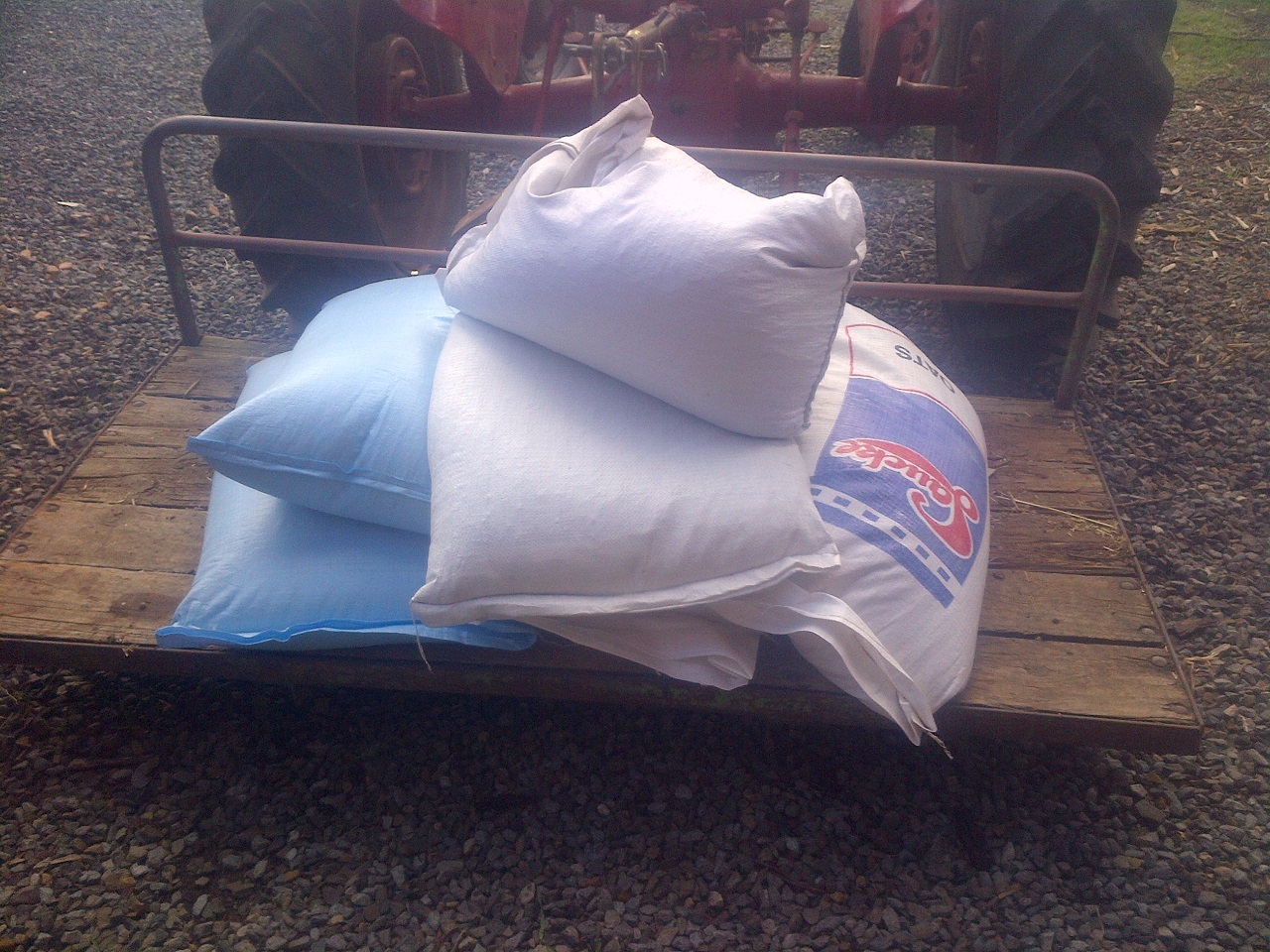
We went for a blend of barley, oats, and peas.  We wanted rye rather than barley, but it proved a little tough to get.  Last year we planted wheat, and put in 60kg.  That was at a slightly higher rate than is normally planted, and it came up quite thickly. This year we planted 60kg of each of the 3 grains, giving us three times the coverage.  I’m expecting big things…

The fixings for our second crop - 180kg of awesome.

The fixings for our second crop – 180kg of awesome.

Our farm equipment is miniature, much like our farm.

Our farm equipment is miniature, much like our farm.

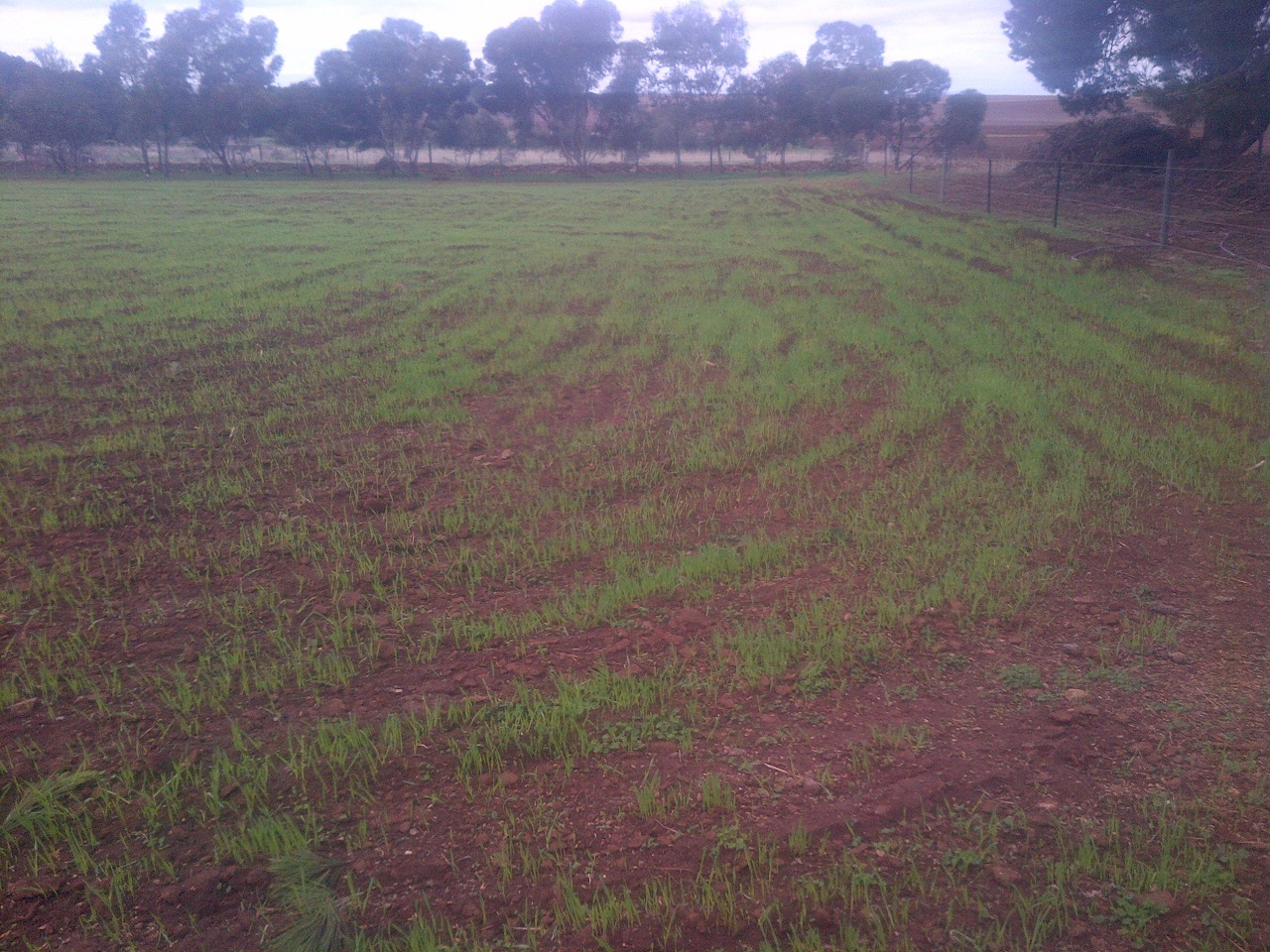
It's surprising how quickly it grows.

It’s surprising how quickly it grows.

Just peeking through.

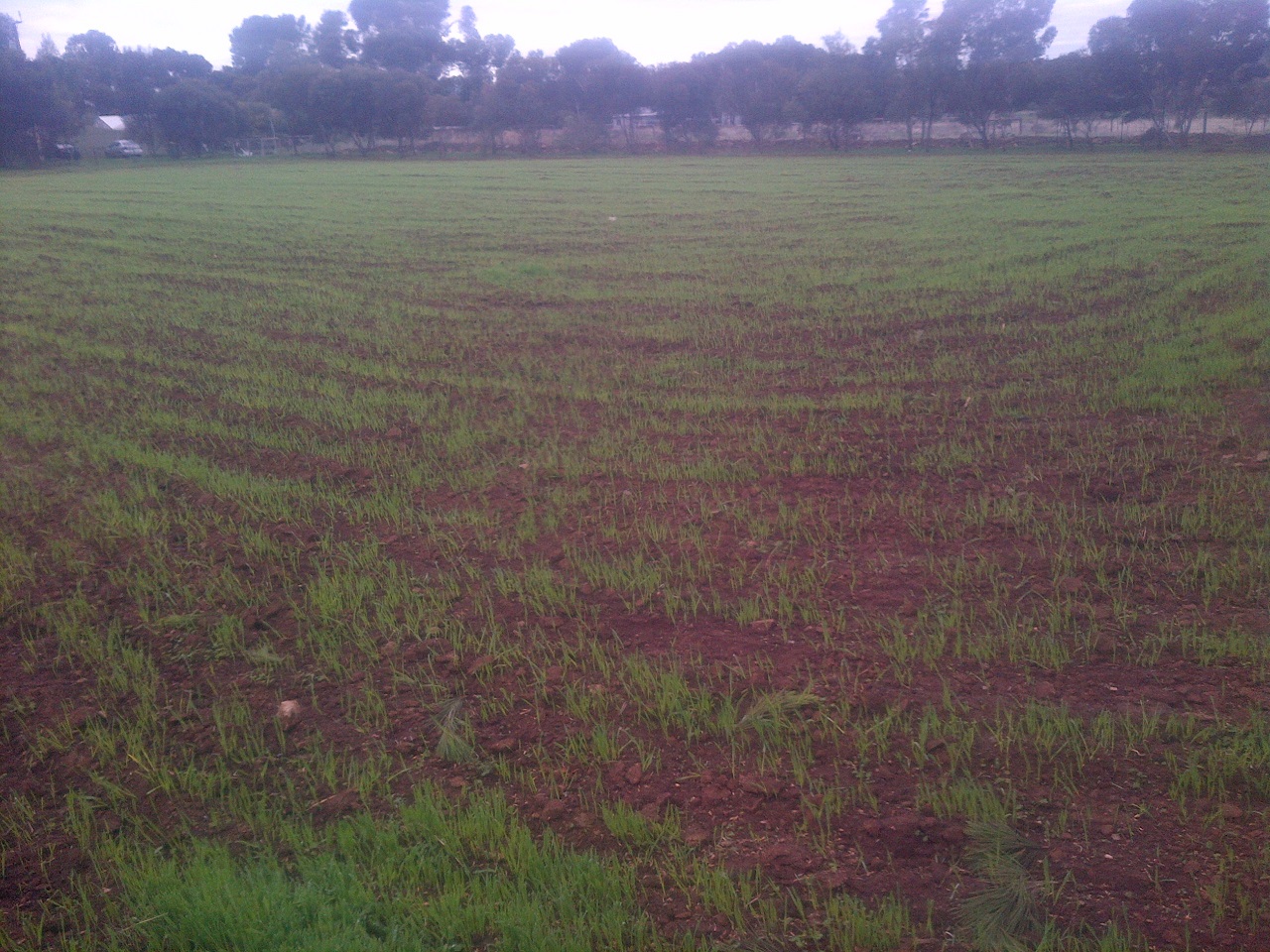
Just peeking through.

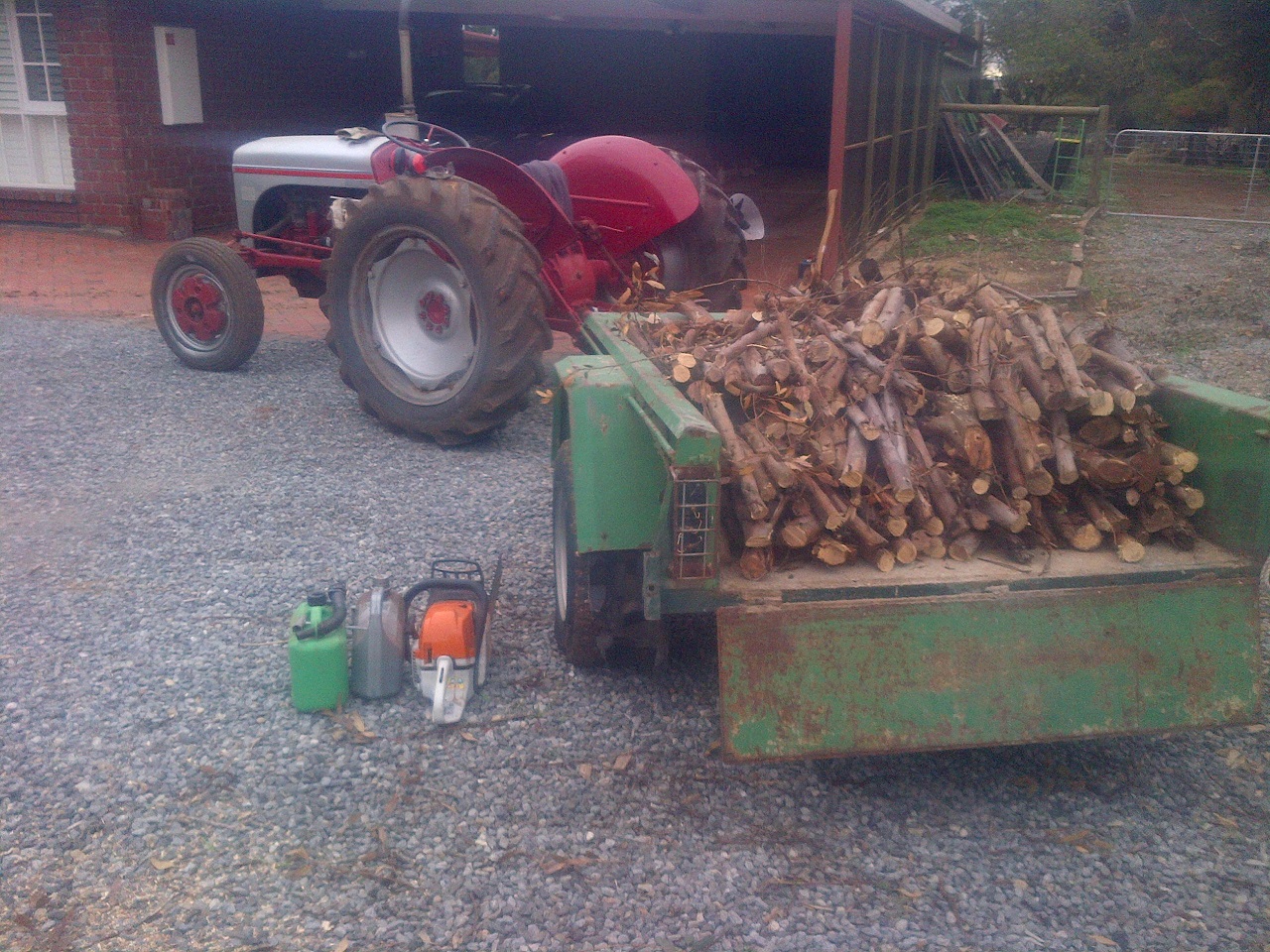
Even with all of this activity, we managed to get a heap of other things done.  We trimmed back the border trees both between us and Farmer John and down the eastern edge of the back paddock.  This is just basic maintenance, but it’s amazing how much wood it produces.

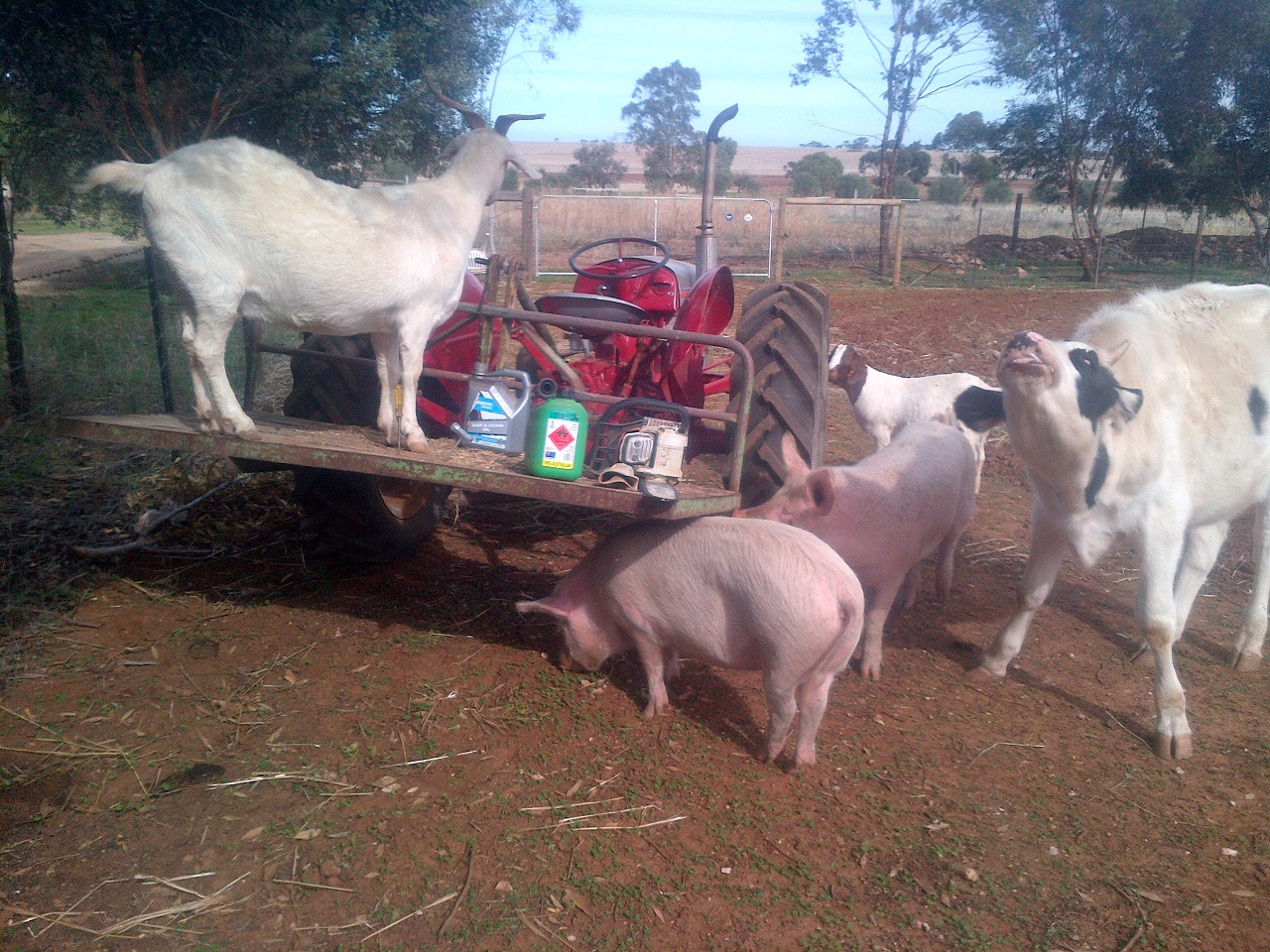
The animals "helping".

The animals “helping”.

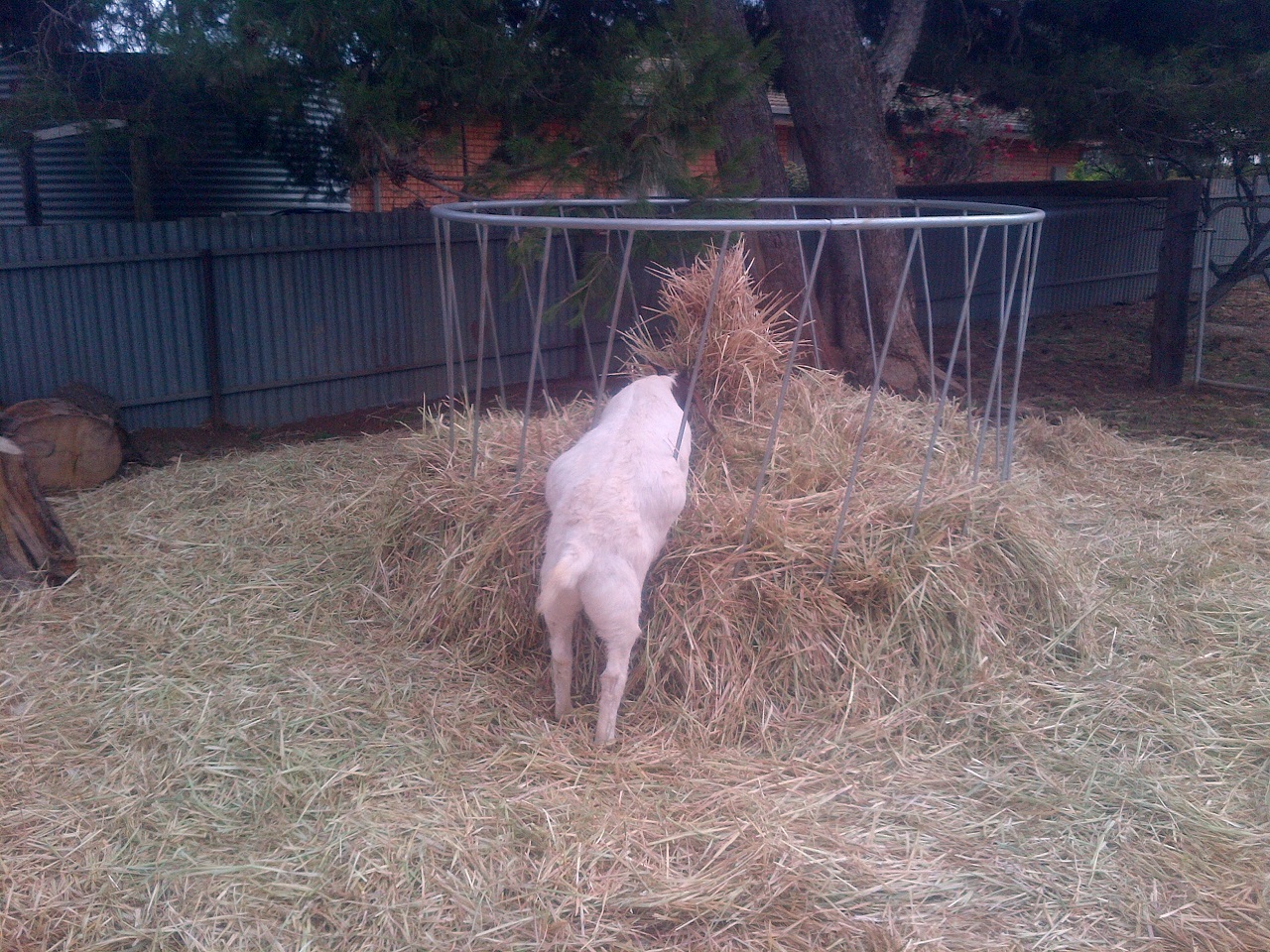
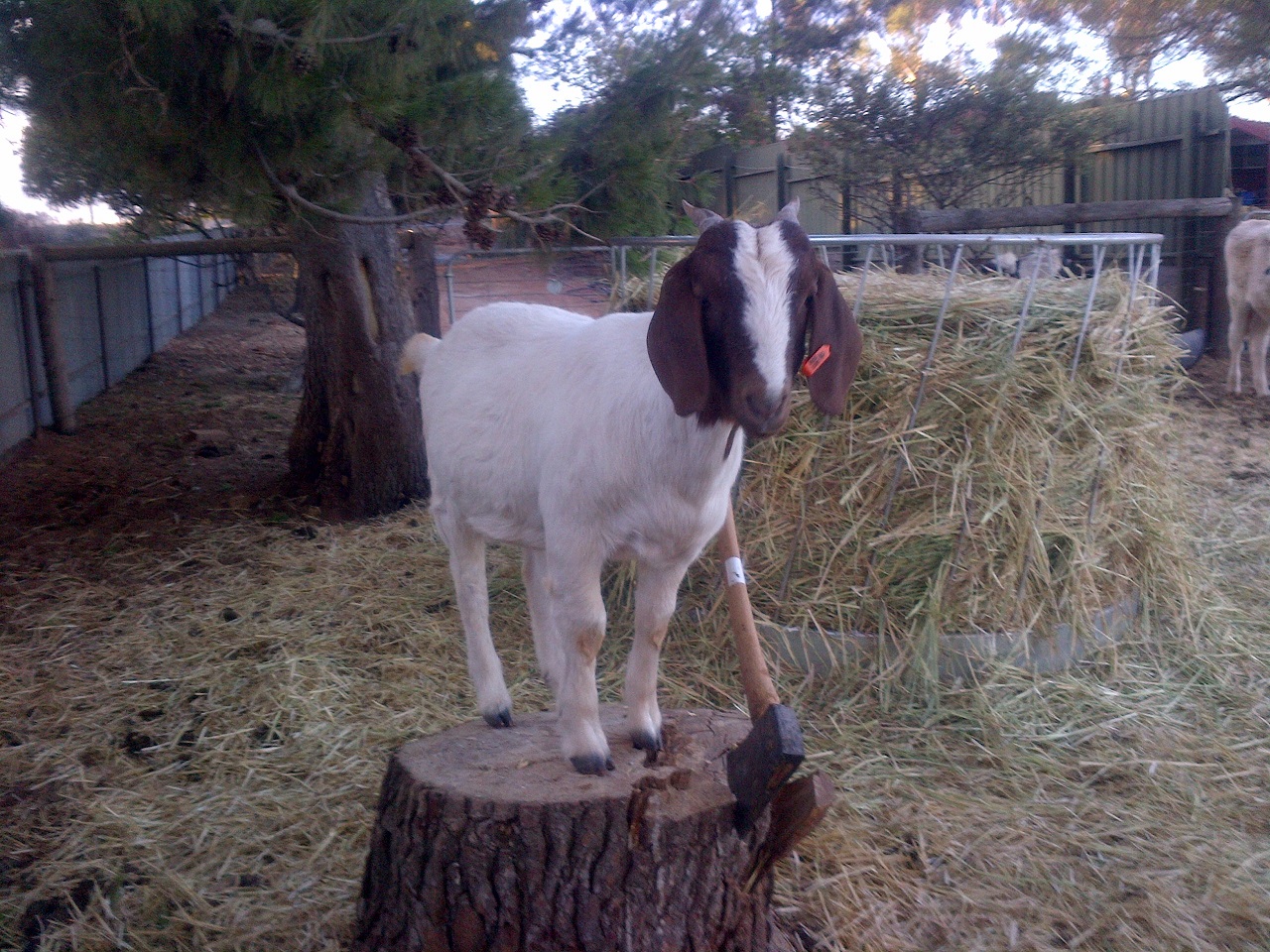
For some reason, goats insist on being at the highest point they can get.

For some reason, goats insist on being at the highest point they can get.

Sheldon hauling our loot.

Sheldon hauling our loot.

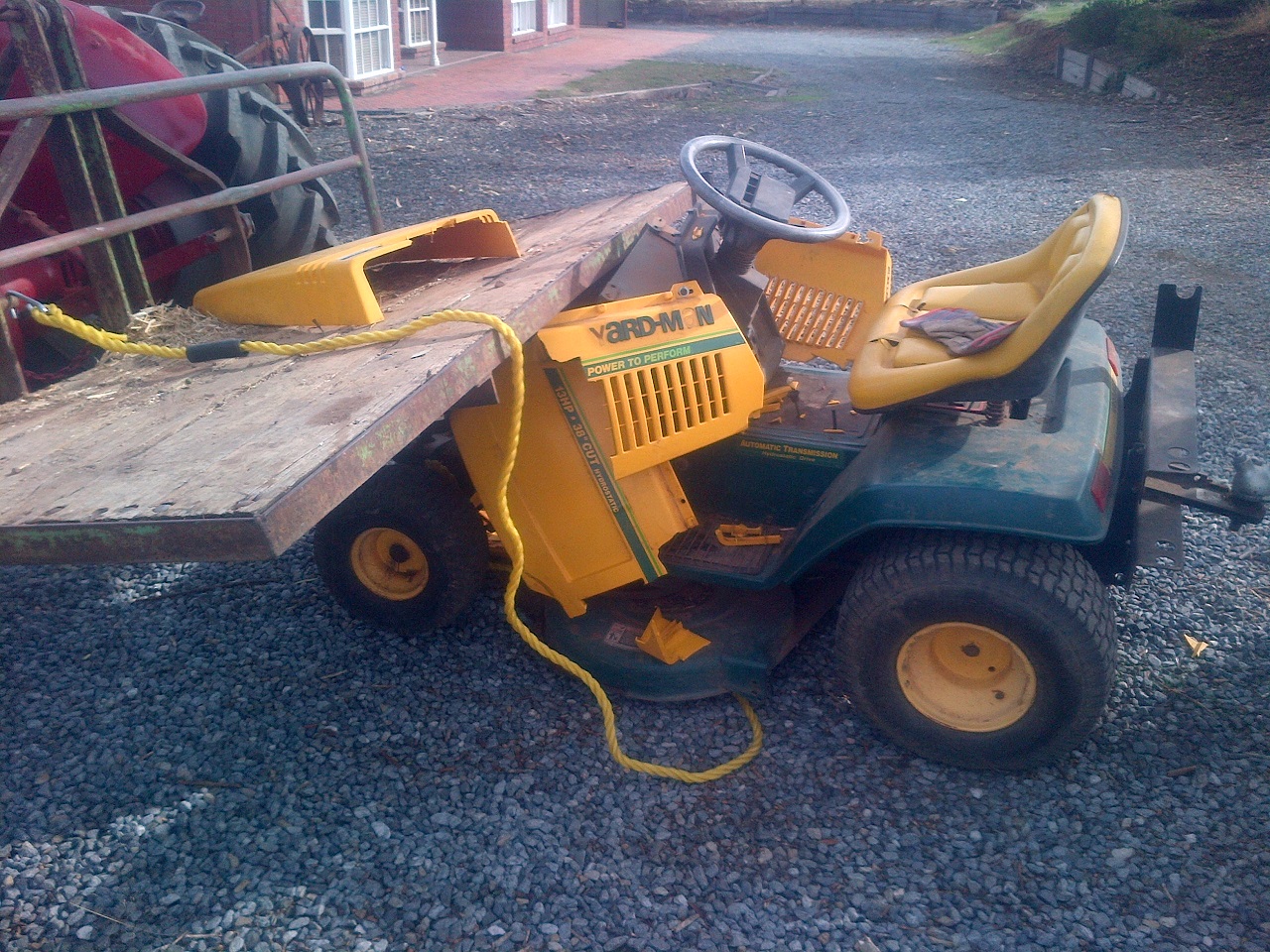
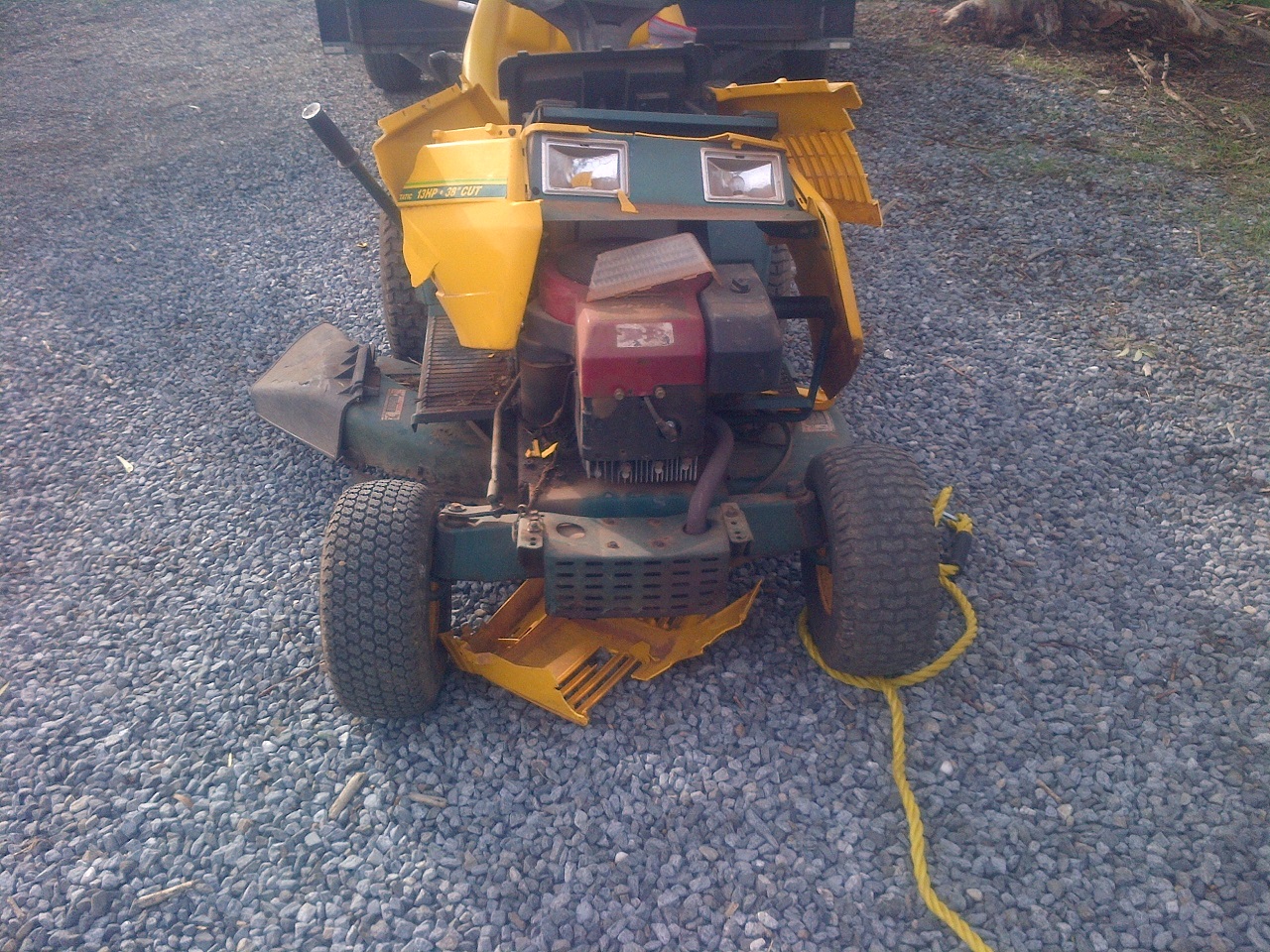
We also had another near-miss farm accident.  The ride-on wouldn’t start after we loaded the trailer it was towing with wood.  I towed it and trailer back with the tractor, and didn’t realise it had no brakes.  The carry-all was half raised, I slowed down halfway down the driveway, and it ran into the back of the tractor. The carry-all busted all of the faring off, and almost crushed dad. Without the faring, dad may have been crushed between against the carry-all. It was a little scary.

In hindsight, I probably should have lowered the carry-all before towing dad.

In hindsight, I probably should have lowered the carry-all before towing dad.

Poor ride-on. It still works like a champ though.

Poor ride-on. It still works like a champ though.

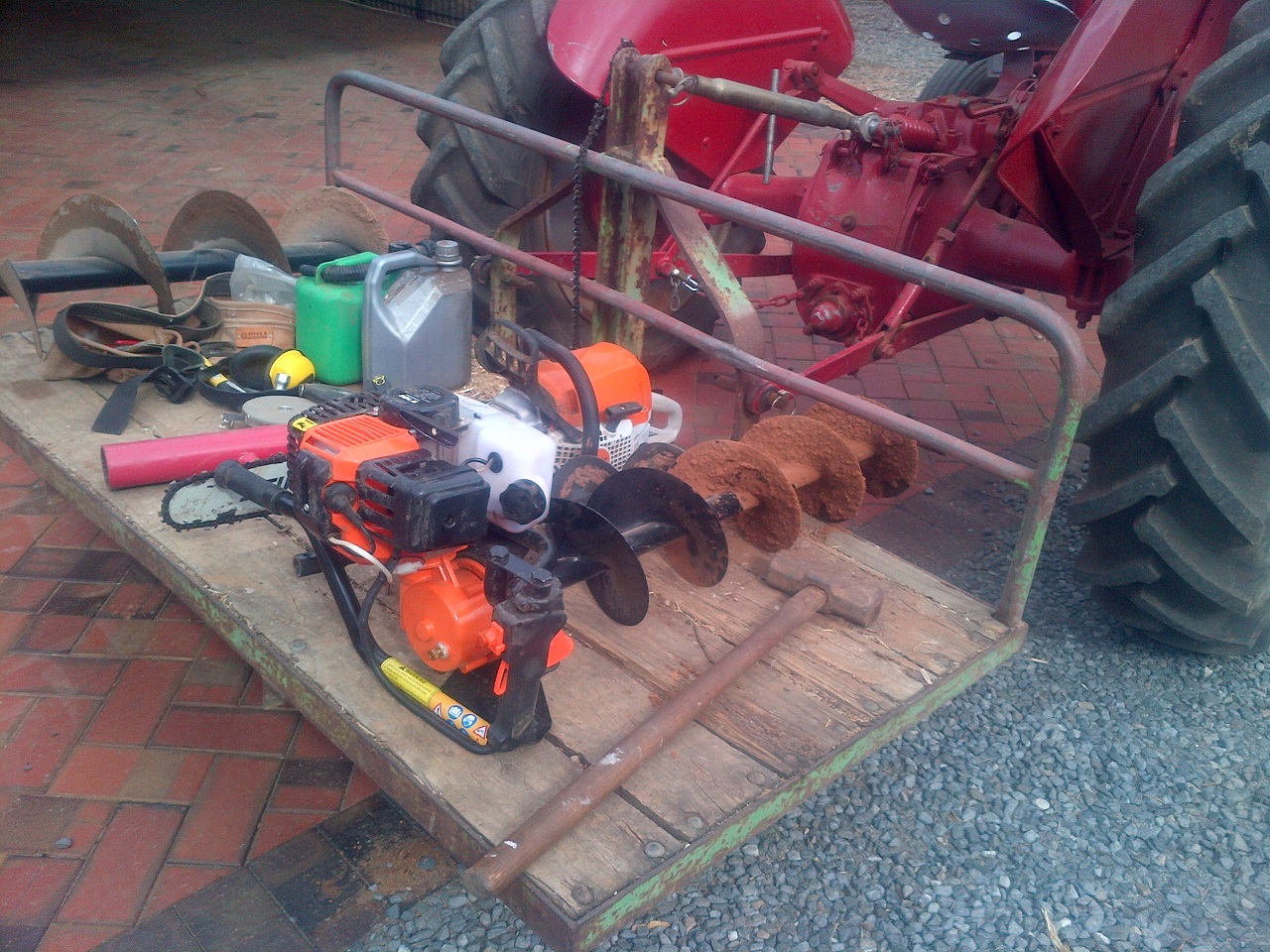
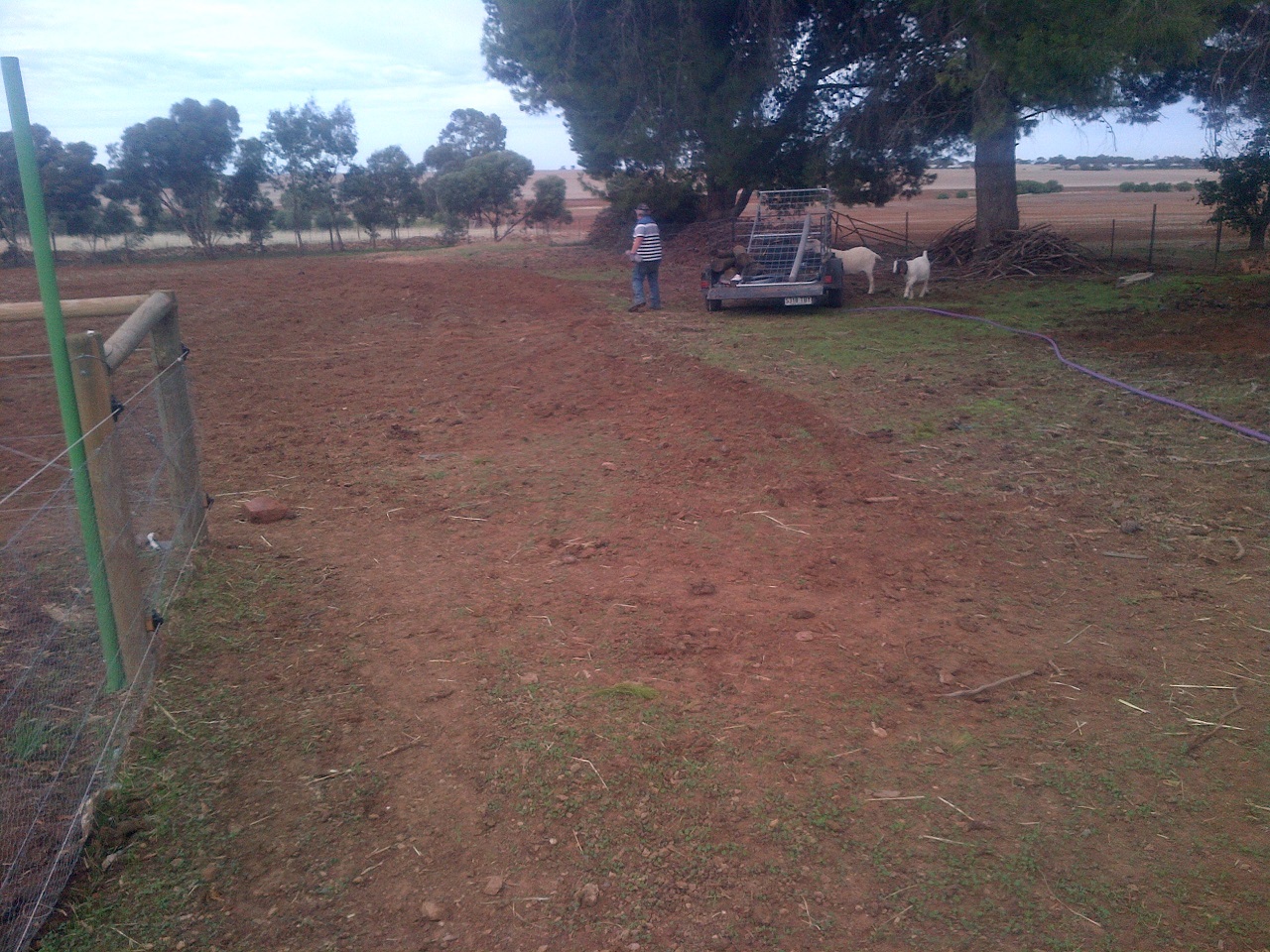
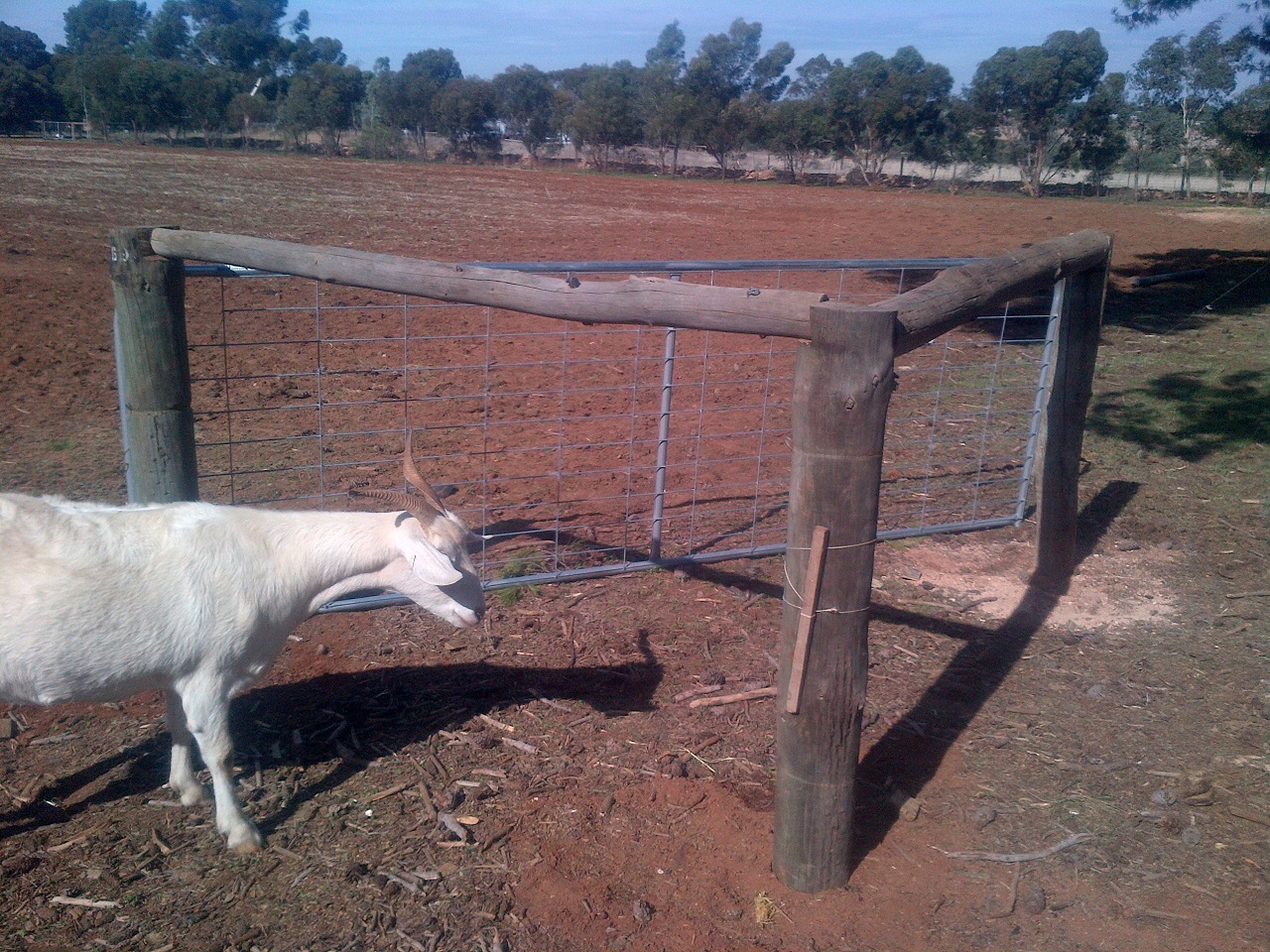
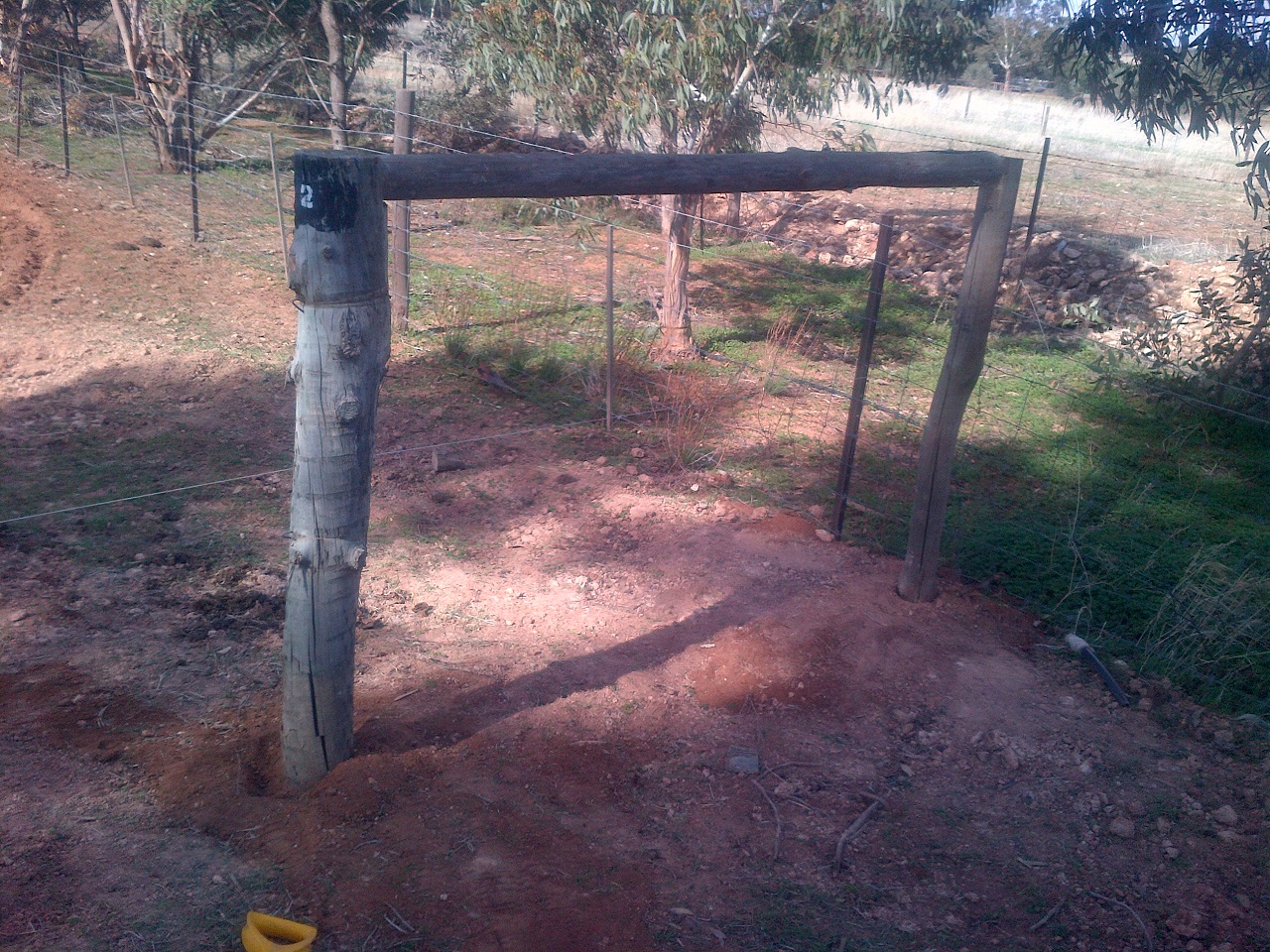
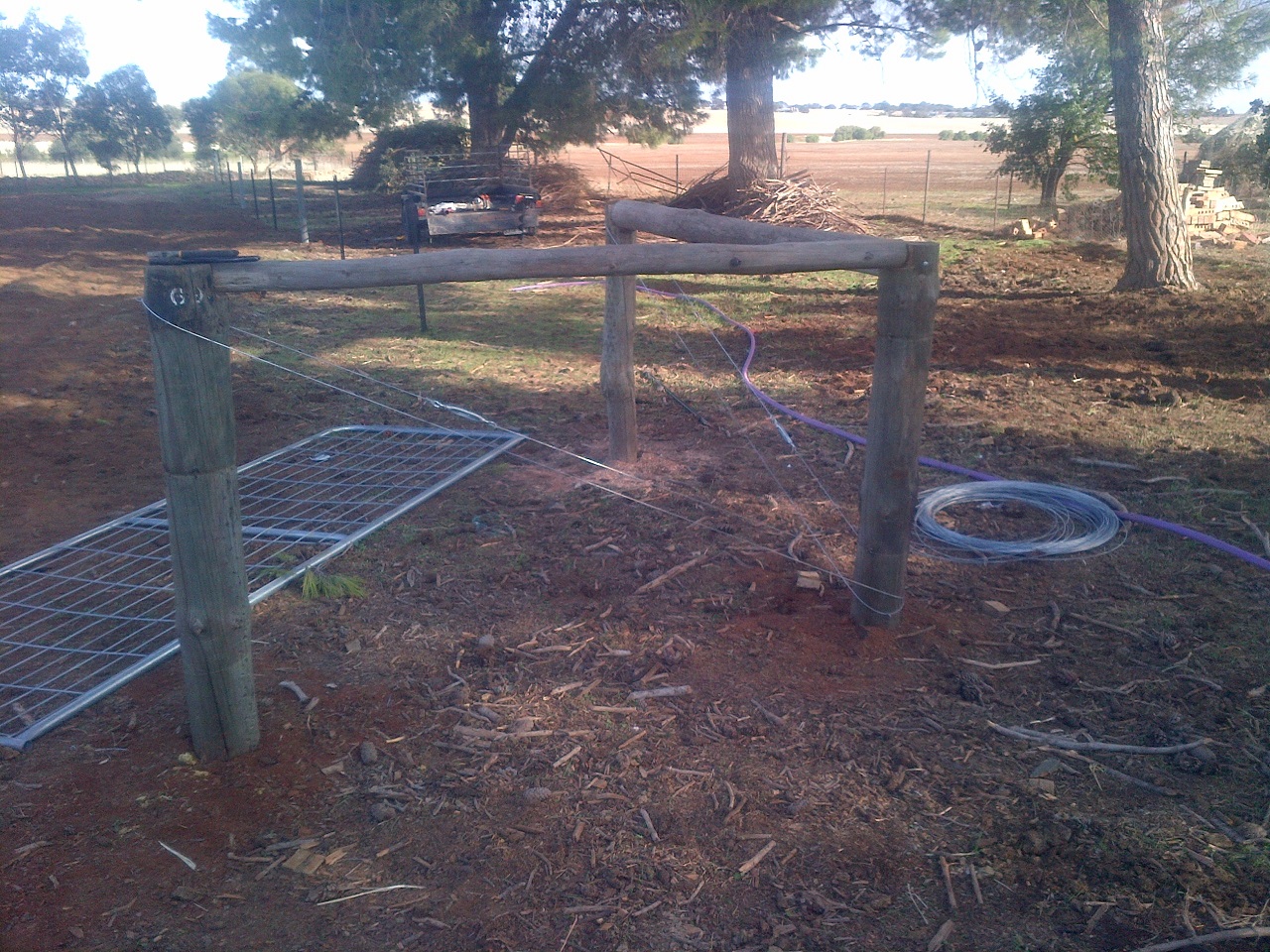
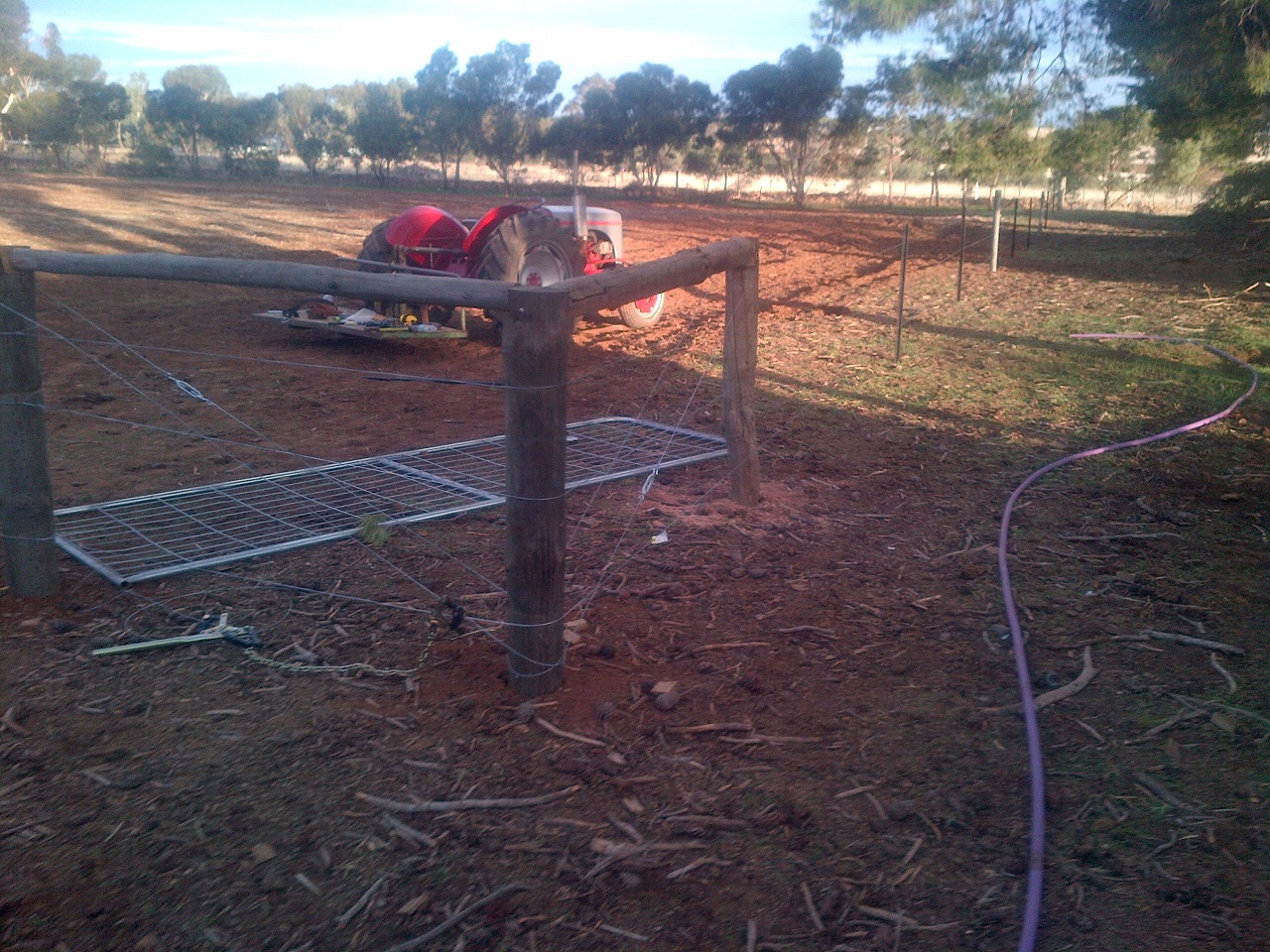
There was also some more fence-building, and potentially the last fence that we need to build from scratch.  We need an area to lock away the cows, and future stock, from the crop. We chose to run a fence north-south near the western edge of the back paddock. This gives the stock a heap of cover under the giant pine-trees, and keeps them close-at-hand.

We put in another 3.6m farm fence opposite the one letting out from the backyard, but closing against the far edge of The Patch’s fence.  We ended up running 3 electric strands and 5 single strands, and still have trouble keeping the stupid goats in. We ended up locking them in a spare pig run until we work that out.

Much better than using a wheel barrow.

Site survey and set up.

Site survey and set up.

The animals doing their own site survey.

The animals doing their own site survey.

Three-way box section.

Three-way box section.

Other box section.

Other box section.

Getting there...

Getting there…

This is more a gratuitous tractor shot than anything else.

This is more a gratuitous tractor shot than anything else.

Done!

Done!

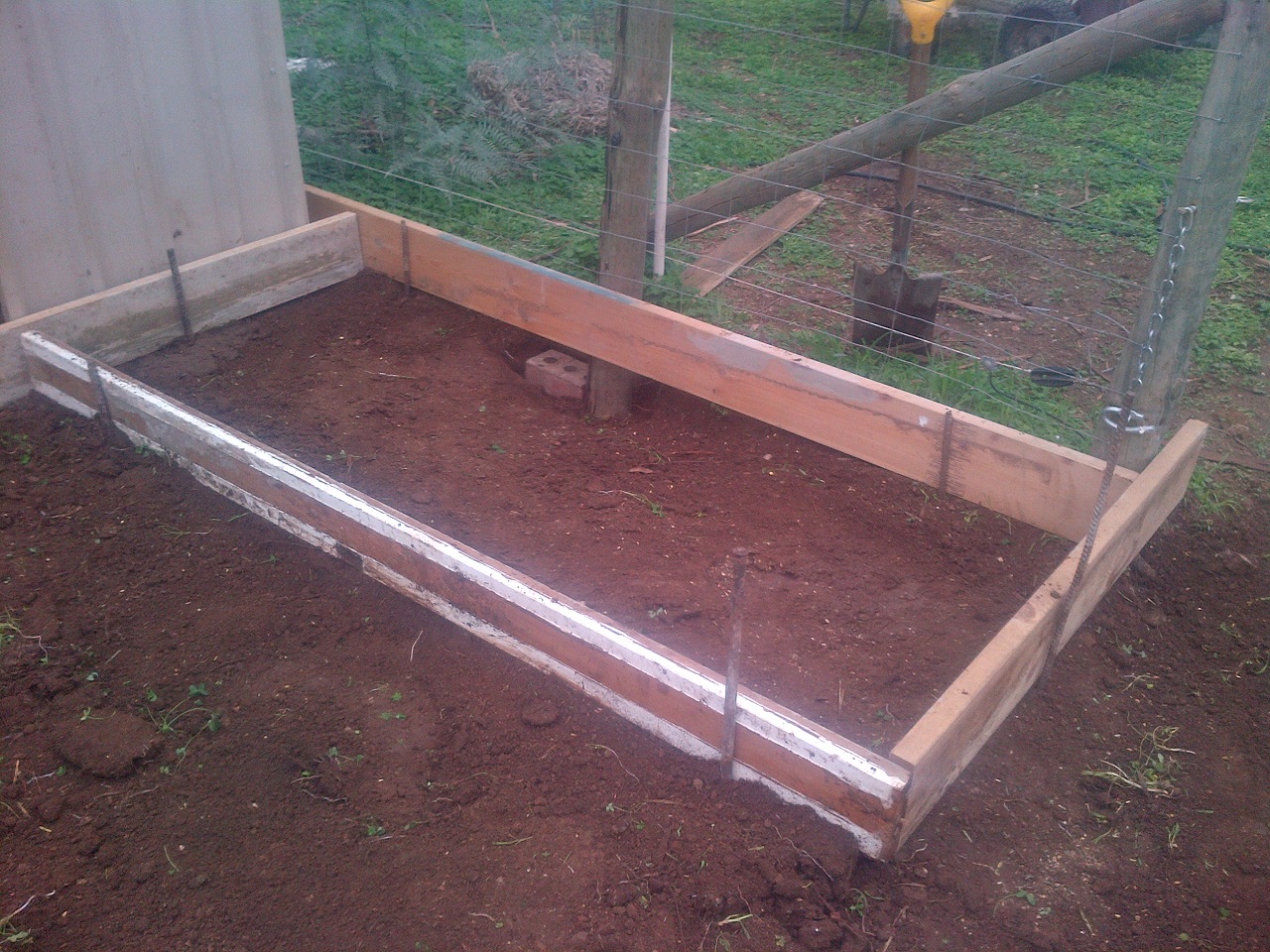
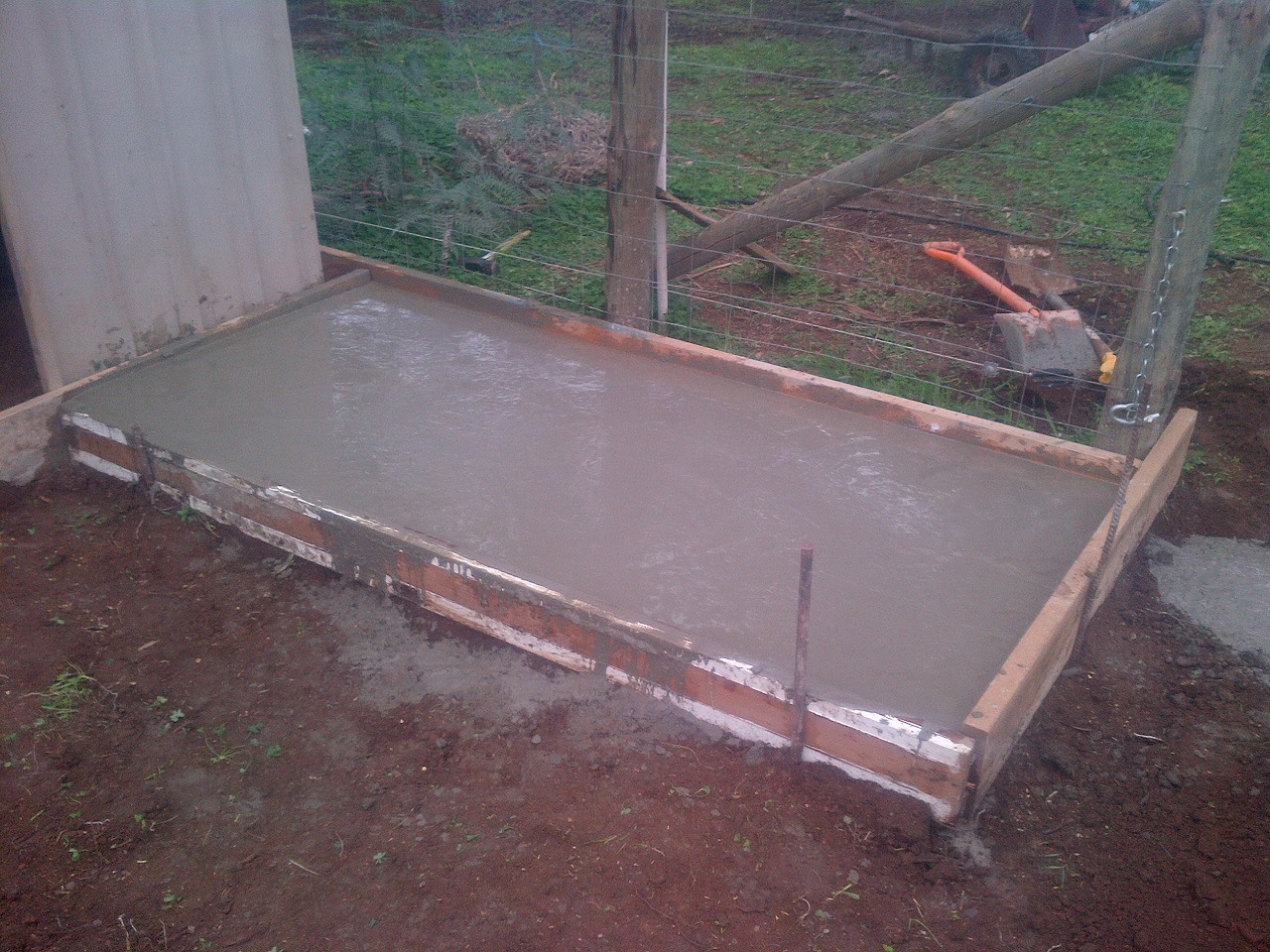
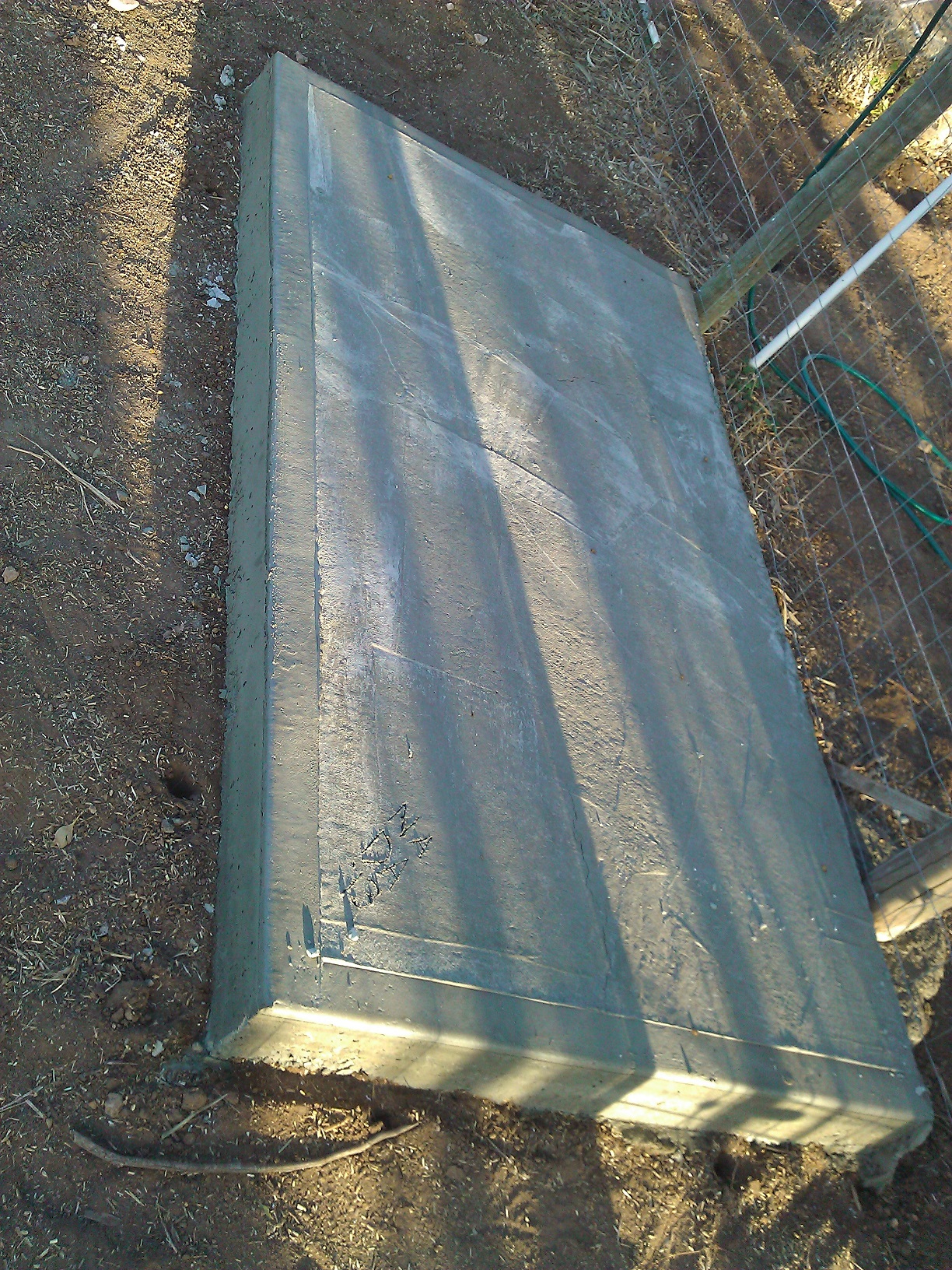
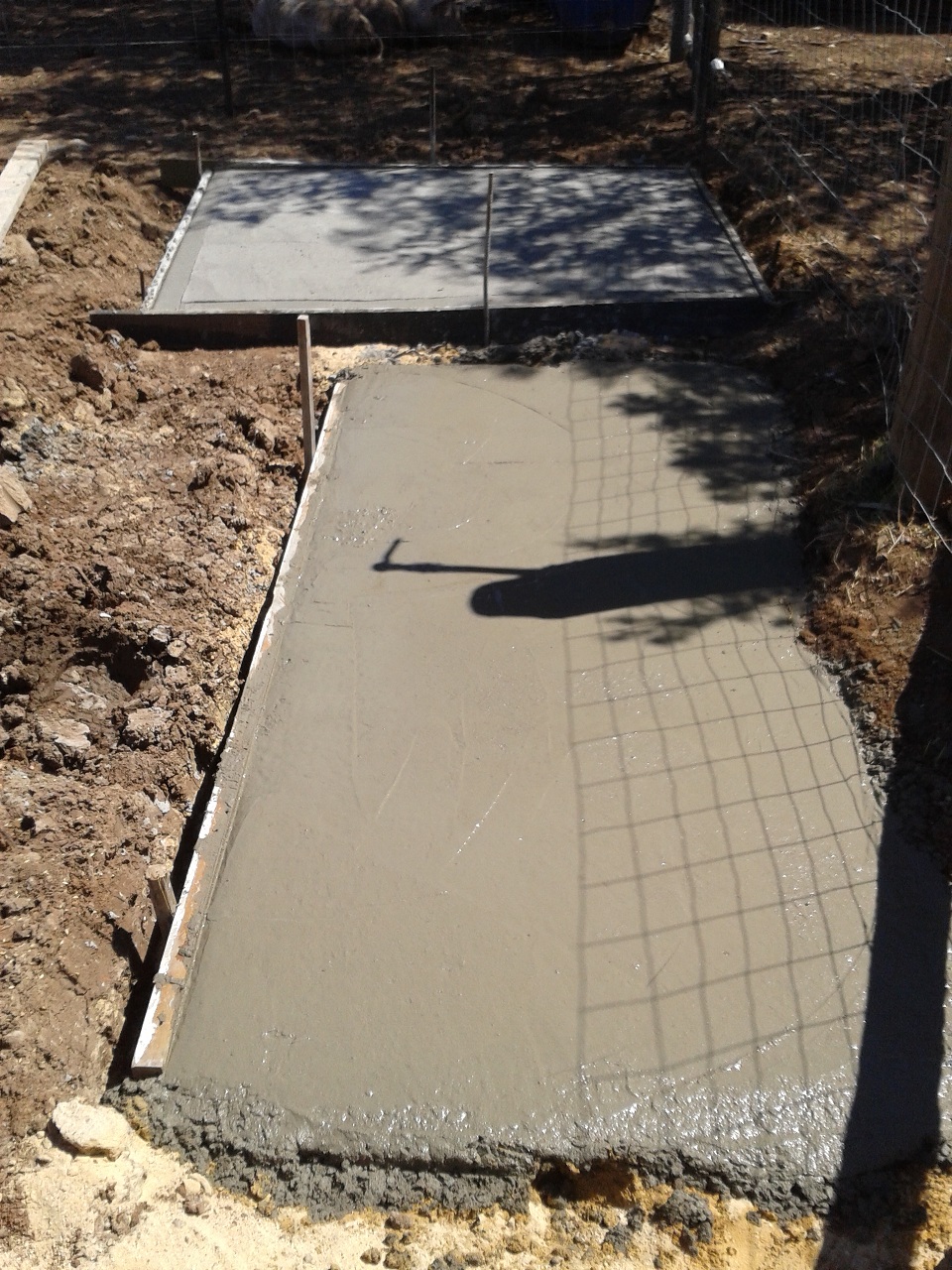
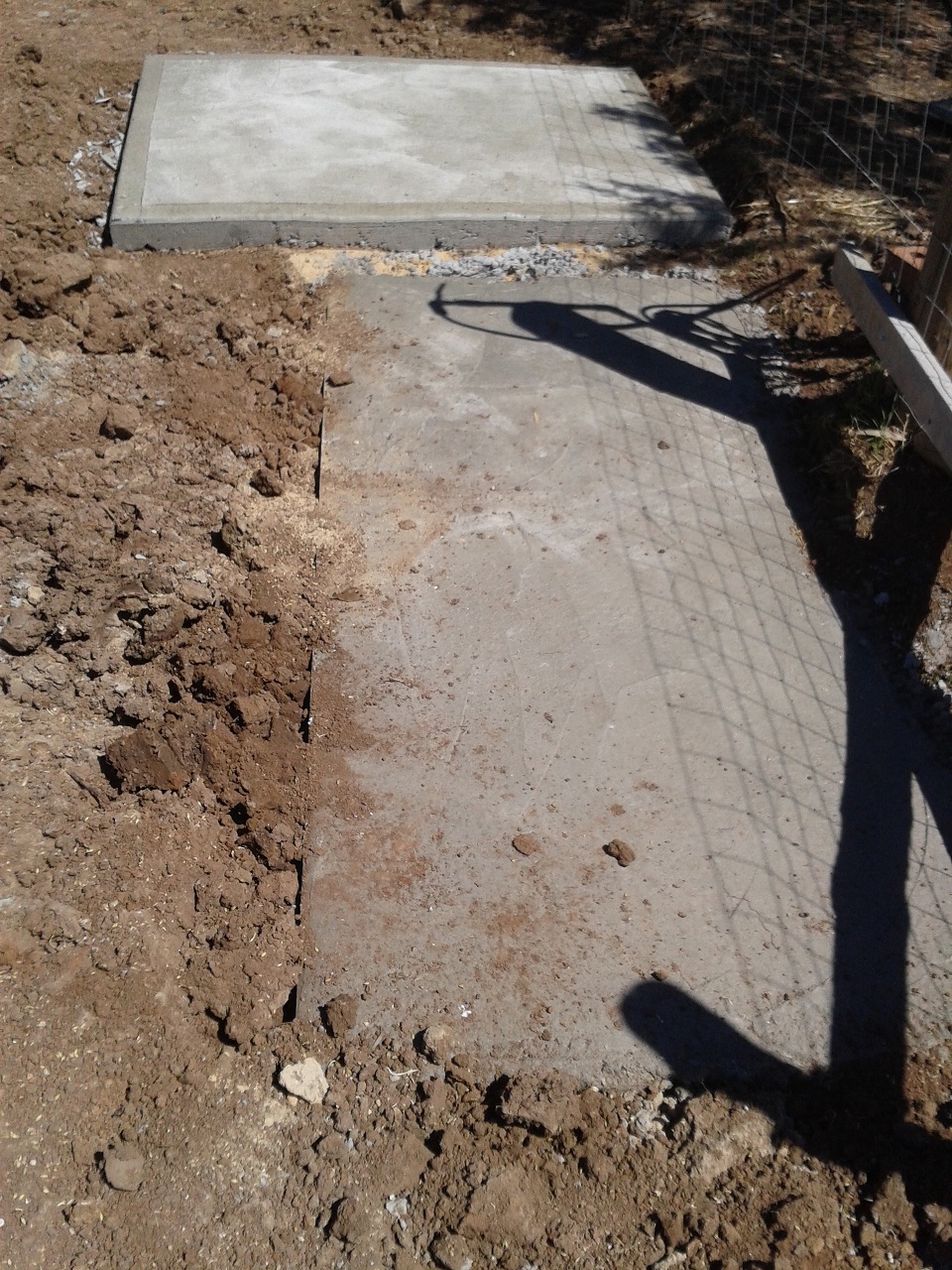
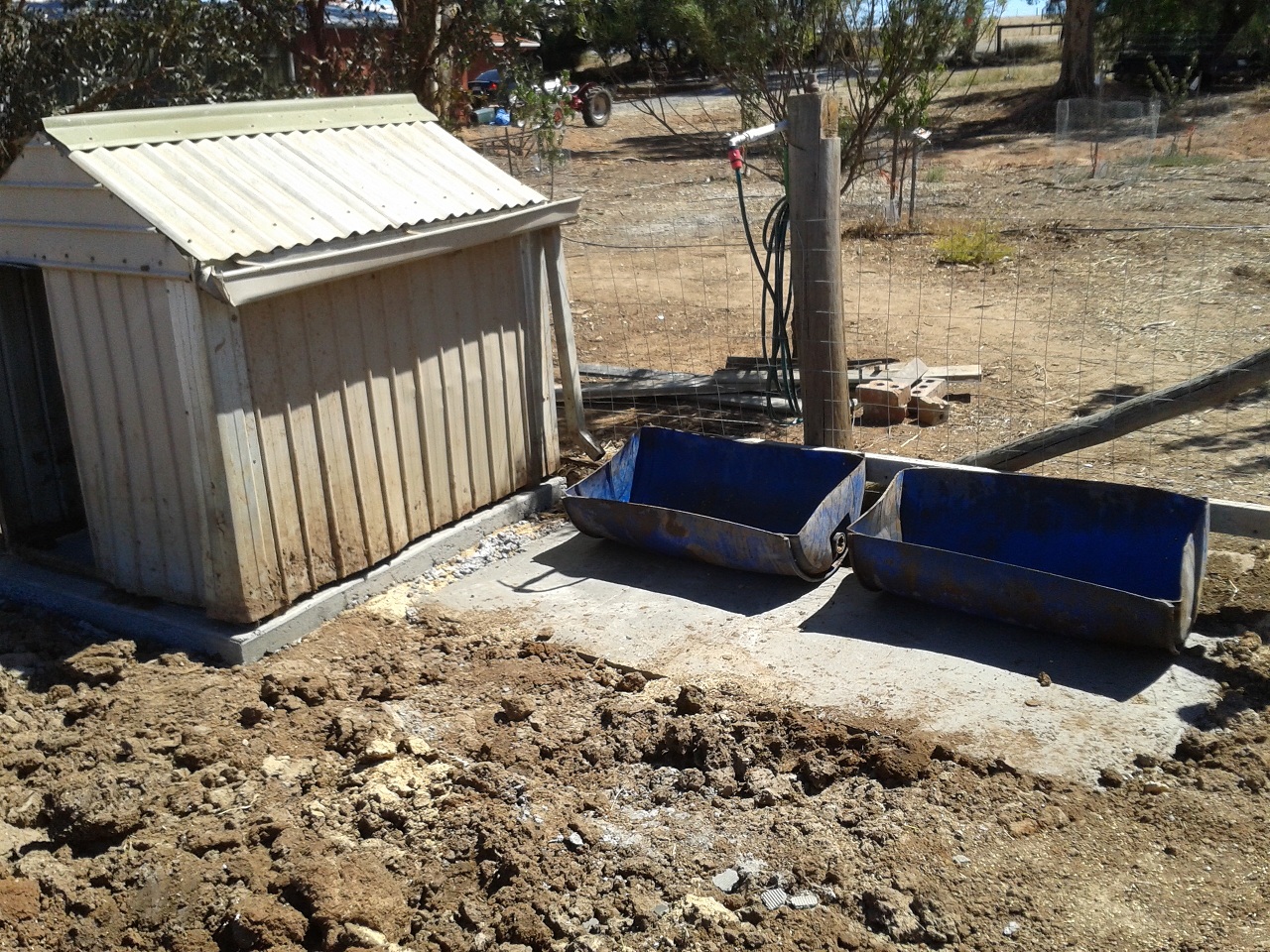
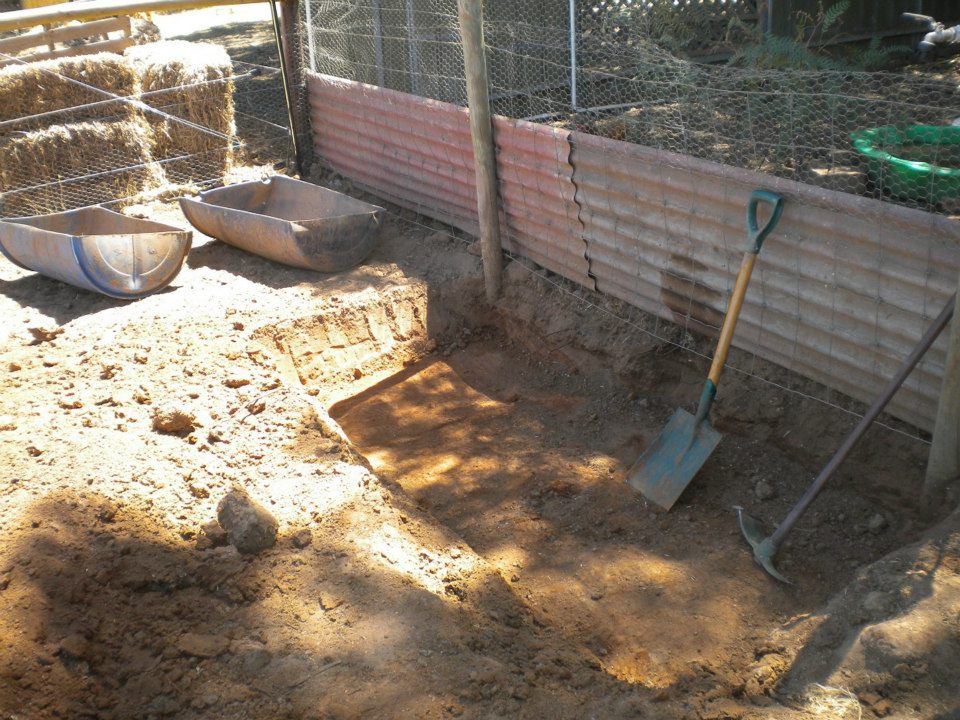
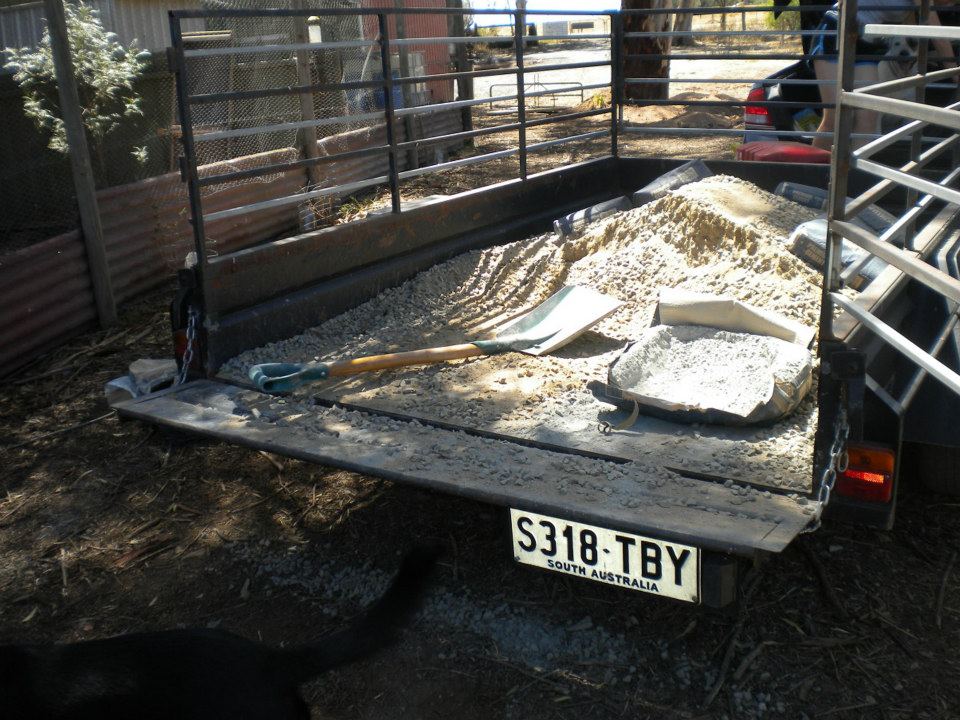
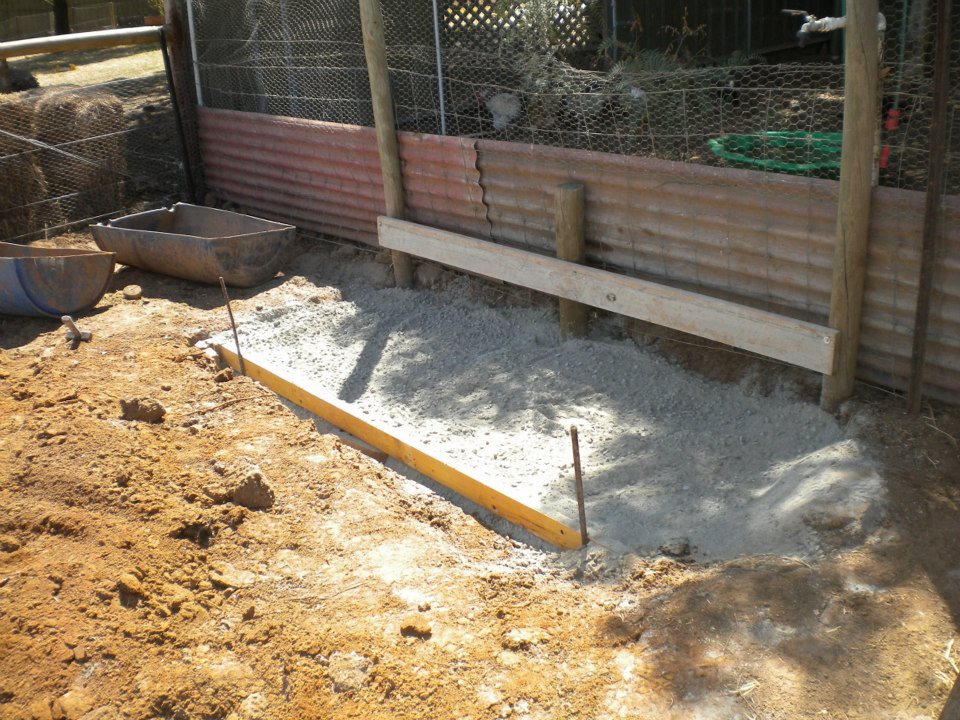
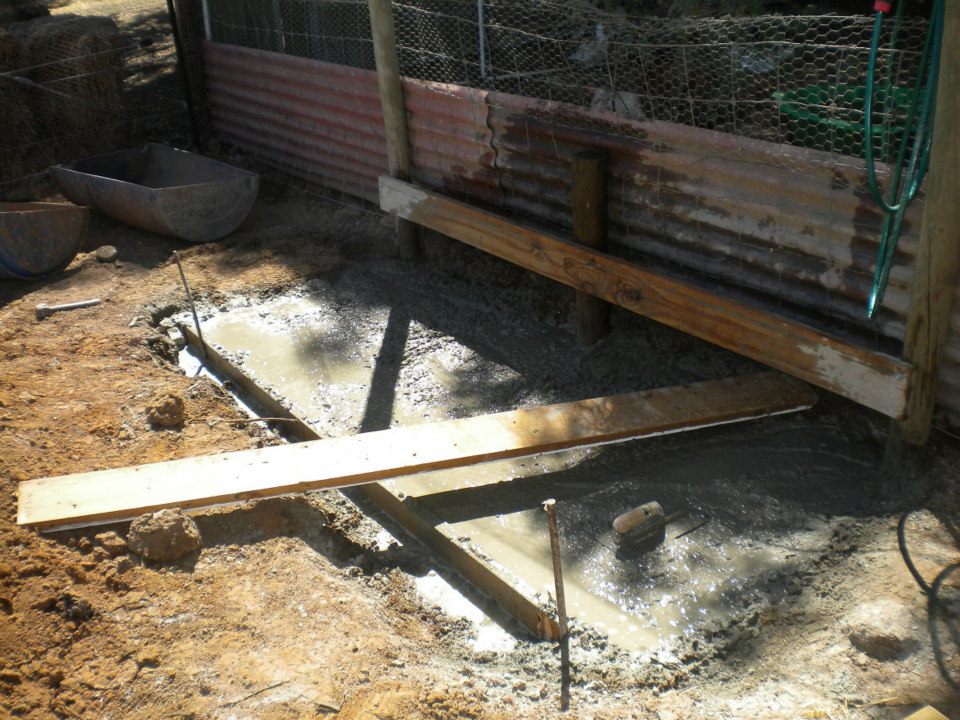
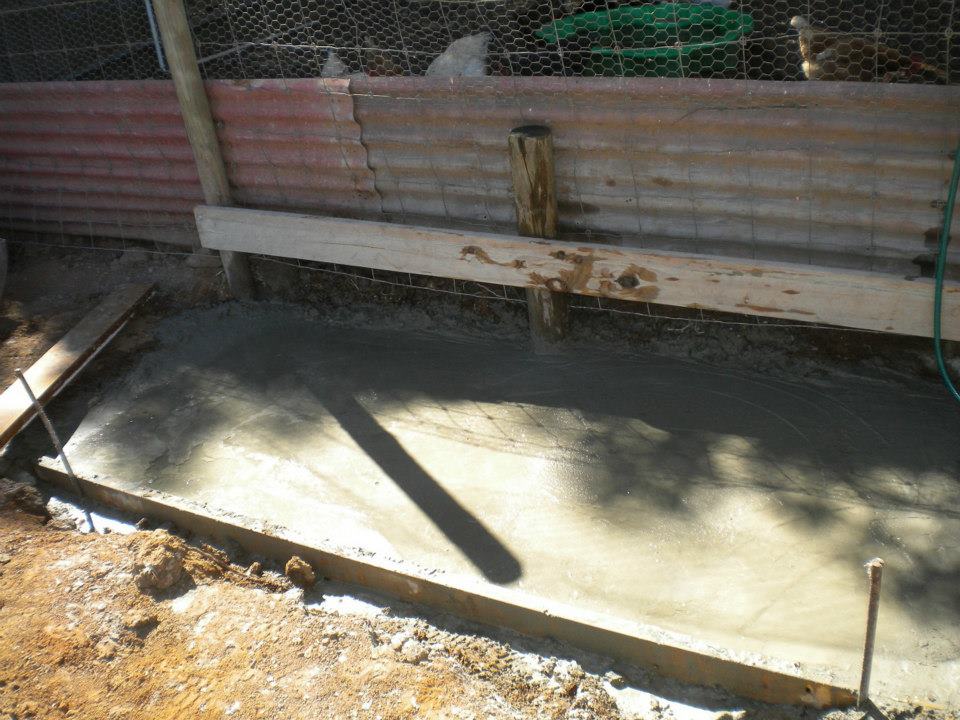
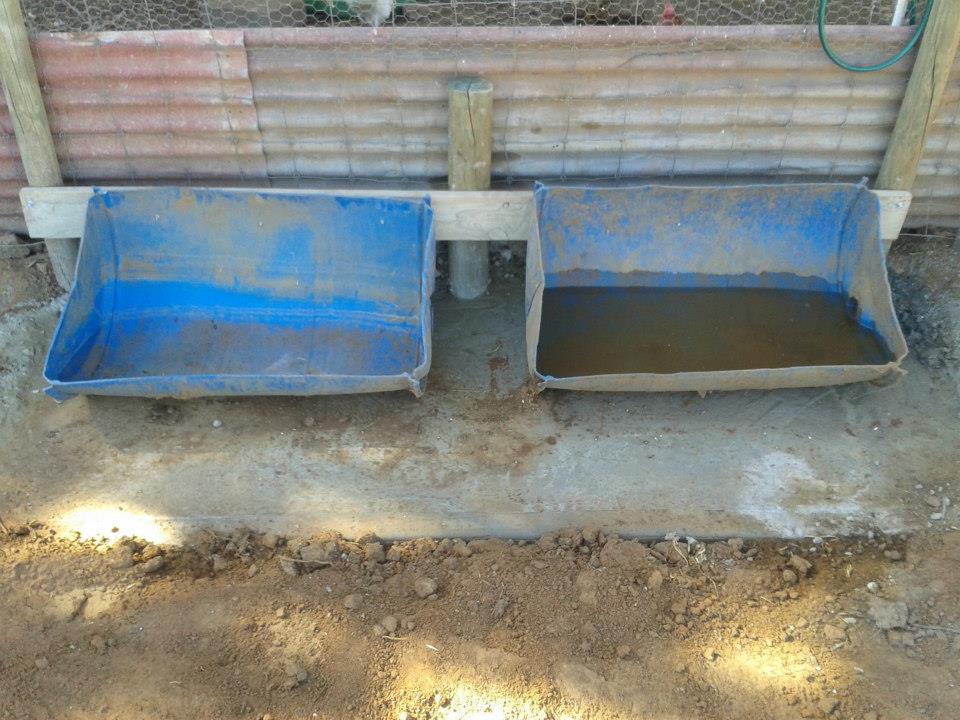
The last of the cement pads was finished in the pig runs.  This is the 5th we’ve done, and Linhda tells me I’m crazy to post pictures of each of them, mainly because they all look the same. However, there’s a lot of hard work goes into cementing, so I’m going to post proof of it. Enjoy…

Shuttering up.

Shuttering up.

Cement in.

Cement in.

Done!

Done!

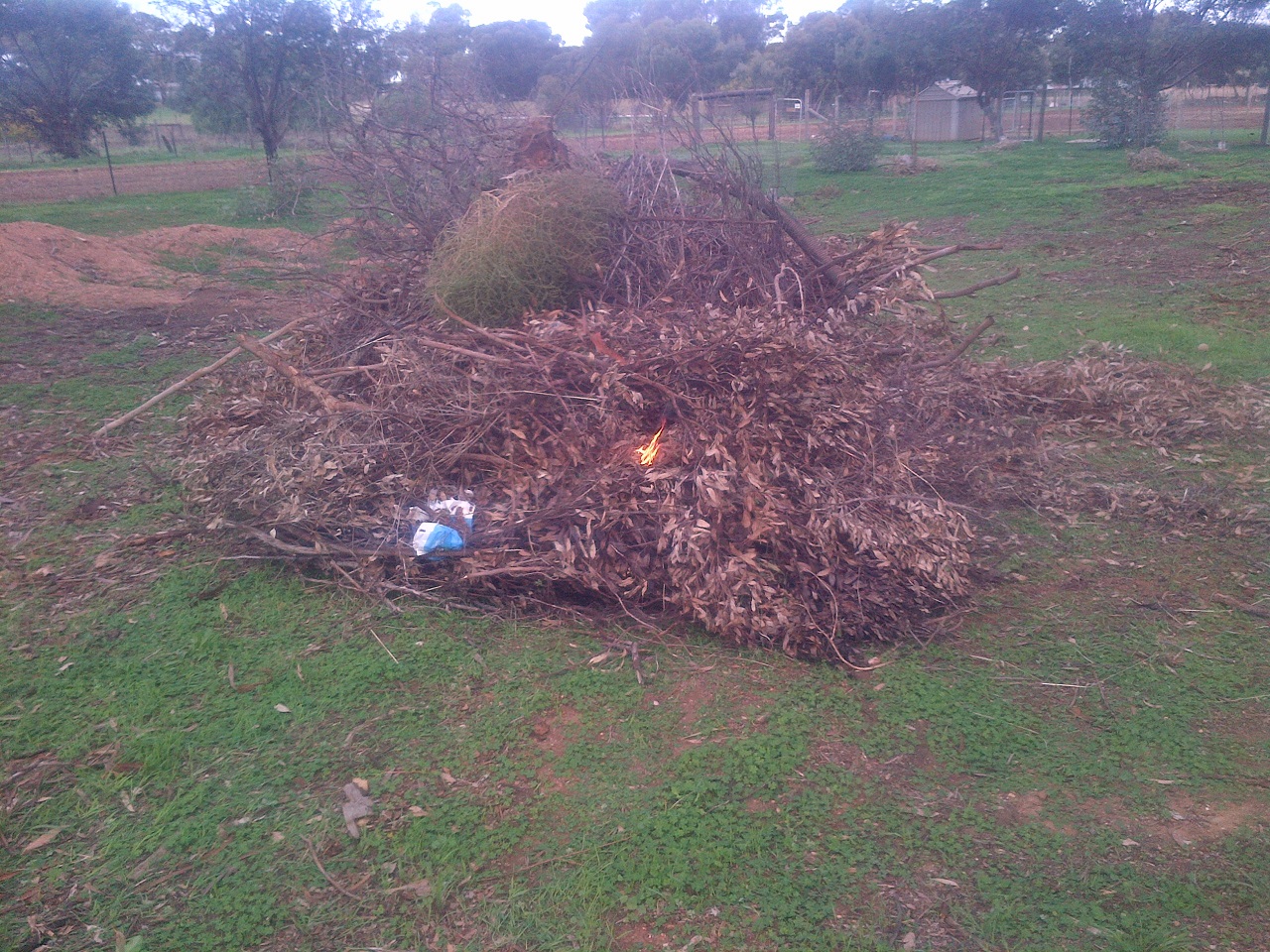
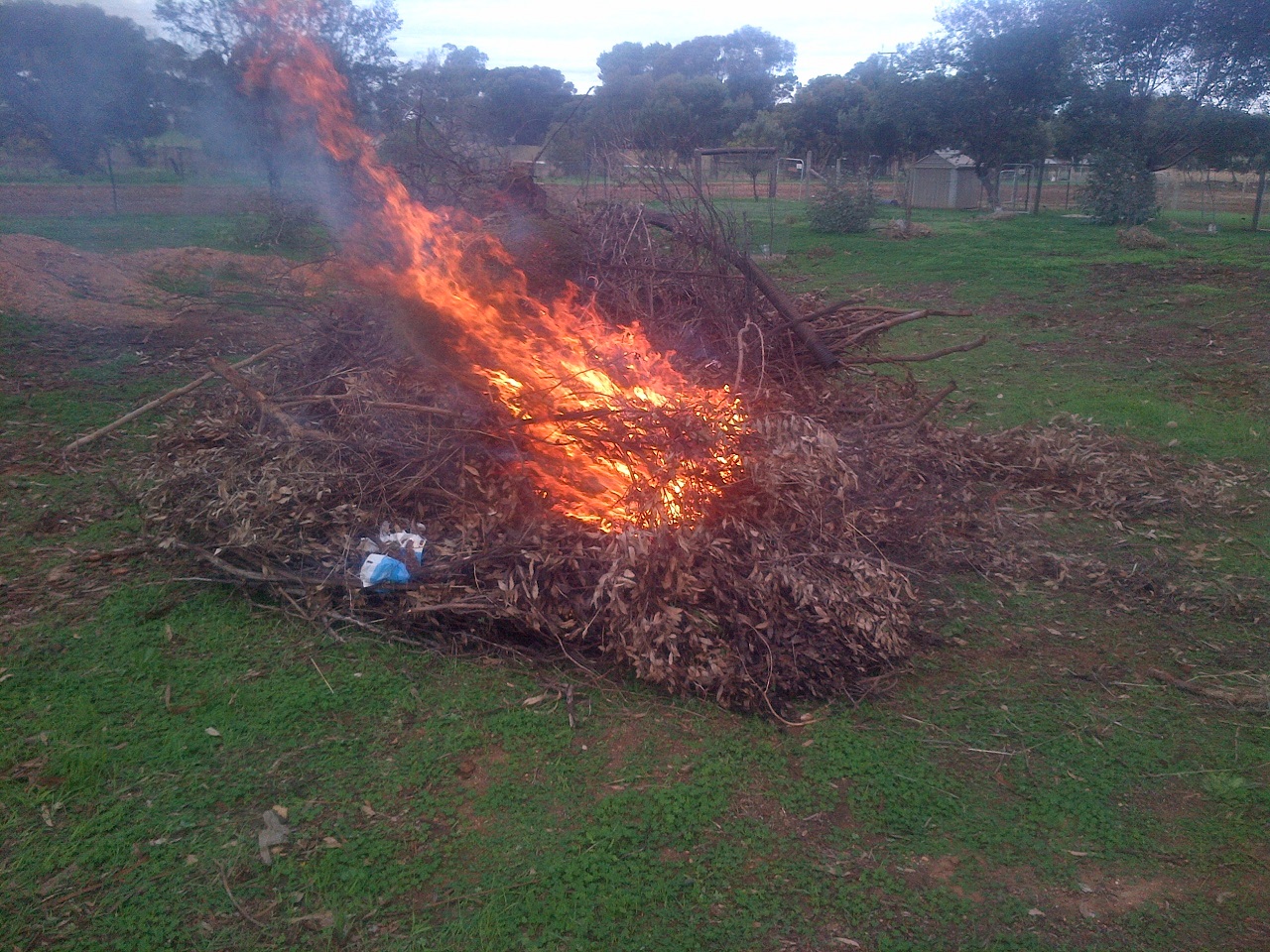
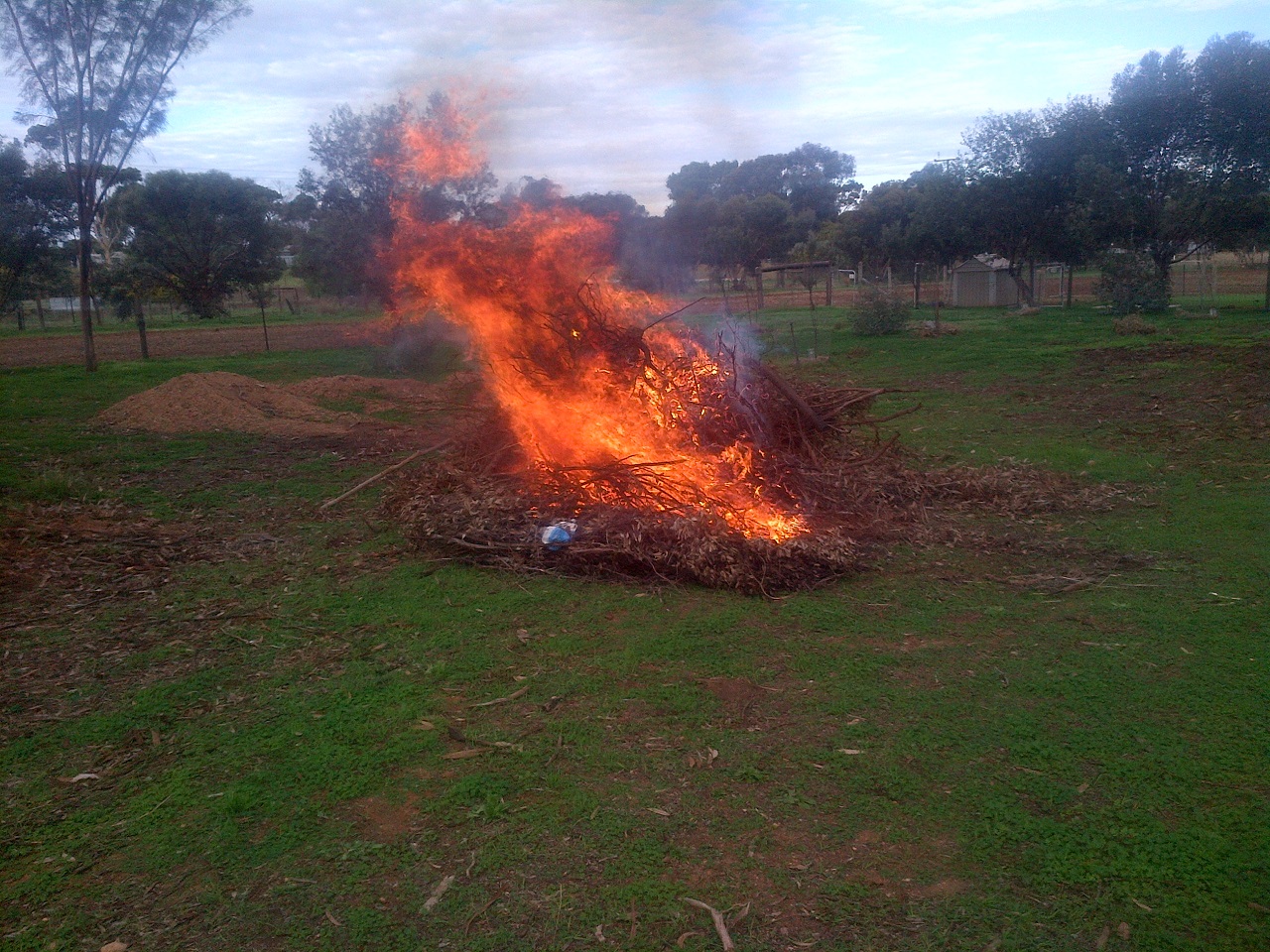
We had a small bonfire, which I’m guessing will become an annual event around this time of year just to clean up any accumulated crap we have hanging around. This one was interesting though.  It had a heap of well-dried leafy gum limbs, though they were a bit damp from being out. Linhda used one match to light one gum leaf, just to see how well it would take. The results were fairly amazing, and it grew to a nice-sized blaze in no time. Just goes to show how easily bushfires can start…

We used one match on one leaf to see how quickly it'd take...

We used one match on one leaf to see how quickly it’d take…

...as it turns out, it took pretty quickly.

…as it turns out, it took pretty quickly.

This was only a couple of minutes on.

This was only a couple of minutes on.

May wasn’t all about growing things and building things, it also had a nice porky theme too.  We took George to the “Other Farm” mid-month.  He was the runty one from the four boys we bought as potential baby daddies some months back. We didn’t really need the meat, but he was certainly getting no bigger and was just eating our CPG.

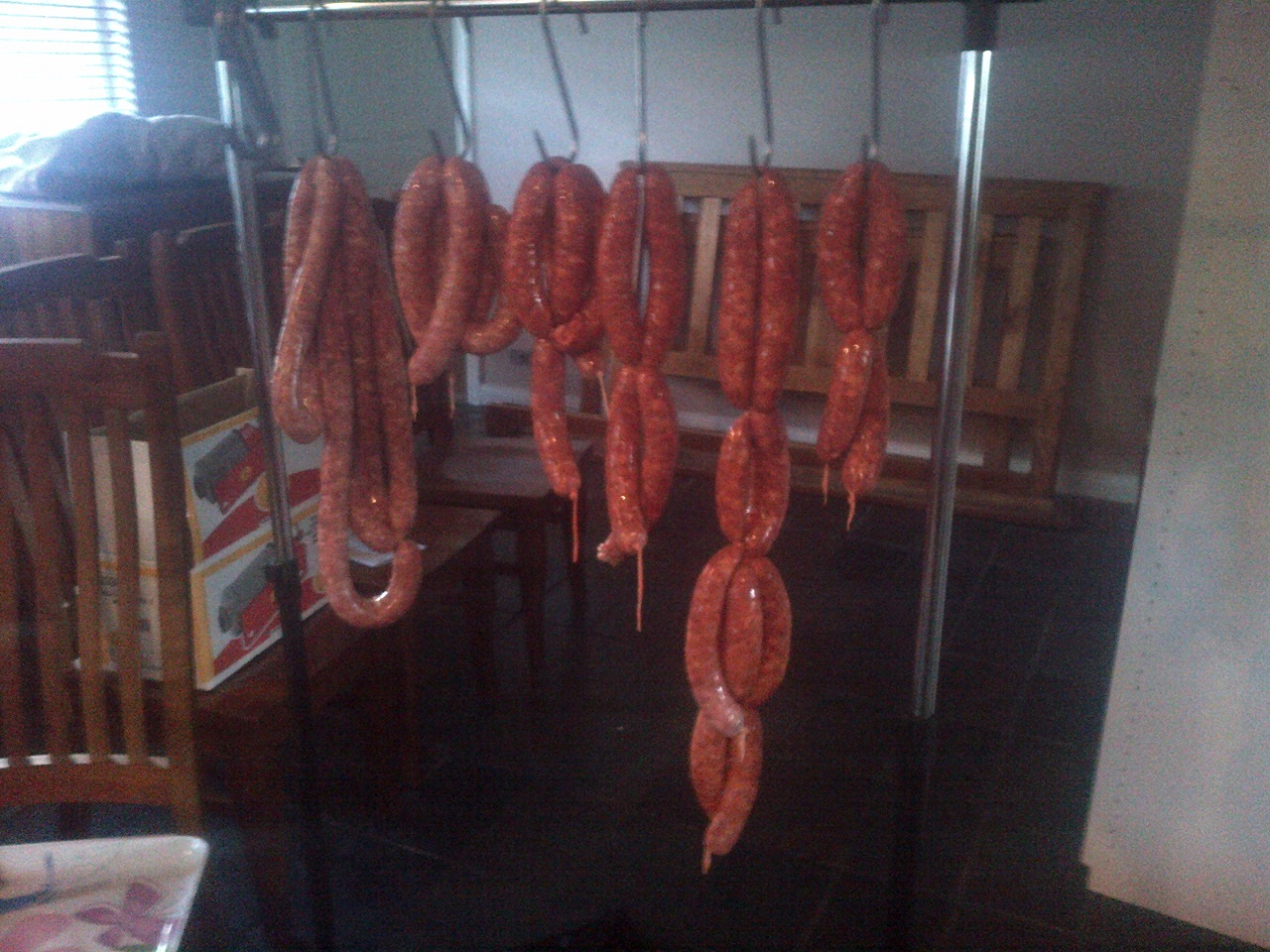
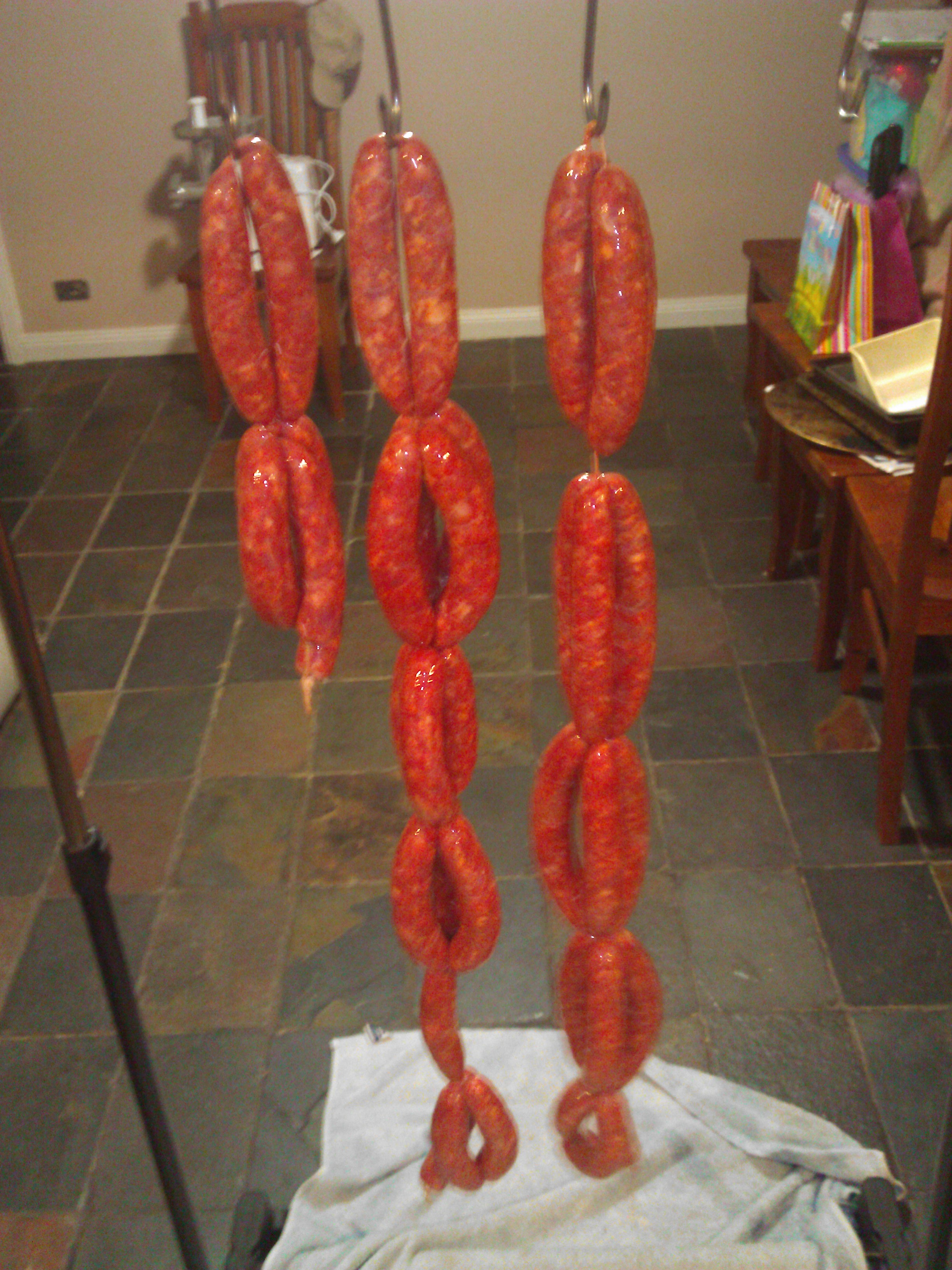
We’re really not that good at estimating size yet, and I guessed he’d dress out to around 30kg.  He ended up being 46kg!  We minced more than last time, put away some mince, and made about 8kg of sausages.  We tried an English Pork Sausage and a Dried Tomato mix, and both are amazing.

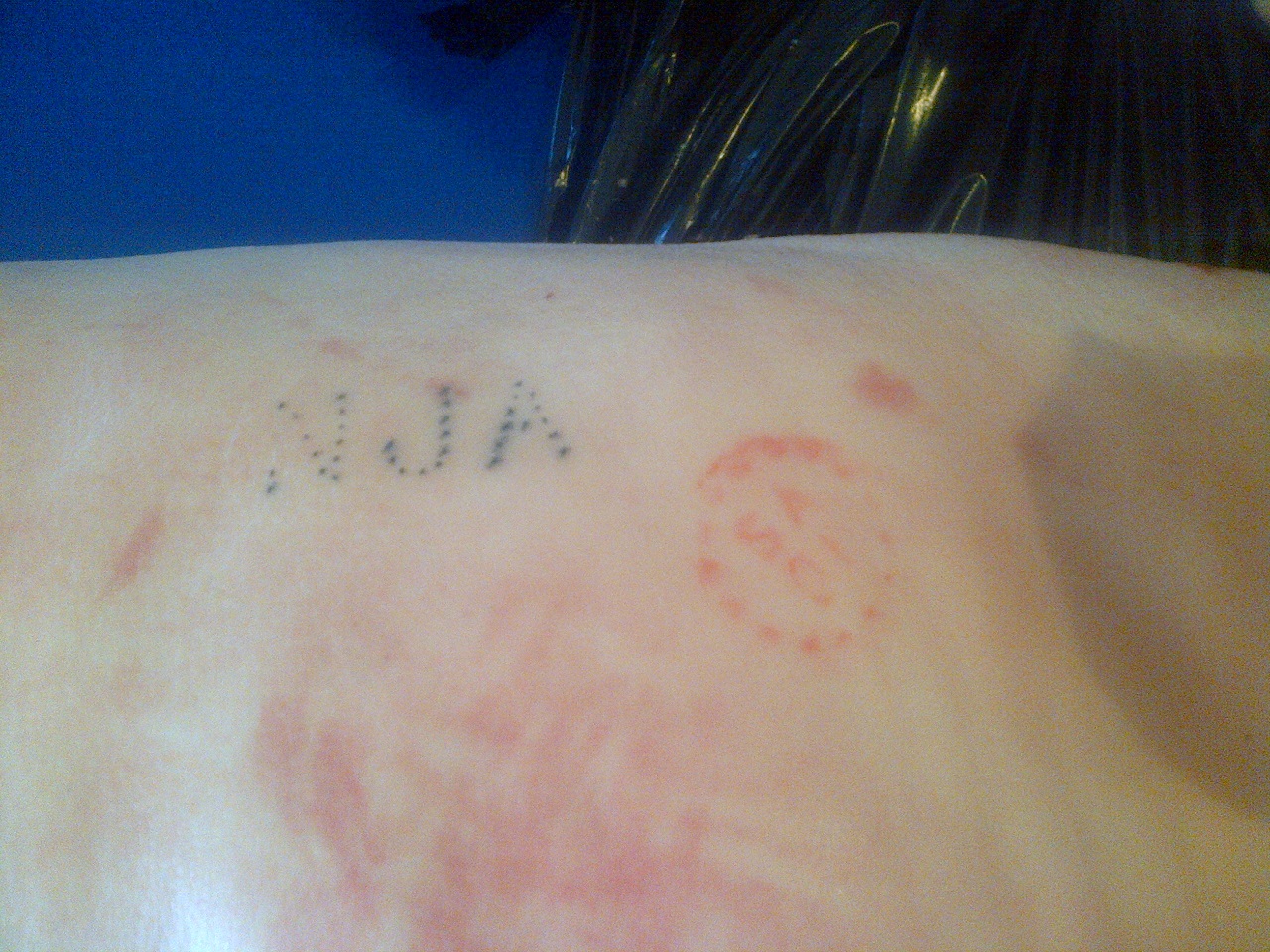
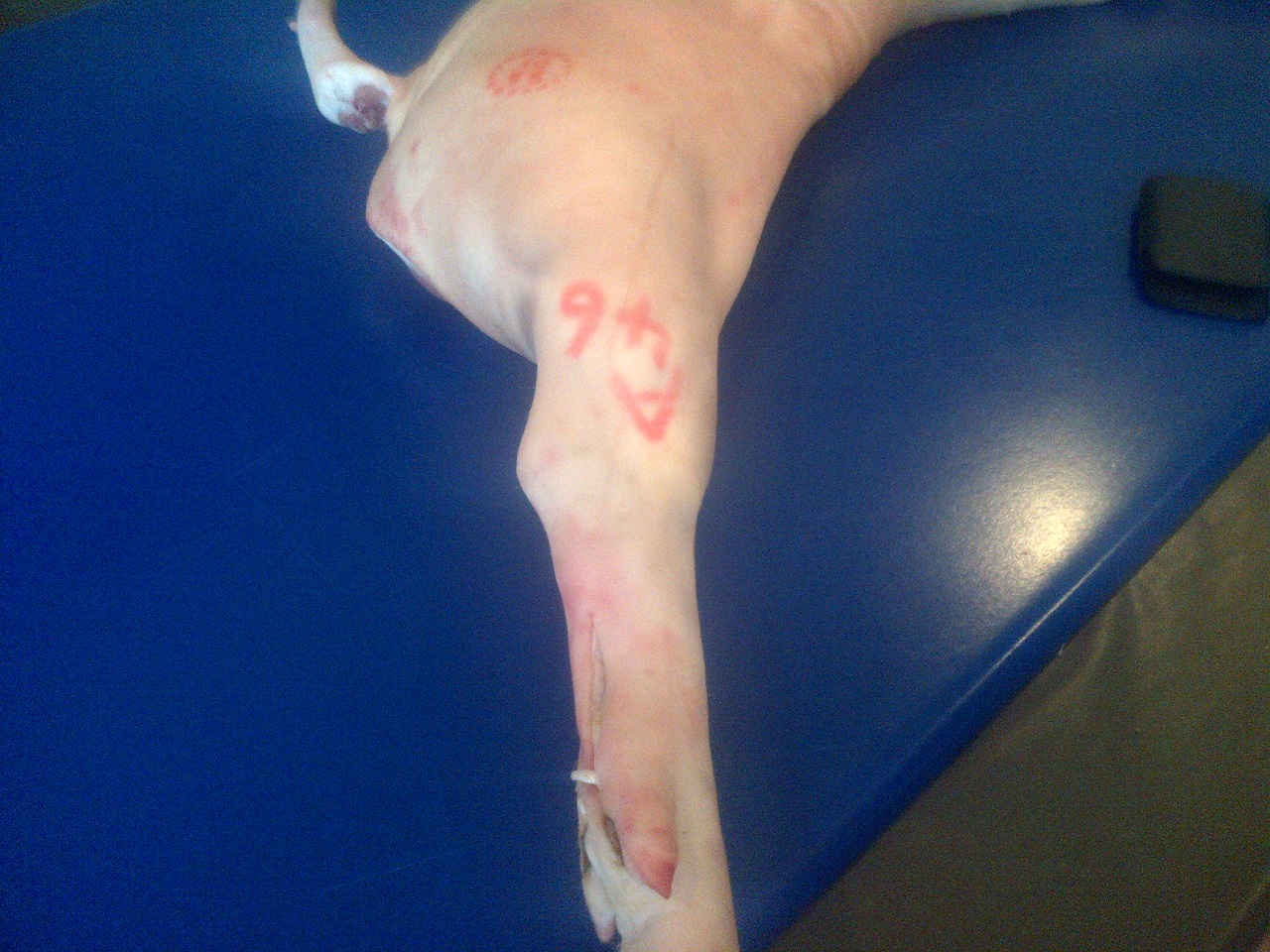
Our brand! Of course, the poor pig has to be dead and dressed for us to see it properly.

Our brand! Of course, the poor pig has to be dead and dressed for us to see it properly.

46kg of amazingness.

46kg of amazingness.

Best. Sausage. EVER!

Best. Sausage. EVER!

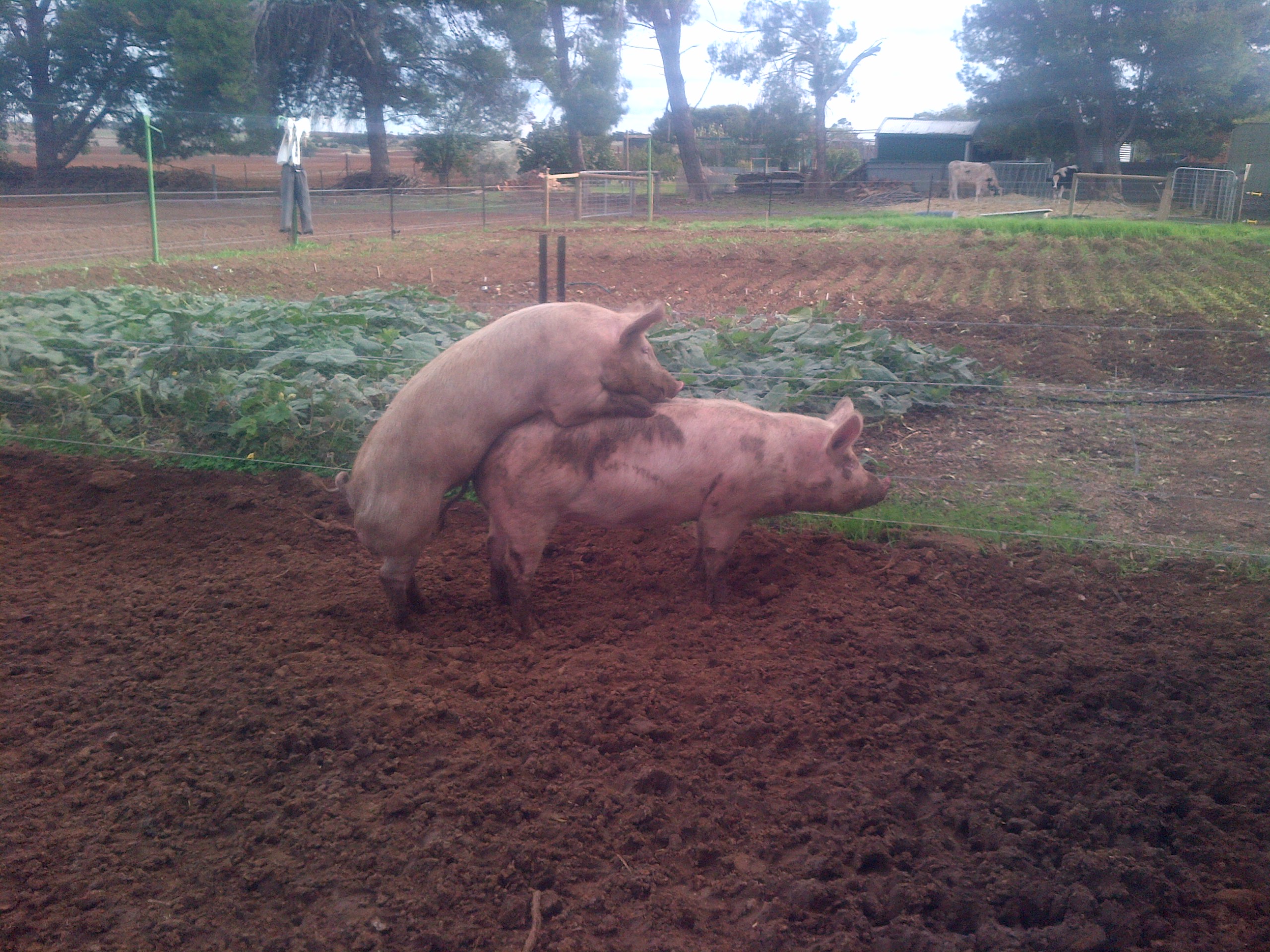
To my mind, the most exciting part of May was that we saw Boris actually end up… doing the deed with the sows.  It took about 10 minutes of fairly determined activity, and that’s without Honey struggling at all. In fact, you could tell she was eager as she stood still and even went as far as raising her tail.

My concern was that Boris would end up being too short, as the girls are significantly bigger. I wanted him to be smaller though, as that should extend his breeding life.  Still, we weren’t sure if the angle-of-the-dangle would work. As it turns out, it works perfectly, and I have the pictures to prove it.

Boris doing his job... and probably really enjoying it...

Boris doing his job… and probably really enjoying it…

We had the last Sunday of the month off, which I think is our second weekend day with no farm work. It wasn’t my idea, and I’m still not sure how I feel about it.

That picture doesn't look a thing like Bruce...

That picture doesn’t look a thing like Bruce…

There is love-handles, and then there is this.

There is love-handles, and then there is this.

Winter Crop in The Patch – 2013.

This was our first shot at planting a cool-weather crop in The Patch.  Last year it wasn’t ready yet, though we had our smaller beds up near the house. This year after waiting for rain so we could rotary hoe , and after rejigging our plan, we were ready for our first Winter crop at scale.

Of course, the plan was changed again.  The drivers for this were threefold:

  • Our pumpkins in bed 1 are still going.  I’d expected them to be done in February, or maybe March at the latest, but here we are in the middle of May and they’re still going strong. More than that, they’re flowering and producing small pumpkins still.
  • We were combining our umbelliferous (carrot and parsnip) and allium (onion and garly) bed, having chenopods on their own, and had a cruciferous vegetable bed. However, I found that an entire bed for chenopods was      probably overkill, while it seemed that every second vegetable I wanted to grow over Winter was a chenopod (brassica).
  • One of the beds, which we barely used over Summer, has some sand and gravel in it.  Rotating along one bed would’ve had carrots in this, which wouldn’t have worked well.

With all of that in mind, we changed the plan:

  • We rotated everything along two beds.  This means that the sandy/gravelly bed is fallow, though we put in a blend of barley/lucerne as green manure.
  • Bed 1 with the pumpkins has been left alone, and will be where we put up a shade/hot-house or a poly-tunnel.  This means we’re incorporating the big bed near the house in our rotation system.
  • I have an entire bed for alliums.  This may end up giving us too many onions, but we’ll see after this season.
  • I combined the chenopods with the carrots.  This still left us space, so I have an overflow portion for brassicas.  This works well with the rotation, as the crucifer bed is 3 beds away, so we’re safe to plant crucifers in this      bed when it rolls around in the rotation.
  • I planted extra legumes in the large bed near the house.  We have an entire bed of legumes down in The Patch, but we have the spare space and I’m quite keen to get a lot of peas and beans frozen this season.

The plan is to plant out every square inch, especially with the staple crops, and see where we end up after Winter. Last year we did well for garlic and onions, but ended up under-estimating how many we’d need by maybe a factor of 2. This year I want to grow as many of everything as we possibly can, just so we have a benchmark for following years.

I’ll renumber the beds now that we’re reclaiming one for the poly-tunnel.  That means we have five in The Patch (1 through 5, left to right), and bed 6 is the large bed up near the house. Some of bed 6 is permanent – strawberries, chillies, asparagus.  We still have a heap of space to work into the rotation though.

Here’s what we planted:

BED 1

Crucifers:

  • Brussel Sprouts – Drum Tight.  Seedlings. 3 rows.
  • Brussel Sprouts – Drum Tight.  Seeds. 1 row.
  • Brussel Sprouts – Evesham.  Seedlings. 1 row.
  • Brussel Sprouts – Evesham.  Seeds. 1 row.
  • Brussel Sprouts – Ruby.  Seedlings. 2 rows.
  • Brussel Sprouts – Ruby.  Seeds. 1 row.
  • Mini Cabbage. Seedlings. 1½ rows.
  • Mini Cabbage. Seeds. ½ row.
  • Mini Cauliflower. Seedlings. 3 rows.
  • Cabbage. Seedlings. 6 rows.
  • Pak Choi. Seeds. 2 rows.
  • Broccoli – Romanesco. Seeds. 2 rows.
  • Wom Bok. Seeds. 2 rows.
  • Cauliflower. Seedlings. 3 rows.
  • Broccoli – Green Dragon. Seedlings. 3 rows.

Total: 32 rows.

The cauliflower and broccoli (green dragon) were store-bought seedlings.  The rest of the seedlings were grown by me in our little hot-house.

I hope that by planting out both seeds and seedlings of some types at the same time, we can end up with a staggered crop.  Some of this we can preserve and/or freeze, but staggering the crop is still a good idea.

BED 2

Alliums:

  • Springs Onions – White Lisbon. 1 row.
  • Leeks – Mammoth. 2 rows.
  • Onions – Evergreen Bunching. 10 rows.
  • Onions – White Globe. 10 rows.
  • Onions – Red Beard. 10 rows.
  • Onions – Californian Red. 3 rows.
  • Onions – Red Marksmen. 2 rows.
  • Onions – Melbourne Market. 1 row.
  • Garlic – Xian (note: cloves were a little dry and may not germinate well). 1 row.
  • Garlic – Dynamite Purple. 3 rows.
  • Garlic – Early Purple. 2 rows.
  • Garlic – Japanese Red. 1 row.
  • Garlic – White. 2 rows.

Total: 48 rows.

These were all seeds.

We potentially have over 1000 onions here, which would obviously be overkill.  I’m really very keen to grow as many as we can in the bed, however, just to see how many we can grow and how many we need to cover us.

BED 3

Legumes:

  • Beans – Borlotti. 1 row.
  • Peas – Dwarf Green Feast. 4 rows.
  • Peas – Dwarf Sugar Snap. 3 rows.
  • Broad Beans – Crimson Flowered. 1 row.
  • Broad Beans – Aquadulce. 2 rows.
  • Peas – Yukomo Giant Snow Peas. 3 rows.
  • Pea – Climbing Snow Peas. 4 rows.
  • Peas – Green Feast. 10 rows.

These were all seeds.

Total: 28 rows.

BED 4

Umbelliferous:

  • Carrots – Chantenay Red Core. 10 rows.
  • Parsnips – Hollow Crown. 2 rows.

These were all seeds.

Chenopods:

  • Beetroot – Monorubra. Seeds. 5 rows.
  • Beetroot – Super King. Seeds. 2 rows.
  • Radish – Black Spanish. Seeds. 1 rows. (not a chenopod, but this is where they are in the bed).
  • Beetroot – Derwent Globe. Seeds. 3 rows.
  • Lettuce – 2 rows with 2 for staggered planting. Seeds.  (not a chenopod, but this is where they are in the bed).
  • Spinach – Baby Leaf. Seeds. 1 row.
  • Spinach – Perpetual Leaf. Seeds. 3 rows.
  • Spinach – Lazio F1. Seeds. 4 rows.
  • Silver Beet. Seeds. 1 row.
  • Silver Beet. Seedlings. 2 rows.

Overflow Crucifers:

  • Kale. Seedlings. 2 rows.
  • Mustard Greens – Miike Green Giant. Seeds. 2 rows.
  • Mustard Greens – Wasabi. Seeds. 2 rows.

BED 5

Fallow.  I bought lucerne as a green manure, and padded it out with some extra barley we had left.

BED 6

Legumes:

  • Broad Beans.
  • Snow Peas.
  • Peas – Green Feast.

This is the large bed up near the house, and I filled it in as best I could around the stuff already there. All of these seeds were our own stock from last year.

We also planted asparagus and horse radish here.  It already had turnips, swedes, and carrots.  This bed also has our strawberries and 9 or 10 chilli plants.

April 2013 Facebook Farm Statuses

  • I was woken      just before 6 this morning by something large-ish climbing onto the roof      above my bedroom. Being in the country, it’s probably a possum. However,      many years of watching Supernatural has taught me it could be a Wendigo,      ghost, or shape-shifter. Personally, I’m hoping for ghost…
  • Just found      the first con of the new easy-turn taps that we’ve installed all over the      property. The smallest cow has discovered that, while in the pig runs, he      can lean over the fence and turn the tap on with his tongue. As a result,      there is now a small river running through the pig runs and the cows are      banished.
  • The valets at the airport always ask if I want my car cleaned, but I normally don’t bother. This week, however, the conversation went:

Valet: And would you like your car washed this week Mr. Atherton?

Me: Do they polish it?

Valet: Yes sir, we can organise that. Does it need some special attention?

Me: Yes, actually. I have these large marks on both front doors. One of my cows rubbed his horns on them.

Valet: Ummm, a cow?

Me: Yes.

Valet: <awkward silence> Why would a cow do that?

Me: They’re intensely curious creatures. Fortunately, they’re also pretty damned tasty.

Valet: <awkward silence> Well, have a good trip.

  • Used our amazing giant rotary hoe to turn over a few hundred square metres of veggie patch, and reclaimed about 50 square metres of the lawn. My conquest of the lawn has begun, and I fully plan on having it all productively planted within 5 years. Don’t tell Linhda.

Also manage to get our fallow bed planted out with green manure, and get the rest of the beds mapped out. It’s amazing what a huge difference a year makes to the soil condition. A year ago it was dead, red clay. Now it looks like rich, dark loam.

The planting begins this weekend. The plan is set, the seeds are bought/dried. So, so, so looking forward to getting it all planted out.

  • Seriously considering a milking cow. I think I’ve found a smaller breed that doesn’t need twice daily, or really even daily, milking. It’s still a lot of work, but on the plus side we have cheese.
    Cheese > work. It’s basic math really.
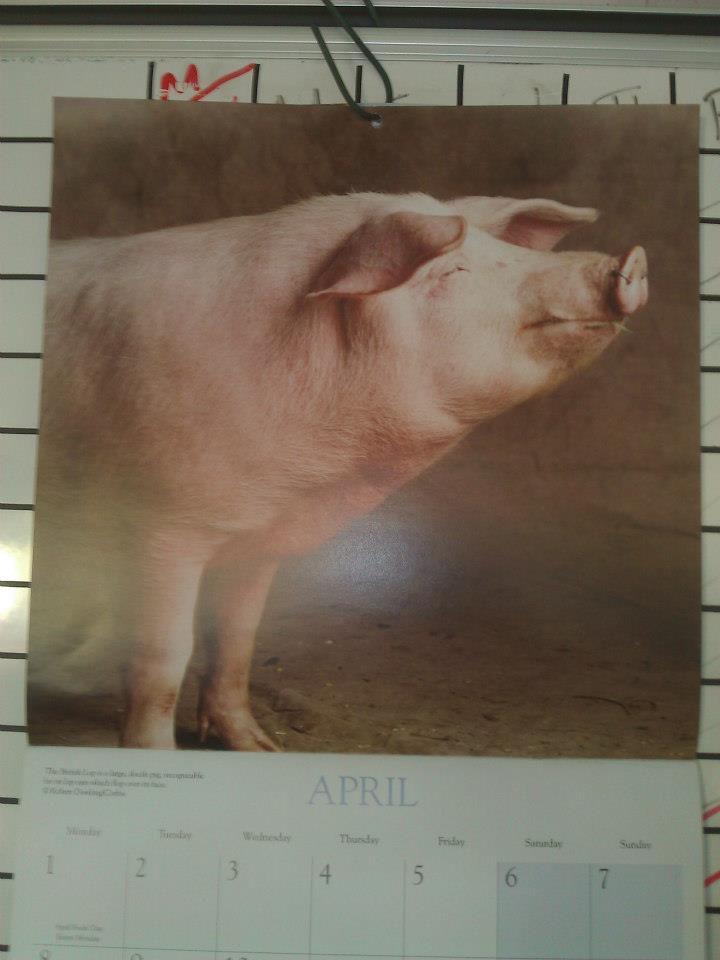
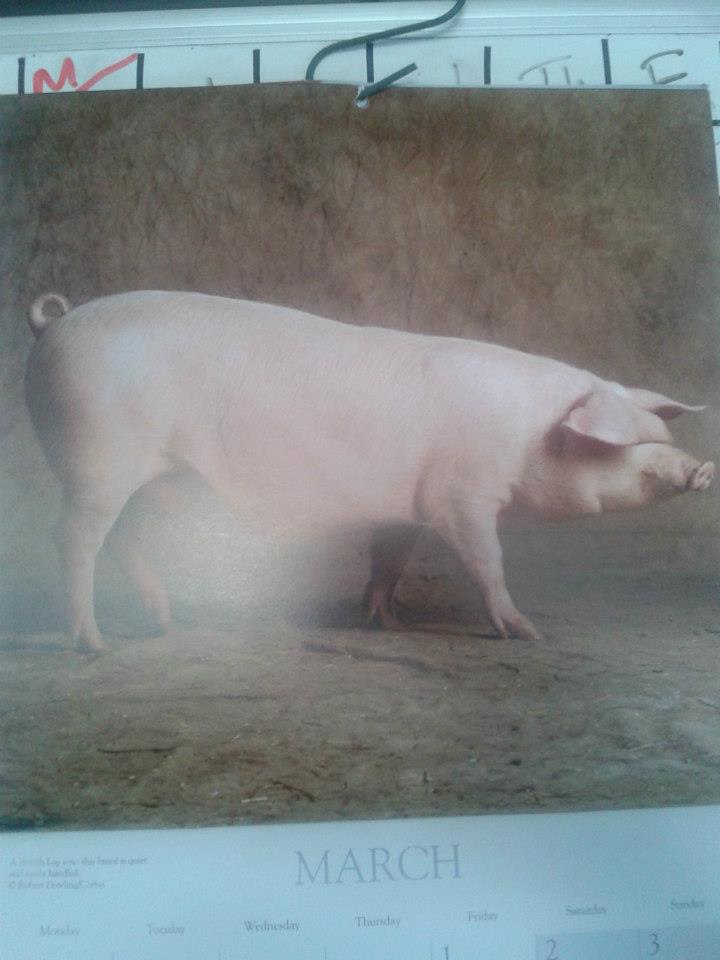
Miss April. It's really just another shot of Miss March, but she's still hot!

Miss April. It’s really just another shot of Miss March, but she’s still hot!

Rain At Last!!!!!

After a ridiculously hot January and February , and a barely cooler March , we had been promised rain in April. In fact, for about six weeks in a row we had forecasts of rain.  It seemed on the Monday we’d have a forecast of a good chance of a good amount of rain the next weekend. By the Thursday or Friday that invariably changed to little chance of next-to-no rain. It was killing me.  We had most of The Patch harvested and ready for the next planting, but I needed the rain to get it rotary hoed and ready.

We finally got the rain towards the end of the month.  Before that though, we managed to fill our time…

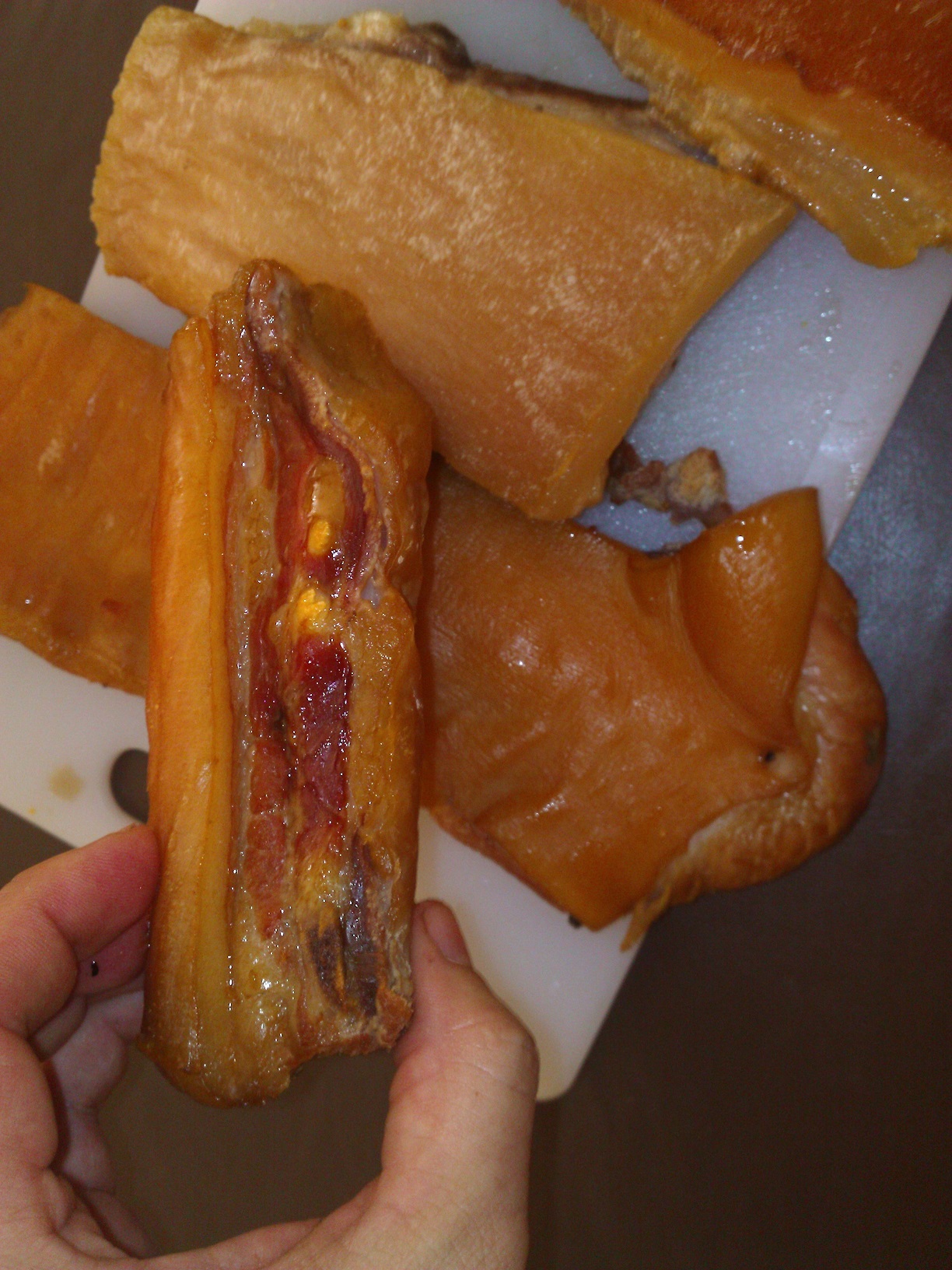
We started the month by finishing our bacon. We put it down at the end of March, trying one cure with sugar and one with maple syrup.  The recipe recommended seven days in the cure, but we tried some after only 3 days.  We tried two ways to finish it – one in a low oven and the other in our new home-made smoker.  That gave us four permutations – two cures and two methods.

Two different cures after three days. The meat is really quite stiff and glassy.

Two different cures after three days. The meat is really quite stiff and glassy.

Two different cures finished off in the oven.

Two different cures finished off in the oven.

Two different cures in the smoker.

Two different cures in the smoker.


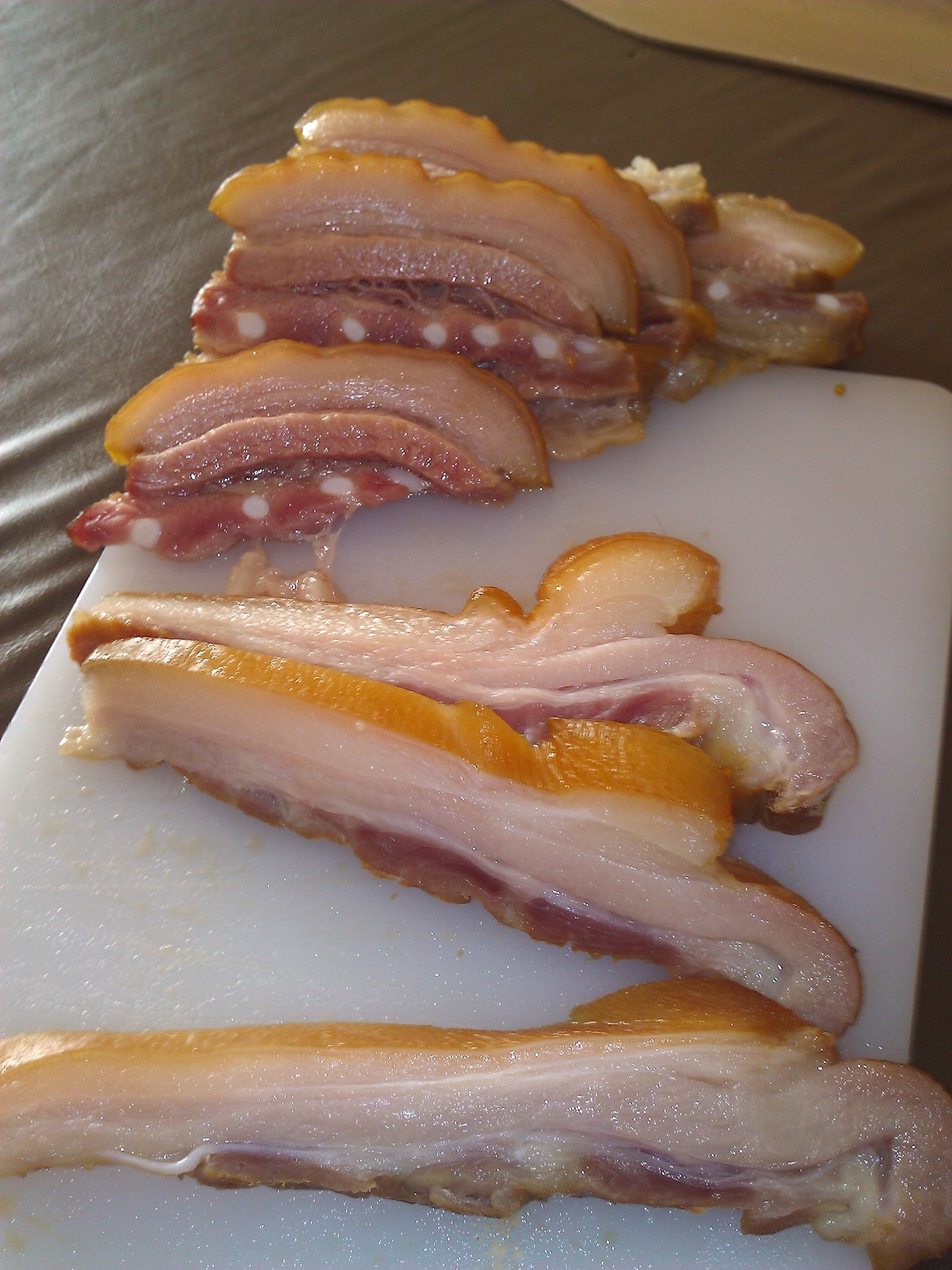
We didn’t use any nitrates, opting instead to use celery juice which apparently has naturally occurring nitrates.  This helps keep the colour. We found that the oven-finished bacon had more of a roast pork colour, while the smoked bacon had more of that expected bacon pinkness.

The smoked stuff. The colour and aroma are amazing!

The smoked stuff. The colour and aroma are outstanding!

It's hard to describe the freshness of home-made bacon. The quality is amazing.

It’s hard to describe the freshness of home-made bacon. The quality has to be sampled first-hand.

This was slightly under-done, meaning I'd not eat it raw. This bacon is amazing though.

This was slightly under-done, meaning I’d not eat it raw. This bacon is amazing though.

Both tasted great, but we preferred the maple bacon and the smoked finish.

Cooked up and ready for the taste test.

Cooked up and ready for the taste test.

This not only showed us which cure and finish worked best, but also the timeframe.  Three days in the cure left it almost too salty. I ended up taking the rest of the bacon and soaking it in fresh water for an hour, before finishing it all in the smoker.  Next time we’ll go maybe only two days.

Keeping to the porky theme, we also finished and hung our first prosciutto.

Our home-grown and home-made prosciutto. Very much an experiment.

Our home-grown and home-made prosciutto. Very much an experiment.

It cured for 17 days. We rinsed it, covered it in a pillow case, and hung it under the veranda.  My concern is the temperature.  This time of year we still get the occasional high 20’s day.  I’ll probably bring it in or put it in the fridge those days.  Charcuterie hanging outside in South Australia is still something I’m not at all sure is possible, and something that requires much more investigation.

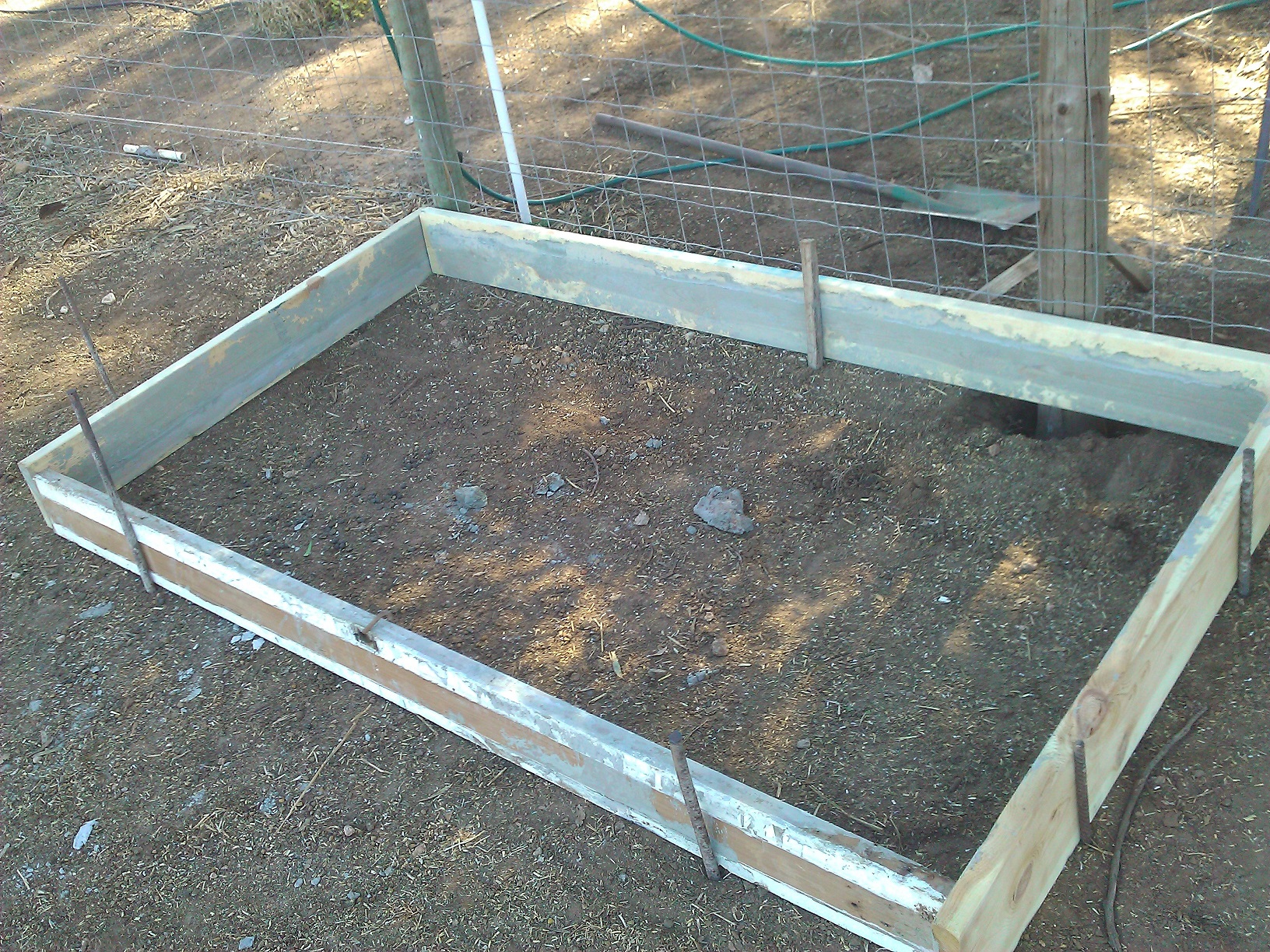
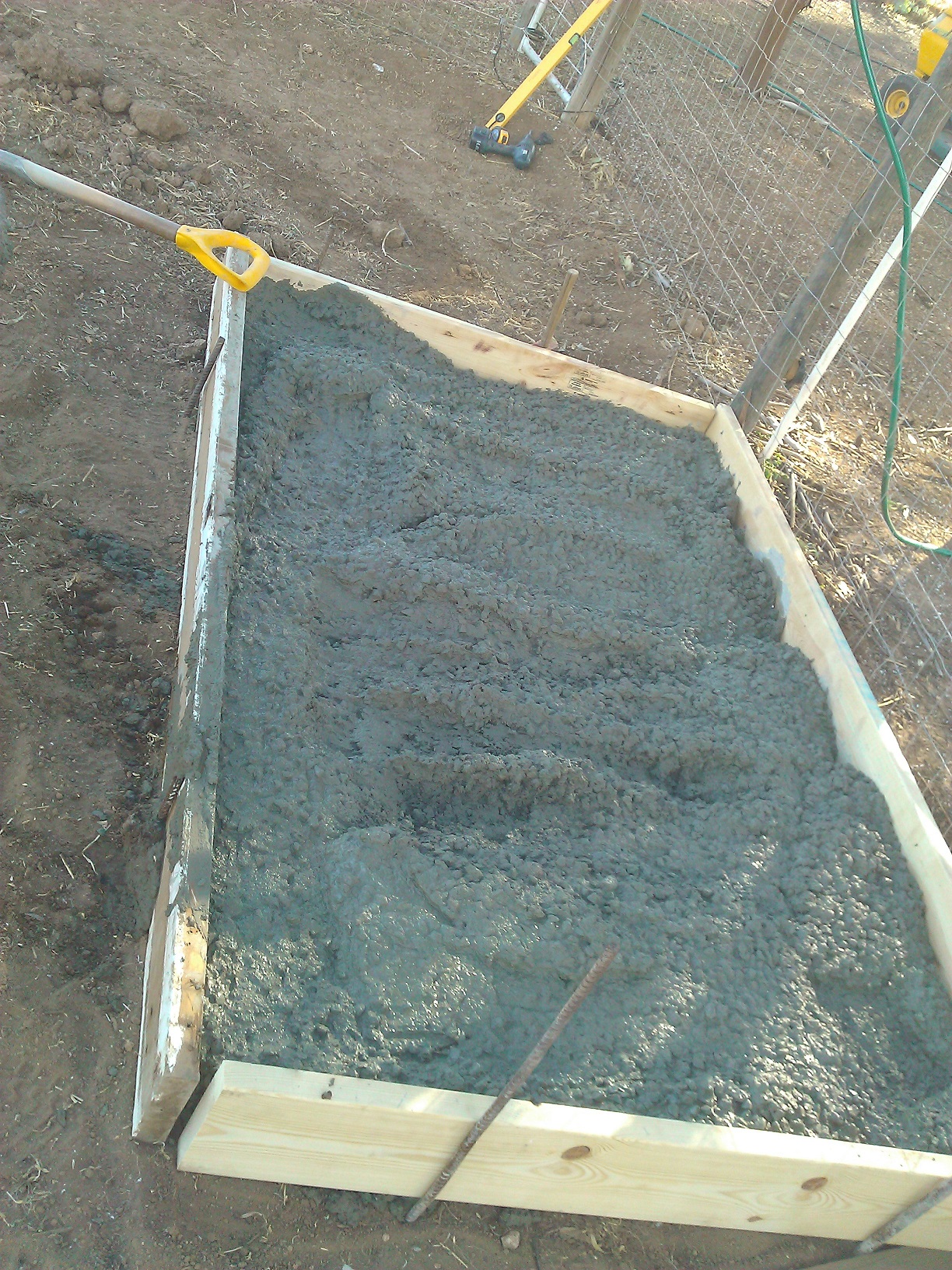
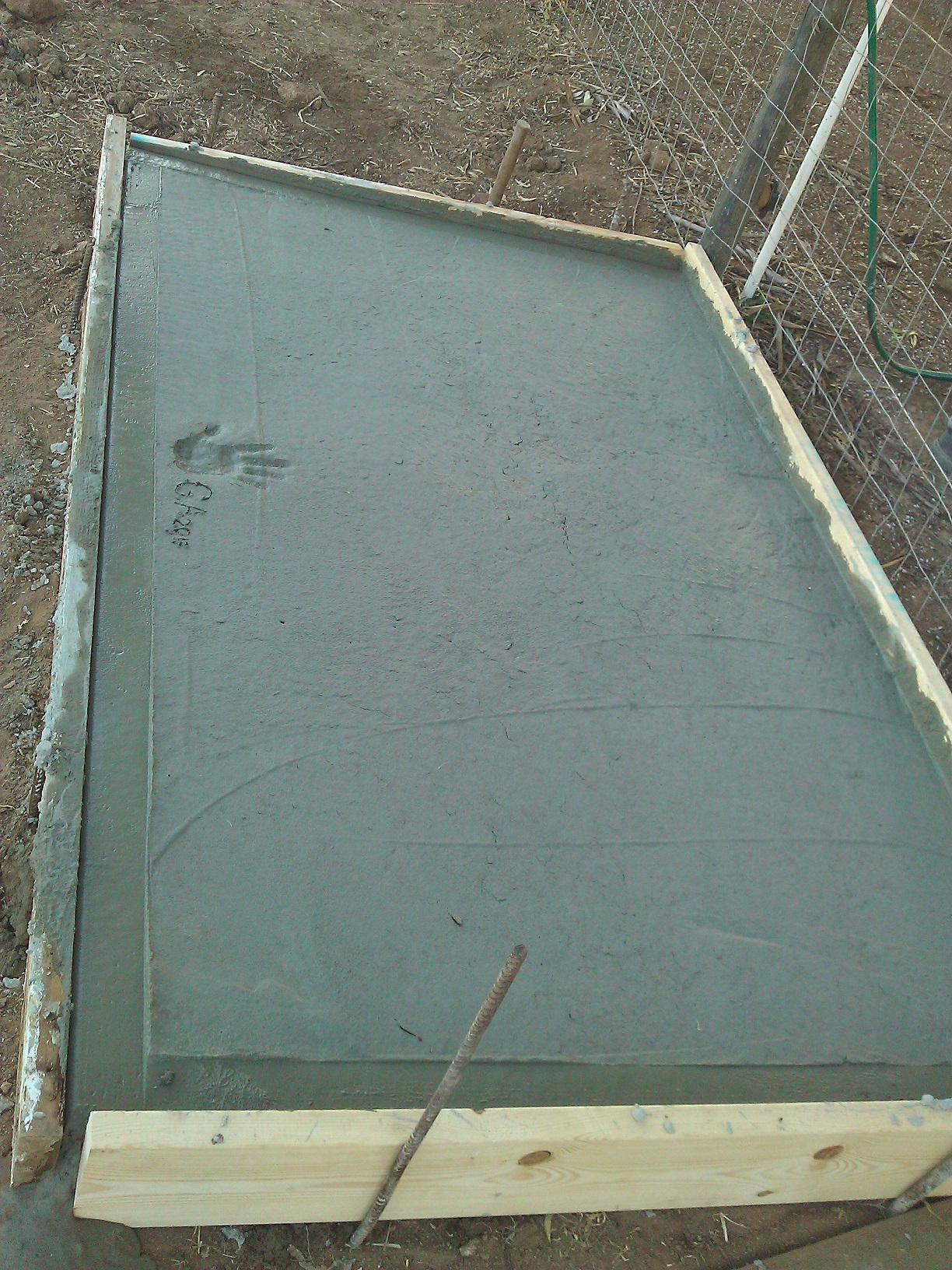
We also managed to mix and pour cement pads for two of the remaining pig runs.  We’re getting much better and faster at the cement thing.

Form work up.

Form work up.

Starting to fill it up.

Starting to fill it up.

Floated off.

Floated off.

Gemma didn't really help, but wanted to commemorate this with a hand print.

Gemma didn’t really help, but wanted to commemorate this with a hand print.

All done.

All done.

Set and done!

Set and done!

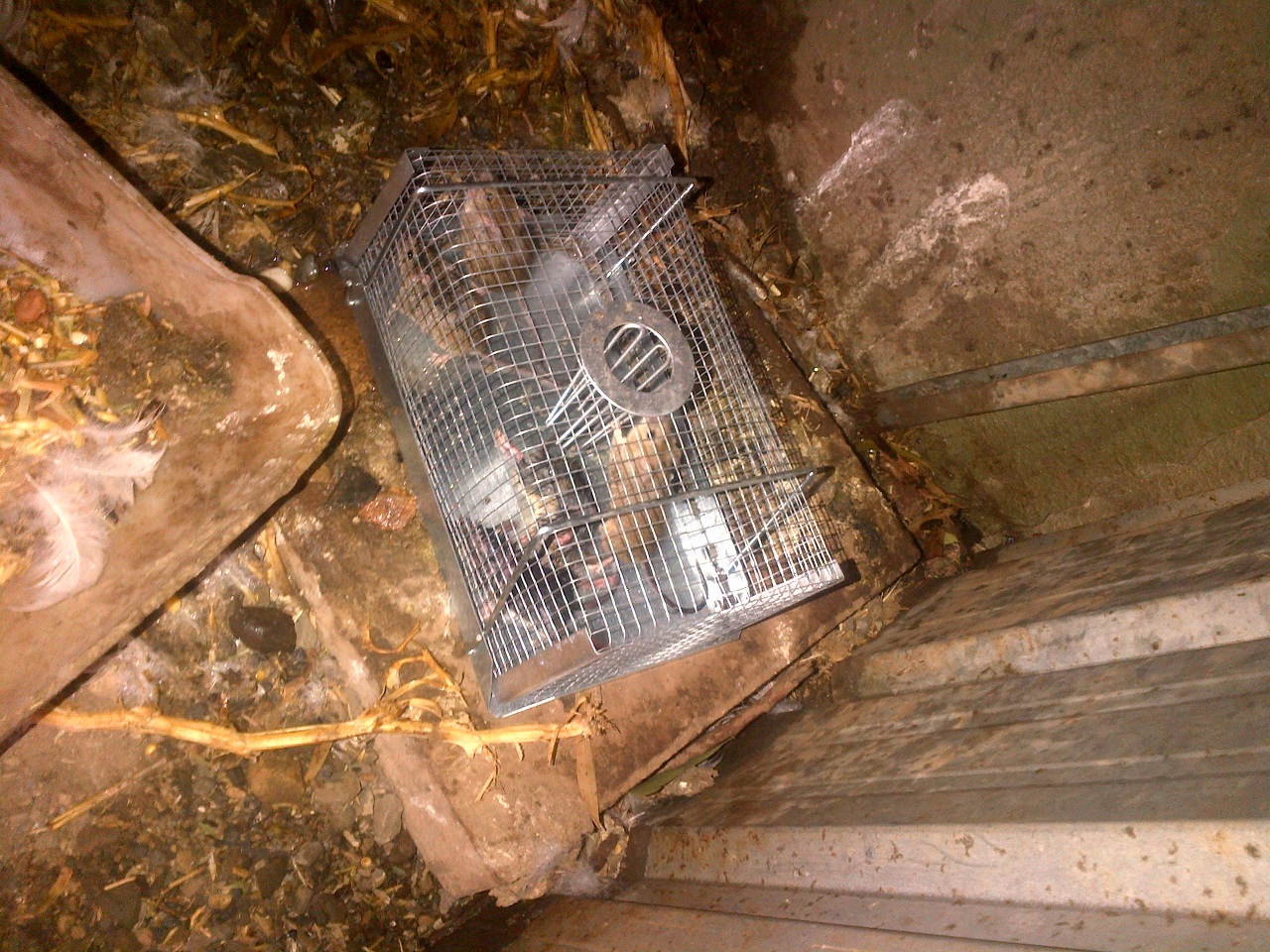
We’ve not had a heap of problems with rodents, but they’re still around.  This is the country and we do live in the cereal belt after all.  We’ve had maybe two mice in the house, though I do have traps down in the sheds that will sometimes catch a few a weekend.  I’d noted mice in both the duck and chook runs though, and we’ve managed to get a rat.  With that in mind, I got some live-capture traps to clean up any rodents that might be running around.

I put a live-capture mouse trap in the duck run, and caught five in the first night.

This live-capture trap works amazingly well.

This live-capture trap works amazingly well.

Since then we’ve managed to get a good twenty or so.  The interesting thing is that we’ll go a few days with nothing and then get a heap. They’re mostly young ones, with a couple of adults. It’s like we get some new litters that come out in a wave.

In terms of meat, we had a bit of a self-sufficiency win. To me, self-sufficiency is doing it yourself.  I can be a bit stubborn about that, and I get fixated on doing/raising things ourselves. However, I’ve been trying to expand that concept.  An equally valid version is raising meat/veggies/fruit, selling the excess, and using that money to buy what we need.  For example, I can never grow all of the food the stock needs, not on our few acres, but I can grow enough pigs to cover the cost of the feed.

With that in mind, we had a sheep that was excess to our needs and so sold him on. We had him processed by Menzel’s, and sold the professionally butchered meat to a friend.  This didn’t make us a fortune, but it did pay for a half-tonne of food.  Our friend got great meat pretty cheap, and we covered some stock food.  It’s a small step in shifting my stubborn paradigm, but it’s significant.

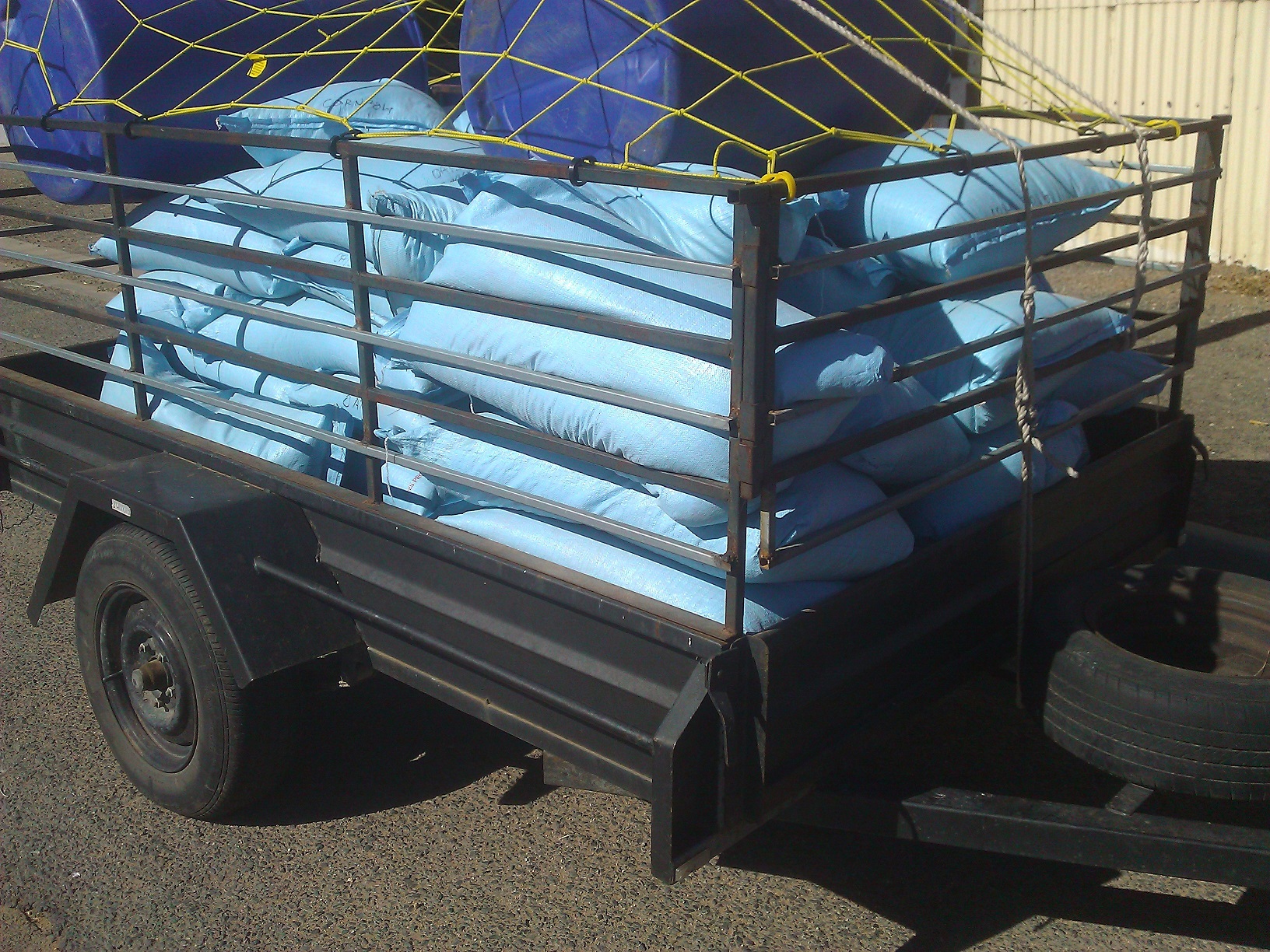
This is a tonne of Cow-Pig-Goat food. I predict we'll be getting a load like this every 10 weeks.

This is a tonne of Cow-Pig-Goat food. I predict we’ll be getting a load like this every 10 weeks.

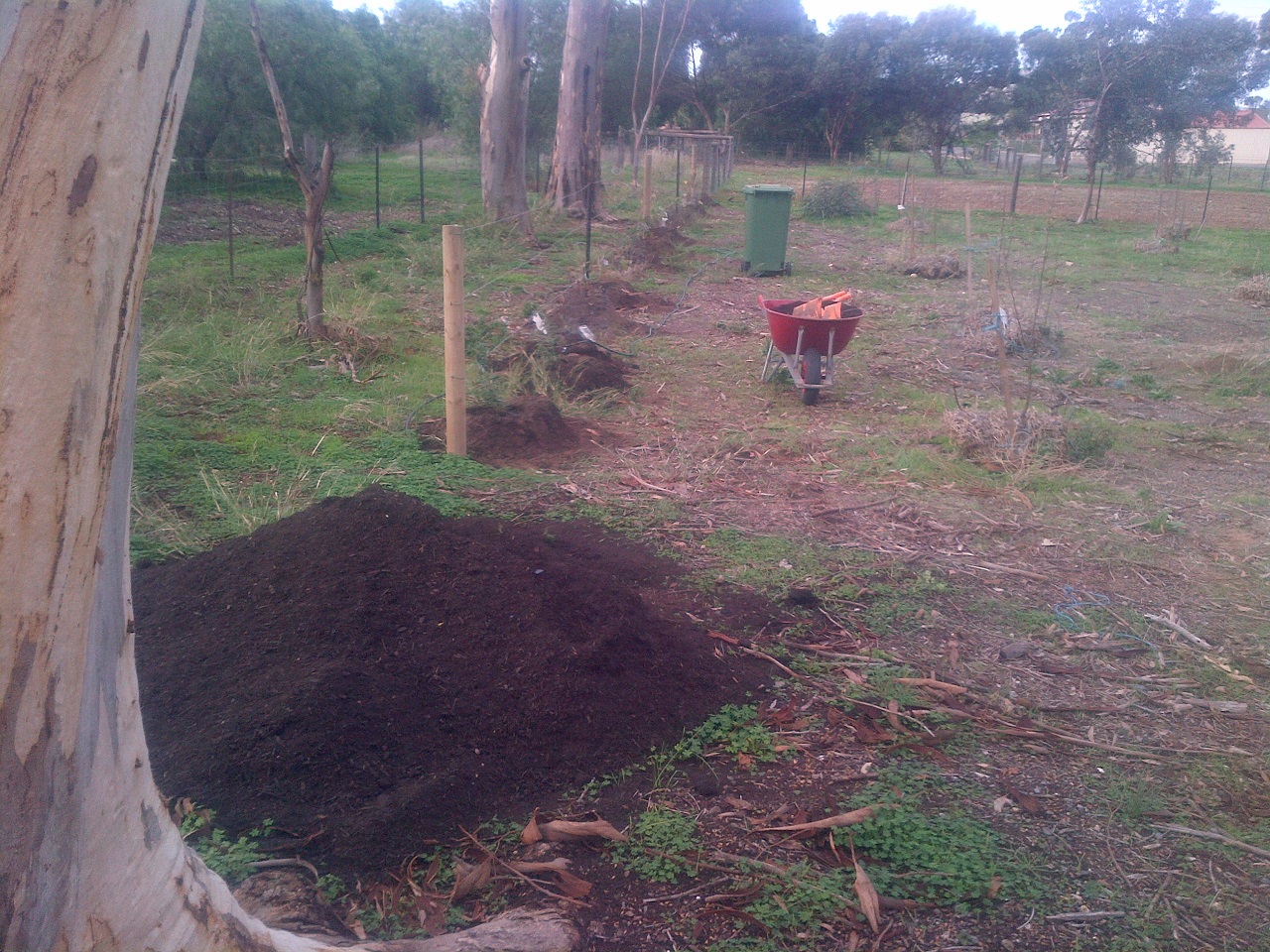
Expecting rain, and eventually begging for it, I started to prepare The Patch.  I spread all of the compost from our bays over the beds.  I also used Sheldon to dump maybe 2 tonnes of our remaining chicken poop over the fence.

Bruce likes to supervise... from a distance.

Bruce likes to supervise… from a distance.

The trick is timing it so the waves of chicken-poop-dust don't cover you. I didn't really get that trick, and got covered. A lot.

The trick is timing it so the waves of chicken-poop-dust don’t cover you. I didn’t really get that trick, and got covered. A lot.


This took maybe 10 minutes. Much better than my shovel and barrow…

I also changed the plan a little.  Rather than shuffle everything along one bed in the rotation, I’ll be moving everything two beds.  The end bed, which was bed 6 this year, has the worst soil. It actually had some gravel, and is really quite thin and gutless.  This year this will be green manure, as it needs the conditioning the most.

This also leaves bed 1 free for a poly-tunnel or shade house.  We’ll incorporate the largest backyard patch in the rotation instead, retaining our six bed rotation system.

We ended up with about an inch of rain over the third weekend of the month, but right at the end and into the Monday, meaning we couldn’t hoe The Patch.  Rather, we waited until the Anzac Day holiday the following Thursday, and it turned out perfectly.

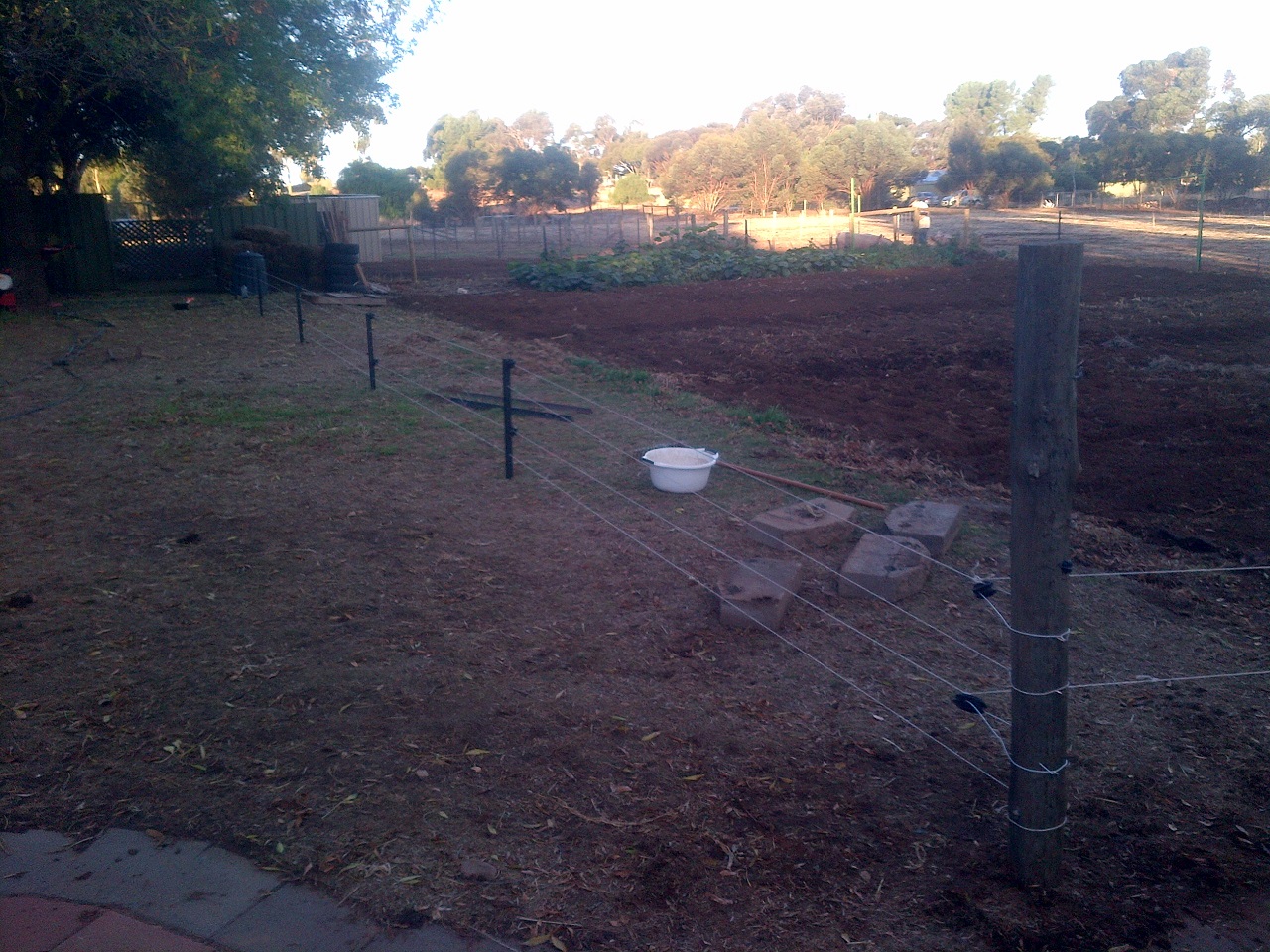
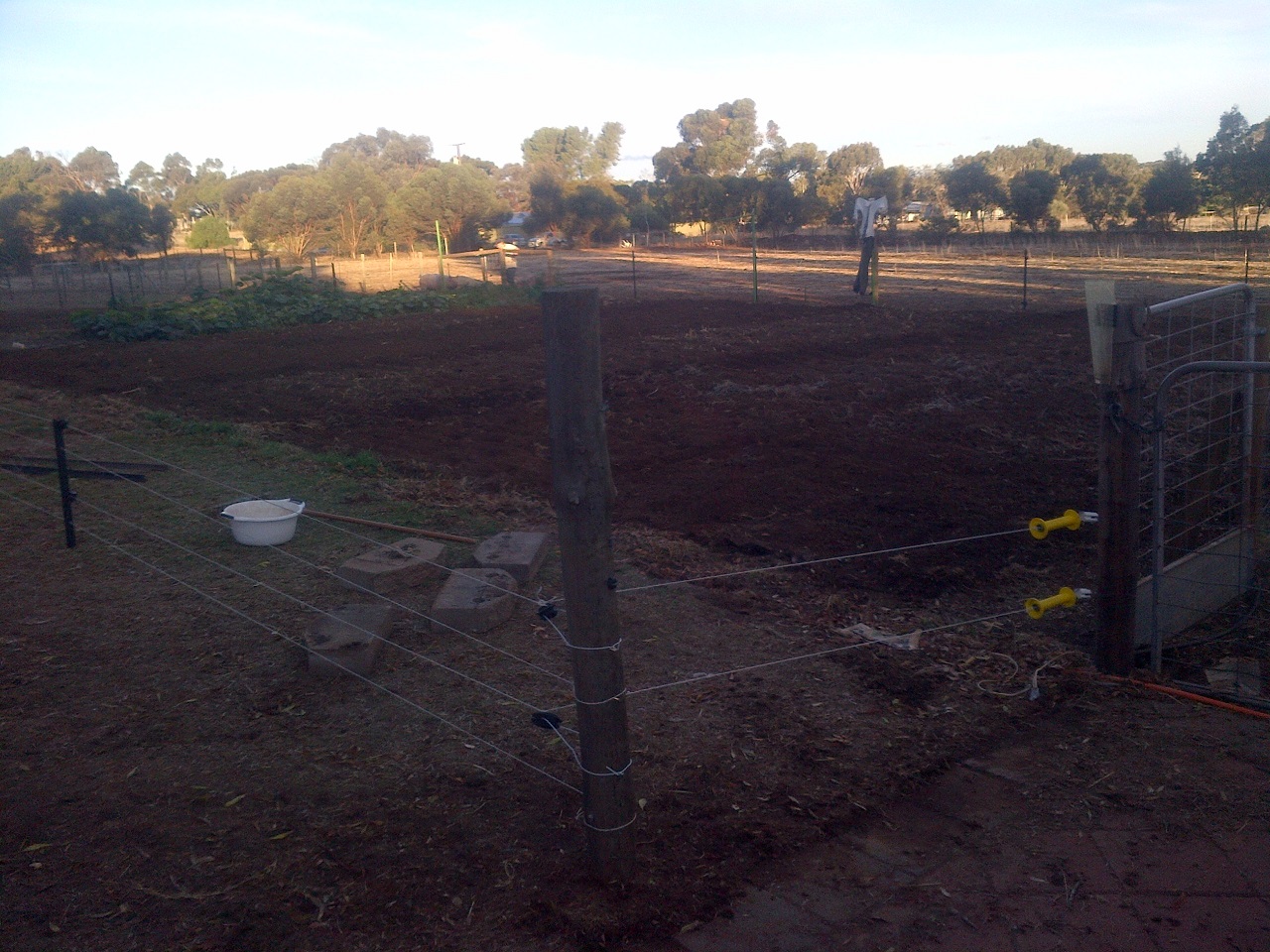
We started by moving the electric fence back a couple of metres.  This means I get to reclaim some of the lawn, which I hate.  It also means we get to extend the beds right up to the old fence line.  For now the reclaimed area is a largish path, but I plan on getting the babies in there after this season to clean out the grass.  Then I’ll try and sneak the fence back more and make the beds larger again. Don’t tell Linhda…

The old fence is down, ready to be moved back a couple of metres. Operation "Reclaim The Lawn" has begun.

The old fence is down, ready to be moved back a couple of metres. Operation “Reclaim The Lawn” has begun.

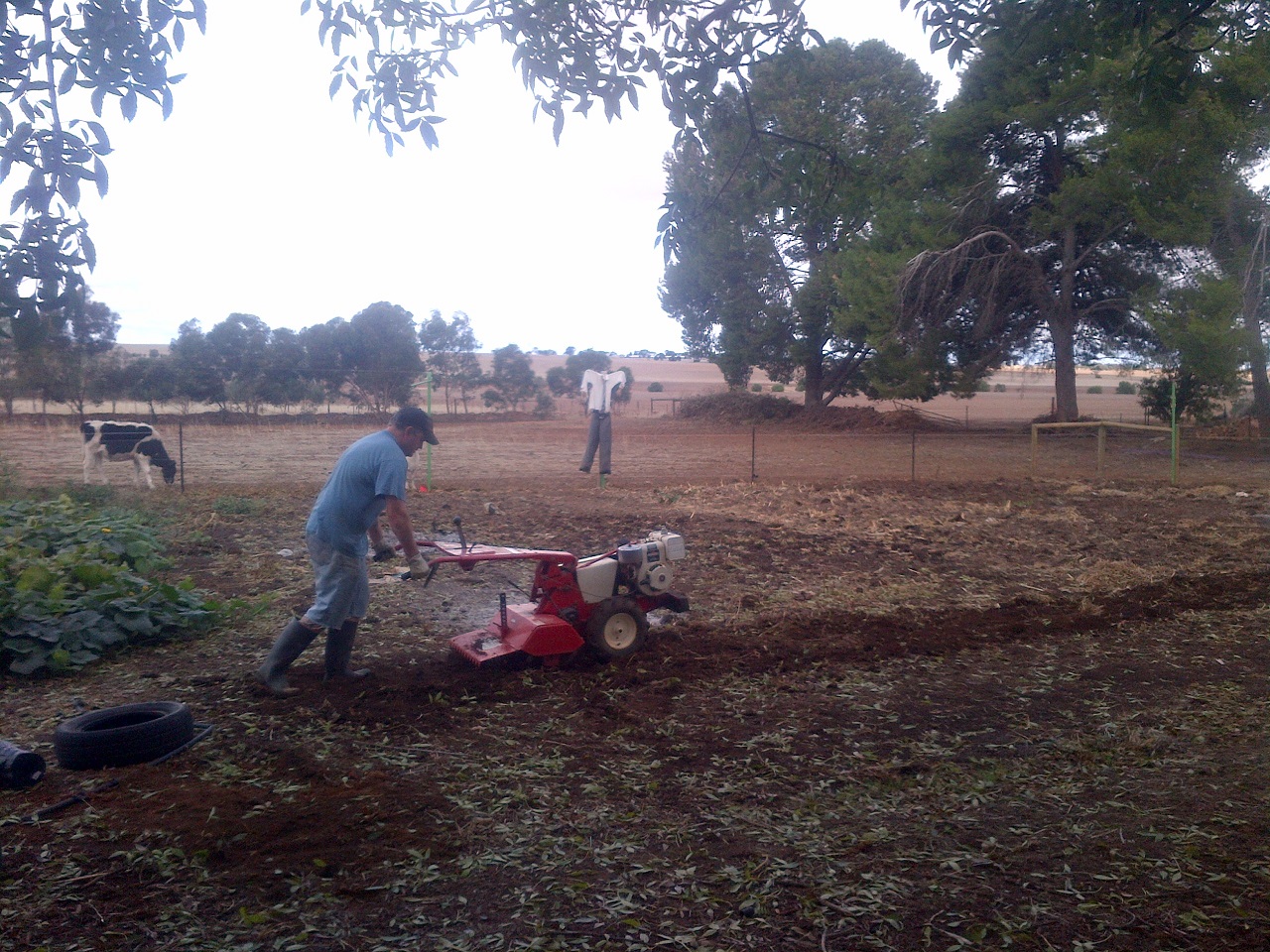
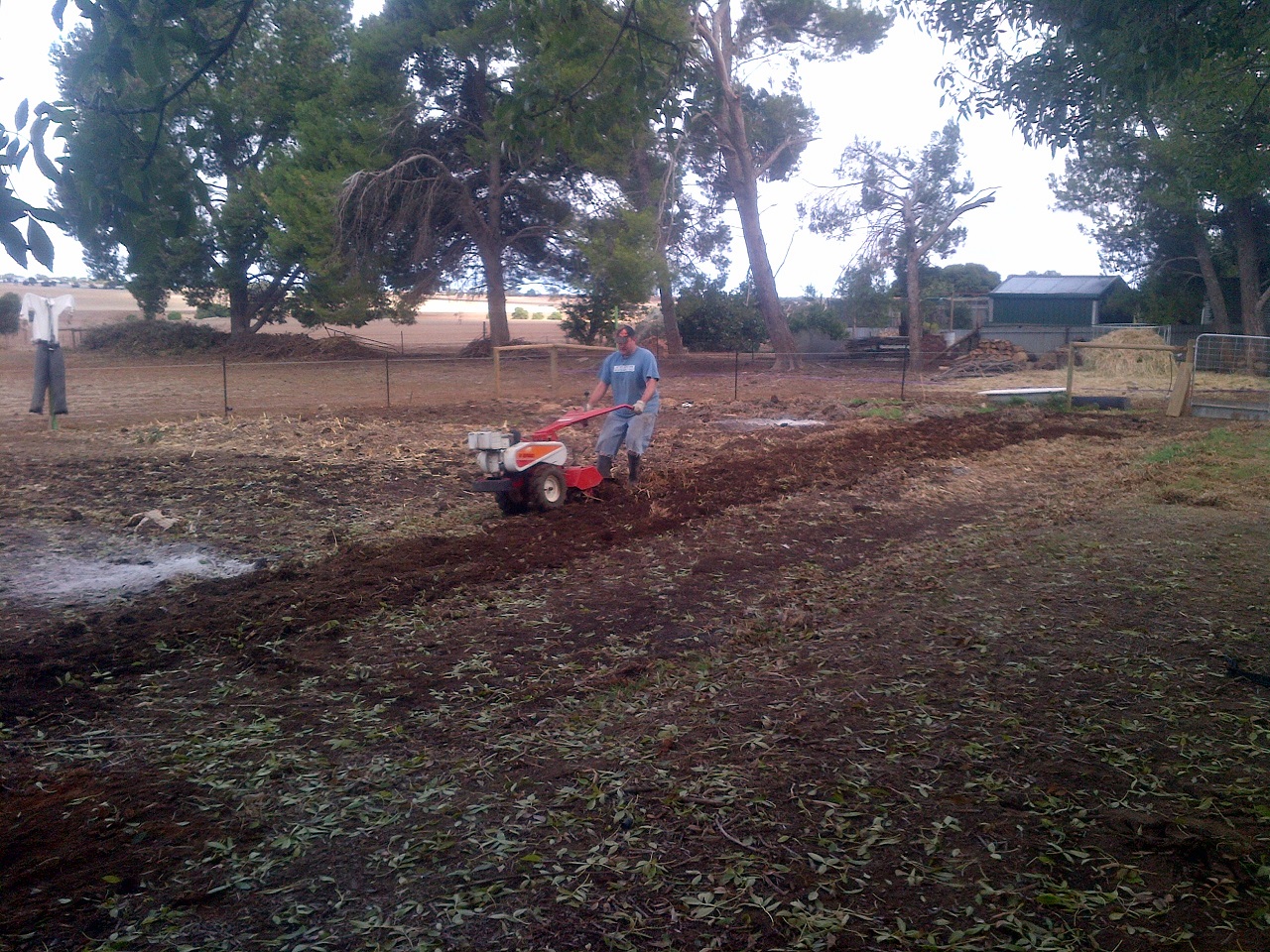
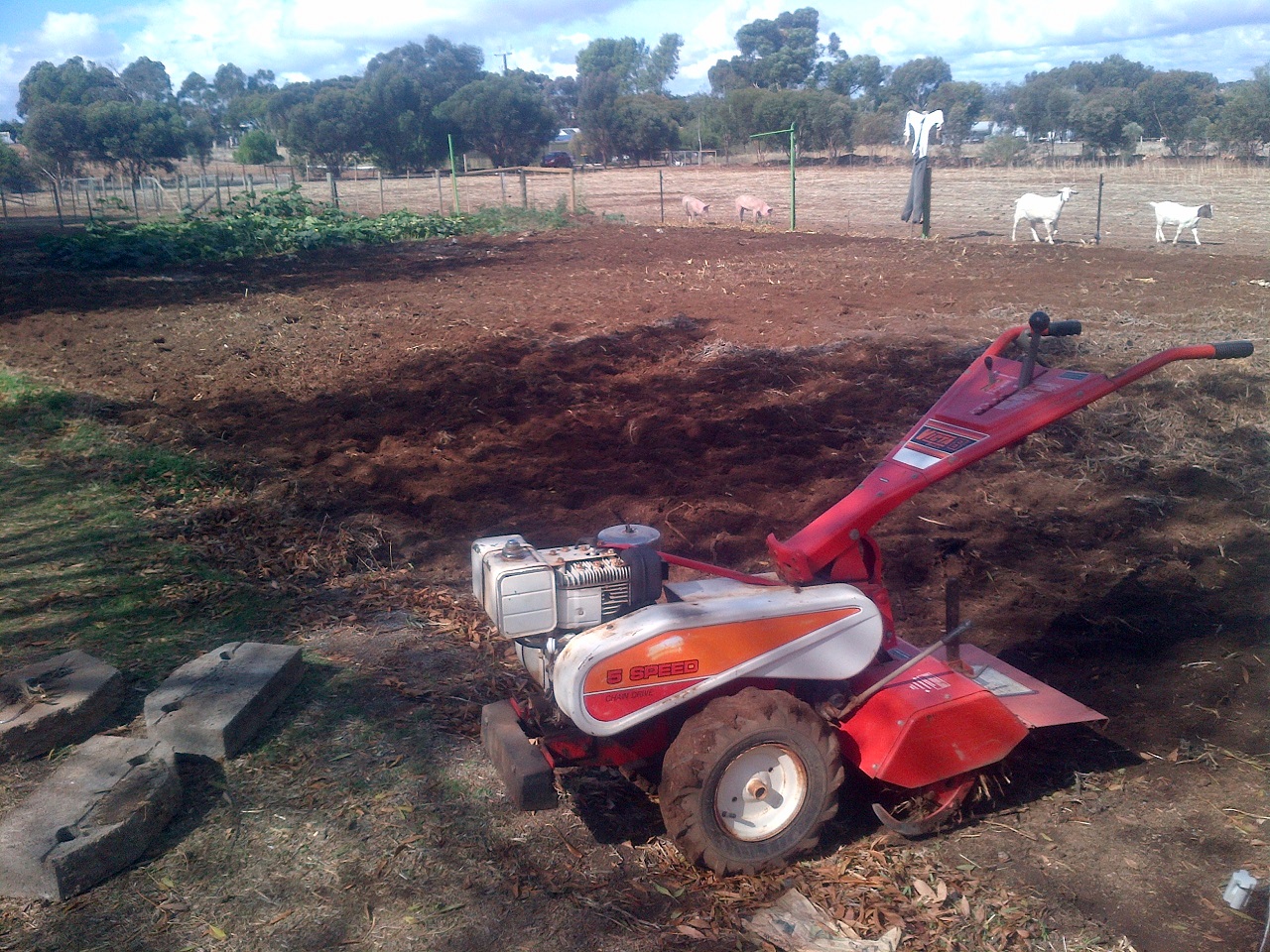
We had been worried about the rotary hoe and The Patch. The soil was quite heavy, to the point where we had one bed that we’d barely used because we’d simply not been able to turn it over. However, the hoe went through it brilliantly.  I set it at maximum depth and it was like a hot knife through butter.  It wasn’t always easy, and it took some wrestling at times, but the results were spot-on.

This is me rotary hoeing The Patch.

This is me rotary hoeing The Patch.

This is me struggling to hold back the rotary hoe on a hard bit on The Patch.

This is me struggling to hold back the rotary hoe on a hard bit on The Patch.

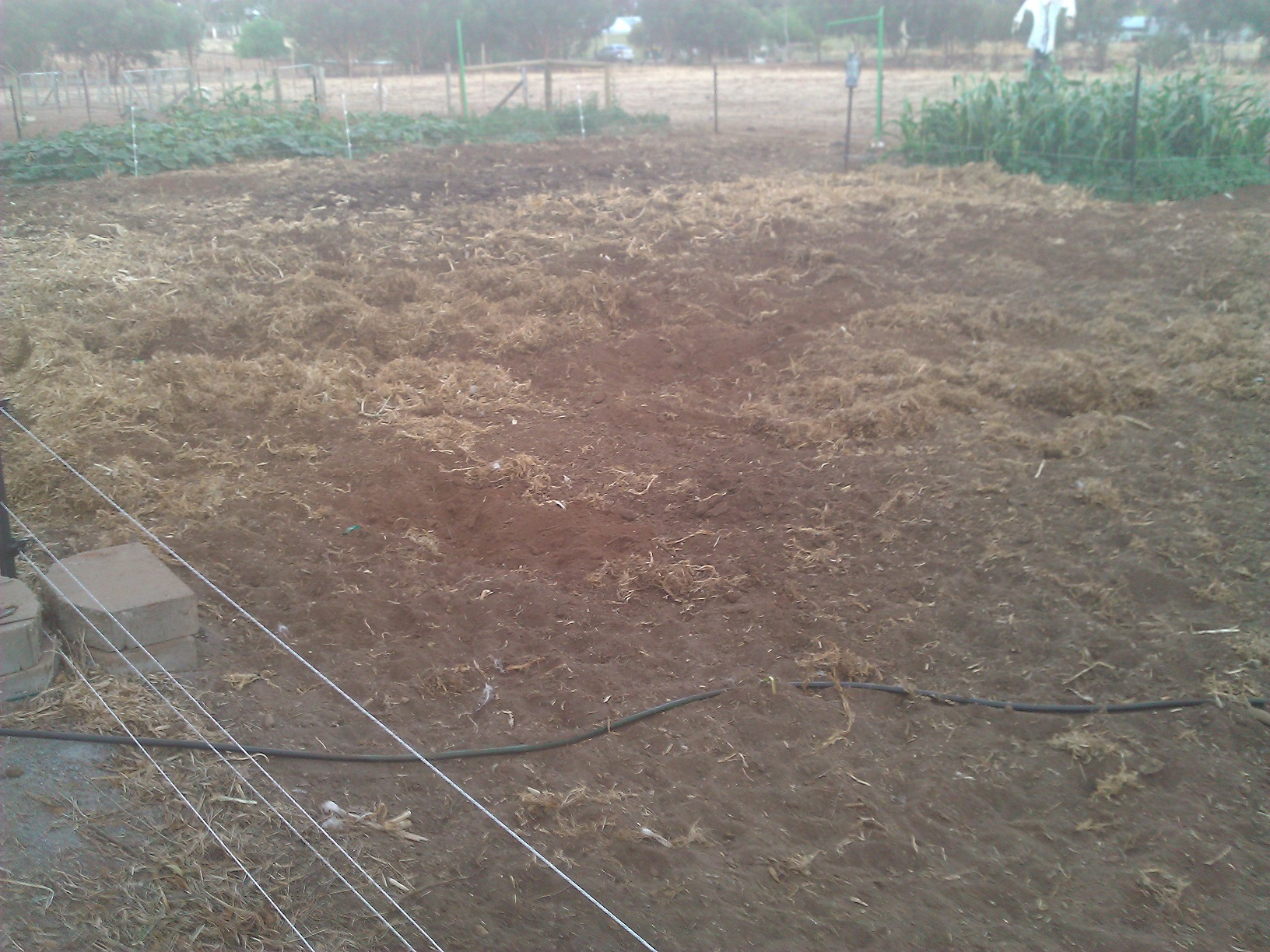
This is The Patch all hoed. That rotary hoe is a freaking beast!

This is The Patch all hoed. That rotary hoe is a freaking beast!

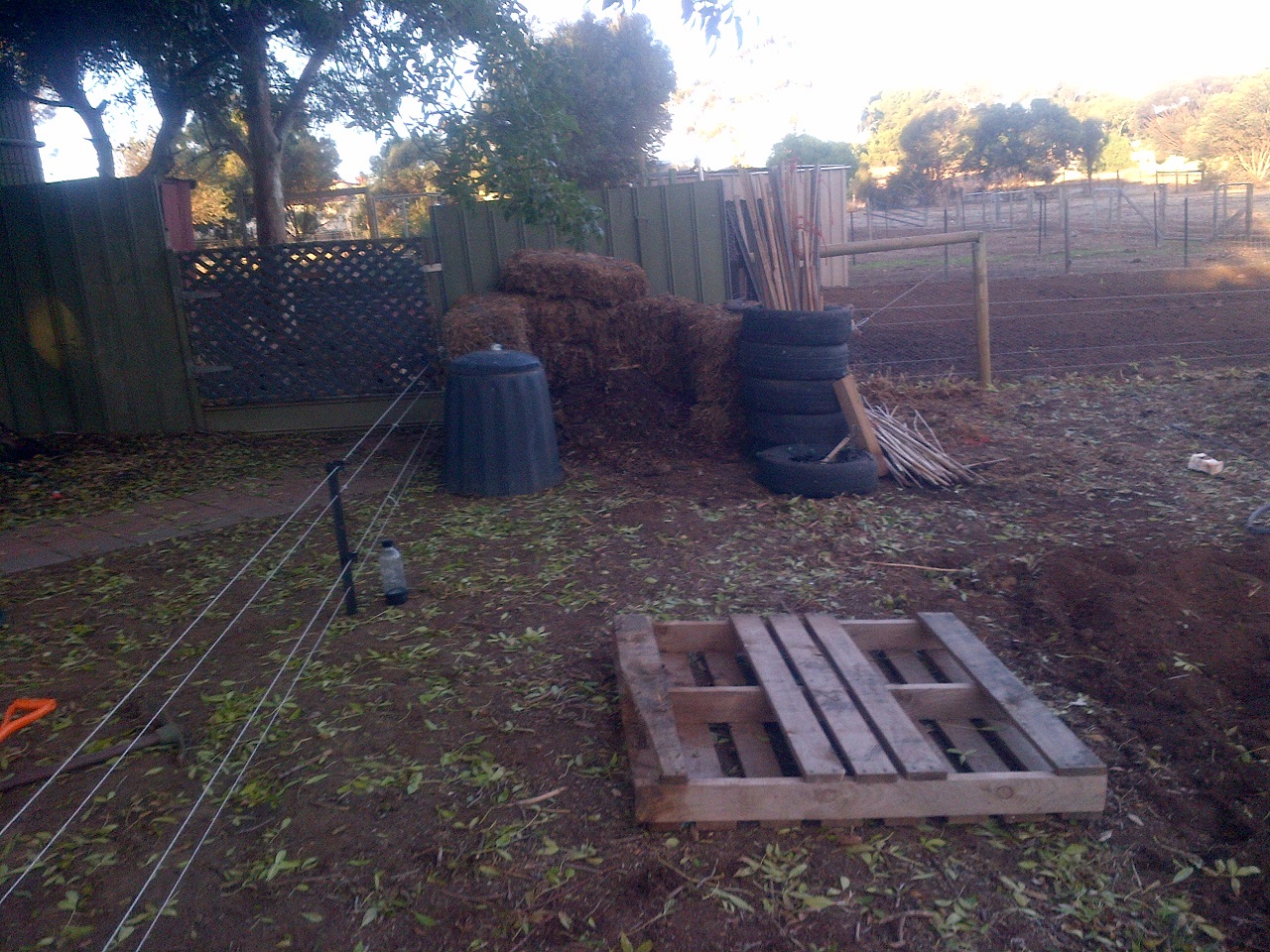
I also moved the compost bays and we put a gate at one end to give us vehicular access.

Went down to one compost bay and moved it up onto the reclaimed area. With the poultry and the babies, we really don't need a multi-bay compost system.

Went down to one compost bay and moved it up onto the reclaimed area. With the poultry and the babies, we really don’t need a multi-bay compost system.

The fence moved back.

The fence moved back.

A gate to allow us to get vehicles (e.g. the ride-on and trailer, or Sheldon) into The Patch.

A gate to allow us to get vehicles (e.g. the ride-on and trailer, or Sheldon) into The Patch.

I mapped out the beds by digging a small path between them. The first time I did that it was quite easy as there really wasn’t much depth to the soil. This time was significantly harder, as the soil was much deeper.

I planted green manure in the RHS most bed (bed 6).  This was a mix of Lucerne I bought specifically as green manure, and some barely we had left over from the pig’s food.  We’ll let this get to maybe thigh-height before cutting it down and turning it in.

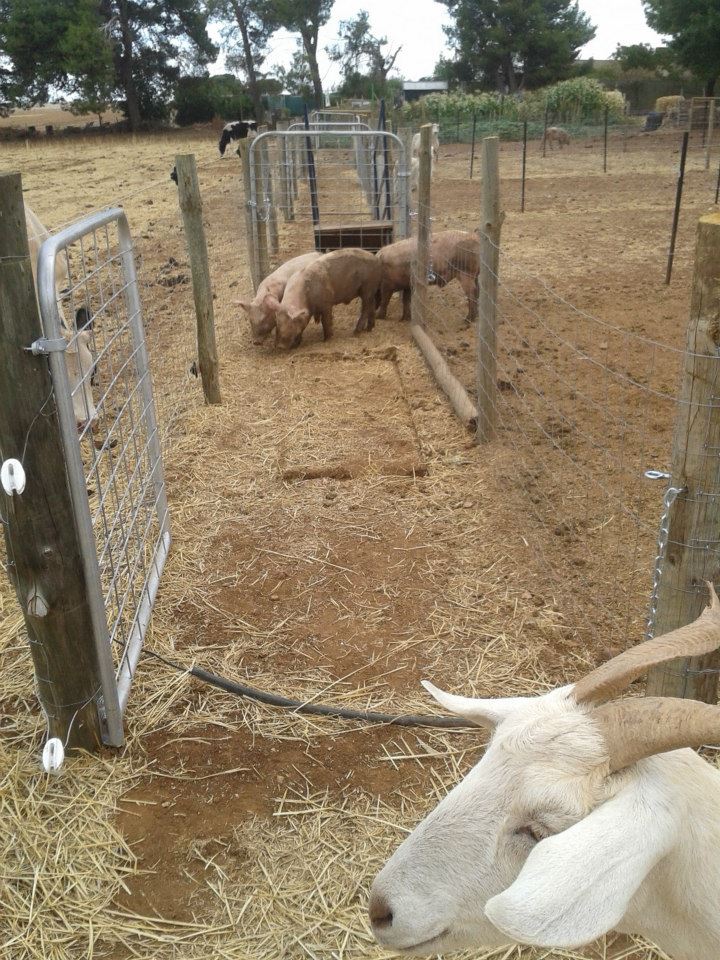
We ended up using the same mix in the three empty pig runs too. At the same time, dad broadcast some old lawn seed I had sitting in the shed, just to use it up.  The runs were all quite green after the rain, just from the grain the goats and pigs had spread around.  Add this extra seed to it and it’ll hopefully thicken right up. We’ll wait until it’s a decent length and swap the pigs in.  This keeps the runs fresh and gives the babies green feed.

We managed to get some planting done before the end of the month.  I planted out the spare areas of the largest bed in the backyard with:

  • Asparagus
  • Broad beans
  • Snow peas
  • Peas

All of those legumes came from seed we’d kept from last year.

We also planted the allium (onion/garlic) and legume (pea/bean) beds in The Patch.  This year my aim is to use every spare square inch to grow as much as possible, especially of the staples.  I need a benchmark to see how much we need to grow from year-to-year.  I thought we did quite well for garlic and onions last year, but we ended up being out by probably a factor of 2.

The allium patch has:

  • 7 different kinds of garlic.  We bought a heap from The Diggers Club to test out and see which we like the most.  We planted out nearly 200 in total.
  • Red, bunching, and white onions.  We planted out 34 x 4m rows.  That’s probably somewhere between 1200 and 1300 onions.

The legume patch has a huge variety of beans and peas. Again, we bought a heap of different varieties to try and see which we like most.

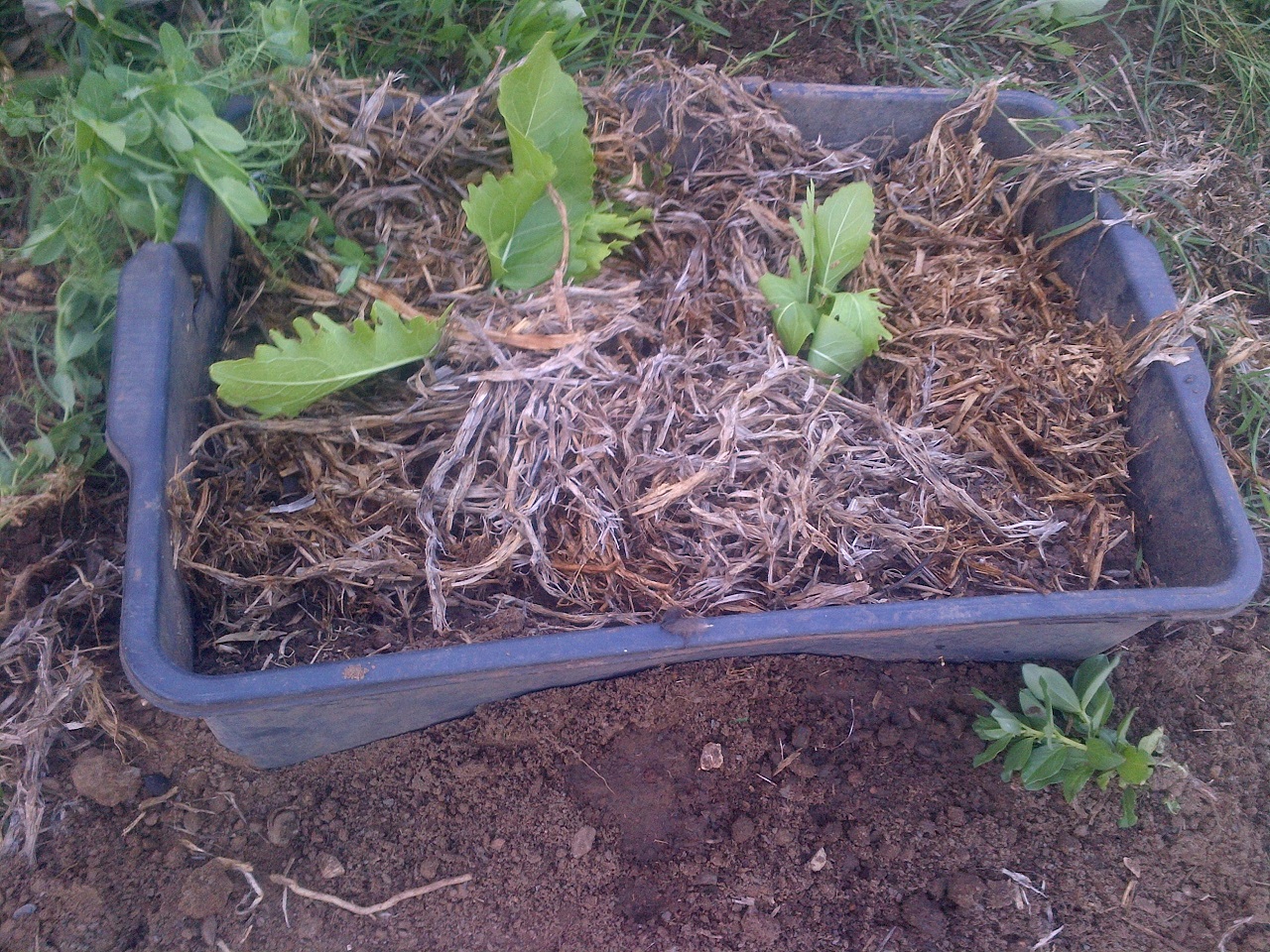
We also got some other various plants – herbs, berries, etc.  Most of these won’t be planted until May after some more rain.  However, I did manage to get horseradish!

Horseradish!!!!! So very excited!!!!

Horseradish!!!!! So very excited!!!!

I’ve been after horseradish for a while, and am pretty freaking excited!  I cut the bottom out of a busted old tub to contain it, as apparently horseradish has a tendency to get away from you if you’re not careful.

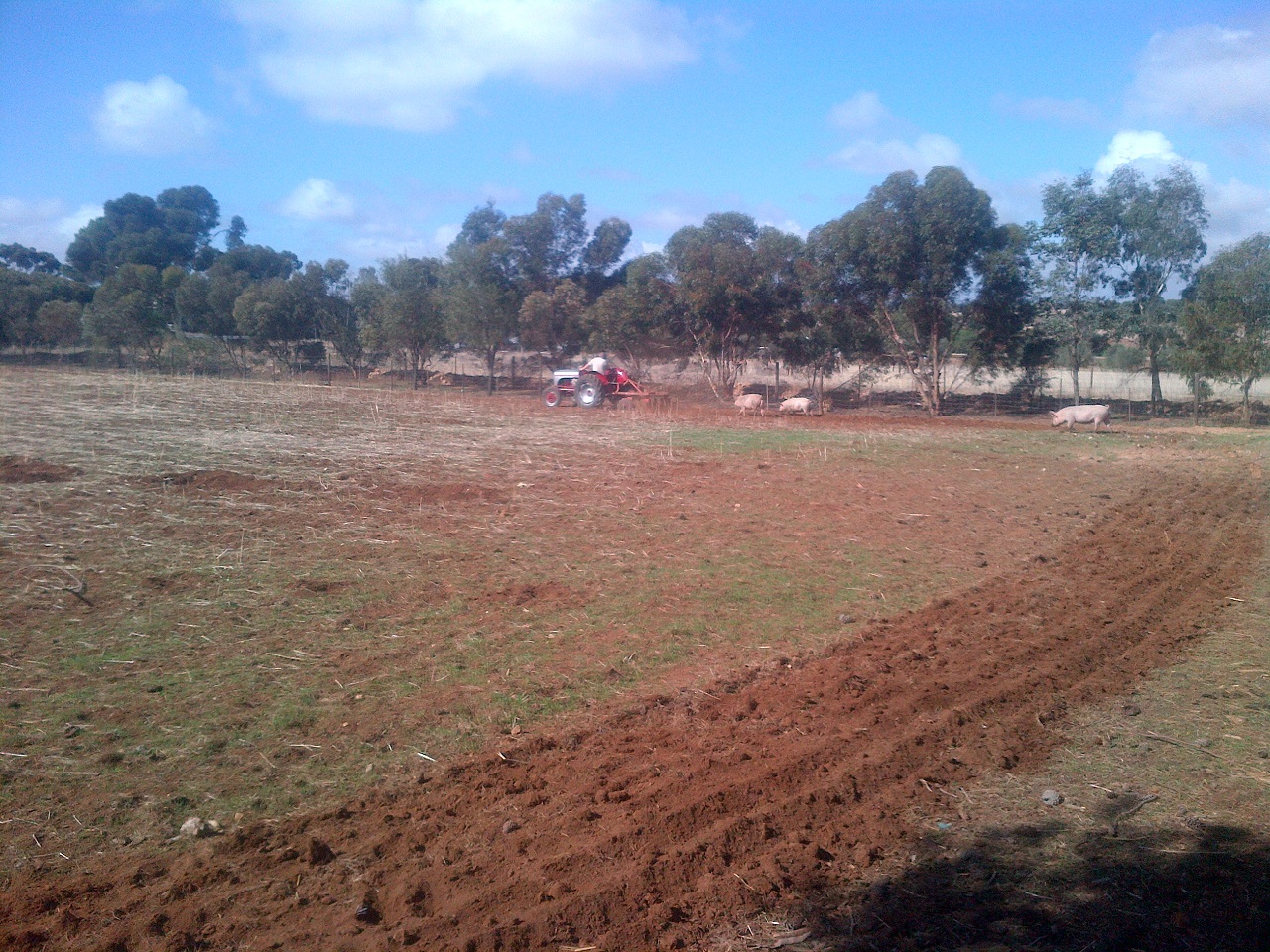
The last thing to happen in April was dad ploughed the back paddock.  We’re probably still a couple of weeks from sowing, but Farmer John next door suggested we turn it over now after the rain.  Within a couple of days there was more greenery coming up, and the cows and goats love it.

Dad getting ready to plough.

Dad getting ready to plough.

For some reason, the babies thought that dad ploughing was a game. They spent the entire time chasing the tractor or messing with the cows. It was better than watching TV.

For some reason, the babies thought that dad ploughing was a game. They spent the entire time chasing the tractor or messing with the cows. It was better than watching TV.

All ploughed.

All ploughed.

It was weird having so much of our veggie area idle for so long.  I’d always expected to work up a routine where we pretty much knew exactly what we’d be doing from month-to-month and could plan ahead. Instead, I expect that we’ll be playing much of it by ear.  This year is a great example – I have a pumpkin bed with a heap of fresh, new pumpkins where I thought it would be done two months ago, at the same time as I had five empty beds waiting to be planted out.  None of that was in my plan!

And to finish the month, I have random goat and meat shots.

Howard being Howard.

Howard being Howard.

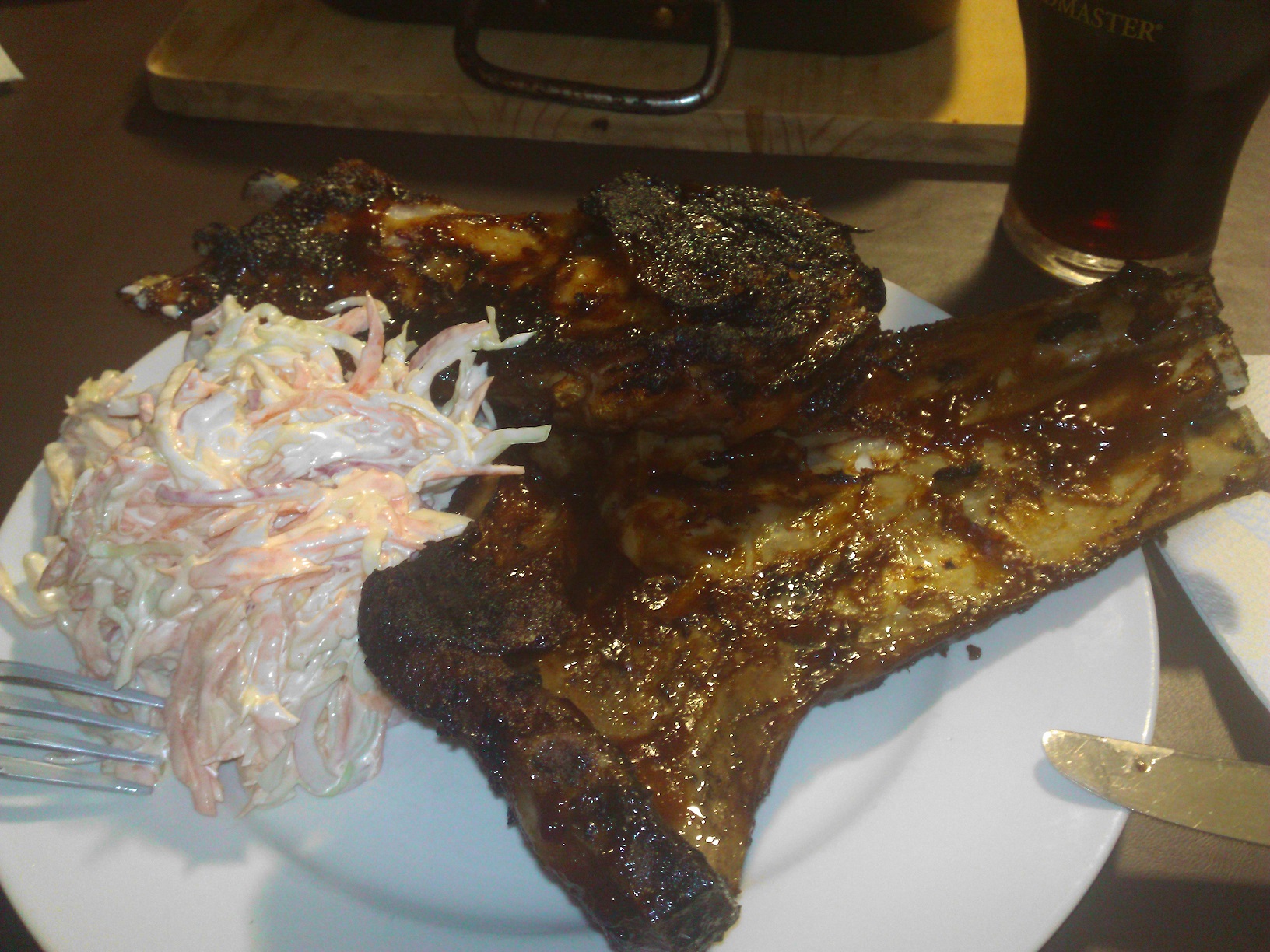
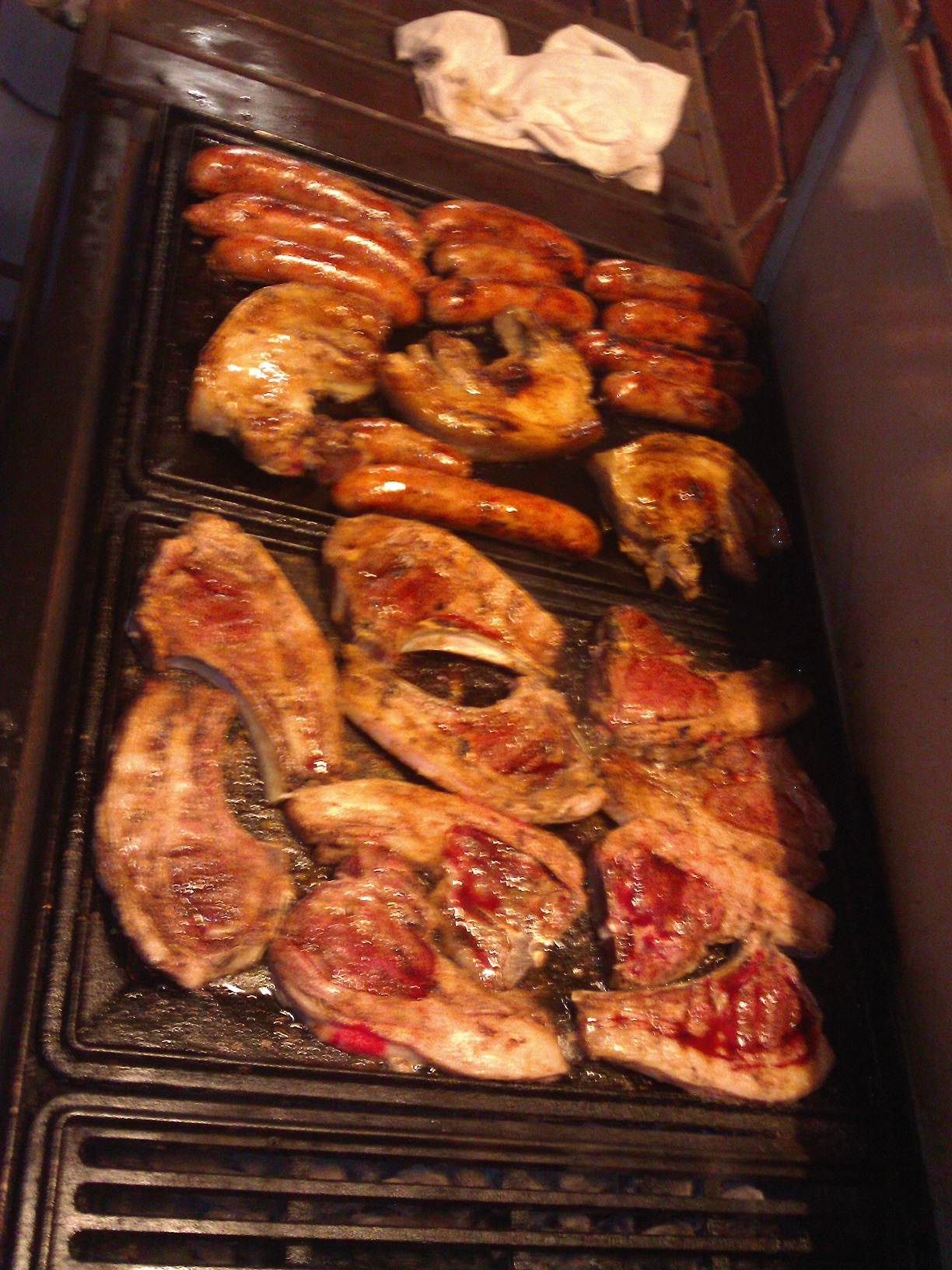
Home-grown, home-made pork and lamb ribs with home-grown and home-made 'slaw. Out-freaking-standing!

Home-grown, home-made pork and lamb ribs with home-grown and home-made ‘slaw. Out-freaking-standing!

March 2013 Facebook Farm Statuses

  • Normal people have to change their clothes when they get baby vomit on them. I just had to change my shirt because I nearly went out with cow snot all down my back. True story.
  • Covered nipples to knee in the sloppiest and smelliest duck poop you’ve ever seen or smelled. And all before 8:30 in the morning.
    I used to think that the best shower in the world was the one you take after the flight between Australia and the US. I now know better.
  • In the paddock loading a sheep up when the pigs decide to give Linhda some love:
    Linhda: “Pigs! Stop it!”

<pigs completely ignore Linhda and keep loving up on her>
Linhda: “Pigs! I said STOP!”
I swear, sometimes it’s like those pigs don’t understand English.

  • Officially a member of “The Diggers Club” and have ordered a metric butt-load of seeds and plants.
    I’d talk about it more, but the first rule of Diggers Club…
  • Real farmers keep Purell in their car to sanitize their hands after dropping off or picking up chooks from “The Other Farm” right? Right?!
  • Just went to check the menagerie and found that one of them (I suspect the shifty goat) had lifted a latch into a pig run, and that the boy and girl pigs were free-ranging together. The boys were fairly freaking ecstatic, the girls didn’t know what to make of the attention, and I was terrified.
    After judicious use of our excellently designed stock race (patent pending), many sloppy and muddy pig kisses, and the biggest boot I’ve ever received off an electric fence, they’re again separated.
    And now I all kinds of need a shower.
  • Put the babies into the veggie bed to clean out two spent beds, but forgot that I’d buried a couple of chickens in one of the beds last week. The babies found the very ripe chooks within about 10 minutes. What ensued is both the grossest sounding and smelling thing I’ve ever been around. /shudder
  • In my delirium last night after many big weeks and not much sleep, I may have bought a pig off the interweb. I think somebody may be delivering it here on Monday.
    Don’t tell dad or Linhda…
  • Spent a couple of very hot hours tracking down a short in the electric fence that was letting one of the babies (Smoked) squeeze under the fence and into the back yard. Finally found it, get her back into The Patch, turn the fence on, get a full signal, and she still squeezes under ignoring the zap. Apparently my dry old lawn is worth that much pain.
    On a related note, David I think we need to run an earth wire along the bottom of that fence tonight…
  • Just tattoo-branded my pigs. It’s as easy as hitting them with a hammer-type implement. Apparently the hard part is getting them on the correct shoulder though (right = bought pig, left = home-bred pig). I’m sitting at 3 out of 5 correct, and in the beginning was 1 out of 3.
    Seriously, I’m really not a stupid man…
  • Got our first proper (i.e. not spit-sized) pig back today. He dressed out to 55kg, or about 120 pounds for my American brothers and sisters. We spent the morning cutting him into many roast joints, chops, and boning out bits to make sausages. We’re also starting our first bacon tonight, and are experimenting on the belly bits and cheeks. And all for a small fraction of the cost of unethical pork let alone the gucci free-ranged stuff.

We now have a sheep that is excess to our needs and we might sell him on (seriously, all of our freezers are full). We can take him to the butcher and they’ll do the entire thing, thereby making it kosher (euphemistically) and legal. Anybody interested in buying a whole, free-ranged sheep?

  • Note to self: when testing the new home-made smoker, you should situate said smoker outside of the shed. Smoke billowing from a shed has the potential to scare passers-by.
  • I got one of the rats that has been running around my shed. Weirdly, I felt like a big-game hunter as I held it up in triumph this morning…
Miss March

Miss March

March Meat Madness!!!!!

After the hottest January in recorded history, and a ridiculously hot February, March only felt marginally cooler. It cooled enough that we were able to get some things done, but I wasn’t able to plant out like I wanted. The result was that we ended up with several beds sitting idle after harvest.  I always expected some empty beds during the transition periods, but not this many.

I revamped the veggie patch plan in March, in part to accommodate these lessons learned. I actually tweaked it again in April, but haven’t updated the blog yet.  The real lessons learned here are that the plan has to be dynamic, and we are completely at the mercy of the elements.

Even with the weather against us, March was an amazingly productive month. This was mostly due to a couple of significant meat wins, but we also managed to get some non-meat runs on the board too.  I’ll start with the non-meat stuff…

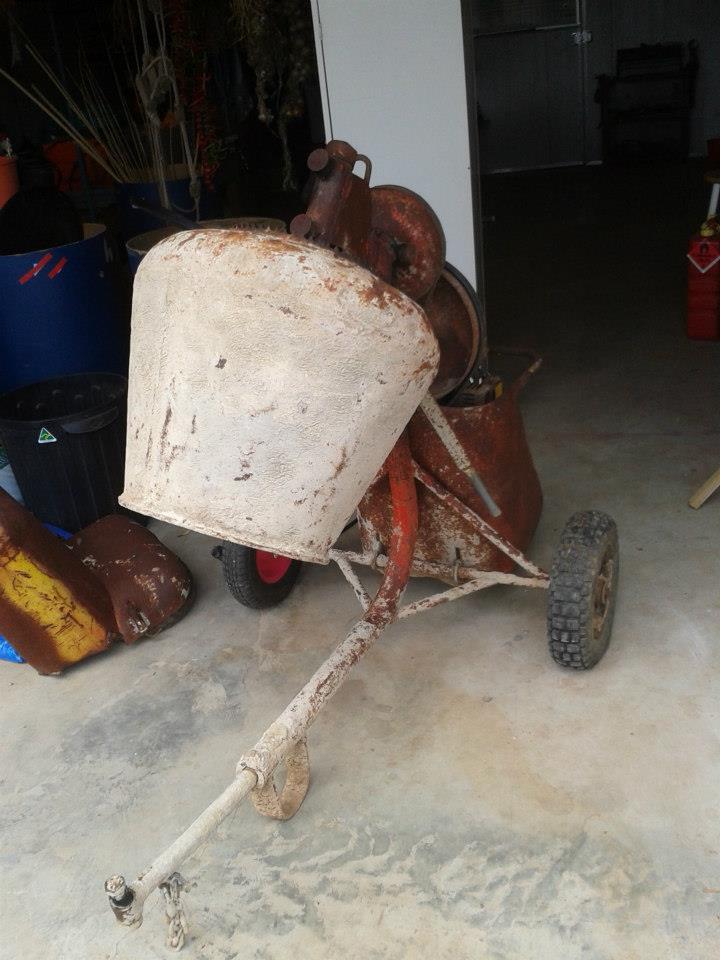
We were able to cement a pad under the boy’s troughs and house in early March, which was our first use of the new (to us) cement mixer.  The mixer worked a treat, and we managed over a tonne of cement in only a couple of hours.

Pigs are both messy and destructive.
Pigs are both messy and destructive.

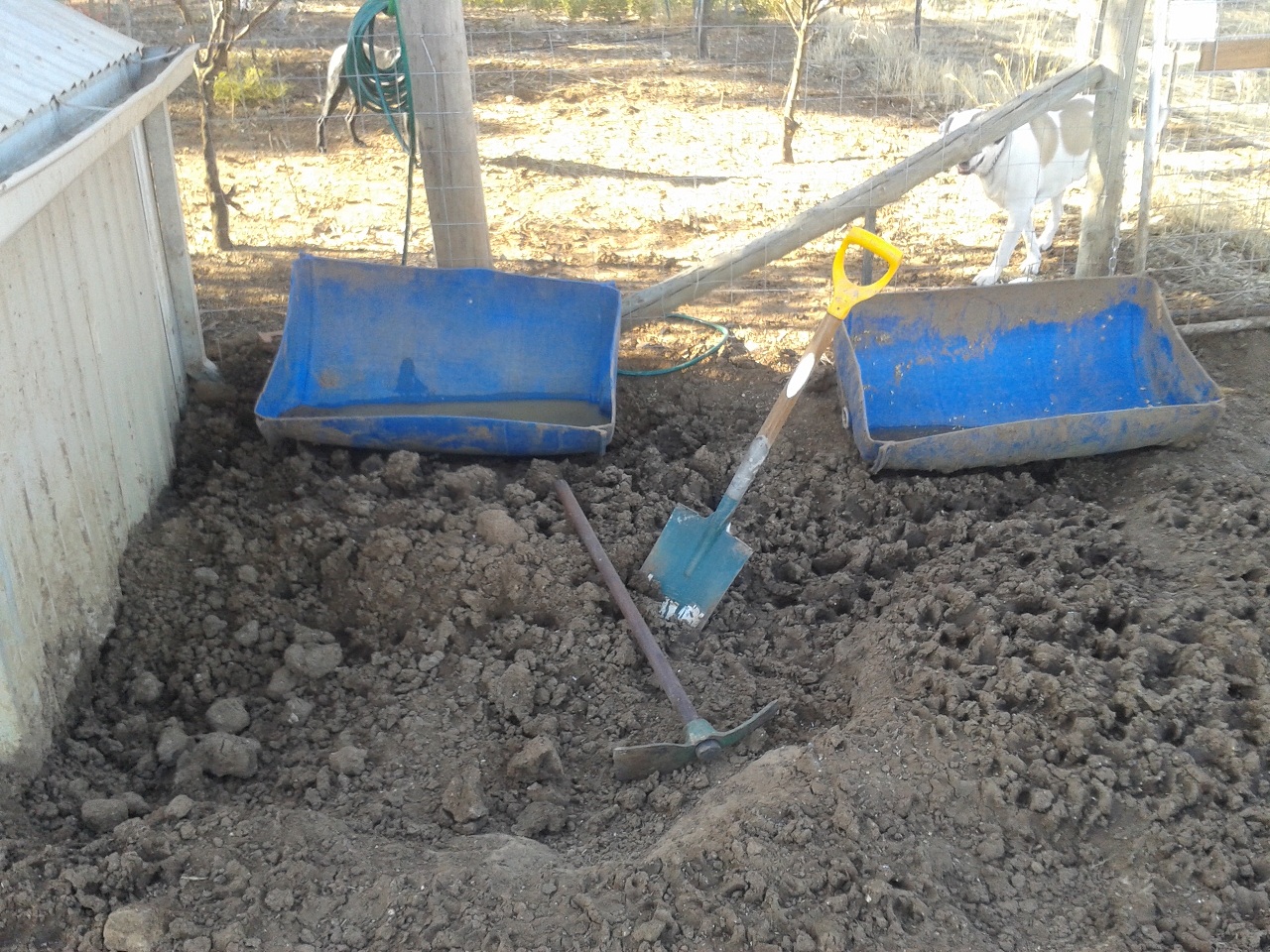
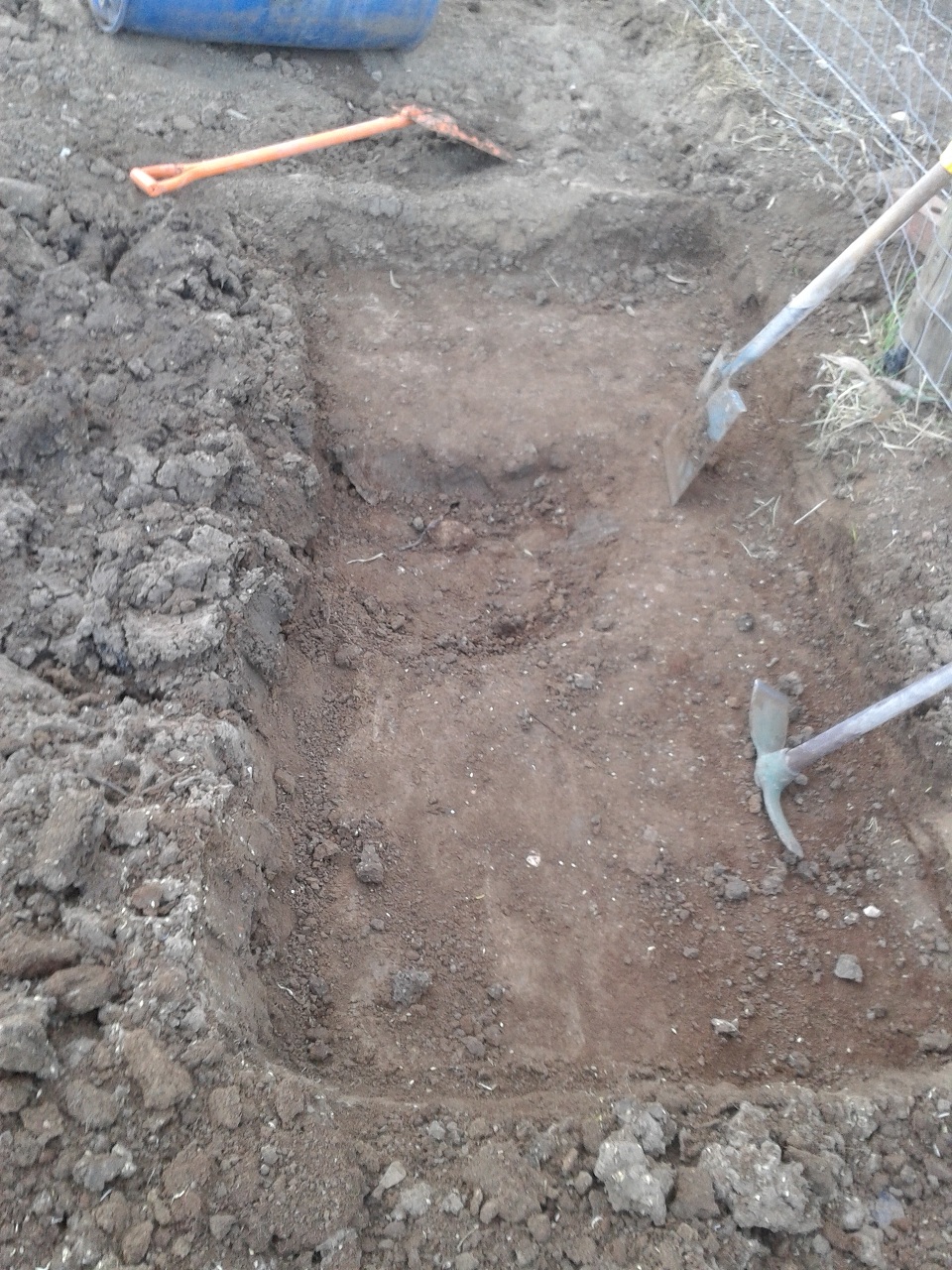
Digging out the wallow.
Digging out the wallow.

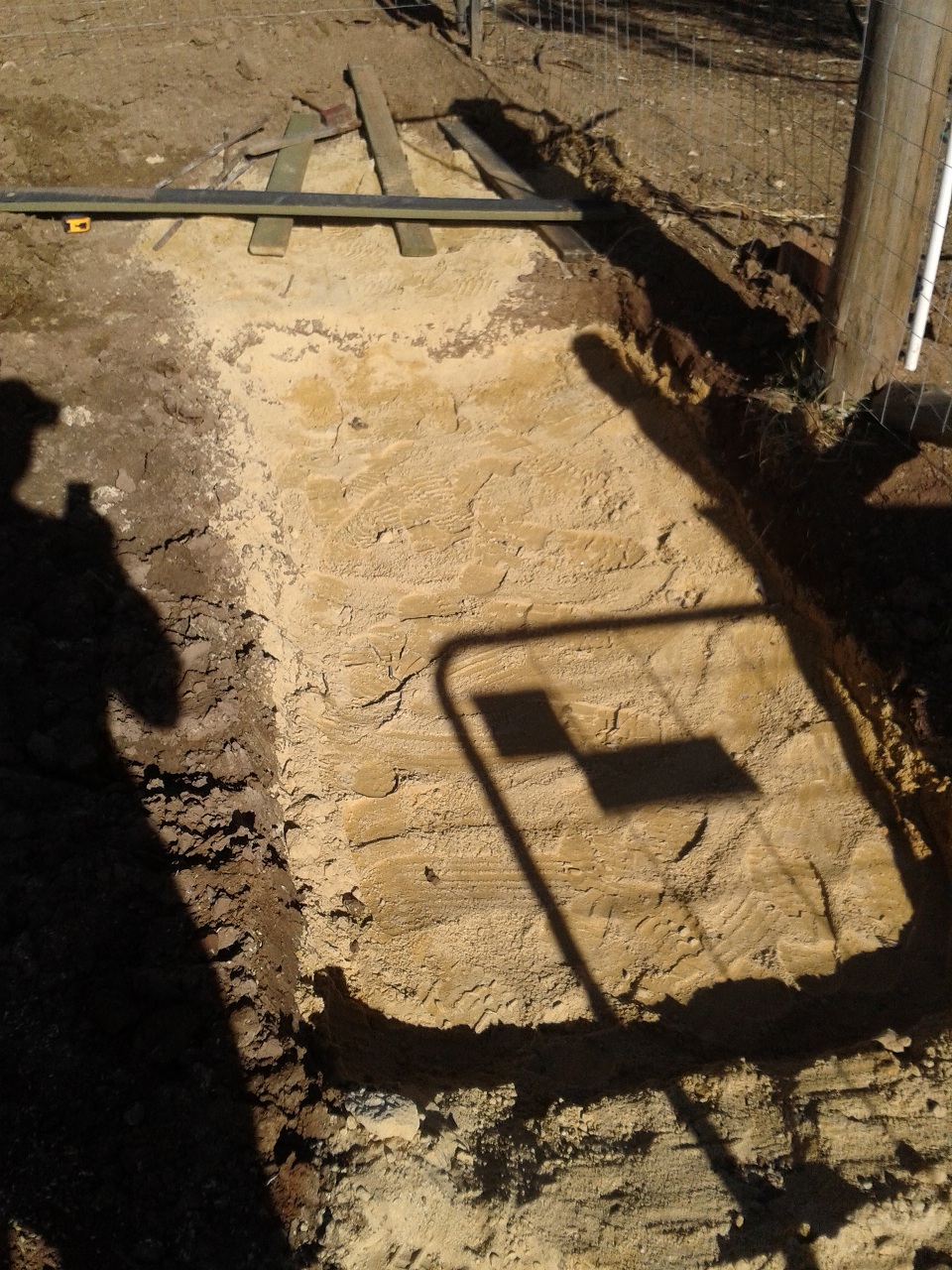
Evened out the bottom with some left over building sand.
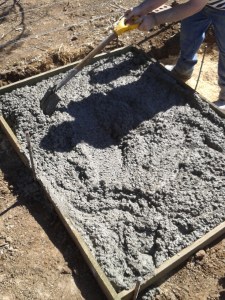
Evened out the bottom with some left over building sand.

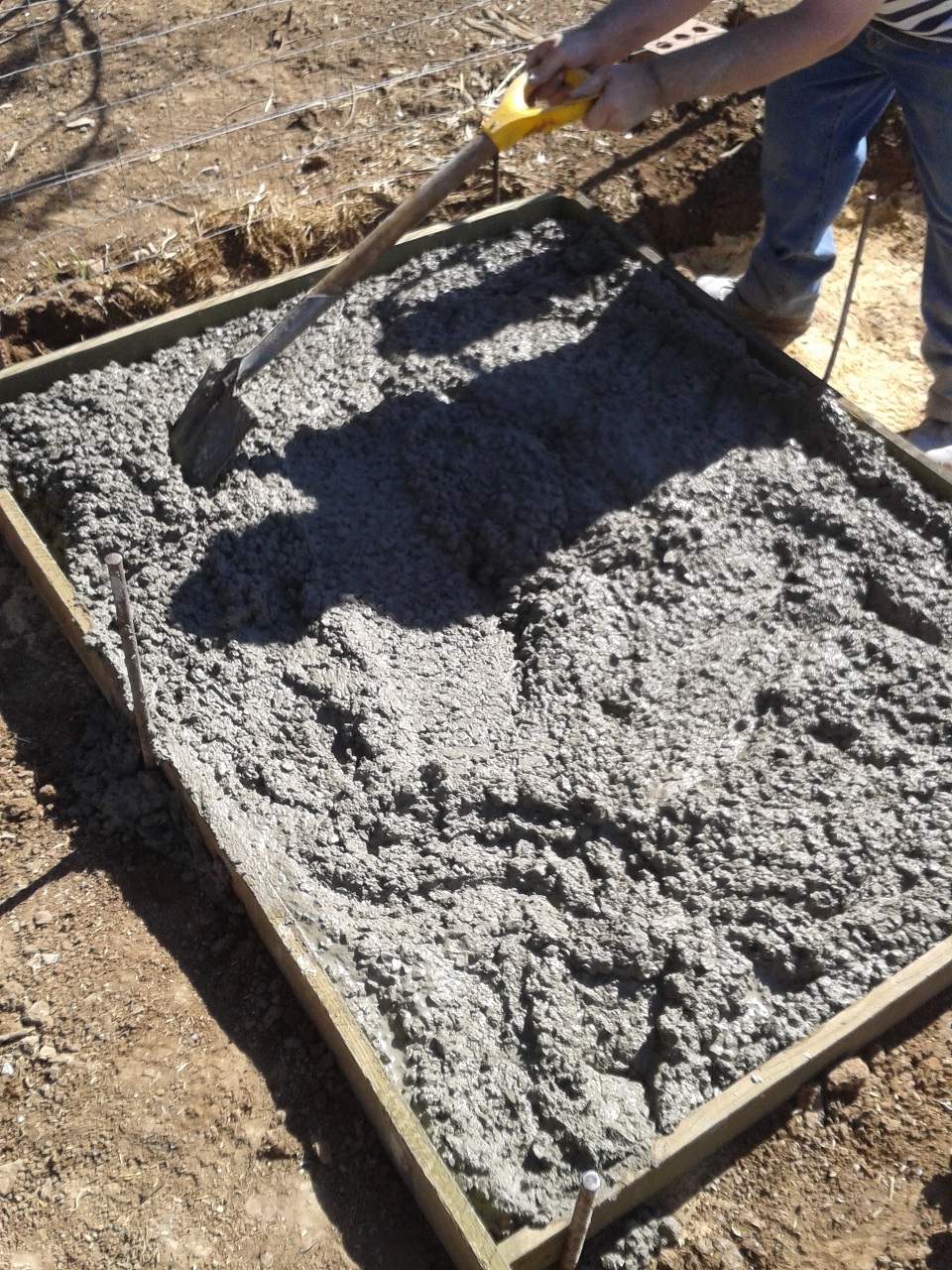
Pouring the pad for the boy's house.

Pouring the pad for the boy’s house.
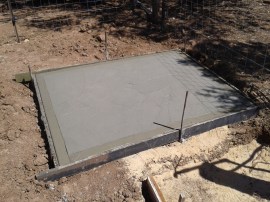
House pad done and floated off.
House pad done and floated off.

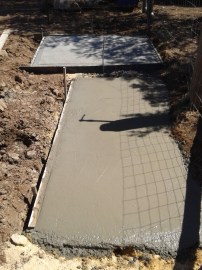
The trough pad floated off.
The trough pad floated off.

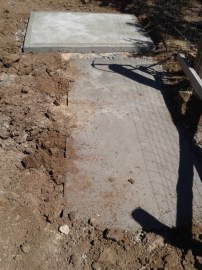
Both pads gone off.
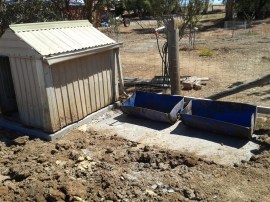
Both pads gone off.

Cemented and assembled!

Cemented and assembled!

We thought we had a major setback with Sheldon, our tractor. For a couple of days we though the engine had seized. As it turns out, the reconditioned starter motor, which had actually been quite expensive, had malfunctioned.  We had him trailered to a farm machinery service business just outside of Gawler, and they fixed him up and gave him a service. He was probably overdue for that level of TLC anyway, and now he works better than ever.
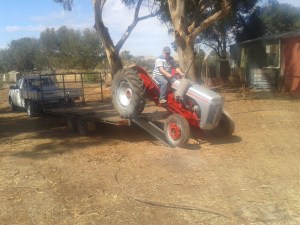
Sheldon coming home after some TLC. I only let dad unload the tractor because there's no roll bar.

Sheldon coming home after some TLC. I only let dad unload the tractor because there’s no roll bar.

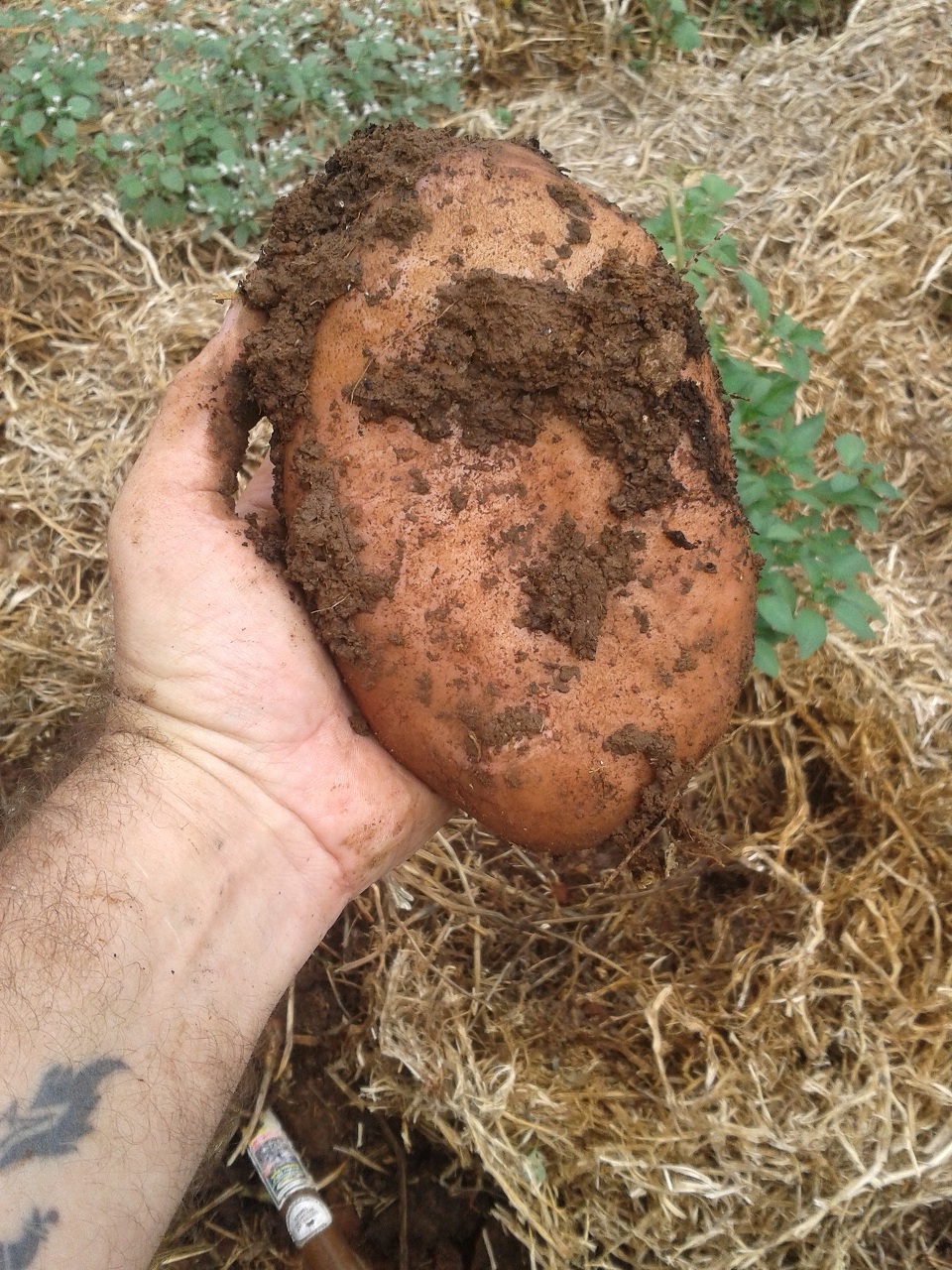
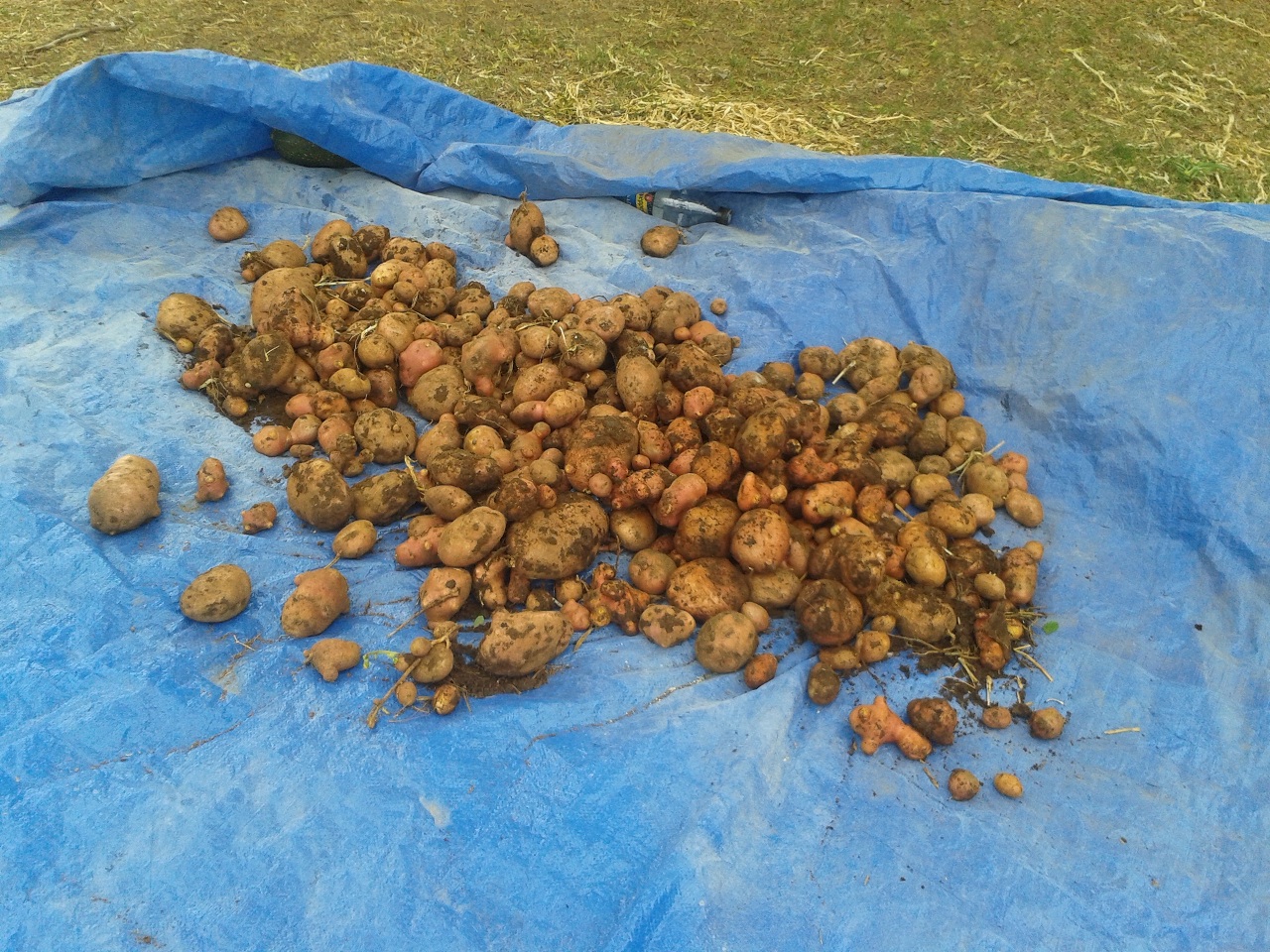
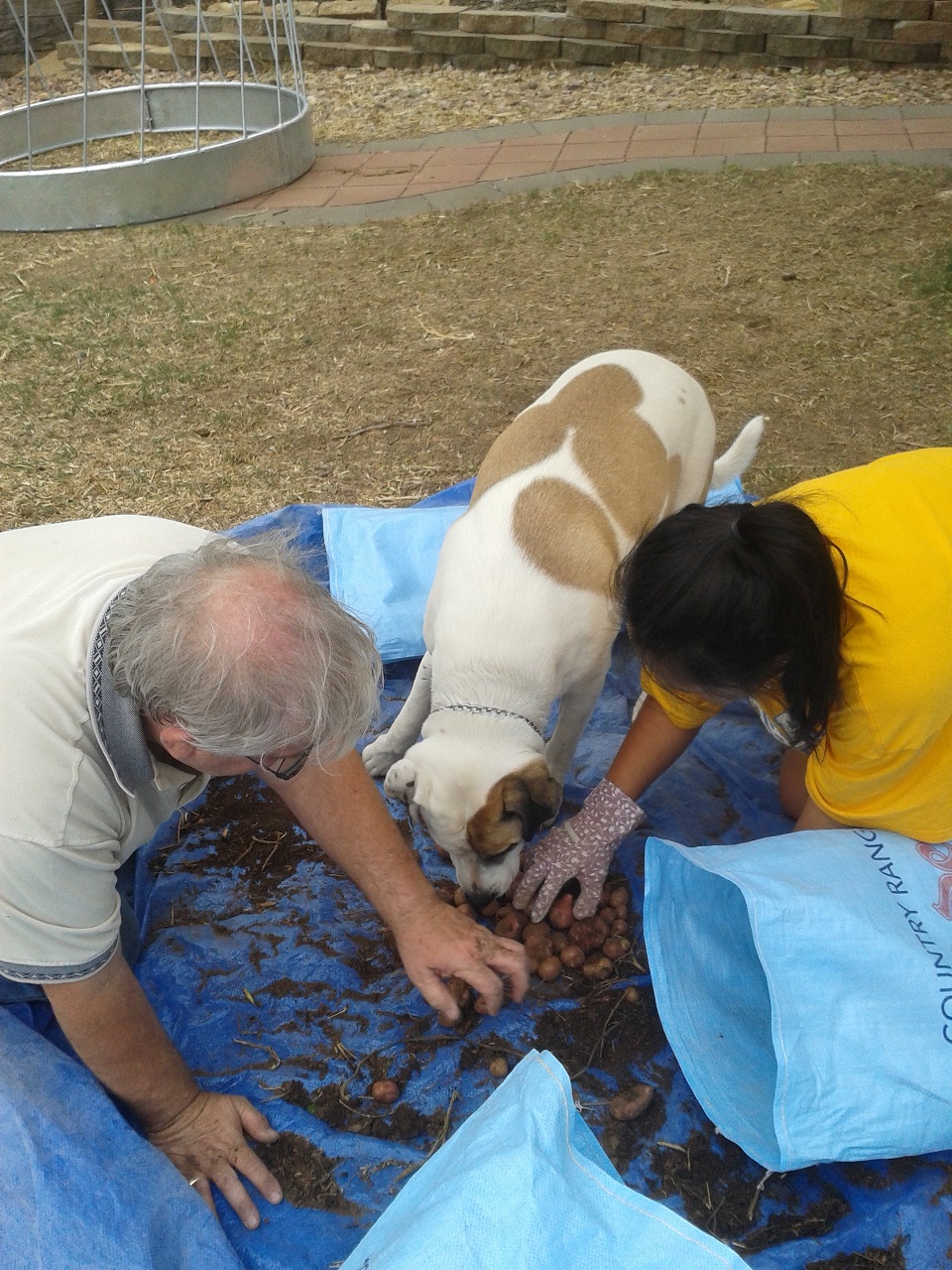
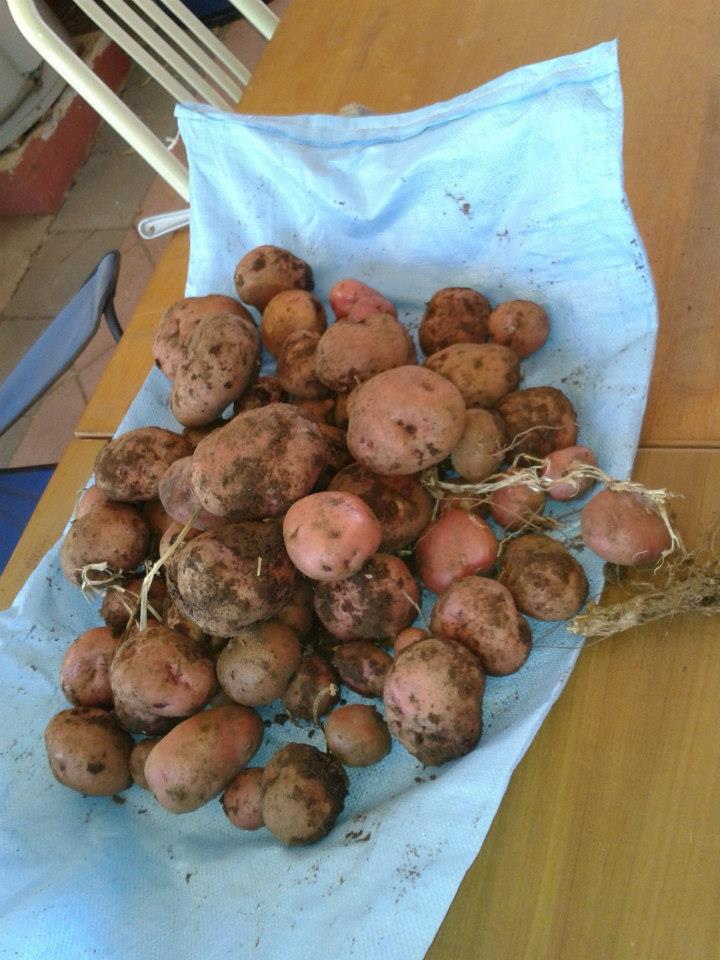
We harvested the rest of our potatoes.  I only planted out a little over half the bed, as we weren’t sure exactly what our return was going to be.  I noted in February that we needed to change our potato approach a little. Even with that, it looks like we have enough for the whole year, and it took a couple of goes to get them all out of the ground.
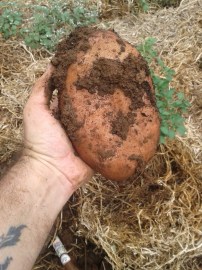
We managed to grow some pretty big spuds.
We managed to grow some pretty big spuds.

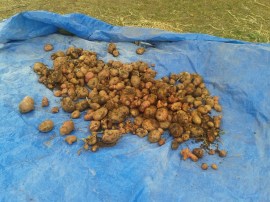
This was one of our spud harvests for the month.
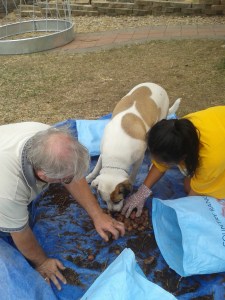
This was one of our spud harvests for the month.

Bruce likes to help.

Bruce likes to help.

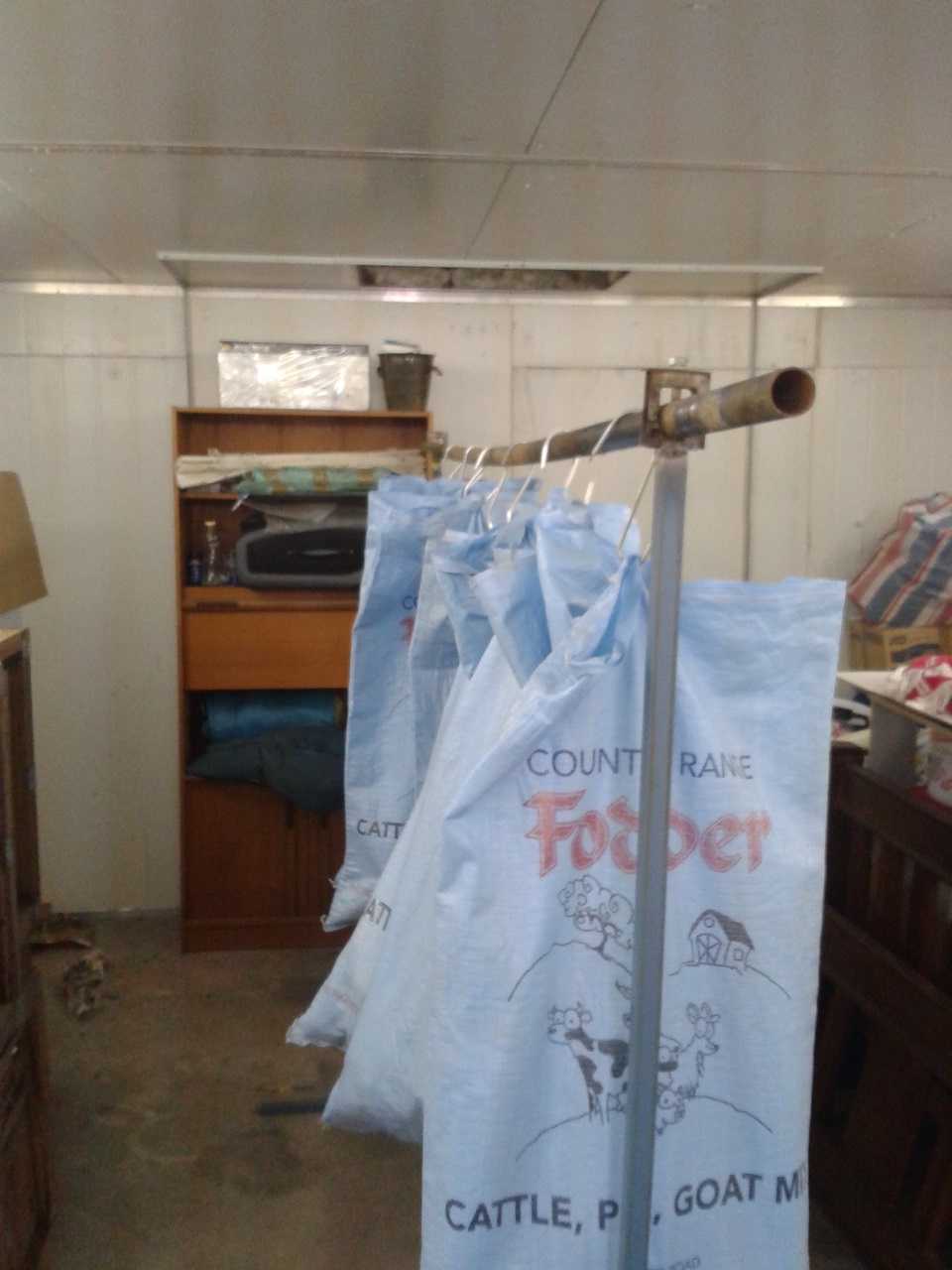
It’s hard to say, but I’m guessing we have somewhere near 200kg of spuds, and in theory they’ll keep most of the year.  Due to a slight malfunction in my labelling process (the words washed away), we’re not exactly sure what they all are.  Next year I plan to use seed potatoes, and make sure we know what’s planted where.

Potatoes out of the reach of rodents. Hopefully.

Potatoes out of the reach of rodents. Hopefully.

We also harvested most of the rest of our corn.  We blanched and froze probably another 5kg, giving us somewhere near 10kg in the freezer. We’ll have to see if this is enough to last us over winter.  If not, we can freeze more next year.

We have enough hanging to use as seed stock next year. As an experiment, I also put some in our dehydrator.  I doubt the results are viable seeds, but they may be useful. I whizzed some up as a kind of corn-meal to use in sausages, and they can be used in slow cooker meals.  We’ll give them a go and see what happens.

I’ve mentioned it before, but one of the beauties of corn is that the entire plant is useful to us. Corn is a giant grass, and every stock animal we have loves to chow down on it.  I cut a heap and fed the stock.

At the same time, we used stand-off fences to let the babies into The Patch to clean up.  I’ve read that this is called “cleansing the beds”, as they dig up every weed, root, stem, seed, and all.  This was particularly useful in this case, as it allowed me to easily cut the spent corn plants and leave the roots in the ground. Pulling up several hundred corn plants would hurt…
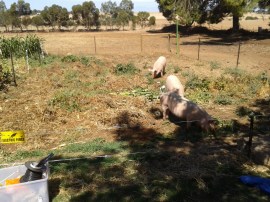
We originally let The Babies into two of the beds, but expanded that to five after a week or so.

We originally let The Babies into two of the beds, but expanded that to five after a week or so.

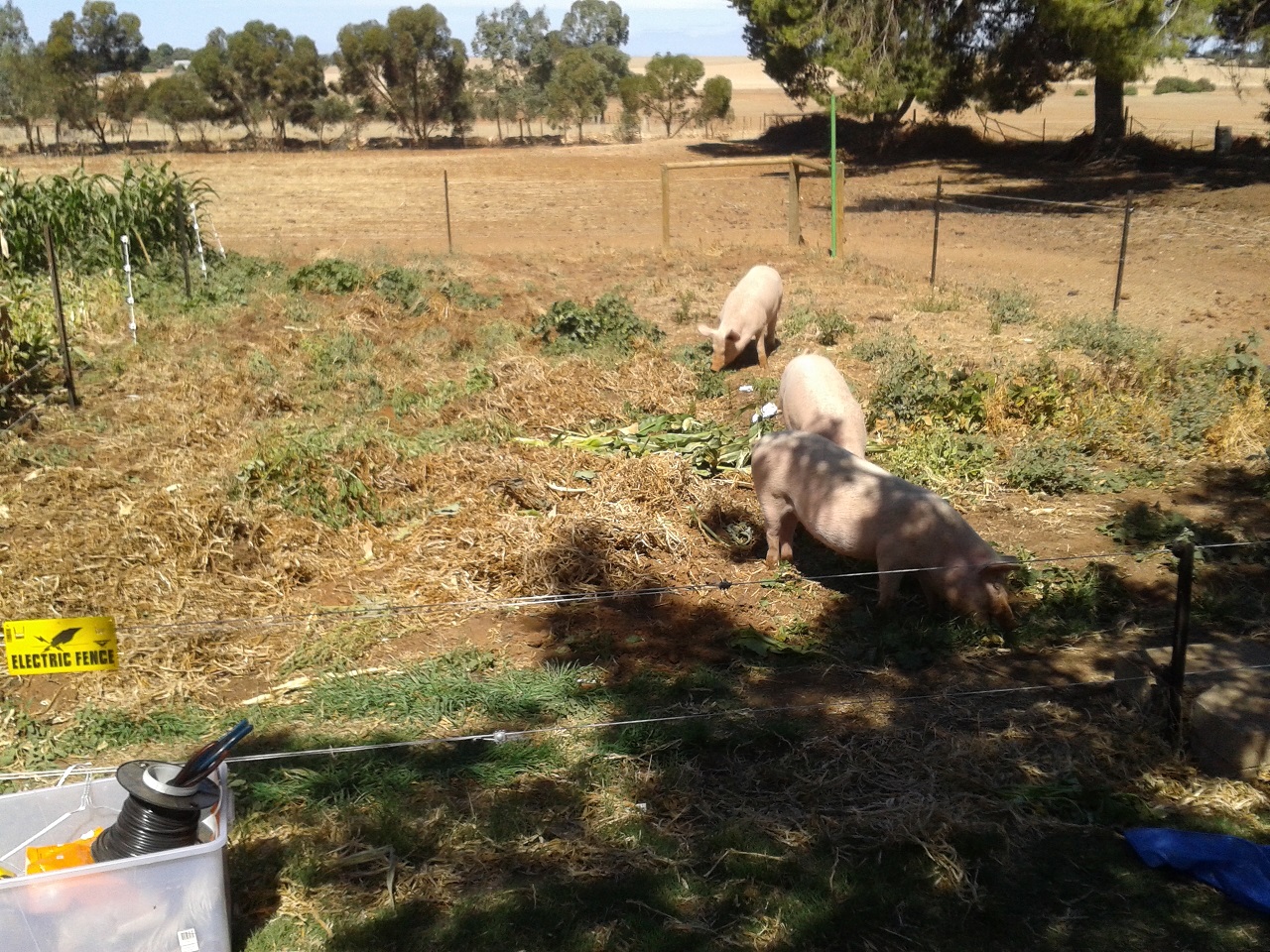
We had always had the plan to let pigs help us in the veggie patch, and it went better than expected.  We ended up having them in there for a total of a couple of weeks, and nothing made it through.
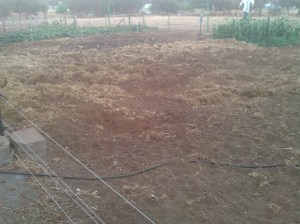
This is what a couple of weeks of pig attention does to spent veggie patches.

This is what a couple of weeks of pig attention does to spent veggie patches.

I’d tried to keep a last few rows of corn that weren’t quite ready. They were too hard to keep watered though, so we ended up just letting the babies in on them.

We managed a ton of “little” jobs too. These are the ones that seem to always need doing, and that pile up if you don’t take care of them. This is things like cleaning up a crappy retaining wall and piling the rotted sleepers ready for fire wood.  We also cleaned up half of the gum trees between us and Farmer John, as well as the row along the driveway running along the front of the property, as they’d dropped a stack of limbs over the warmer months and were threatening the fence.

Other little wins involving slightly less work included:

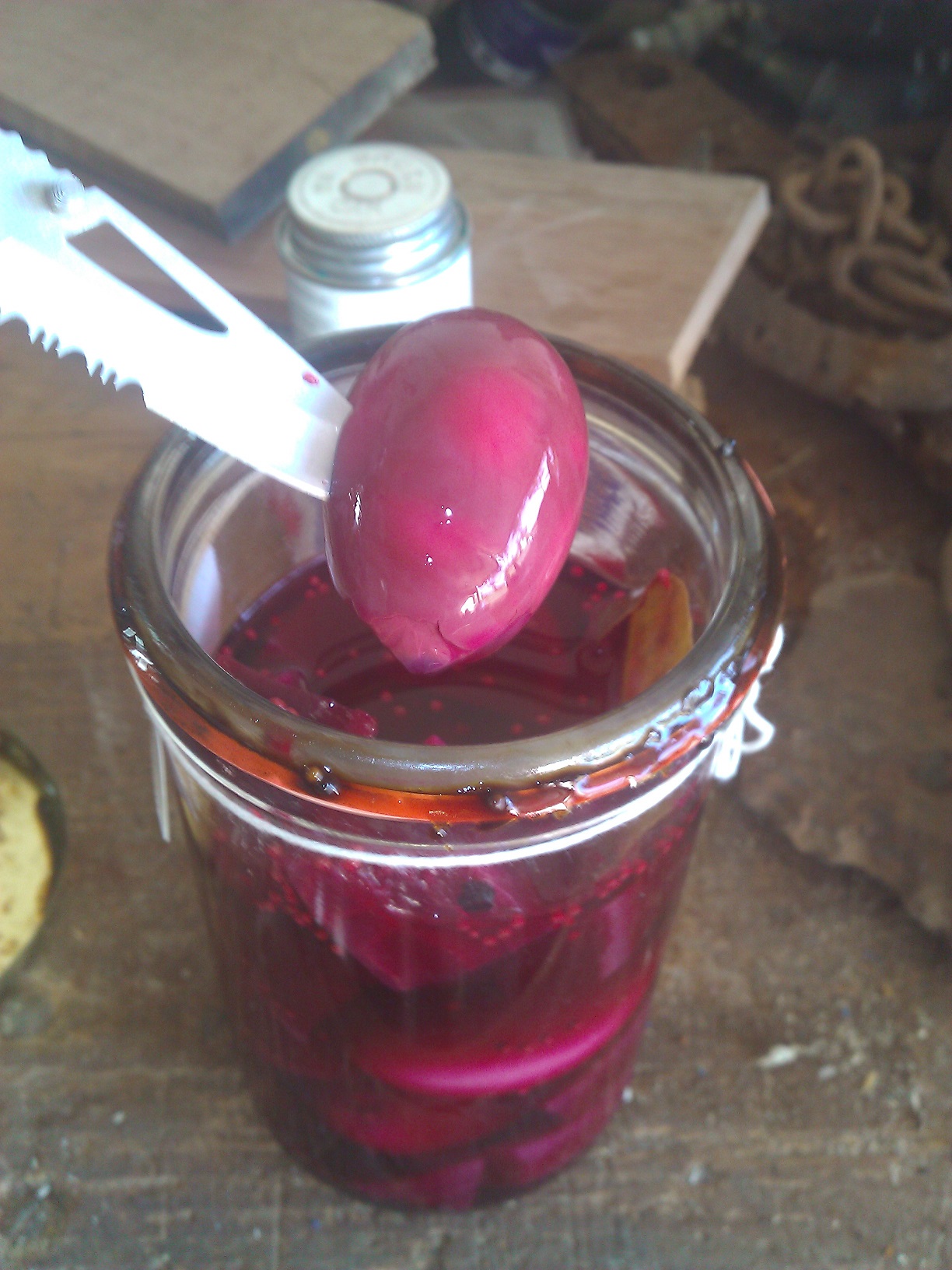
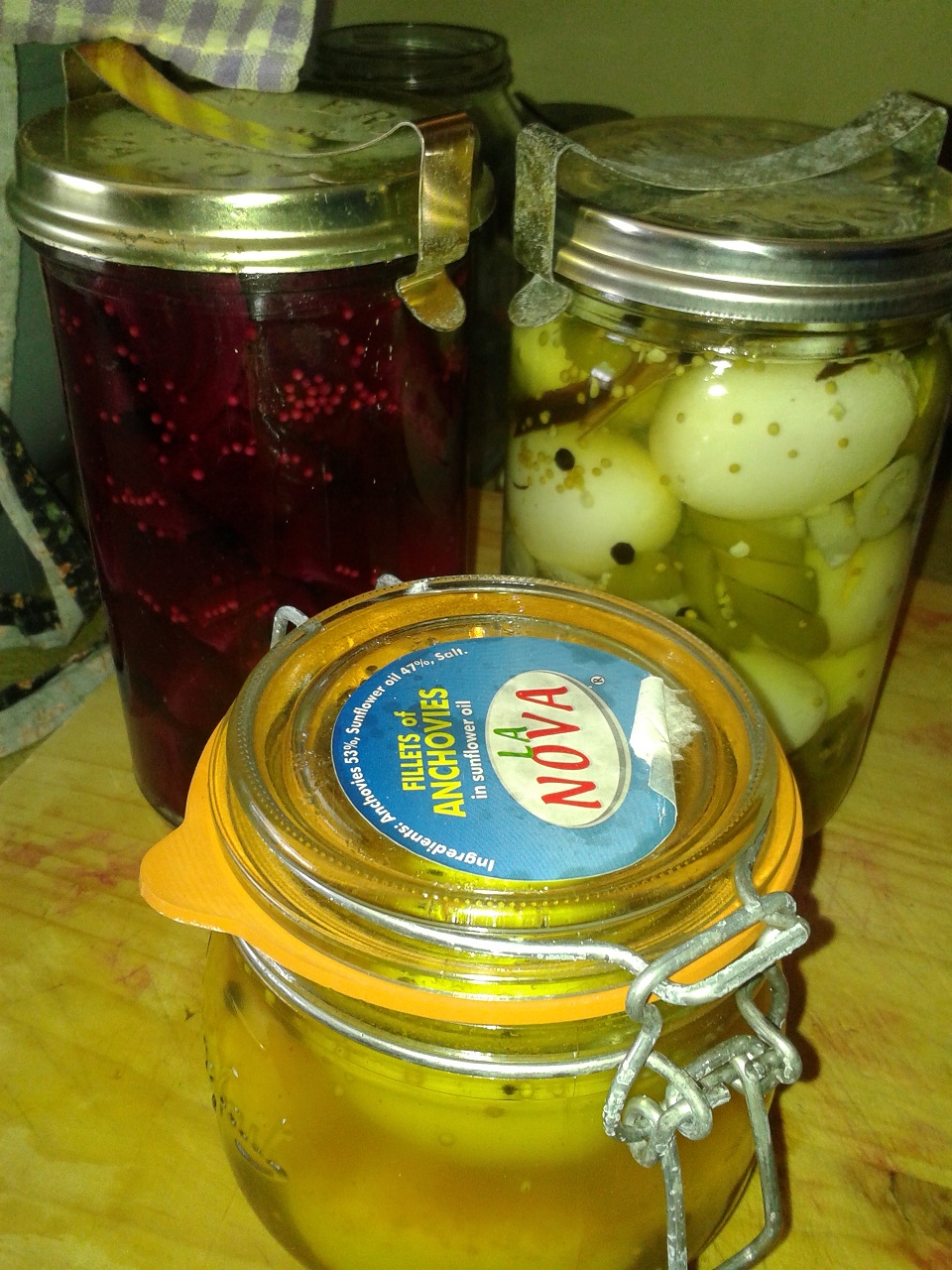
Opening our beetroot-pickled-egg experiment to find them delicious!
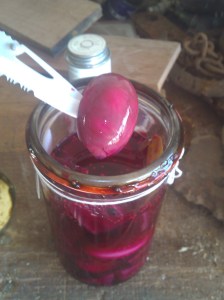
Beetroot Pickled Eggs. YUM!

Beetroot Pickled Eggs. YUM!

Opening some of our chilli-pickled-onions to find them equally delicious, if somewhat fiery.
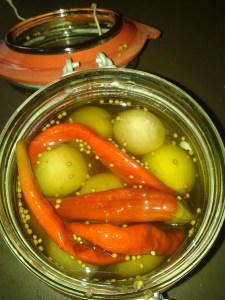
So very, very hot...

So very, very hot…

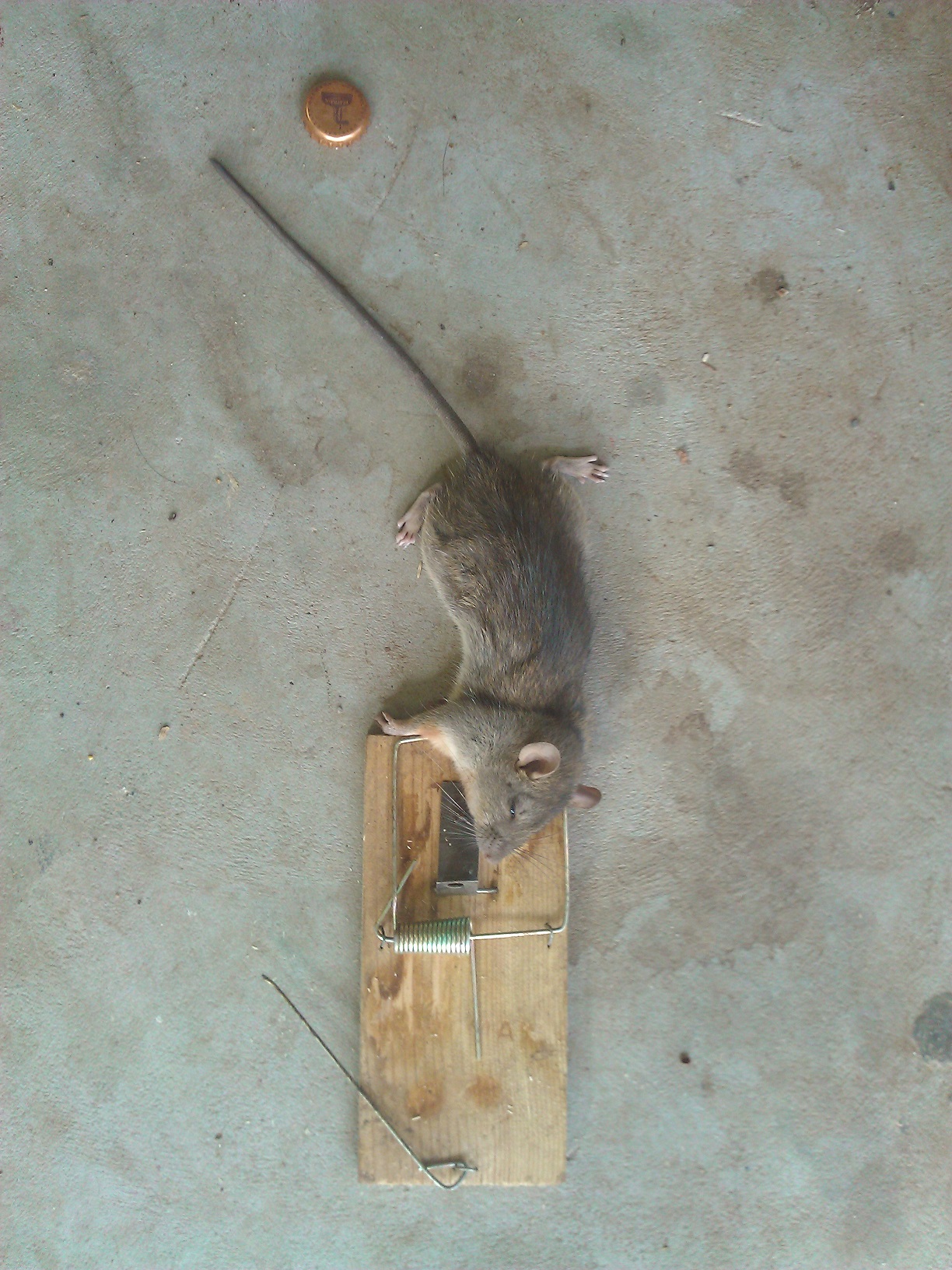
Managing, after over a year, to actually get my first rat.
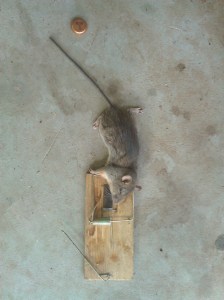
It's weird, but I felt like a big game hunter after getting this guy.

It’s weird, but I felt like a big game hunter after getting this guy.

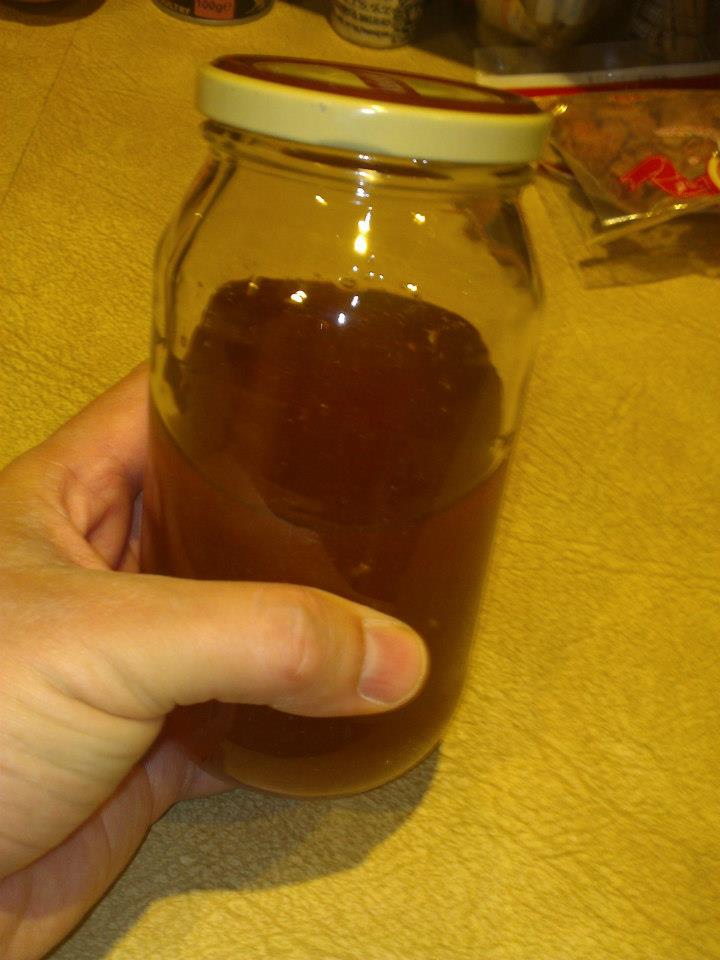
Getting our first honey from our hive. In truth, the hive had problems over the hot months, and it looks like the combs kind of slumped. The result is that the bees have built combs up that stuck to the roof. I had to pry the lid off and literally break the combs off, all the while sending happy thoughts to the thousands of pissed off bees. The little bit that snapped off went inside and use just used gravity to let the honey run out.  The result was nearly a full jar of the best honey you’ll ever taste.
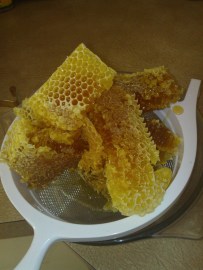
Letting the honey leak out.
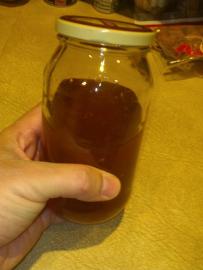
Letting the honey leak out.

Our first honey!

Our first honey!


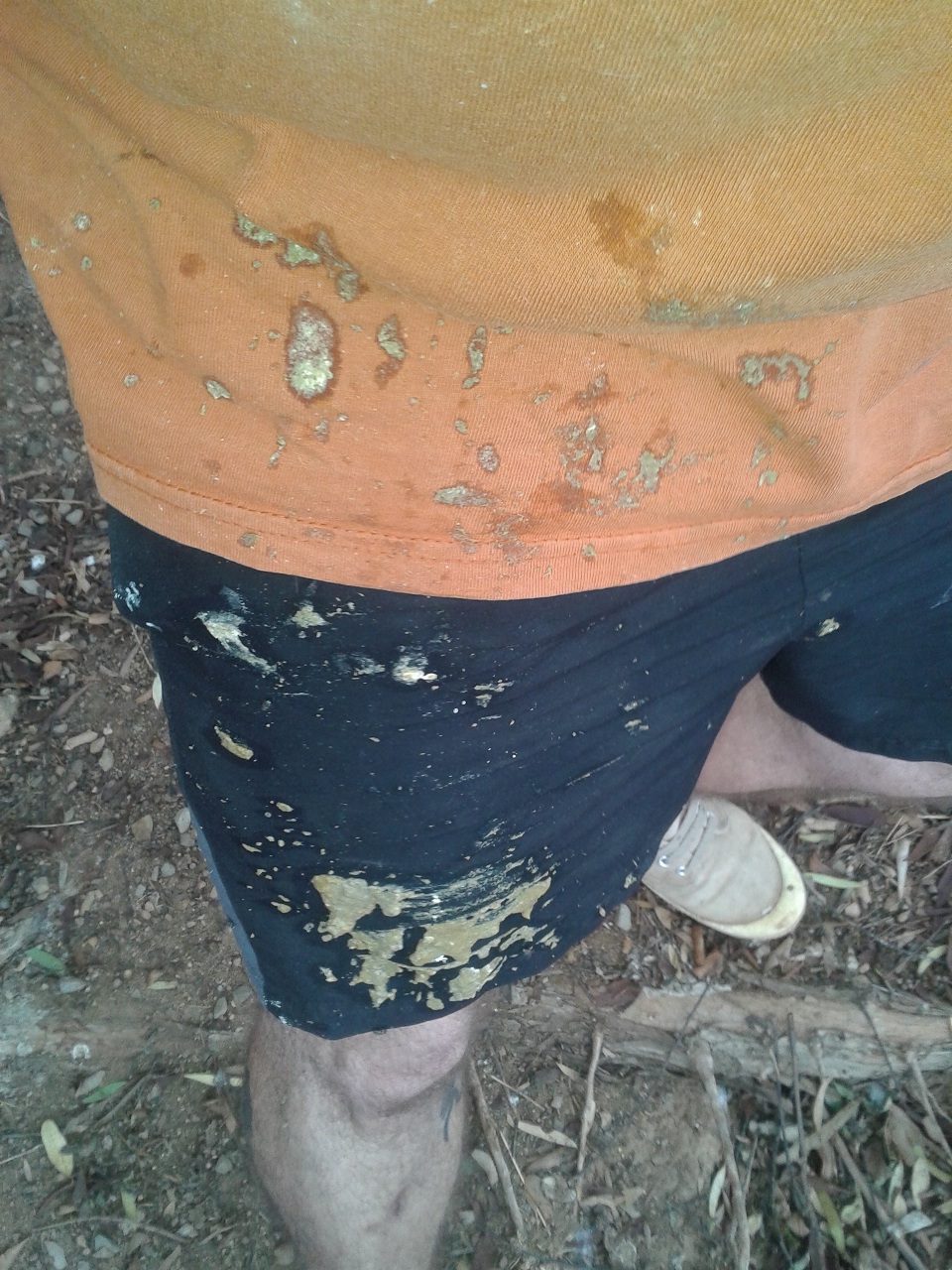
We moved the meat birds to their own run. We have what I’m sure is a Mammoth Muscovy Drake and I’m keen for him to make me mammoth babies. Of course, the one problem with handling ducks is their first, and really only, line of defence is to shit on you…
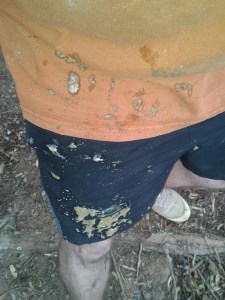
Picking up a duck can be like squeezing a tube of toothpaste... full of duck shit...

Picking up a duck can be like squeezing a tube of toothpaste… full of duck shit…

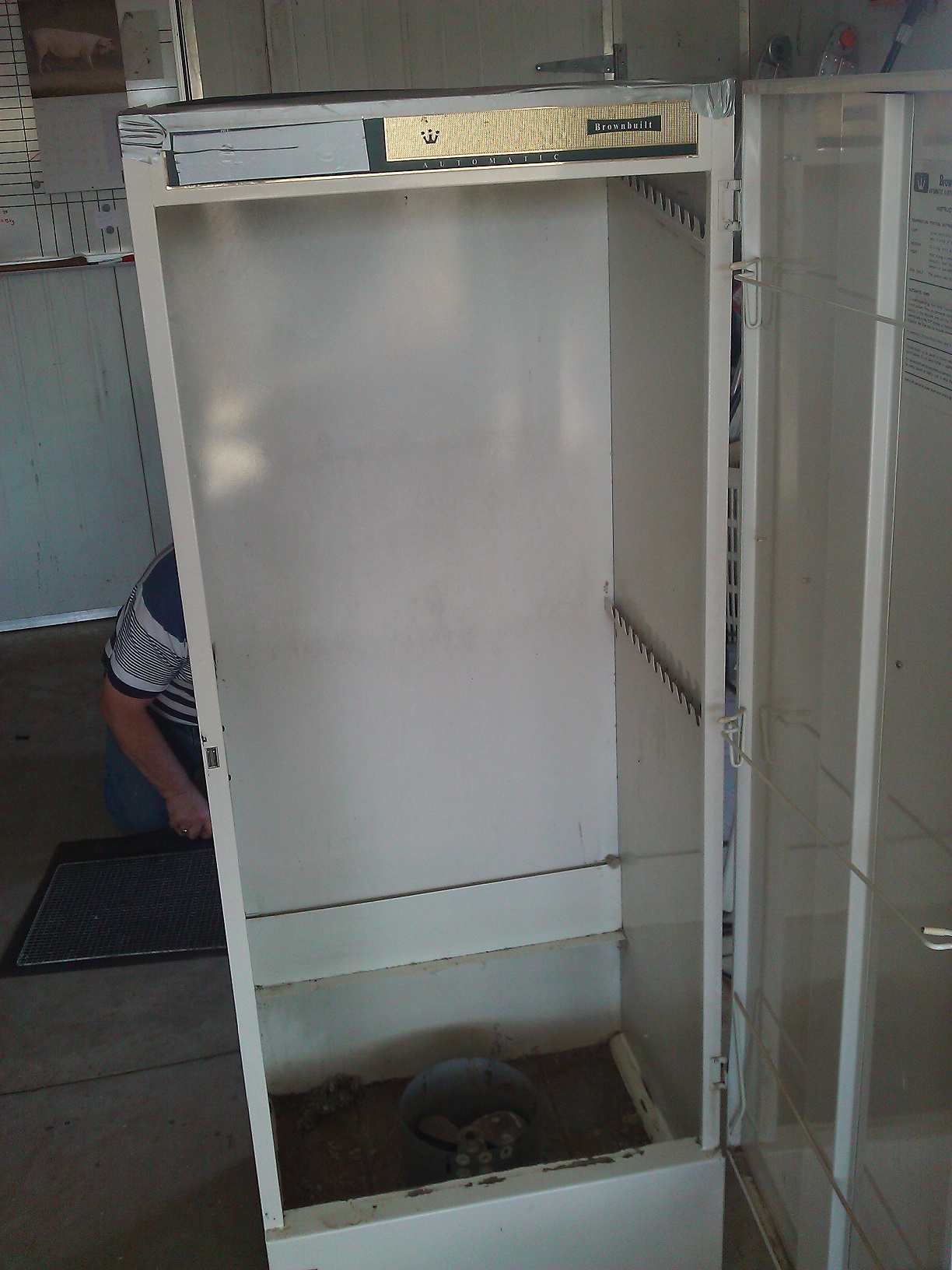
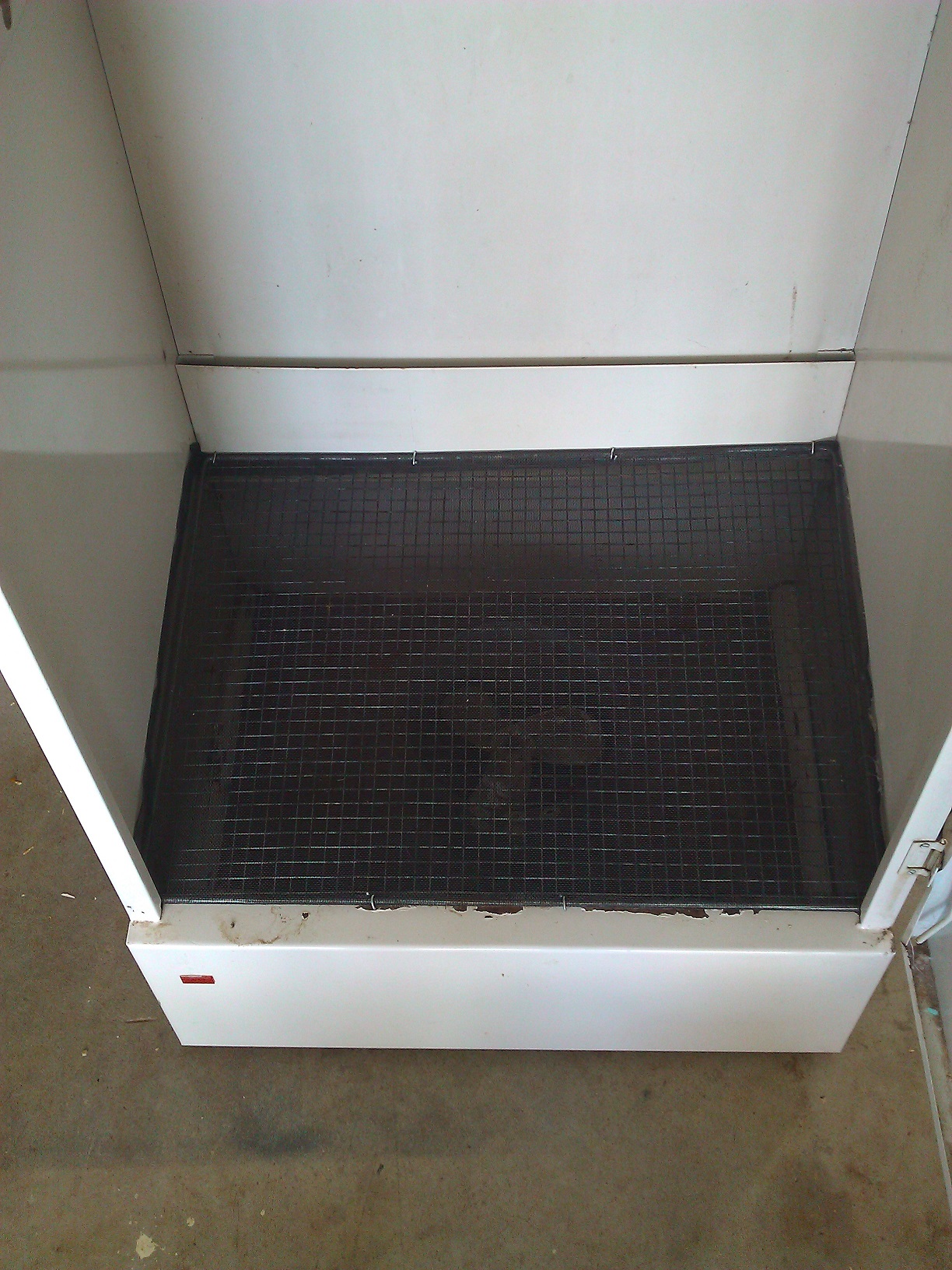
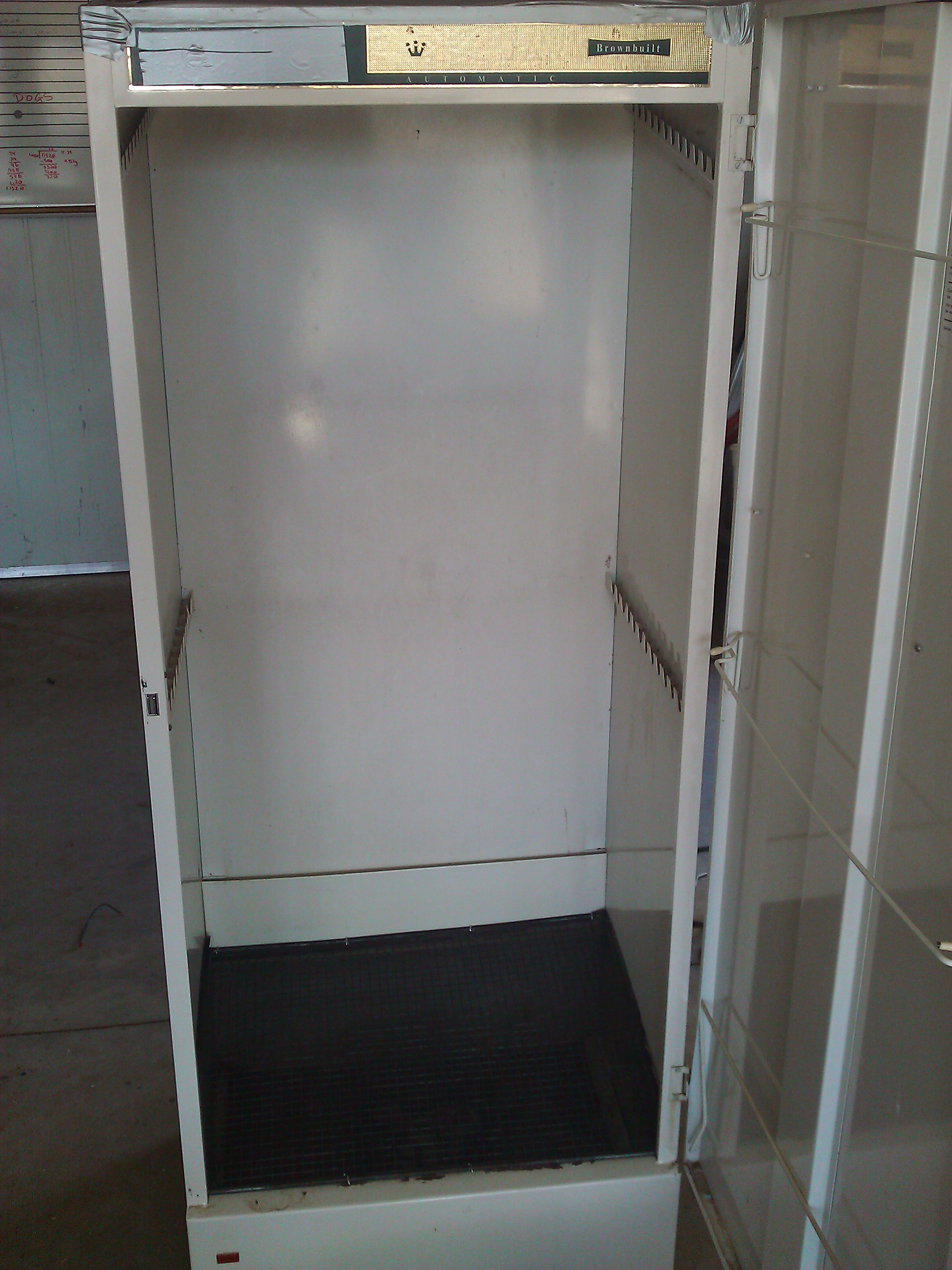
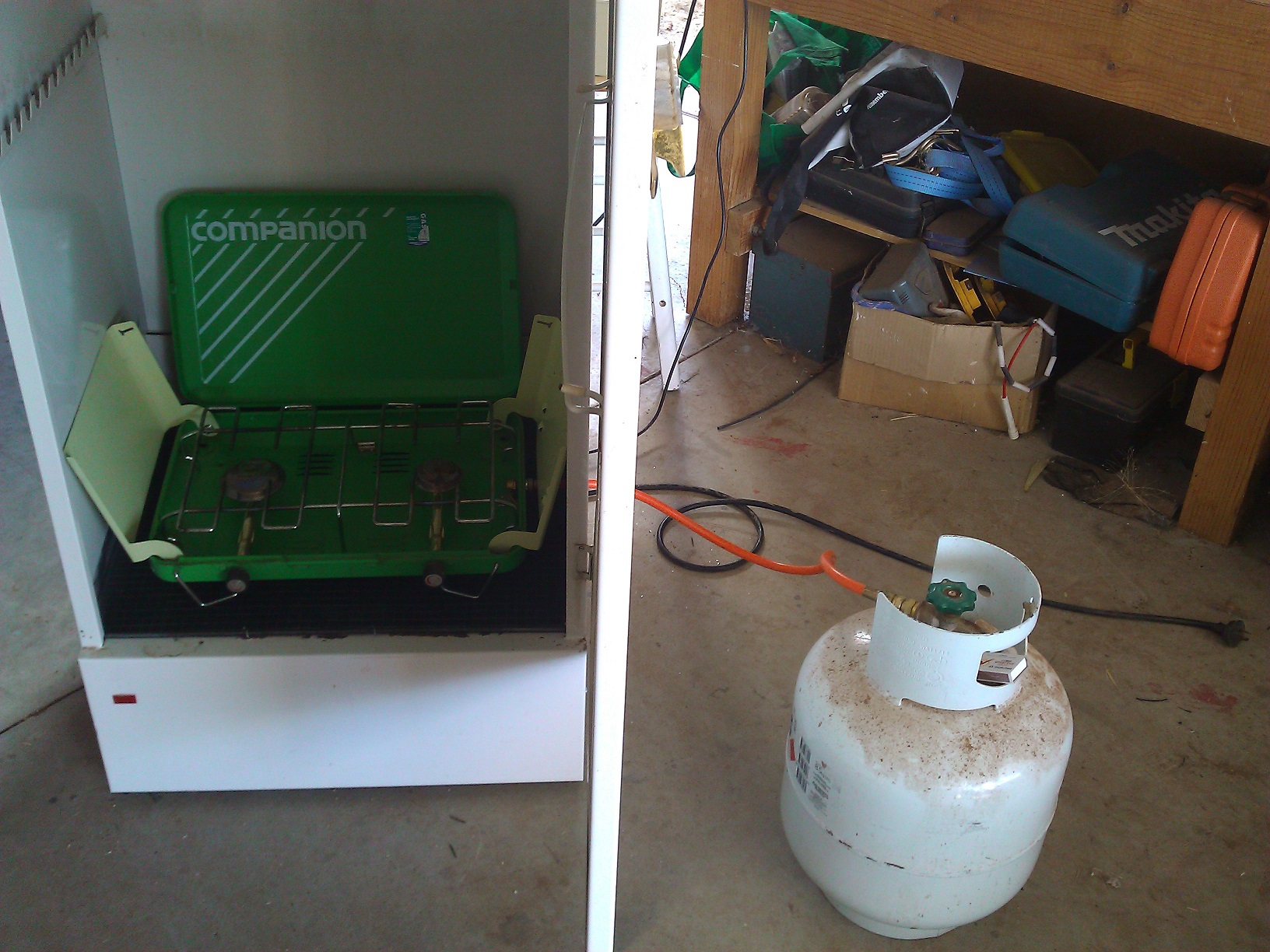
We finally built a smoker.  Dad had sourced an old drying cabinet from back in the 70s, which was about the size of a large fridge.
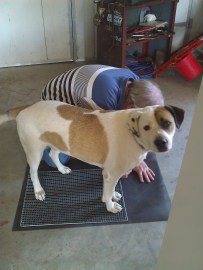
Bruce being super helpful again.

Bruce being super helpful again.

At this stage we'd removed the heating element from the bottom.

At this stage we’d removed the heating element from the bottom.


We made it insect and vermin proof.
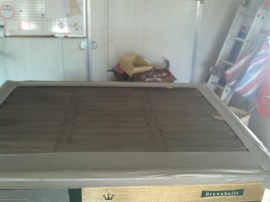
Insect/vermin proofed the top.

Insect/vermin proofed the top.

Insect/vermin proofed the bottom.

Insect/vermin proofed the bottom.

Mostly assembled.

Mostly assembled.

We added a heat source, and voila we had a working smoker!
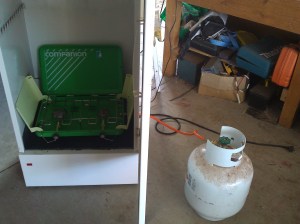
The heat source and the smoker is done!

The heat source and the smoker is done!

Last and certainly not least, Bruce found a stick!
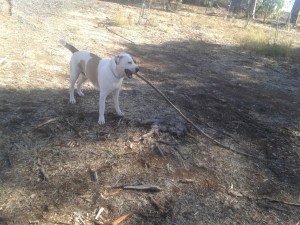
Bruce found himself a stick!

Bruce found himself a stick!

The meaty part of March started the meat chooks. We actually lost two when their legs gave out on them. That left us with a grand-total of 8, which is pretty pathetic. However, apart from one that was a couple of kilos, the rest averaged around 3.5kg and one topped out at 4.1kg.  That’s pretty damned big for a chook!

This taught us two things. Firstly, raising the meat birds over the hot months doesn’t work. All they do is sit in the shade and get fat. Secondly, it’s worth trying a different breed. The Cobbs are amazing when done properly, but their tendency towards congenital leg defects makes them a little sad.  I’m not a fan of roosters, so we might buy/build an incubator and source some fertile eggs over the cooler months.  That way we can experiment with breeds, and potentially heritage breeds, and see which work out best for us.  Of course, after this month, and our forecast for the next several months, we might not be needing the meat…

We primed ourselves for our March meat madness by buying some more equipment.

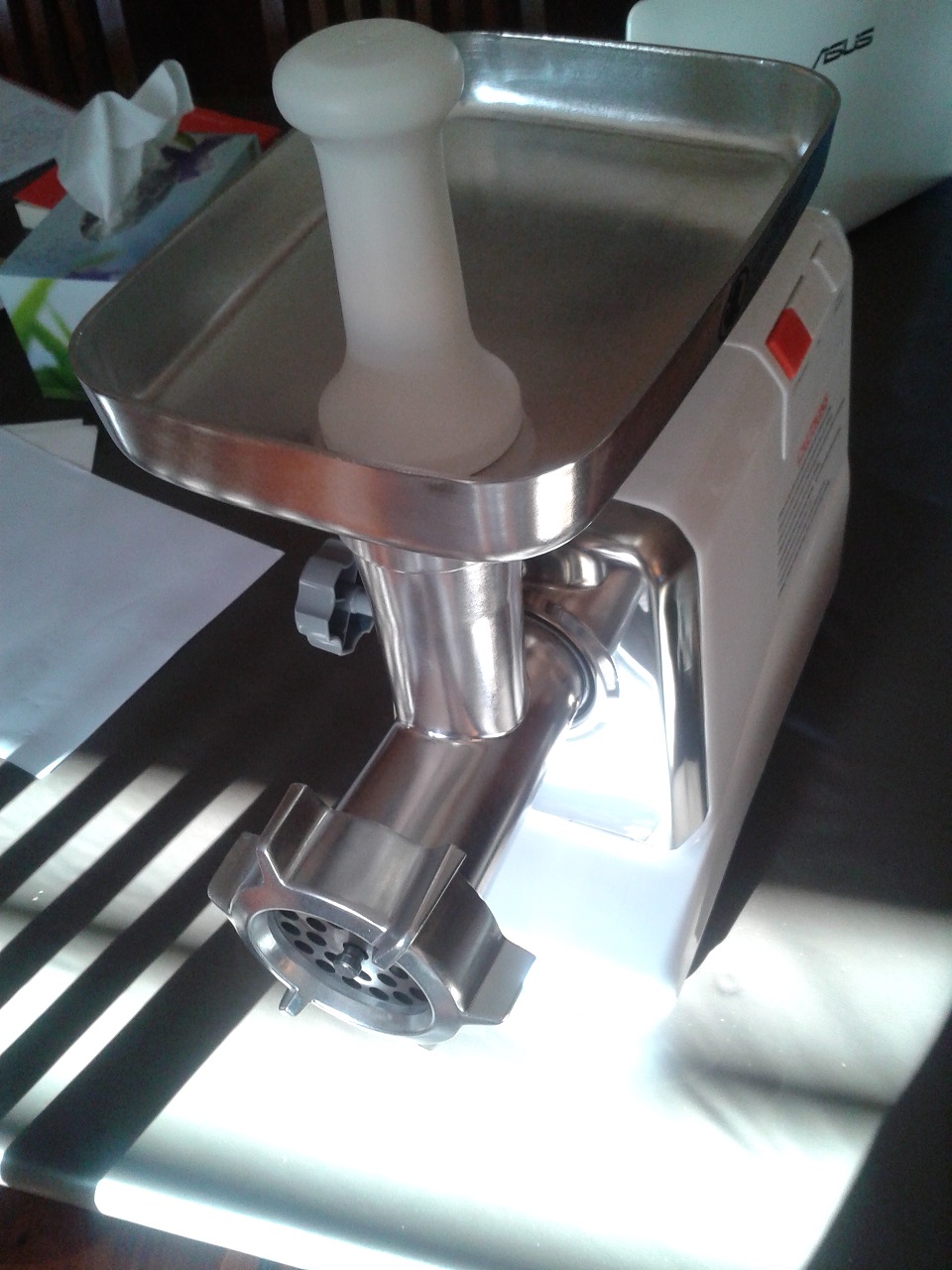
This beats the little hand mincer we've been using...

This beats the little hand mincer we’ve been using…

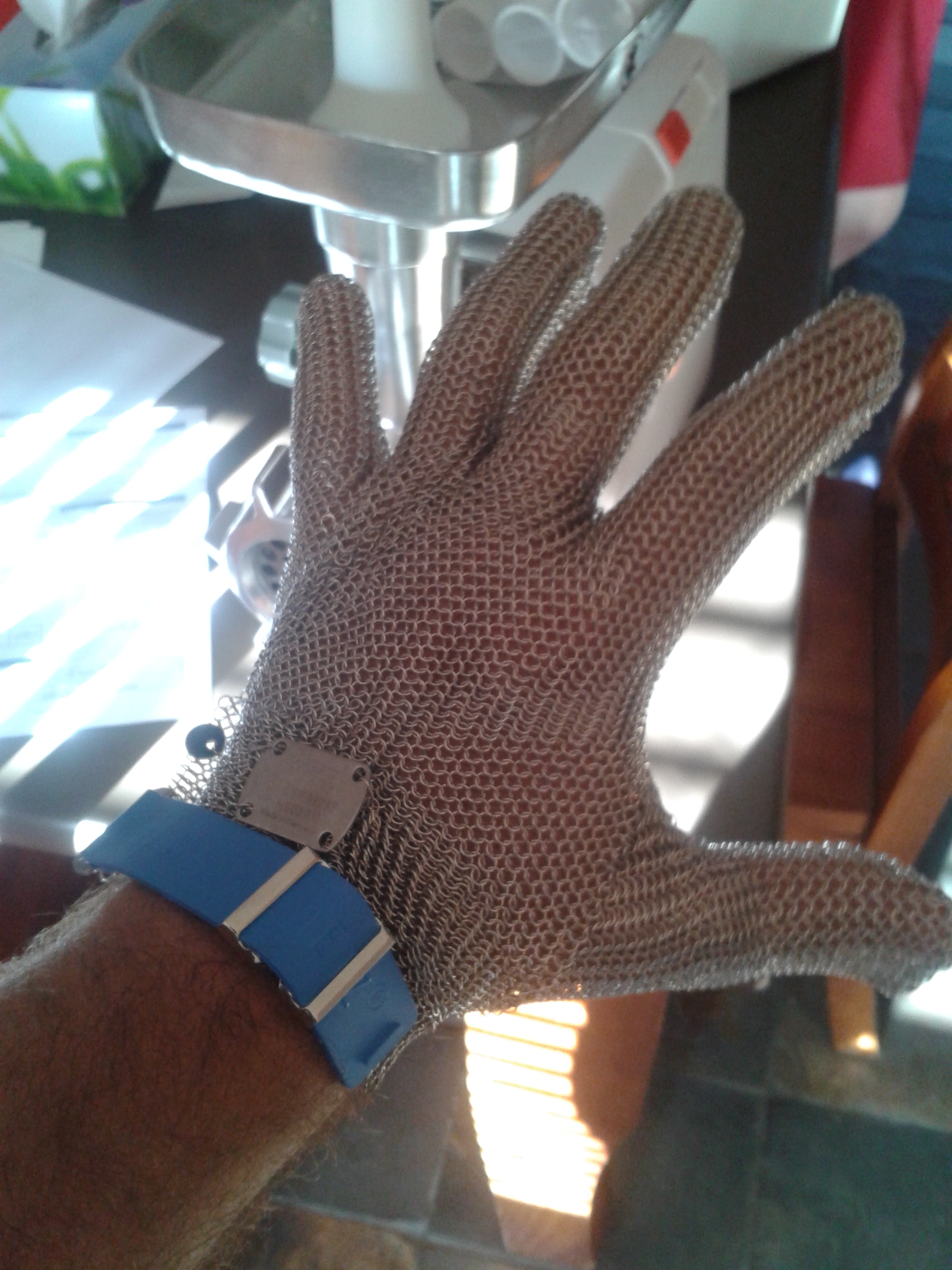
Linhda made me buy a chainmail glove. I don't need the protection, but chainmail is cool as hell!

Linhda made me buy a chainmail glove. I don’t need the protection, but chainmail is cool as hell!


After the equipment was all sorted, our first big meat win for March was with Todd (all of our sheep are named Todd). We tried a breed we’d not seen before. We got him in January and were told he was a “Broad Lace”. Of course, that isn’t a breed we can find any information on, but that didn’t change the fact that Todd was definitely a meat breed and was built like a tank.

On a side note, this Todd was the perfect test of the stock race we built along the face of the pig yards.  He was a big boy, he was a little aggressive, and he had no qualms about trying to go through fences or people. I carried a spare gate in front of me to bar the way, and patiently herded him down the run. It took all of 60 seconds, and he calmly ran into the trailer. I had visions of having to tackle him, and I really wasn’t looking forward to it.

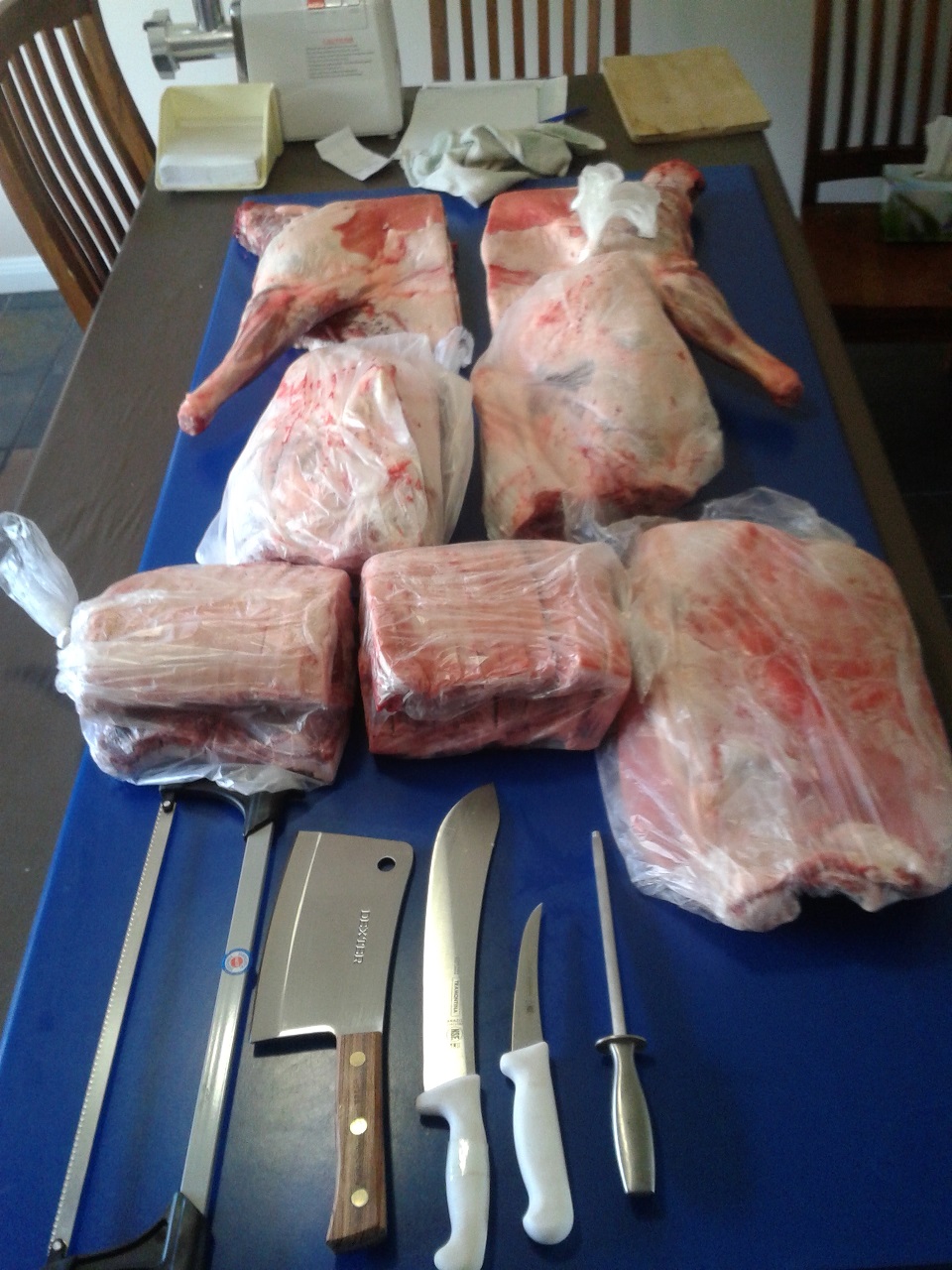
Todd dressed out to 42kg! That is probably close to twice as large as the merino crosses we bought when we first moved in.  I actually messed up when giving the butcher instructions. I thought I was asking them to now cut or bone-out the shoulders, but apparently I asked for the forequarters to be kept whole.  That means they gave me the front half of the sheep in two parts. It worked out for the best though, as we were able to get off a lot of meat to mince.
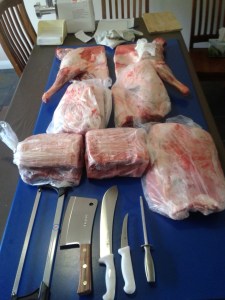
Todd - 42kg of awesome.

Todd – 42kg of awesome.

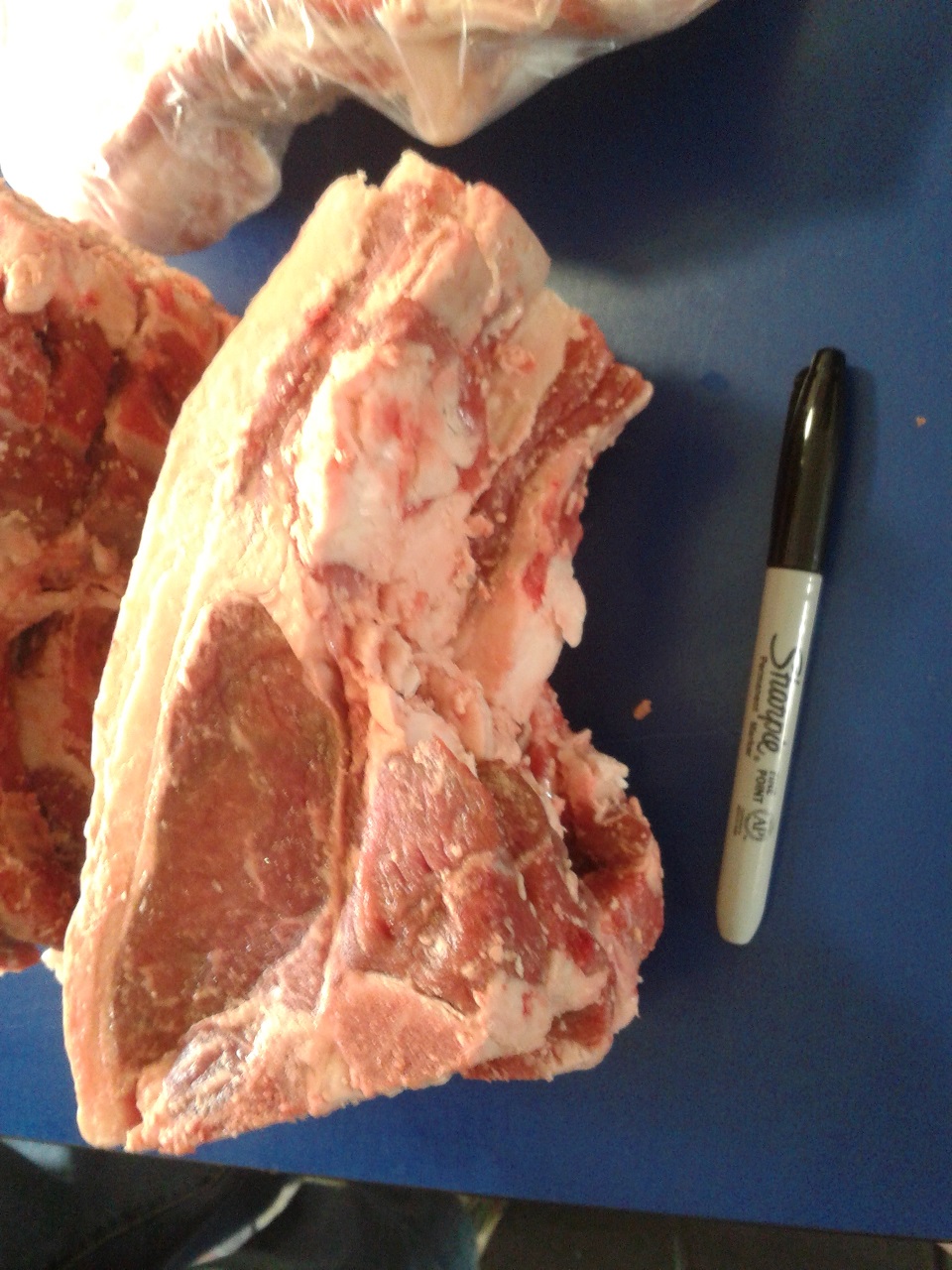
Just to give some perspective as to Todd’s size, the roasts from him were 6kg, and we got 8kg of giant loin chops.
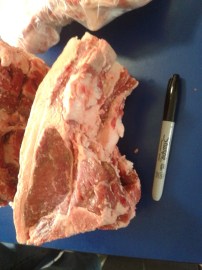
Biggest loin chops ever!
Biggest loin chops ever!

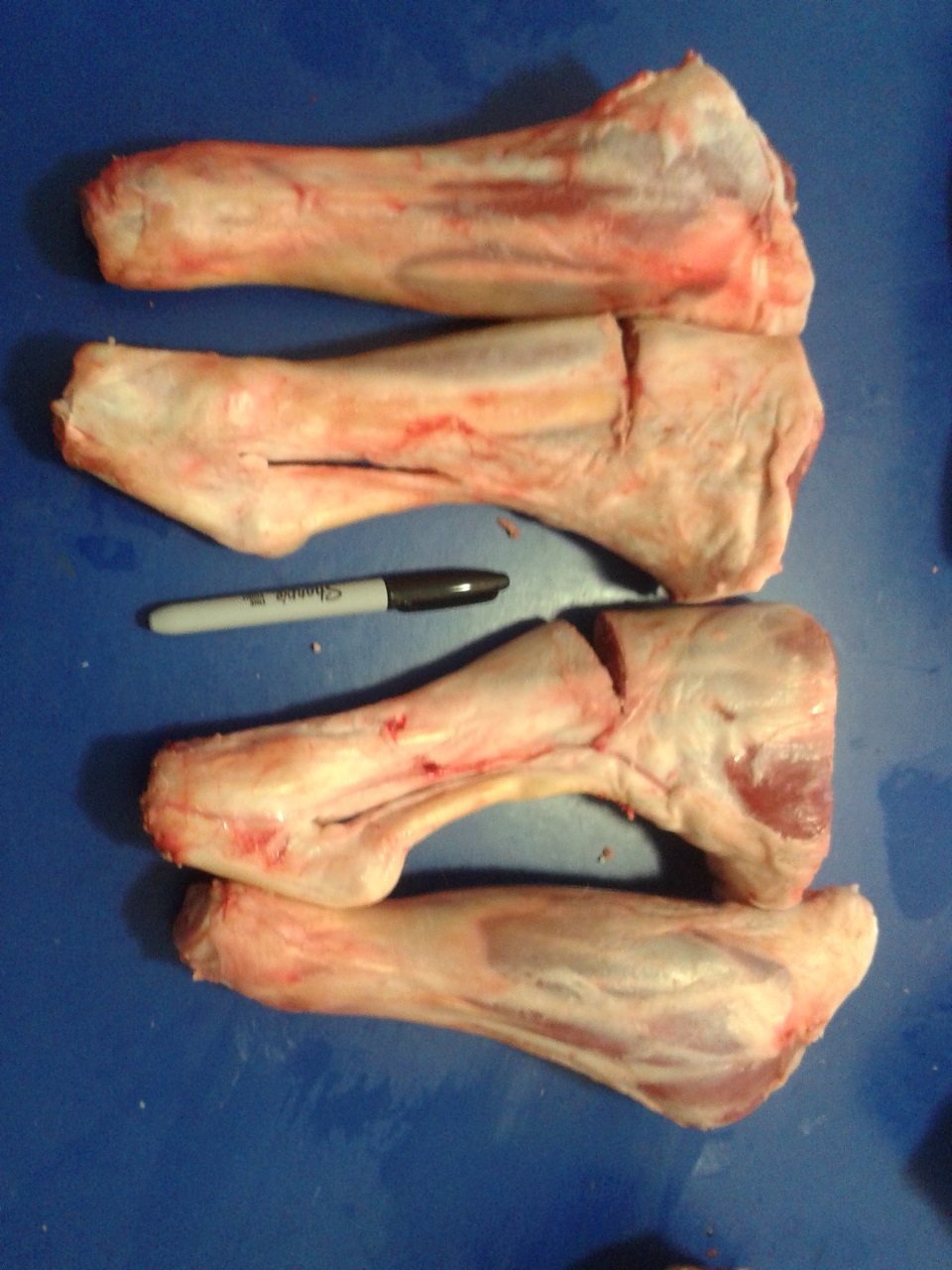
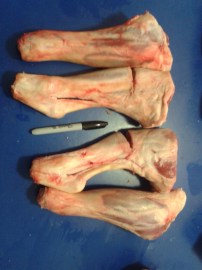
I think the shanks are my favourite part.

I think the shanks are my favourite part.


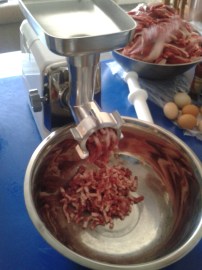
We had a go at sausages too. They turned out okay, and were a huge learning experience. We learned to better control the fat content, and that we needed a separate sausage stuffer. In theory, the mincer works as a sausage stuffer, but in reality it was hard and prone to problems.
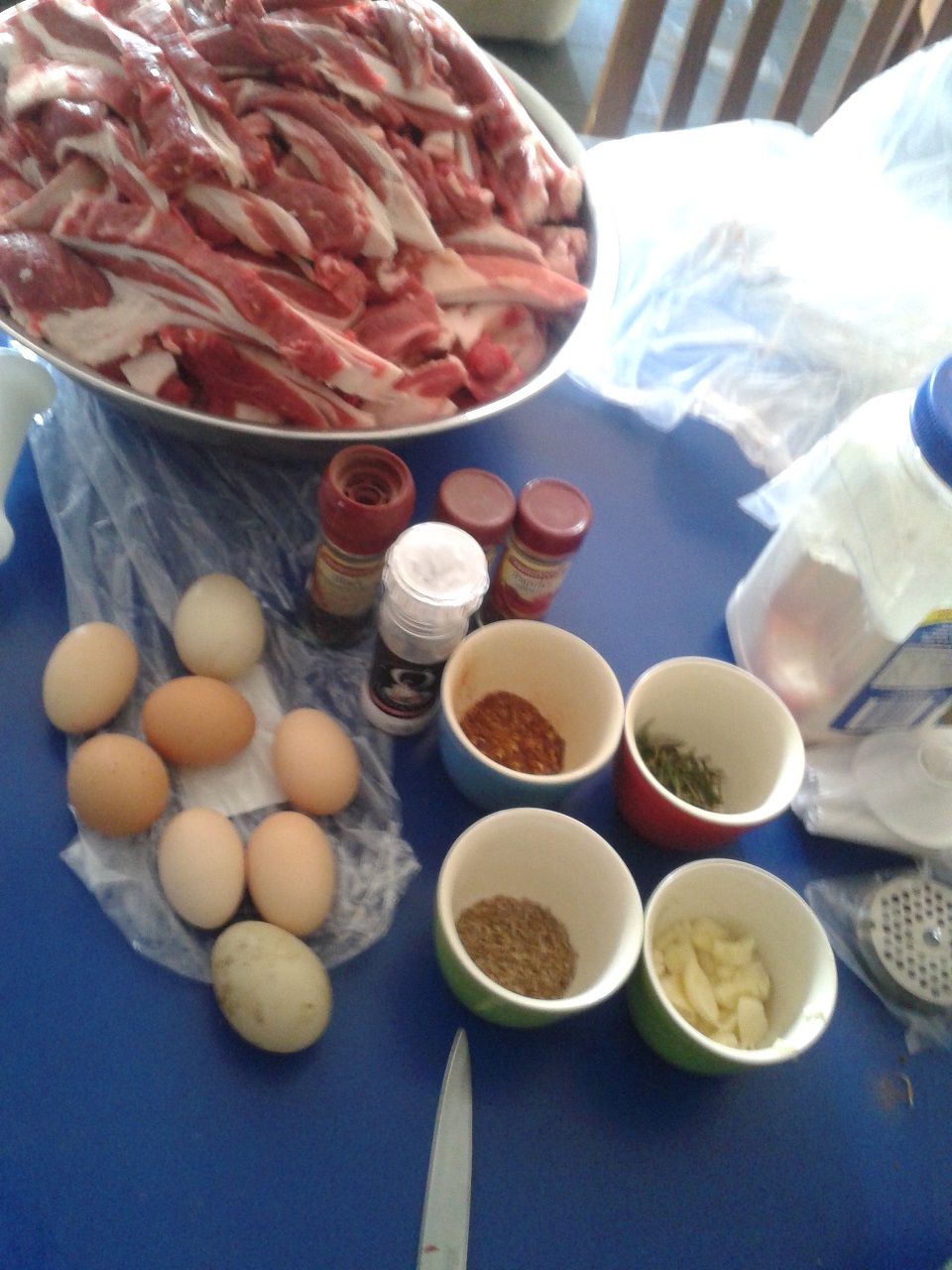
Ready for some sausage experimenting.
Ready for some sausage experimenting.

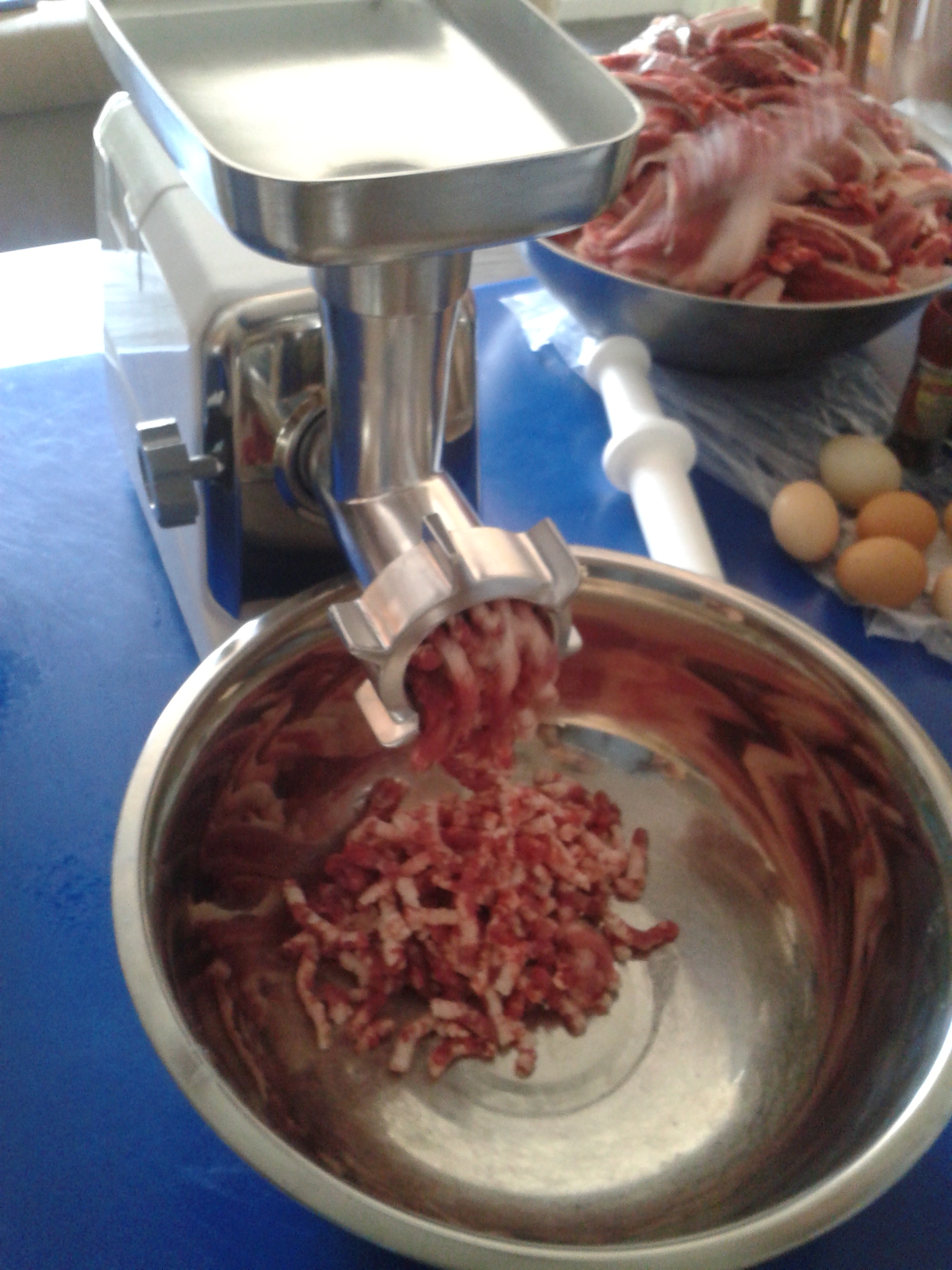
Mincer in action.

Mincer in action.


By far the biggest meat win of the month, and I’d argue of the entire time on our farm, was our first pig (not counting the spit pig).  We took Ham to “The Other Farm” in the last week of the month, and this was a real test in many ways. Firstly, I had raised Ham since he was 3 weeks old. I genuinely love the pigs, and had bonded with Ham. Secondly, our pork production had never really been put to the test before this. Happily, it all worked out.
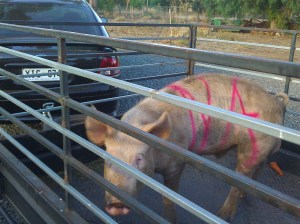
Ready for the trip to "The Other Farm".

Ready for the trip to “The Other Farm”.

I was able to maintain my perspective when it came to Hammy. I knew definitively that he had grown up with excellent care, fed the best food, had space and exercise, and that he was shown nothing but affection. I also knew that he had been killed humanely, and that he was now going to nourish my family.

Hammy dressed out to 55kg at around 6 months old.
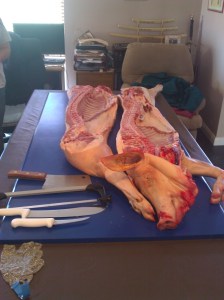
This is the "after" picture.

This is the “after” picture.

We butchered Ham ourselves, using the River Cottage “Pig in a Day” DVD as a reference. In fact, we used it twice, as there were two sides to butcher. 🙂

We ended up with:

  • Lots of roasting joints – leg, chump-end, rolled loin, spare-rib end roasts. Seriously, every second cut on the pig is a roasting joint, and we ended up with around 8 or 10 roasts, a couple of which are huge.
  • Chops, though only about 7 or 8. This saved the length of the rolled loin.
  • Tender loins x 2.
  • 5kg of bacon, including some from the cheeks.
  • Nearly 5kg of sausages.
  • 1 x 6kg prosciutto.
  • A stack of dog meat – bones and trimmings.
  • The offal – also dog meat.

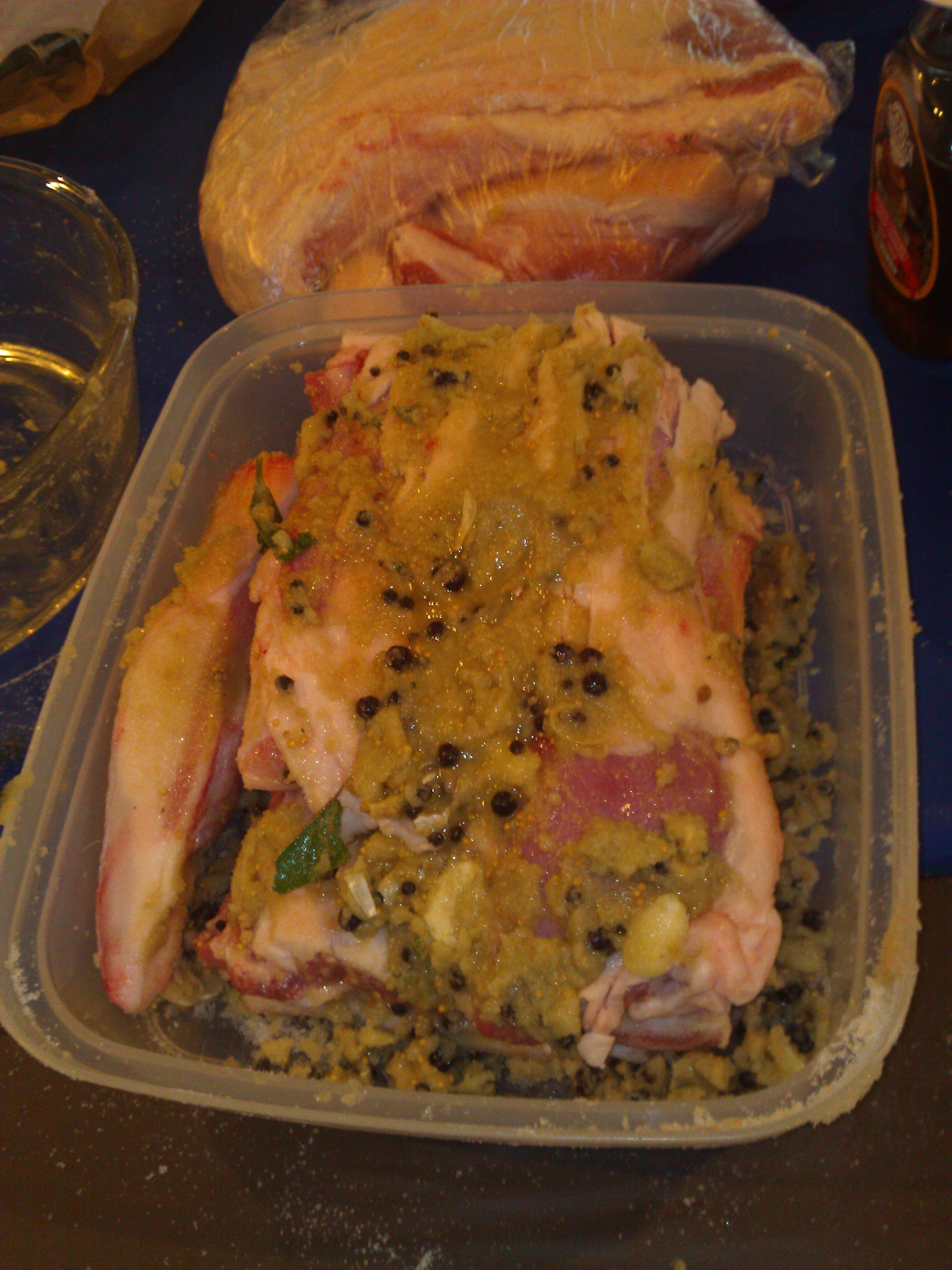
The bacon was our first big test. We used two different rubs, one with sugar and the other with maple syrup.

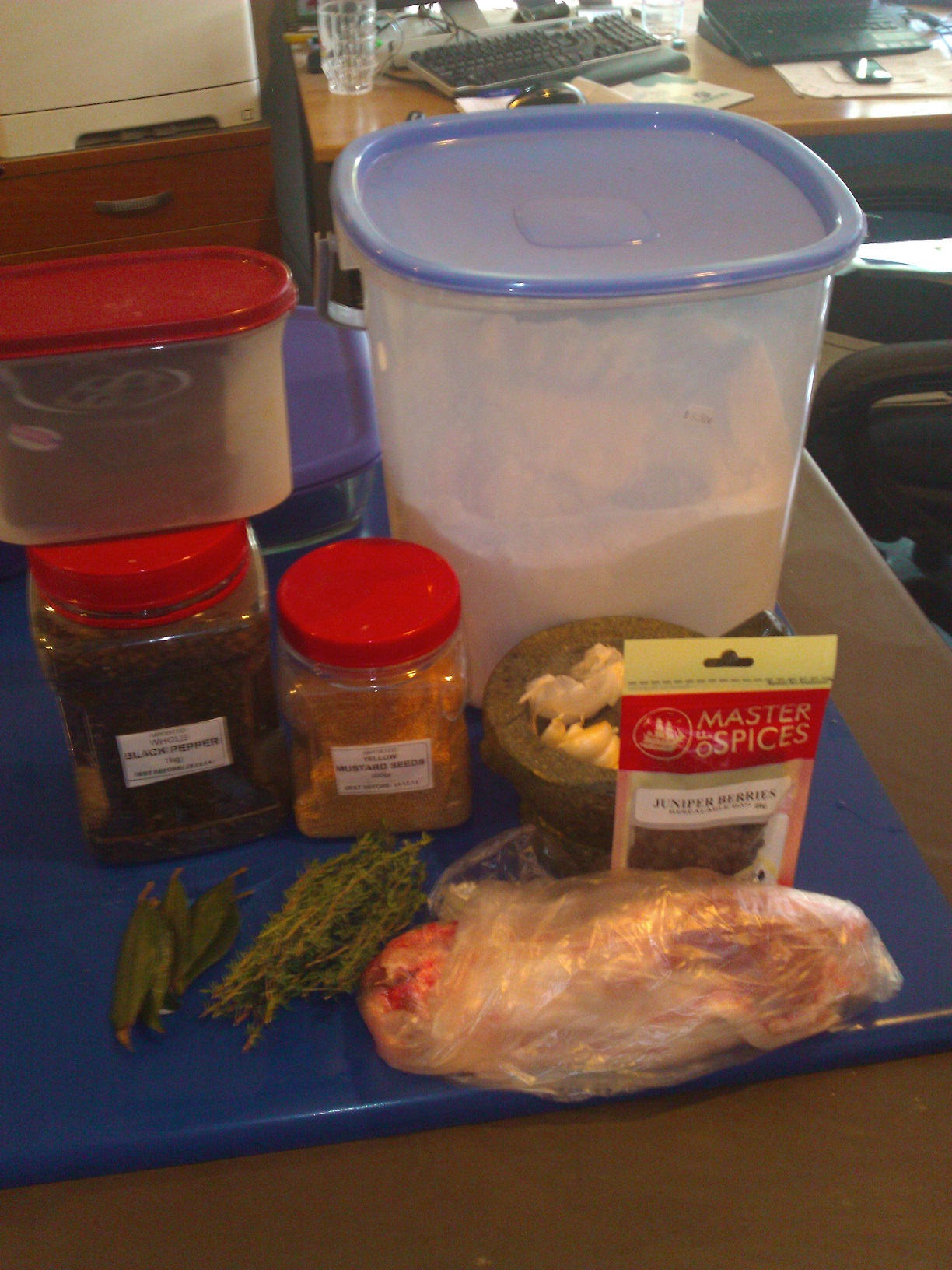
Getting the cure ingredients together.

Getting the cure ingredients together.

Kicking it old school with a mortar and pestle.

Kicking it old school with a mortar and pestle.

One of the cures assembled.
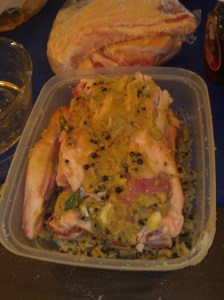
One of the cures assembled.

Cure #1: uses sugar.
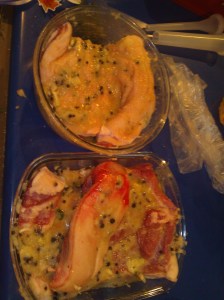
Cure #1: uses sugar.

Cure #2: uses maple syrup.

Cure #2: uses maple syrup.

The results were actually in April, and I’ll include them there. Suffice it to say, the bacon was amazing!

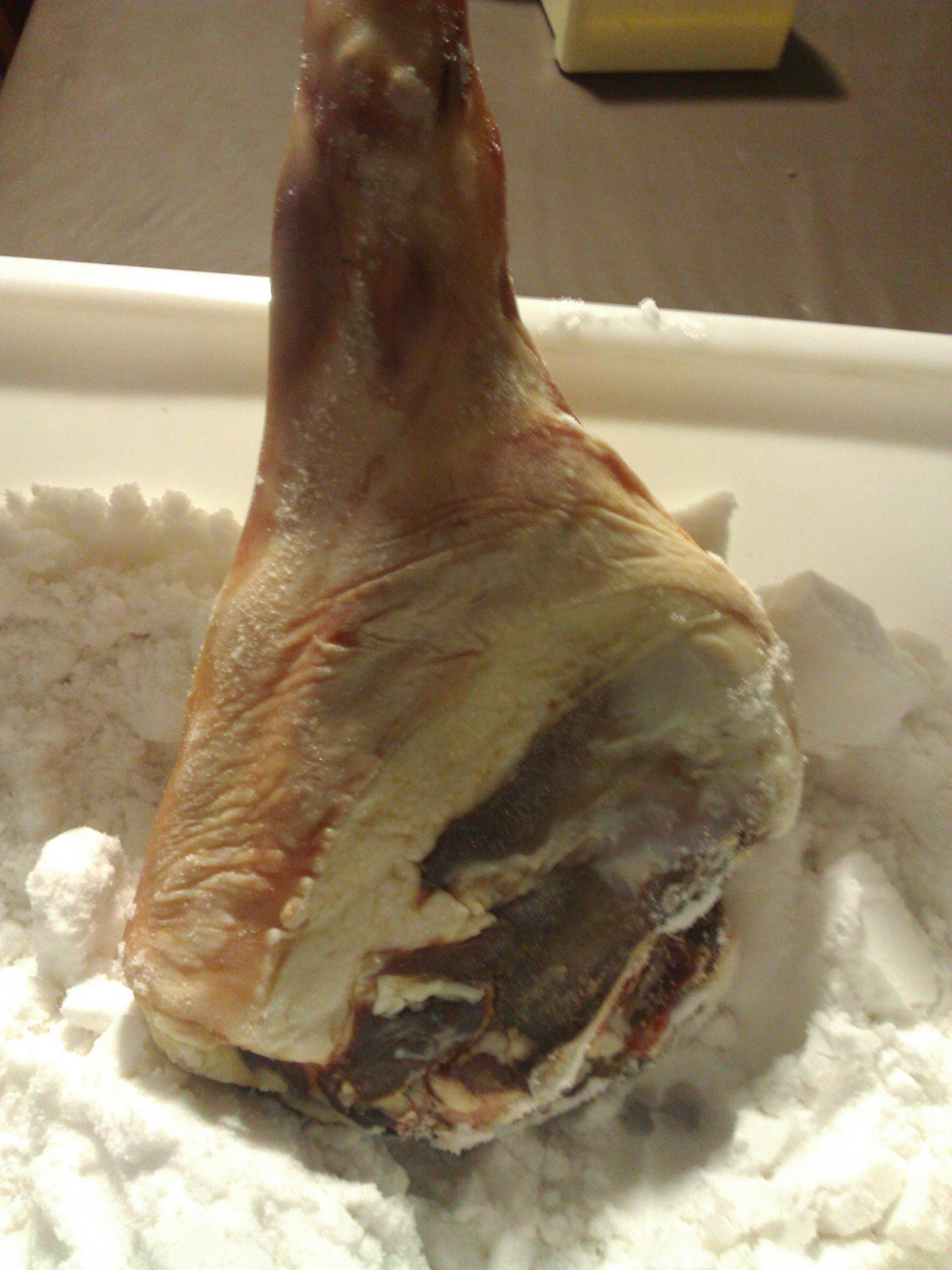
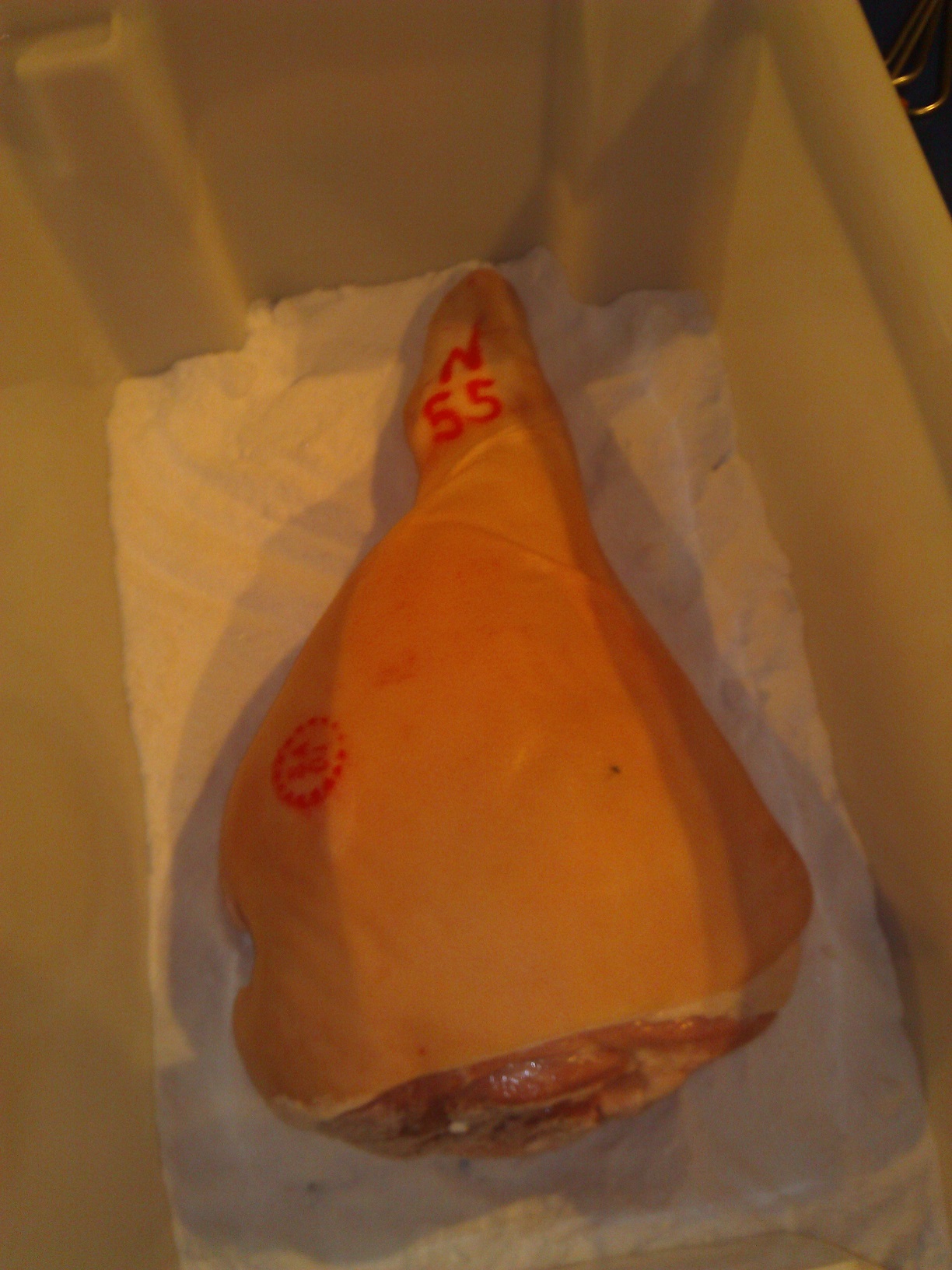
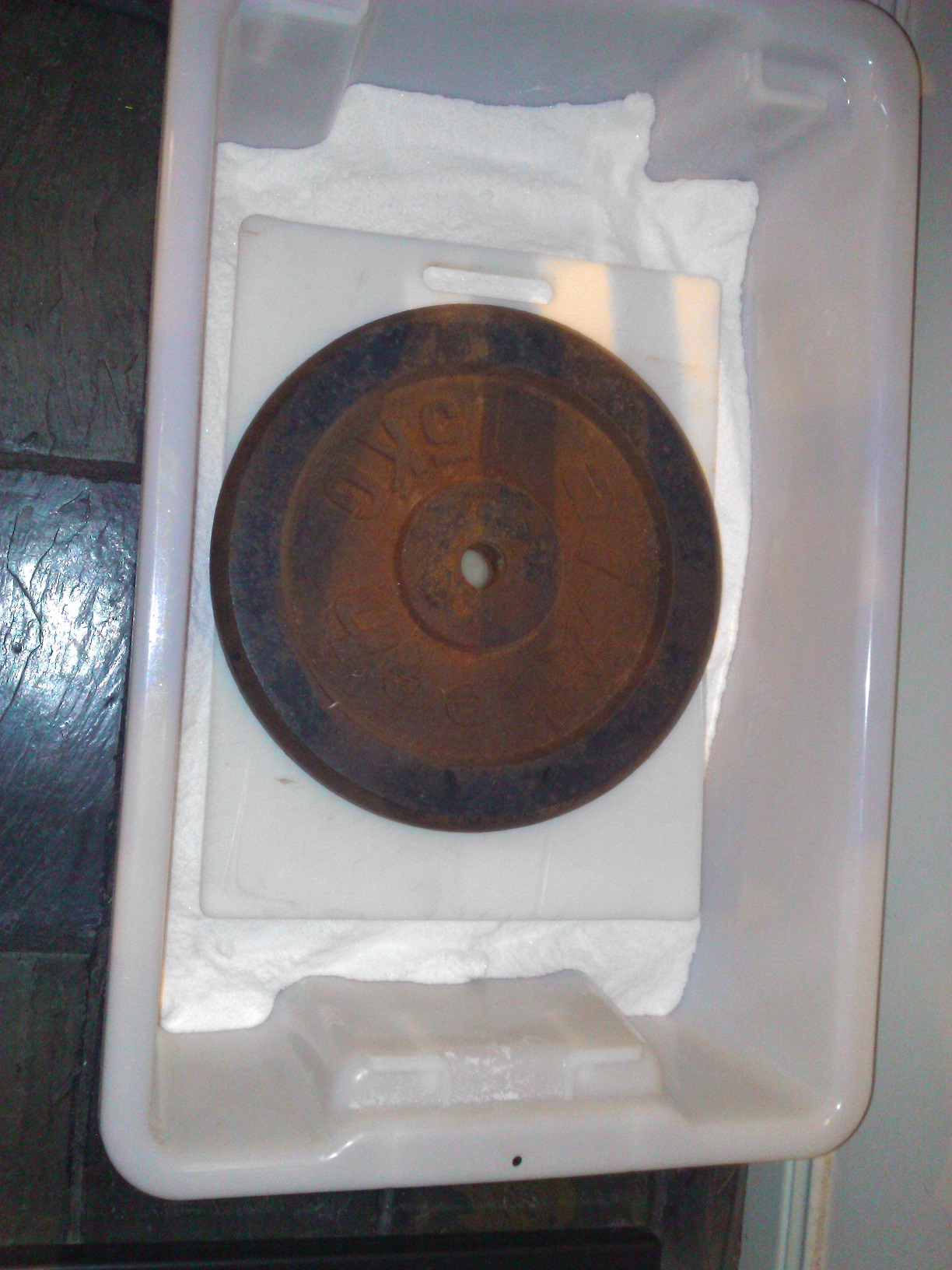
We also put down a 6kg prosciutto, which is an amazingly simple process.
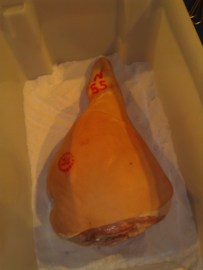
This is a 6kg leg ready to be made into prosciutto.

This is a 6kg leg ready to be made into prosciutto.

This is a 6kg leg covered in salt.
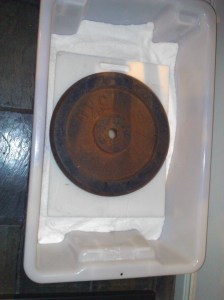
This is a 6kg leg covered in salt.

This is a 6kg leg covered in salt and weighted down.

This is a 6kg leg covered in salt and weighted down.

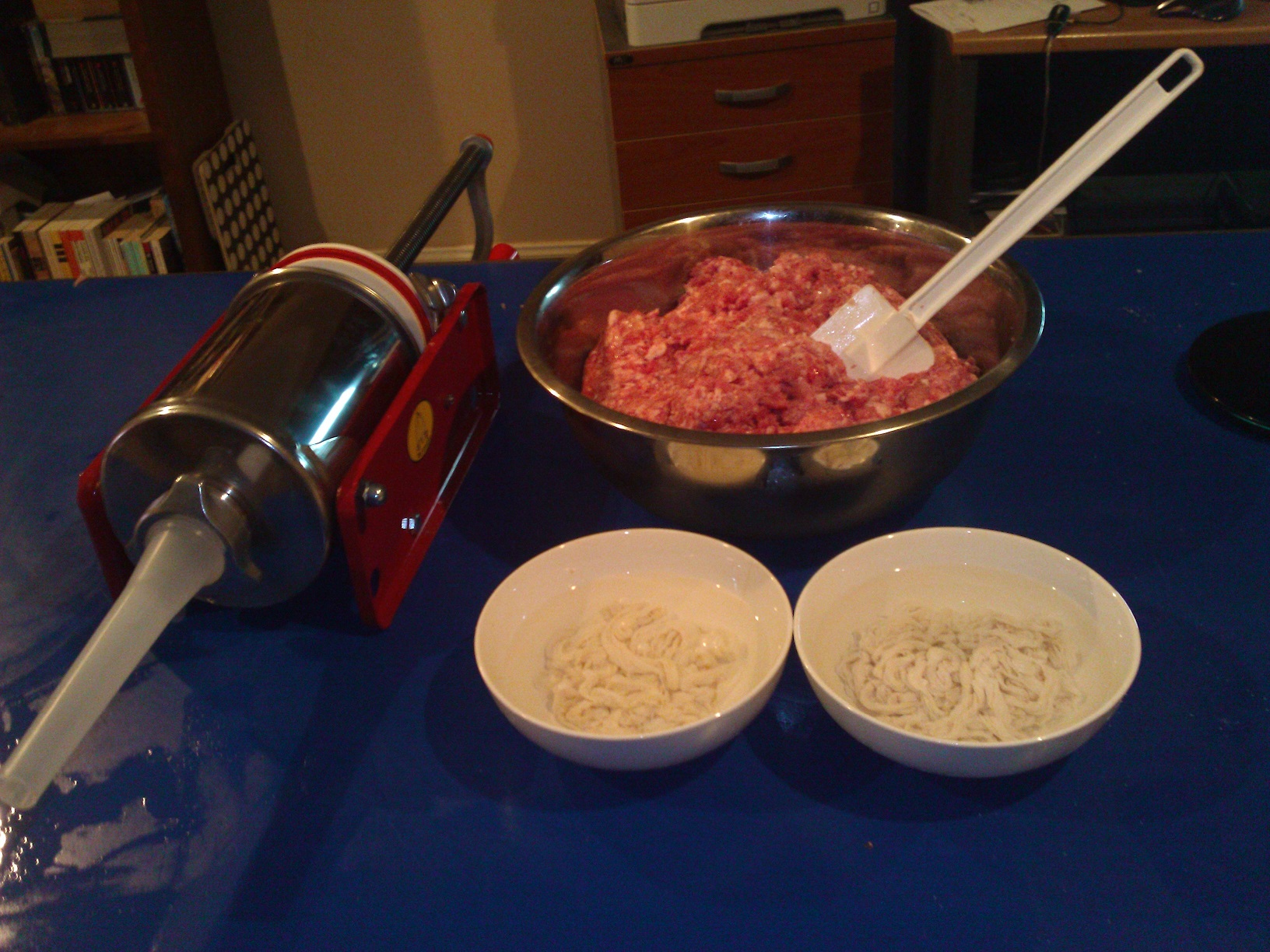
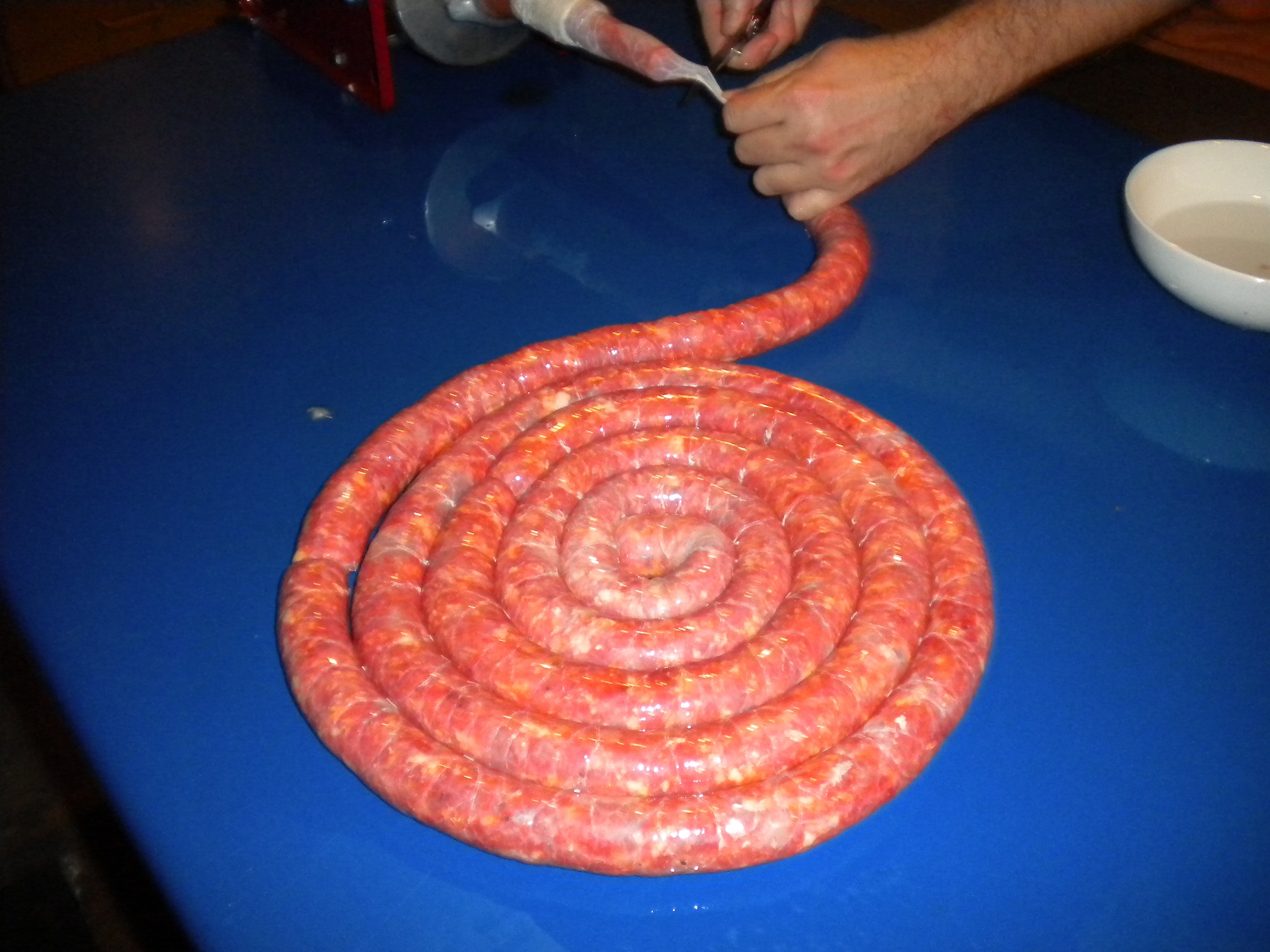
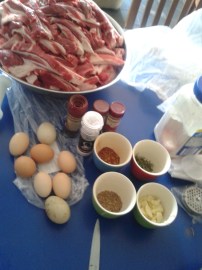
Lastly, we made sausages. We bought a proper sausage stuffer, which worked amazingly well.  We made around 5kg of sausages in no time.
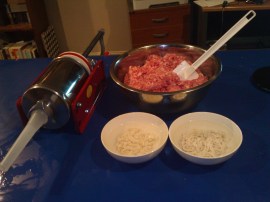
Sausage ingredients and equipment assembled.
Sausage ingredients and equipment assembled.

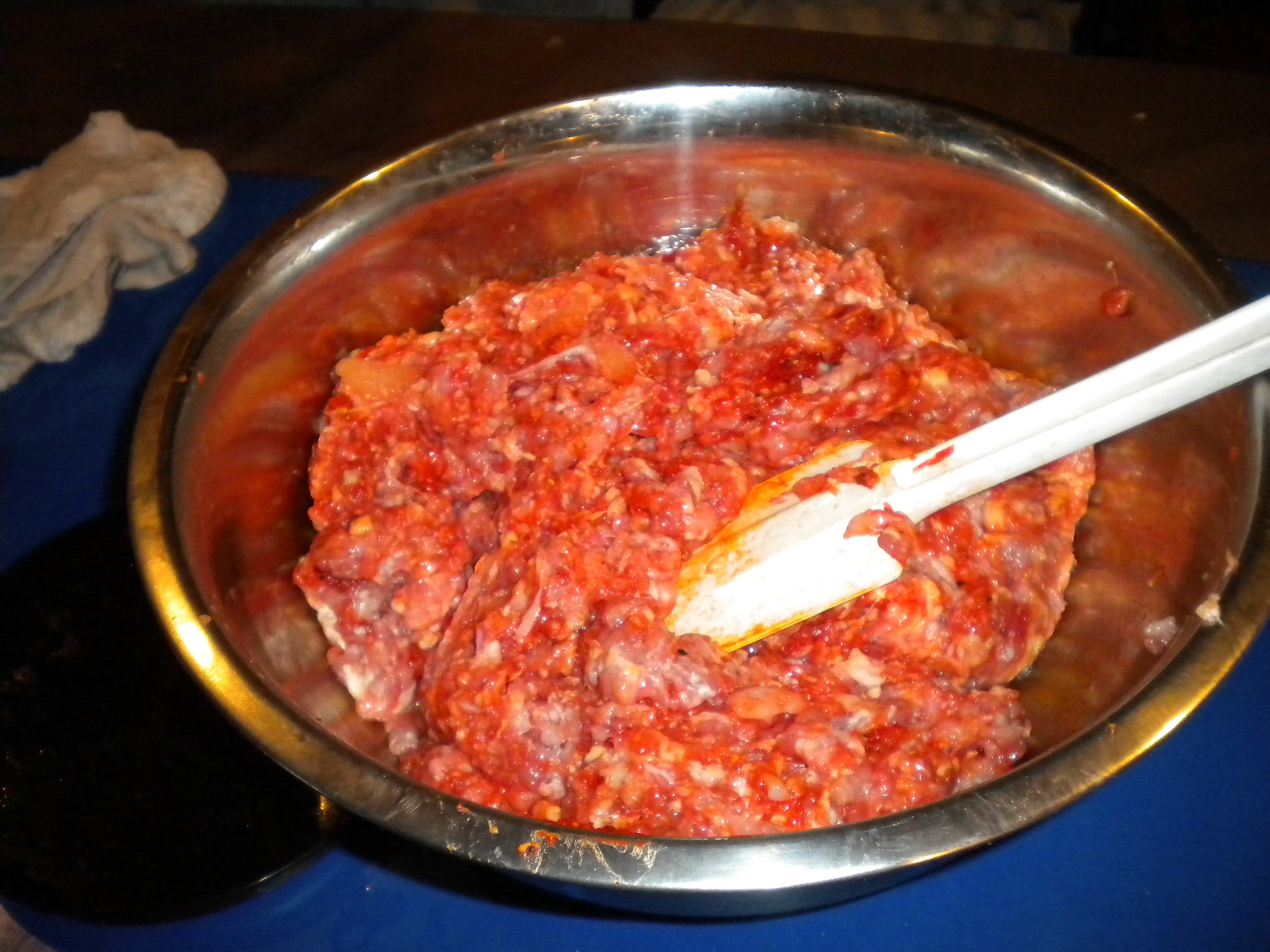
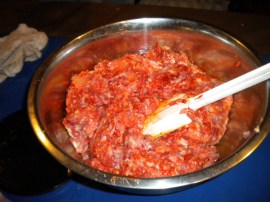
The meat mixed with the flavourings.
The meat mixed with the flavourings.

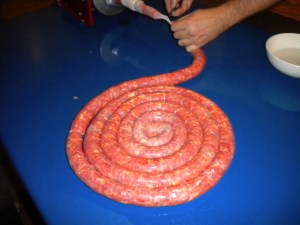
That sausage filler is so easy to use!

That sausage filler is so easy to use!

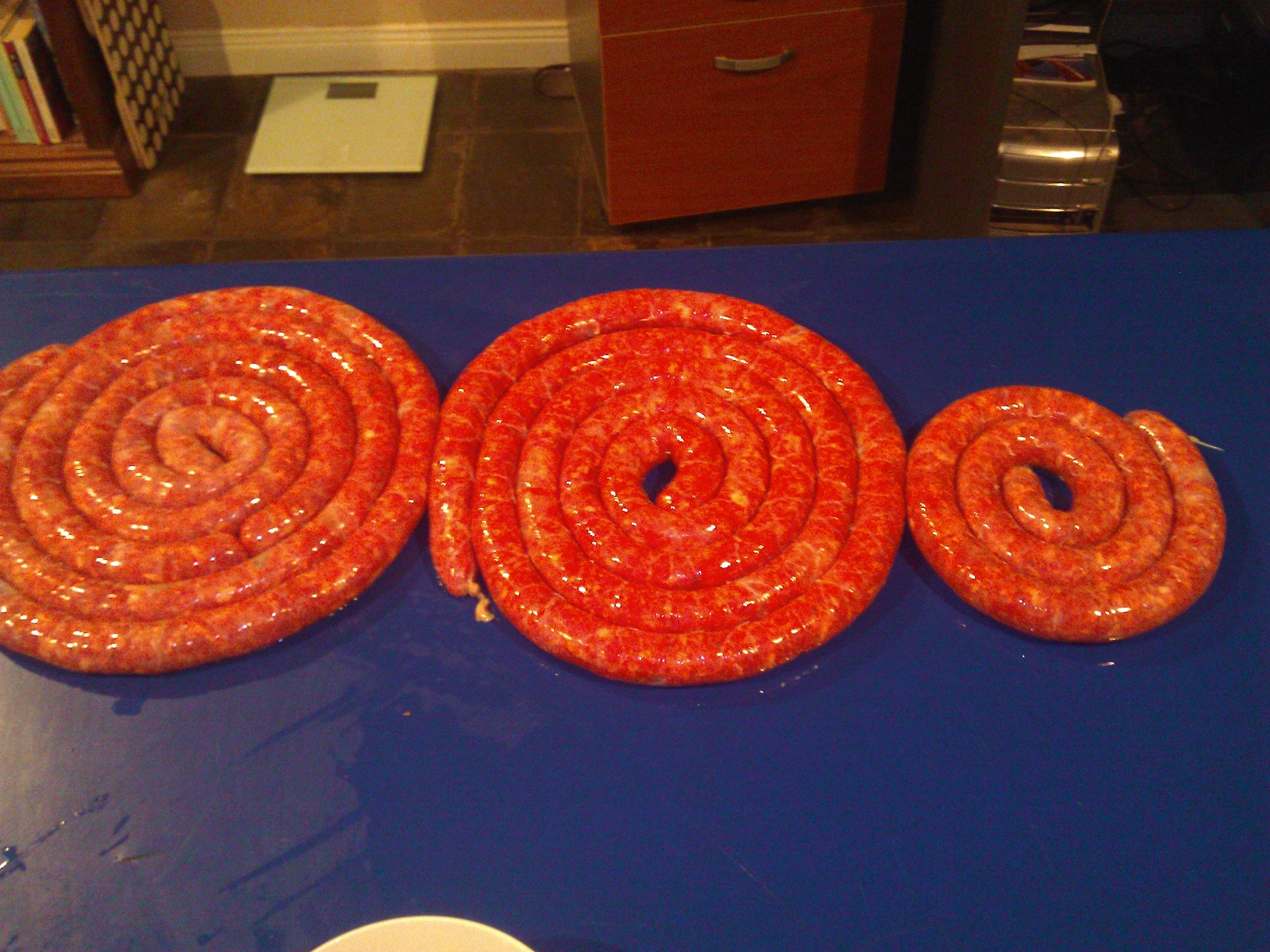
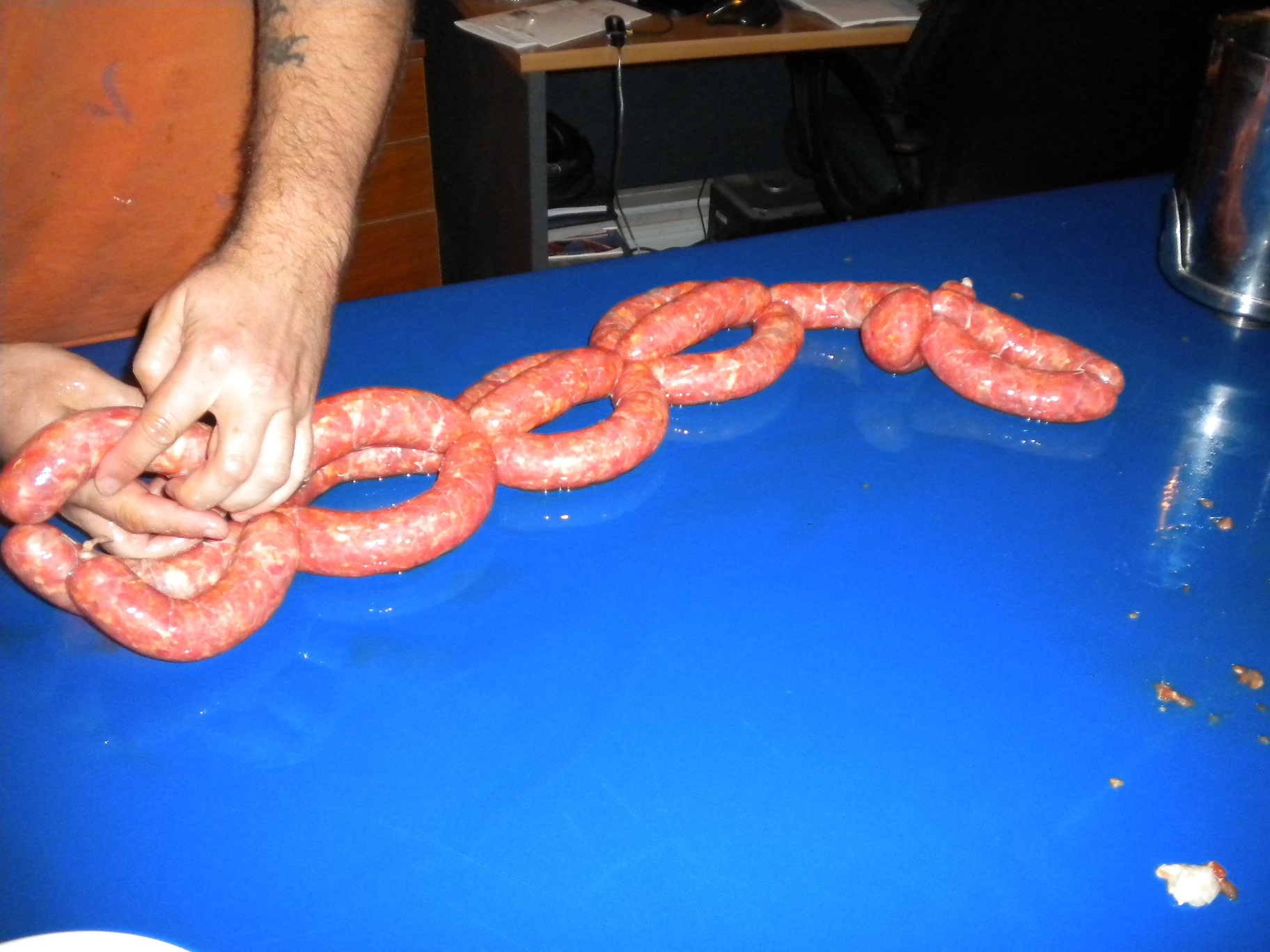
We took our lessons from the lamb sausages earlier in the month and controlled the amount of fat and also minced it more coarsely. The sausages are chorizo flavoured, but are fresh and not cured. They’re as good as any sausage you’ll ever buy, and I even taught myself to twist the links.
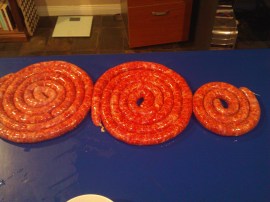
A total of nearly 5kg of sausage.
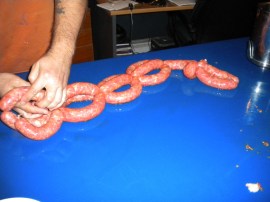
A total of nearly 5kg of sausage.

Twisting sausage is more art than science.
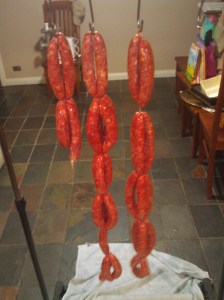
Twisting sausage is more art than science.

Letting them dry a little.

Letting them dry a little.

I’ll include all of the recipes and combinations (oven finished and smoked) in the recipe section of the blog.  One day.

March was probably more significant to us than we even now realise. We ended with around 110kg of meat in our freezers, all of which are at critical mass. While we’re still learning every day and refining pretty much every single thing we do, if we had to, right now, we could live wholly from what we have grown and have stored.

We finished March with a BBQ, the entire contents of which came entirely from our land. I honestly can’t overstate how satisfying that is.
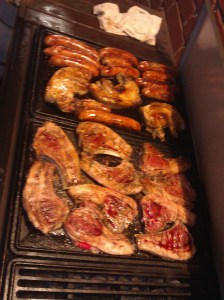
Our first 100% home-grown BBQ.
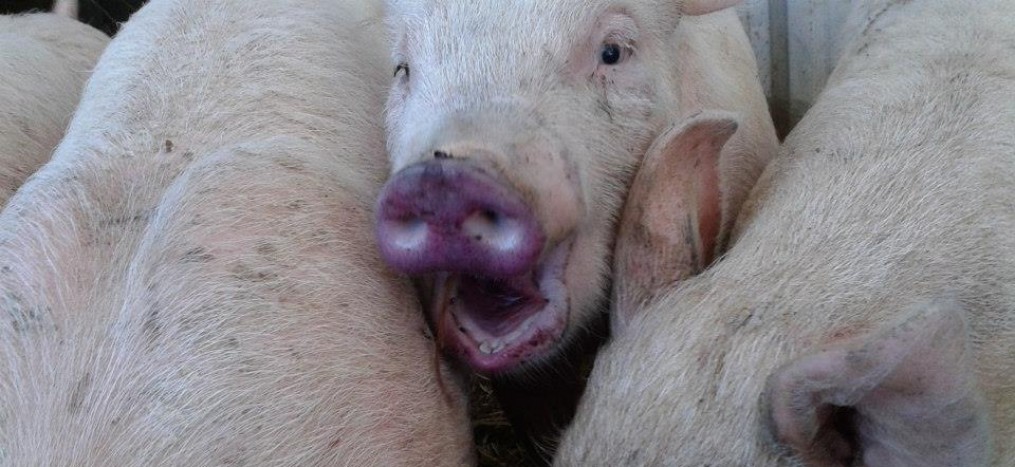
Our first 100% home-grown BBQ.
February 2013 Facebook Farm Statuses

  • David Atherton – I keep seeing repurposed window greenhouses. I know you like to work with metal, but I think we should give this some thought…
  • Home alone tonight until Linhda gets home from work in several hours. I’m eating home-grown baked spuds with chilli, home-made tzatziki, and tabasco sauce, all washed down with a beer or two.
    Baby, I apologise in advance. You know what I mean.
  • Home-made Coopers Pale Ale? Not too freaking shabby!
  • An apprentice tradie just sliced his hand open. I’ve offered to stitch it for him, but he declined. Spoil sport…
    I did get a good picture though.
  • Tried to properly process and store our own corn today – blanch, cool, cut, freeze. It’s surprisingly easy, especially when you get a bit of an assembly line going. It shouldn’t be too terribly difficult to freeze enough for the entire off-season. I’m calling it – we’re now 100% self-sufficient for corn. That’s saying something, because we use a *heap* of corn.
    On a related note, this is the best corn we’ve ever grown. We always do pretty well, but this year’s batch is amazing! Go Team Atherton!
  • All caught up! Well, the monthly posts are now all done, up to and including January 2013. I’ve started in on the rest of it, but that’ll take a little longer.
    As it turns out, stupidly hot days that drive you indoors can still be used for farm-related activities, even if that is only blogging…
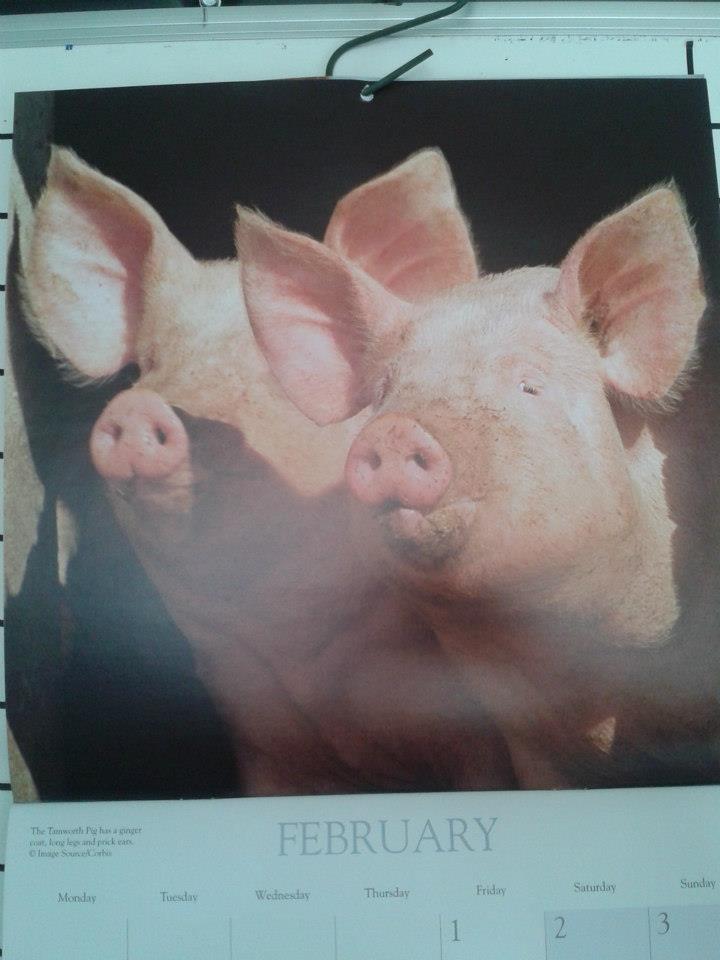
Miss February

Miss February

So. Much. Heat!

2013 had the hottest January in recorded history for most of the country, including our little patch of paradise.  February really didn’t feel much cooler, and the only coolish days, or at least those cool enough for outside work, seemed to be during the week. Couple that with the fact that I travelled every week in the month, and February didn’t feel very productive at all.  Looking back we did okay, but at the time it was an exercise in frustration.  I never thought I’d think this, but I’m genuinely looking forward to the cold months.

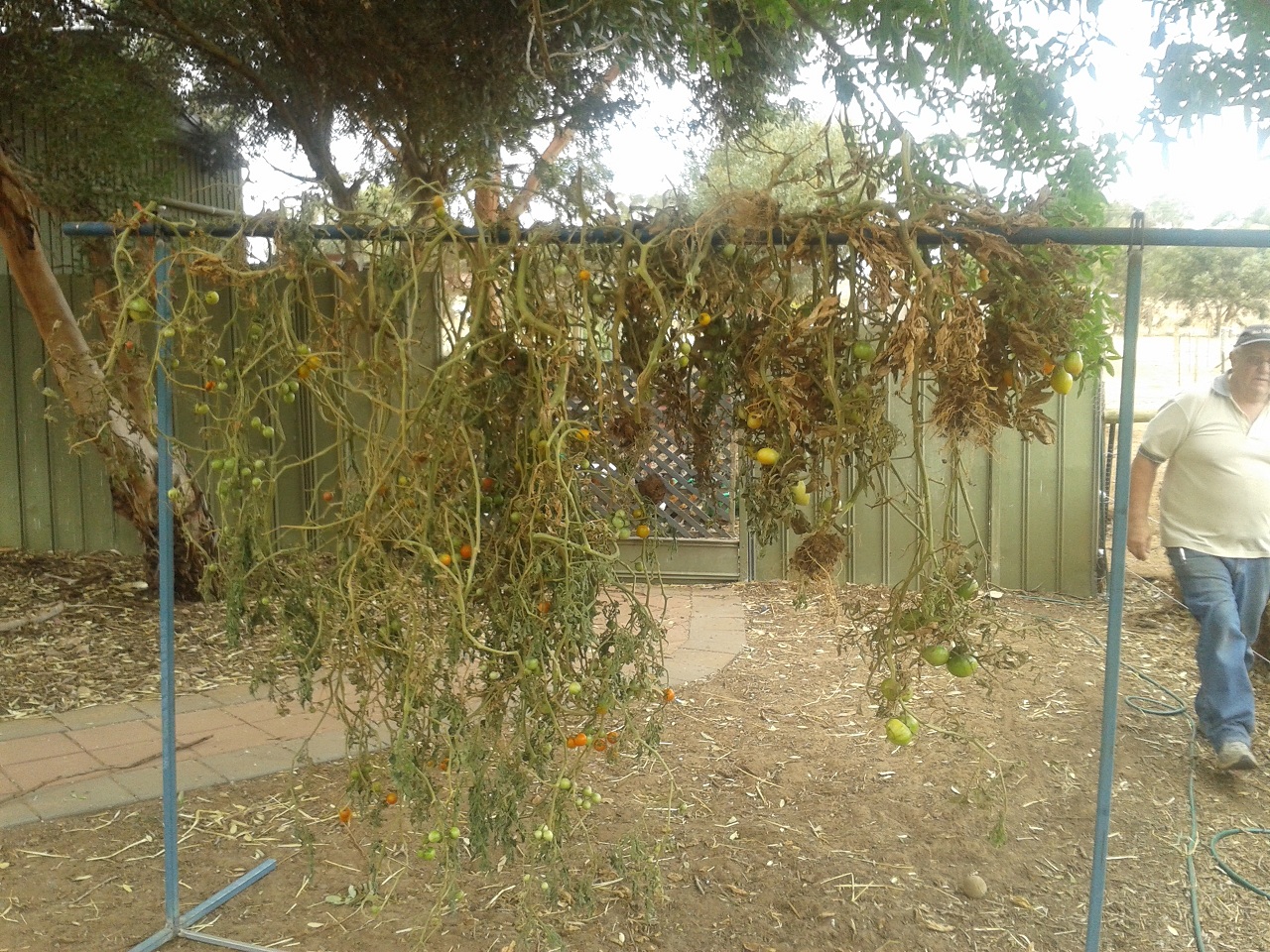
While the heat made veggie work a little tough, we were in full swing for harvesting things like tomatoes and corn, and in fact we ended our tomato harvest in “The Patch”, pulling out the last plants and hanging them to allow the tomatoes to ripen.

Letting the last of the tomatoes ripen on the vine.

Letting the last of the tomatoes ripen on the vine.

Our last tomato harvest from "The Patch". Hopefully the late harvest crop work out.

Our last tomato harvest from “The Patch”. Hopefully the late harvest crop work out.


One exciting thing is the late harvest variety we’re trying in the smaller veggie patch up near the house.  These are called “Floradade”, and if they work they have the potential to extend our harvest through to the end of Autumn. Fingers crossed…

Late harvest tomatoes - Floradade

Late harvest tomatoes – Floradade

The corn in particular is doing amazing things. We always do pretty well growing corn, but this year’s batch is hands-down the best I’ve ever tasted.

Best. Corn. EVER!

Best. Corn. EVER!

We have one full bed in the rotation dedicated to corn, giving us somewhere between 40 and 50 square metres.  They’ve done exceptionally well, with some of the plants topping out at around 8 feet. Towards the back they’re smaller, but we’re still getting the same number and sized ears.

I’m excited about growing corn, both because we eat a lot of it as a family, but also because it’s the perfect stock food. Corn is a giant grass, and the plants themselves can make a hearty meal for the pigs/sheep/goats/cows/poultry. Even the denuded husks go to the pigs who love crunching them up. Not a single bit of the plant is wasted.

While I think we’ve done well with the corn, I’m confident we can do even better. This first year we managed a couple of ears per plant, while in our last place we were getting four and five. I want to change our spacing and maybe our watering on the next lot and see if we can’t improve.

We blanched and froze some corn in February, which is our first attempt.  The process is quite simple:

  • Four minutes at a rolling boil.
  • Out and straight into ice water to cool them below the cooking point.
  • Cut off the kernels.
  • Bag and freeze.

Blanching them retains their texture for freezing. Putting them in ice water means you don’t overcook them.  We got a bit of an assembly line going and froze several kilograms of kernels in maybe a half-hour.  We’ll do that one more time and should have enough to last us through winter.  We eat a lot of corn, normally buying it in canned form, but hopefully this year will only be eating Atherton corn.

We also experimented with ways to make corn relish. I’m quite keen to have only home-made/home-grown condiments, and we’re well on our way with a number of batches of chutneys, relishes, and sauces. The corn one was particularly awesome, with Peyton and Linhda both getting into it.  There’s a chilli version which is my favourite!

Our potatoes were good to go in February also. We’ve half-arsed potato growing before, experimenting with growing them both in the ground and under straw. This is the first time I’ve made a concerted effort to them properly, and having an entire bed dedicated to them, we’re also doing them in bulk.

In the past I didn’t really wait for the plants to die back.  You don’t have to, but harvesting them early means the spuds are smaller and don’t keep as well.  This year I’ve let the plants die completely, and the results are pretty good.

Our first small potato harvest. There's at least 10 times this much left to dig up.

Our first small potato harvest. There’s at least 10 times this much left to dig up.

I only harvested a small amount because of the heat. However, despite the fact that they’re only just ready for harvesting, those in the ground are starting to sprout. They need to come up and be stored, but we need some cooler days to do it.

The big lesson learned here is keeping the potatoes covered as they grow.  I knew this going in, but didn’t quite execute the way I should have.  The soil needs work, and some of the spuds were close to the surface. Any exposed potatoes are green, and therefore poisonous. I think next year I’ll plant the rows a little further apart, and hoe between them as the plants grown. This way I’ll cut down the weeds, which can be a problem with overhead irrigation, and mound up dirt around the plants.

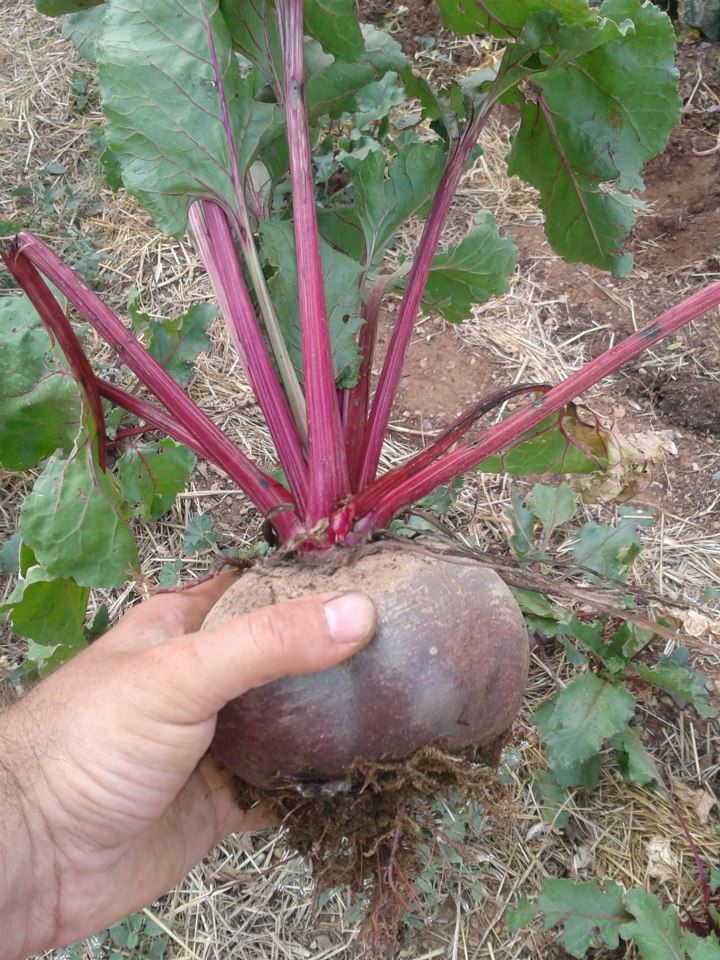
We managed to harvest more beetroot.

From our third beetroot harvest from "The Patch". The phased harvesting works well.

From our third beetroot harvest from “The Patch”. The phased harvesting works well.

The beetroot is interesting in that the harvest can be phased.  We basically wait until we have giant beetroot, harvest them, and then just leave the rest to grow.  We have one more harvest from that latest batch before they’re done, and I think that’ll be harvest number 4.

The best thing about the beetroot is that Linhda did me pickled eggs with a beetroot twist, along with another couple of varieties. YUM!

Three varieties of pickled eggs!

Three varieties of pickled eggs!

The heat made any plantings almost impossible. I managed to prepare the largest of our backyard veggie patches, ripping out the plants that were done and rearranging the permanent part of the bed with the jalapenos I’d grown from seed.  I also planted:

  • Suede
  • Turnips
  • Brussel Sprouts
  • Cauliflower

Those last two were planted because I’d grown a few from seeds as an experiment and wanted to see how they go. They’re in a sheltered, semi-shaded area that gets some grey-water run-off.

Apart from that, I’ve prepared half the bed ready for beetroot and more carrots. However, it stayed prepared for the entire month, and even during the second week of March it’s too warm to plant anything.  Carrots particularly need some baby-sitting early on, and letting them dry out can spell the death of the entire crop.  The heat combined with my travel means we need to wait.

The one decent farm project we got done was cementing a pad under the babies’ feed and water troughs. Being pigs, they’re both slightly messy and destructive, but still awesome. Awesomeness aside, they like to get in their water, dump their water on the ground, and then make deep, messy wallows out of it.

Some see the babies being destructive. I see them helping me dig the hole for the cement pad.

Some see the babies being destructive. I see them helping me dig the hole for the cement pad.

I took advantage of the good work they’d already done and widened their wallow to dimensions large enough to cement a pad under their troughs. Basically, I dug the hole out big enough and then used it as most of the shuttering for the concrete.

At this stage I thought the hardest part was done.

At this stage I thought the hardest part was done.

A little bit of shuttering.

A little bit of shuttering.

Mixing cement by hand is long and painful. Rather than wet mix it in the barrow and risk it going off before we were done, I dry mixed it and put it dry in the hole.

The raw materials.

The raw materials.

Dry mix in.

Dry mix in.

Once that was done we added water and wet mixed it in the hole.

Water added, and then mixed for what felt like hours.

Water added, and then mixed for what felt like hours.

Floated off and done!

Floated off and done!

For posterity.

For posterity.

The results were better than we ever expected, and keeps the area free of holes.

The babies are now free to make as big a mess as they like.

The babies are now free to make as big a mess as they like.

Wet mixing the cement in the hole was always going to be painful, but I completely underestimated the magnitude of that pain. It was a half-hour or so of the heaviest digging and was not fun.  A week later we found a cheap cement mixer on gumtree.com, spent an hour fixing it, and are now ready to do the cement pads for the other four runs.

I'm still wondering why we did the first batch by hand...

I’m still wondering why we did the first batch by hand…

The other big news for February is that the boys got to have a go at free-ranging. We’d been restricted up to now as the race isn’t finished down at The Patch end of the runs, so we had to get the electric stand-off fence to a spot where the boys could get out their end. One of the cows ended up taking that decision from us.

One of the animals had brushed against one of the strainers in the fence around The Patch and knocked an insulator off. The result was the electric fend was grounded near the start of the run and the rest of it was pretty much useless. One of the cows took that opportunity to walk through the stand-off fence and get to the rest of the crop.

We had maybe a quarter of the crop left ungrazed, but so late in the year there was little head left on it.  Most of it had either shaken off the stalks or been eaten by birds, so we were safe to let the animals in.  I took the stand-off fence down, which meant the gate out of the race was open for us to let the boys out.

The boys being let out for the first time.

The boys being let out for the first time.

Freedom!

Freedom!

The boys about 2 minutes after being let out for the first time. They have no fear at all.

The boys about 2 minutes after being let out for the first time. They have no fear at all.

We can’t have the babies and the boys out at the same time, mainly because they’ll be trying to make babies of their own when they’re too young. What we do now is alternate which lot are free-ranging.  That will change when the last of the boys goes to “The Other Farm” and we have Boris in with the girls full-time.

The boys do love a swim.

The boys do love a swim.

Apart from that we did odd jobs around the heat, things like fixing storm water drains and leaky taps.  Whatever we could find that wouldn’t hurt us in the heat. We also managed to use Sheldon to move some dirt, but dad did most of that.

Using the scoop on Sheldon to move dirt around. Much better than the shovel and barrow.

Using the scoop on Sheldon to move dirt around. Much better than the shovel and barrow.

Looking back, February was more productive than it felt.  However, we did have a couple of set-backs. First of all, the meat bird’s run was left closed on a warm day and we lost one. They had water, but the heat was too much. This has been the unluckiest bunch of meat birds we’ve ever had, mostly due to my mistake with their water when we first got them.  It has taught us that getting them over summer is probably a mistake. This was our hottest summer ever, but I think that we should, as a rule, get them during the cooler months.  The heat means they just sit in the shade, and really don’t free-range at all.

The second set-back was the big freezer in the big shed was left open overnight.  We were running low on meat anyway, so it wasn’t a huge loss, but we lost several chickens/ducks, some legs of lamb/goat, plus some other miscellaneous meat. Again, we’ve now learned to be more careful, and to maybe change the freezer configuration to reduce the risk of this happening again.

We have a couple of sheep that we’re feeding on, as we knew our meat was running low.  In addition to that, we have a pig ready in a month or so, another a couple of months after that, plus a couple of cows in several months.  In the mid-to-long term we’re looking at a glut of meat; however, because of travel, temperature, and the butcher being booked out, we can’t get a sheep done for a while. That means we’ll be buying meat for up to a month, and that thought really bothers me.

Planning our meat needs is surprisingly tricky.  This has taught us to try and forecast out a bit further, and I’m sure it’s a process we’ll refine over time. Once we have our pig production down properly, I’m confident we won’t need to buy any kind of meat, up to and including small-goods.

First Year Replan.

We were able to do a replan after our first full year.  I’d found little things like harvests not happening quite when I’d anticipated, right up to complete rotation changes including the inclusion of a fallow bed.  I’ve also found that our seasonal rotations will have to be phased.  I was mostly expecting that, and see this being the tricky part. It’s not like the beds are going to be ready to rotate at the same time, or even an entire bed being ready to change all at once.  This replan and working it through makes that process a little clearer, and shows that adaptability is going to be the key.

The new plan now is:

THE PATCH PLAN (Year 2)

BED 1

Curcubits – pumpkin, cucumber, watermelon, rockmelon

  • Pumpkin:
    • Plant Sept – Dec
    • Harvest 15 to 20 weeks
  • Cucumber:
    • Plant Sept – Feb
    • Harvest 8 to 10 weeks
    • Can grow in with corn to save space here
  • Watermelon:
    • Seed trays in August
    • Plant out Oct – Dec
    • Harvest 9 to 14 weeks
  • Rockmelon:
    • Seed trays Sept – Oct
    • Plant out Nov – Dec
    • Harvest 10 to 16 weeks

Summary:

  • Bed busy September to April/May
  • Can start most plants early in hothouse

Followed by:

  • umbrelliferous (carrots) – want first planting around April/May
  • allium (onions) – want first planting around April

Soil preparation for rotation:

  • Lime soil after harvest
  • Need to wait 4 weeks before manuring soil, otherwise lime will lock up the nutrients
  • May be able to grow green manure, but only a month or so probably means applying composted manures

BED 2

Solanaceous – tomatoes, capsicum, eggplant, chilli

Legumes – peas, broad beans, snow peas

Solanaceous:

  • Tomato:
    • Seed trays in Aug – Sept
    • Plant out Oct – Dec
    • Harvest 8 to 17 weeks
  • Capsicum:
    • Seed trays in Aug – Sept
    • Plant out Oct – Dec
    • Harvest 10 to 12 weeks
  • Eggplant:
    • Seed trays in Aug – Sept
    • Plant out Oct – Jan
    • Harvest 12 to 15 weeks
  • Chilli:
    • Seed trays in Aug – Sept
    • Plant out Oct – Dec
    • Harvest 8 to 17 weeks
    • Can grow in permanent beds, but I think I like the idea of keeping them annual

Legumes:

  • Peas:
    • Plant April – Sept
    • Harvest 9 to 11 weeks
  • Broad Beans:
    • Plant March – June
    • Harvest 12 to 22 weeks
  • Snow Peas:
    • Plant April – Sept
    • Harvest 12 to 14 weeks

Summary:

  • Solanaceous:
    • Bed busy October to March
    • Planting out October – December
    • Harvest around March
  • Legumes:
    • Bed busy March to September

Followed by:

  • Curcubits – pumpkin, cucumber, watermelon, rockmelon
  • Needs to be ready by around September
  • Several months of no activity
    • Either green manure, or
    • Legumes

Soil preparation for rotation:

  • Superphosphate – directly after legume harvest or green manure

BED 3

Fallow and/or Green Manure

Followed by:

  • Solanaceous – tomatoes, capsicum, eggplant, chilli
  • Needs to be ready by around October

Soil preparation for rotation:

  • Composted manure and lots of it


BED 4

Corn:

  • Plant Sept – March/April
  • Harvest 11 to 14 weeks
  • Start planting in Sept, have 5 or 6 successive plantings maybe 3 or 4 weeks apart
  • Grow cucumber and zucchini between the stalks, and peas around the edges
    • Cucumber:
      • Plant Sept – Feb
      • Harvest 8 to 10 weeks

Followed by:

  • Fallow/green manure


BED 5

Potatoes:

  • Plant Aug – Oct
  • Harvest 15 to 20 weeks
  • Bed busy from August to March

Crucifers – broccoli, cabbage, cauliflower, horseradish, mustards, turnip

Chenopods – silver beet, spinach, beetroot

NOTE: Not growing these things, particularly the crucifers, over the warmer months as they’re prone to bolting. Rather, we’ll grow them in the cooler months, prepare, and freeze them.

Crucifers:

  • Brocolli:
    • Seed trays in Feb
    • Plant out March – April
    • Harvest 10 to 16 weeks
  • Cauliflower:
    • Seed trays in Feb
    • Plant out April – May
    • Harvest 15 to 22 weeks
  • Cabbage:
    • Seed trays in March
    • Plant out April – June
    • Harvest 8 to 15 weeks
  • Horseradish: – this clashes with the corn – will have to move
    • Plant Sept – Nov
    • Harvest 16 to 24 weeks
  • Mustard Greens:
    • Anytime
  • Turnip:
    • Plant Sept – April – early plantings clash with the corn – will have to skip
    • Harvest 6 to 9 weeks
    • Probably squeeze in 3 successive plantings
    • Can grow in bed 6 if necessary – bed 6 is mostly just carrots and so should always have space and it’s a full 3 years from this rotation.

Chenopods

  • Beetroot:
    • Plant July – April
    • Harvest 7 to 10 weeks
    • Probably squeeze in 2 or 3 successive plantings
  • Silver Beet
    • Plant Sept – May – early plantings clash with the corn – will have to skip
    • Harvest 7 to 12 weeks
    • Probably squeeze in 2 or 3 successive plantings
  • Spinach
    • Plant March – May
    • Harvest 5 to 11 weeks
    • Probably not needed if we’re growing silver beet

Summary:

  • Potatoes:
    • Plant Aug – Oct
    • Bed busy from August to March
  • Crucifers
    • February – hothouse
    • March/April – plant out
  • Chenopods
    • Busy from July to May
    • May have a month or two to green manure

Followed by:

  • Corn
    • Needs to be ready by around September
    • This clashes with the last onion planting, garlic, second leeks planting, and spring onions
    • The way around this is to leave  the last onion planting, garlic, and leeks in until the last spud plantings. Plant spud out in free parts, and progressively plant it as the alliums are harvested. This means we’ll have to be careful in what order we plant out the alliums – onion, garlic, and leeks in particular.

Soil preparation for rotation:

  • Composted manure and lots of it
  • Potash


BED 6

Umbelliferous – carrot, parsnip, celery AND lettuce and turnips

Allium – onions, garlic, chives AND Brussels sprouts

Umbelliferous

  • Carrot:
    • Plant Sept – May
    • Harvest 12 to 18 weeks
    • Probably squeeze in 3 successive plantings
  • Parsnip:
    • Plant Aug – Oct
    • Harvest 17 to 20 weeks
  • Celery:
    • Seed trays in Sept – Oct
    • Plant out Nov – Dec
  • Turnip:
    • Plant Sept – April
    • Harvest 6 to 9 weeks
    • Probably squeeze in 3 successive plantings
    • Can grow in bed 6 if necessary – bed 6 is mostly just carrots and so should always have space and it’s a full 3 years from this rotation.
  • Lettuce
    • Had been left out of rotation
    • There should be room in this bed

Allium

  • Onions:
    • Seed trays in Feb
    • Plant out April
    • Direct Sow May – Aug
    • Harvest 25 to 34 weeks
    • Planting 1
      • Seed tray, plant out April
      • Harvest around Oct/Nov
    • Planting 2
      • Direct sow May
      • Harvest around Nov/Dec
    • Planting 3
      • Direct sow Aug
      • Harvest around Feb/March
  • Garlic:
    • Plant April – June
    • Harvest 17 to 25 weeks
    • Plant shortest day, harvest longest day
  • Spring Onions:
    • Plant Aug – Oct
    • Harvest 8 to 12 weeks
  • Leeks:
    • Seed trays in Feb – March
    • Plant out April – May
    • Seed trays in Aug – Sept
    • Plant out Oct – Dec
    • Harvest 15 to 18 weeks
  • Chives
    • Grow pretty much whenever and can use to fill in around garlic and leeks
  • Brussels Sprouts
    • Seed trays in Feb – March
    • Plant out April – May
    • Not sure where to put them, but they’re good with onions so this bed will probably work

Summary:

  • Can keep the bed going the entire year with just carrots and onions

Followed by:

  • Potatoes
    • Needs to be ready by around August

Soil preparation for rotation:

  • Composted manure and lots of it
  • Should have months in which to grow green manure