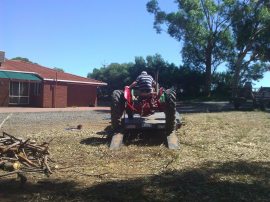
- We’re tractor owners!
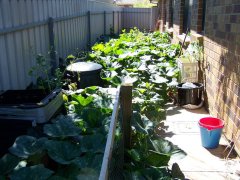
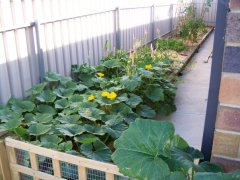
- In Canberra I look out of my office and can see Parliament House. At home I look out of my study and can see tomato plants, chilli plants, corn, a rabid pumpkin vine, fruit trees, ducks, goats, lambs and a giant pile of chicken manure in my back paddock. In summary, Parliament House can suck it.
- A two-day weekend of farm work leaves me pleasantly tired. A long weekend of farm work has left me absolutely knackered. My prediction is that Easter is going to kill me. On a related note, the new tractor is Farm-Freaking-Tastic!
- Today my dad, David Atherton, killed a mouse with a full 9kg gas bottle. He cut its head off! He’s a farm ninja!!!!!
- This morning I went out to put my tractor away, released a goat from the back paddock fence, took my car into the back paddock to get the big cage trailer, and waved at my neighbour a couple of times, all while wearing my pyjamas. LIKE A FARMER!
- Wearing gumboots. LIKE A FARMER!
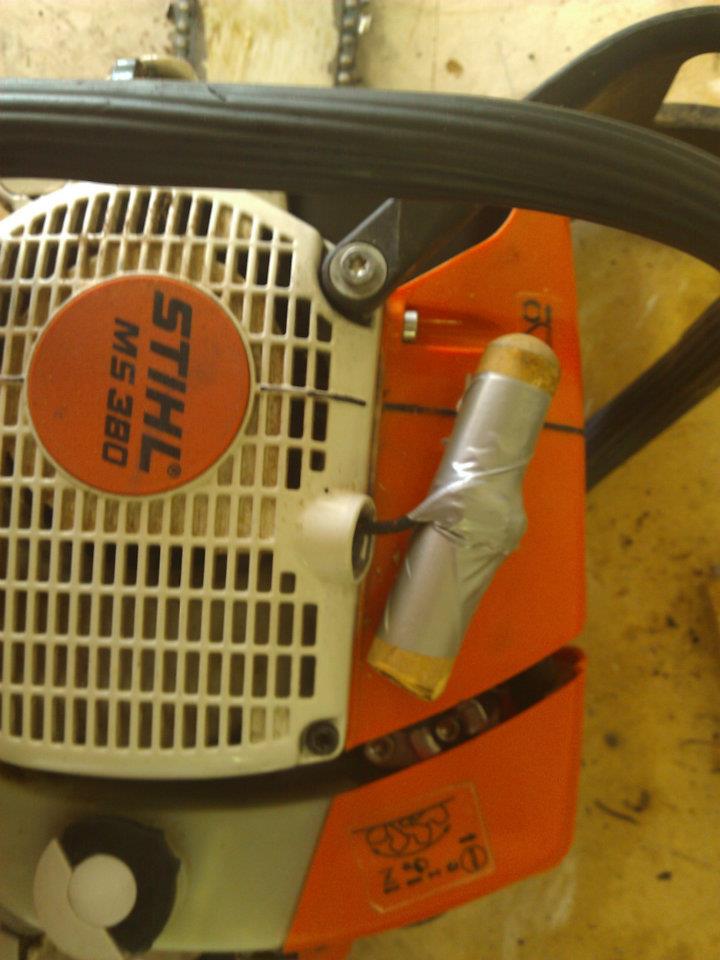
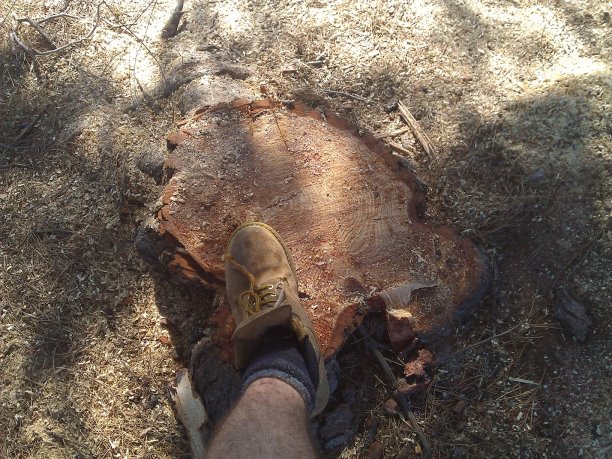
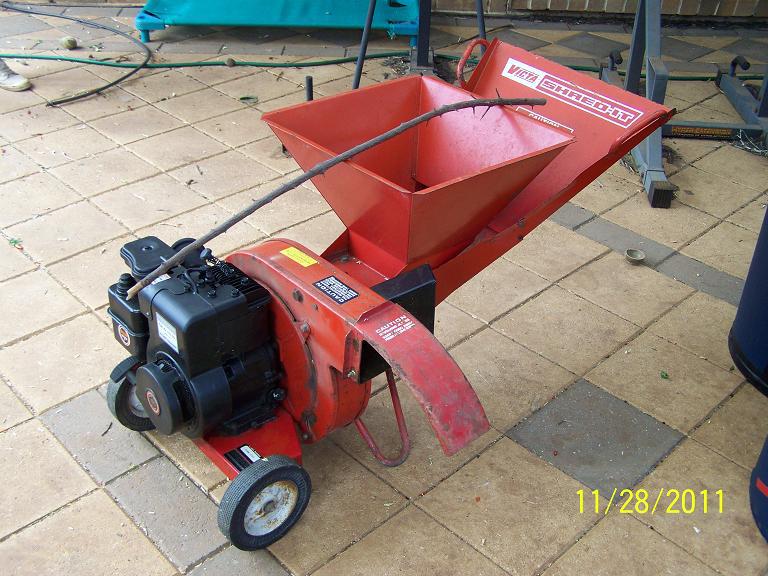
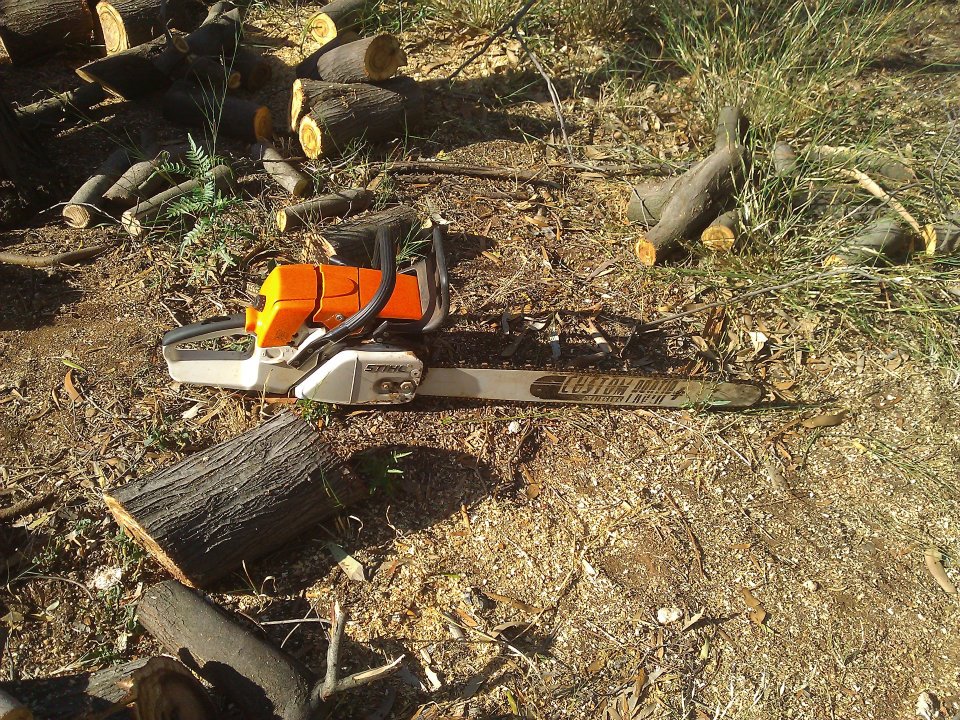
- Today we broke our big chainsaw and the mulcher, all before lunch. The farm gods are frowning on us… Pictures to follow. J
- First meal at our local pub. Biggest. Schnitzel. EVER!
February 2012 Facebook Farm Statuses
- Fun Farm Fact #45: The hand mincer makes noises worse than every horror movie ever made combined. A couple of kg’s of home-made mince (preservative free, chemical free, no lips-and-arseholes meat, yada yada yada) is worth it though. J
- Rule #1 of chainsaw use: “Keep it out of the dirt!”. Rule #2 of chainsaw use: “Let the chainsaw do most of the work”. Today I found a third rule: “When you step into a sink hole while sawing an 18 inch diameter limb and use the chainsaw to break your fall, check that you’ve not accidentally engaged the chain brake before tearing the entire thing apart to find out why the chain won’t go around”. Feel free to quote me.
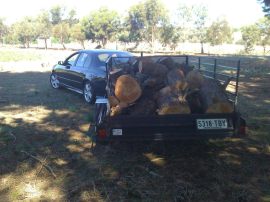
- Cut out two scrubby melaleucas to make room for fruit trees. My predicted three 8×5 trailer loads turned into seven 8×5 trailer loads. Of course, that meant braking hard 8 times to avoid running Bruce over – 7 times while driving to the wood pile and bonfire pile, and 1 time while putting the trailer away. I was more worried about him damaging my car than vice versa…
- Linhda just called my awesome 5 foot crow bar a “fencing stick”. True story.
- I think we have a clucky duck! And no, I’m not being euphemistic.
Good News, Bad News Machinery March…
This month was weird when it came to machinery. We had some pretty big highs, plus a couple of mechanical lows.
I’ll start with the lows. First off, my chainsaw broke. I’d scored it off of eBay at around half the retail price. It was clearly badged as a Stihl, and so I logically assumed it was true-to-brand. Boy was I wrong. I had it serviced and the man, who is an authorised Stihl dealer, told me that it was a “very good Chinese copy”. It worked well, so I was pretty happy with a very good copy. However, it let me down a couple of times.
Firstly, it kept breaking starter cords. Turns out it had some poorly machined moving part that was cutting through the cords.
I could live with having to replace the cord though. The big problem was when it broke the crank shaft. That was pretty much the death knell, after which it became spare parts. 😦
Our second mechanical failure was the mulcher. We were using it to mulch up some pine branches when it made a god awful noise and seized up. Turns out that one of the spinning blades snapped and tore holes in the casing. This one was actually quite dangerous. The blade that snapped was probably 100mm long by half that wide, and maybe 5mm thick. It would have been spinning at a huge rate, and it nearly punched through the casing. We were able to replace the blade and fix the casing, but I became a little less enthused about mulching all of our trashy branches after that…
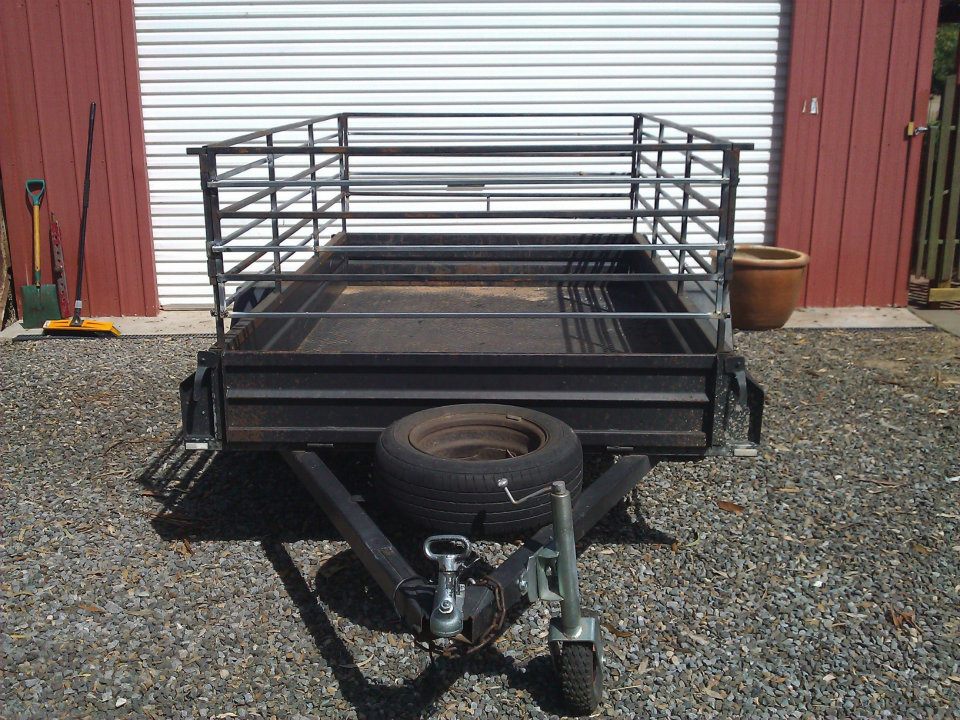
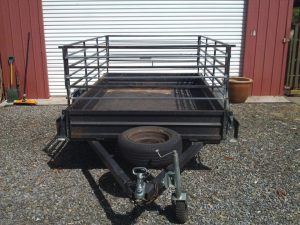
While painful, our machinery woes were far outweighed by our mechanical highs. First off, dad made our 8 x 5 cage trailer into a stock trailer. He welded some square tube to raise the sides, thereby letting us cart sheep and goats etc.
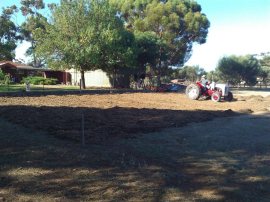
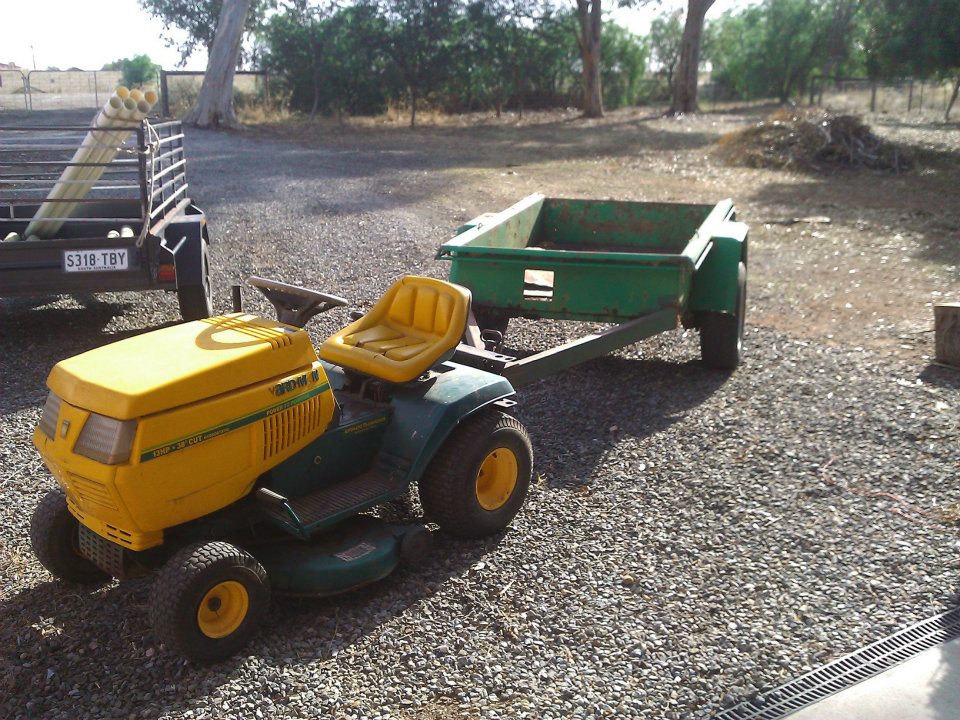
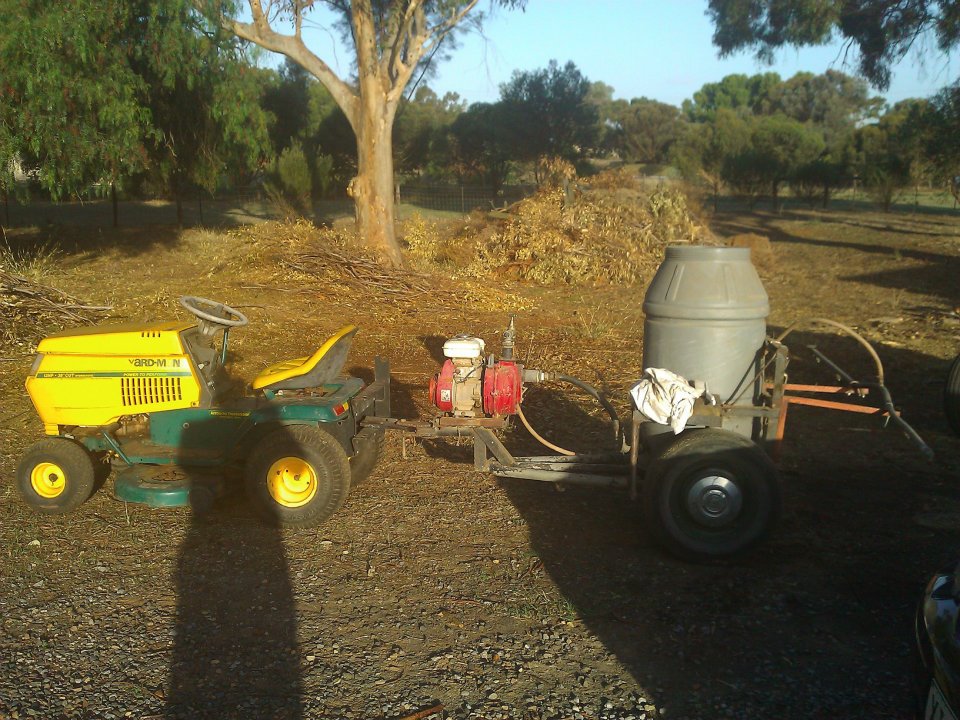
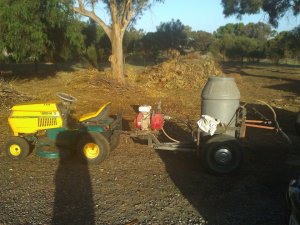
Secondly, dad scored a cheap ride-on mower from my aunty. It needed some work, but he got it working and welded a tow bar on the back. It’s all of 15Hp, but will tow a fully laden 6 x 4 trailer with at least a tonne of wood in it. It’s been amazingly helpful, up to an including towing the seeder we used to sow our back paddock.
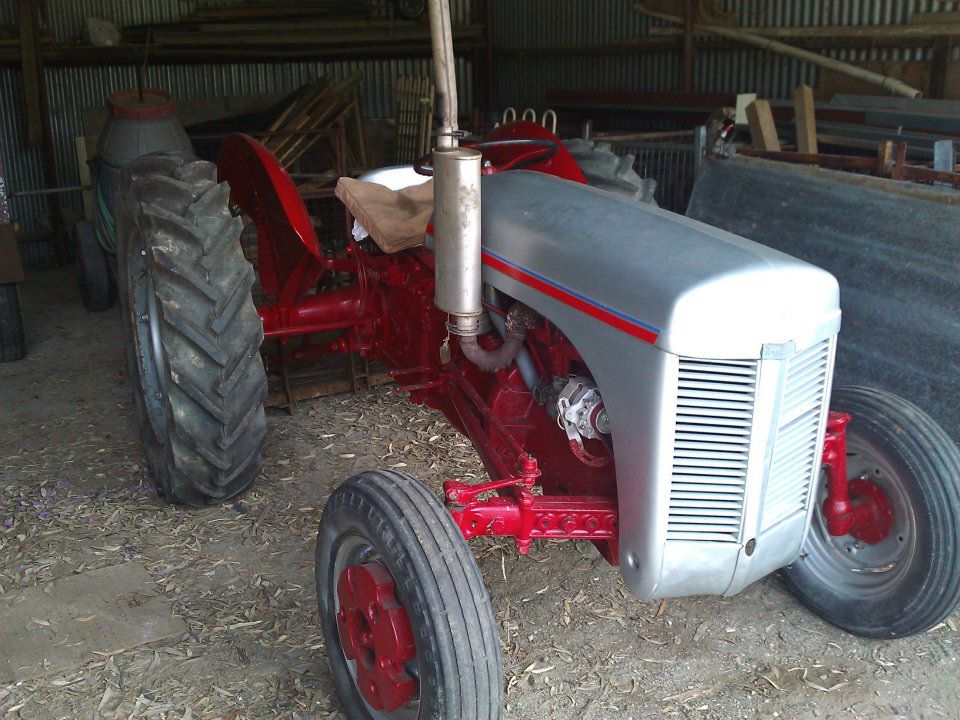
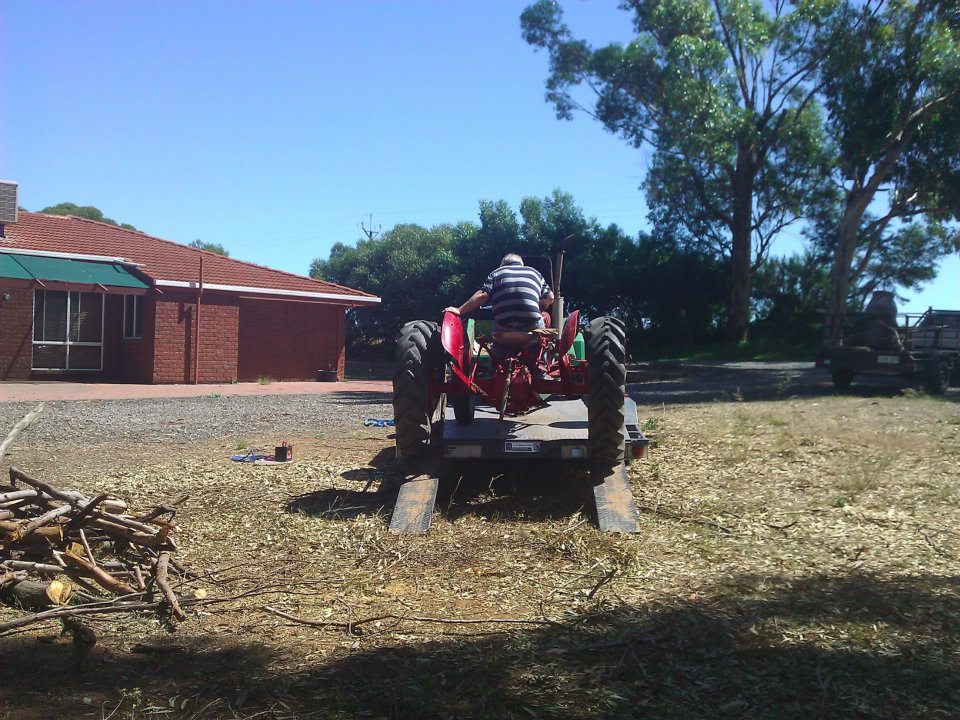
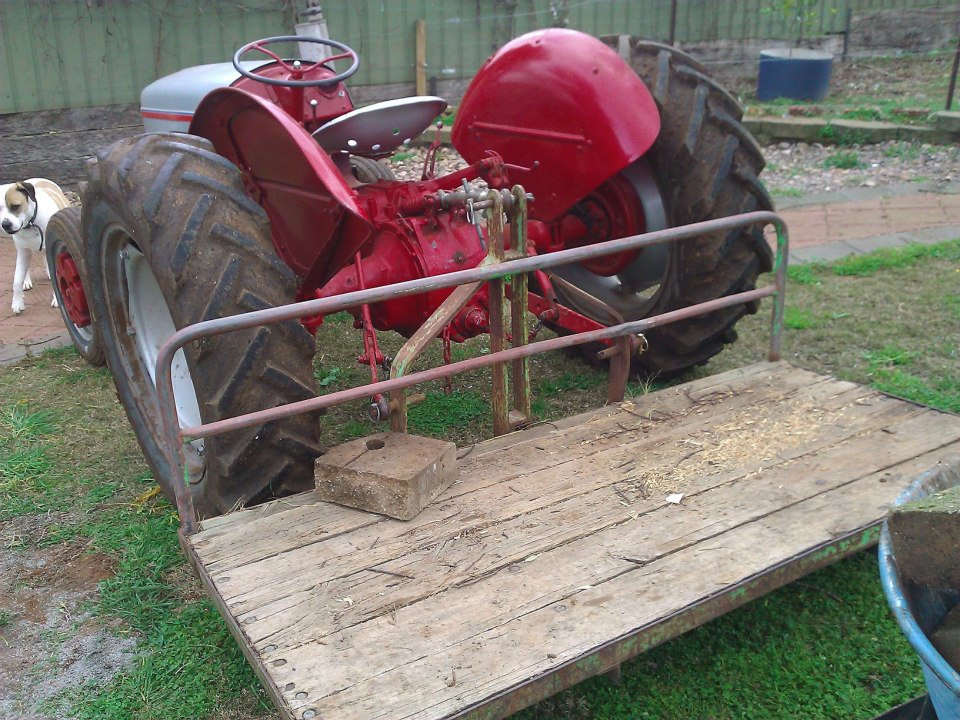
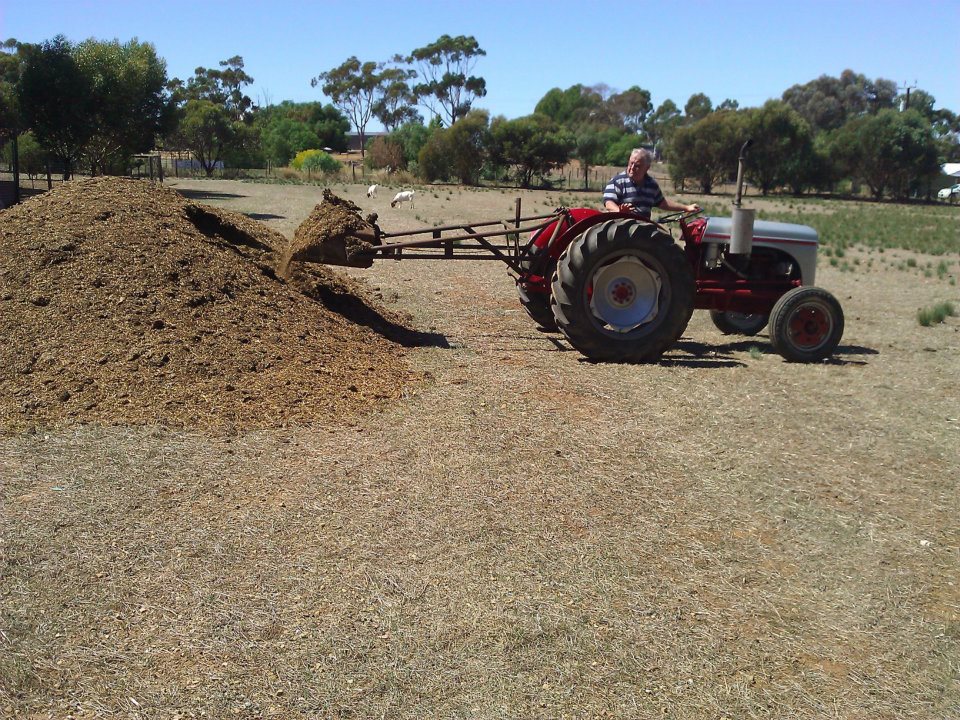
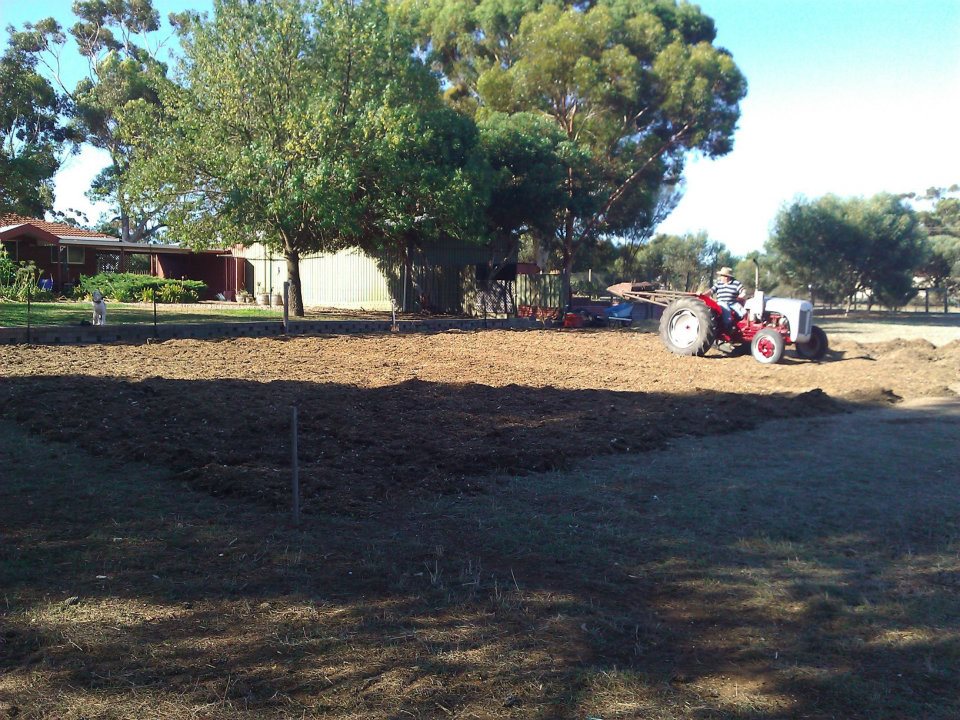
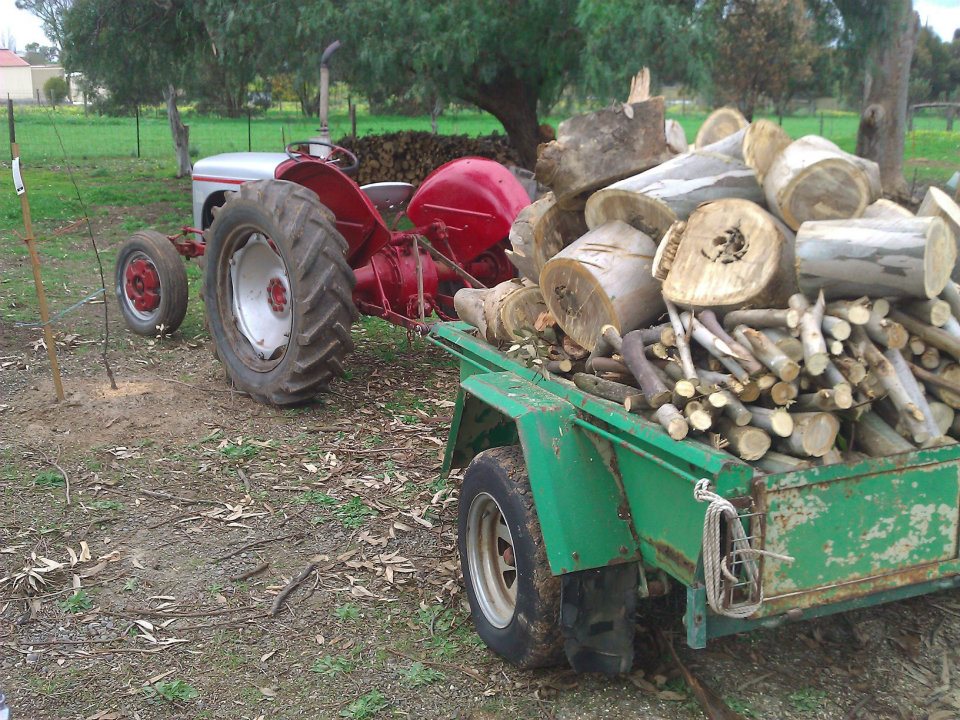
The biggest of our mechanical wins, hwoever, was our new tractor! It’s a Massey Ferguson TEA20, and is probably somewhere near 50 years old. It was meticulously maintained by a guy who had been a mechanic for most of his 70+ years, and it just gorgeous. It has a power take off (PTO) and three point linkage (3PL), and was even restored and painted in the original colours. We also got a carry-all, a spray unit, a 3PL-mounted scoop, and a farm trailer.
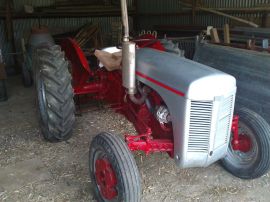
The carry-all has obvious applications, but we weren’t at all sure of the rest of it.
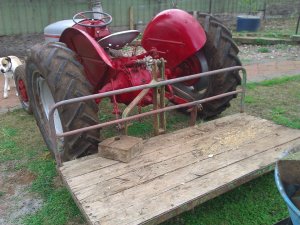
As it turns out, everything we scored with the tractor is amazingly helpful. The spray unit can be used as fire fighting equipment, and we’re looking at getting a bigger tanks for it.
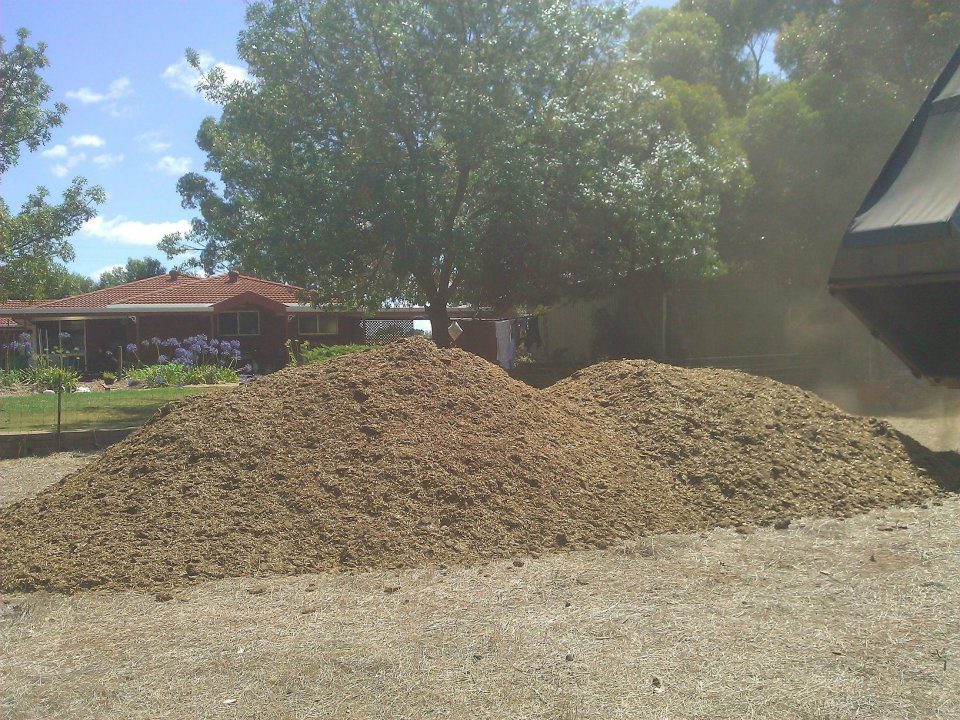
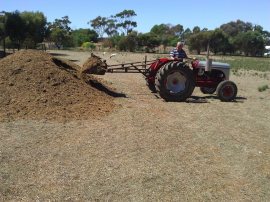
I had assumed that the scoop would be pretty much useless to us. However, dad insisted that we spread our GIANT pile of chicken poop with it, and it worked a treat. My plan had been to spend a weekend with a barrow and shovel, but for some reason my brain automatically goes to the manually labour intensive solution. Either way, the scoop ended up being a freaking god-send.
I think the biggest win, and ironically the thing we almost left behind, was the farm trailer. It’s a little 6 x 4 trailer that has been beaten to hell, but we use it all the time. My car, the tractor, or the ride-on can tow it, and I can’t even guess how many tonnes it’s carried for us.
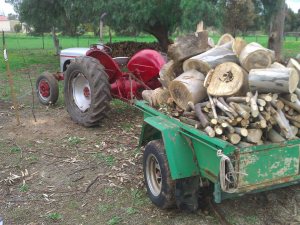
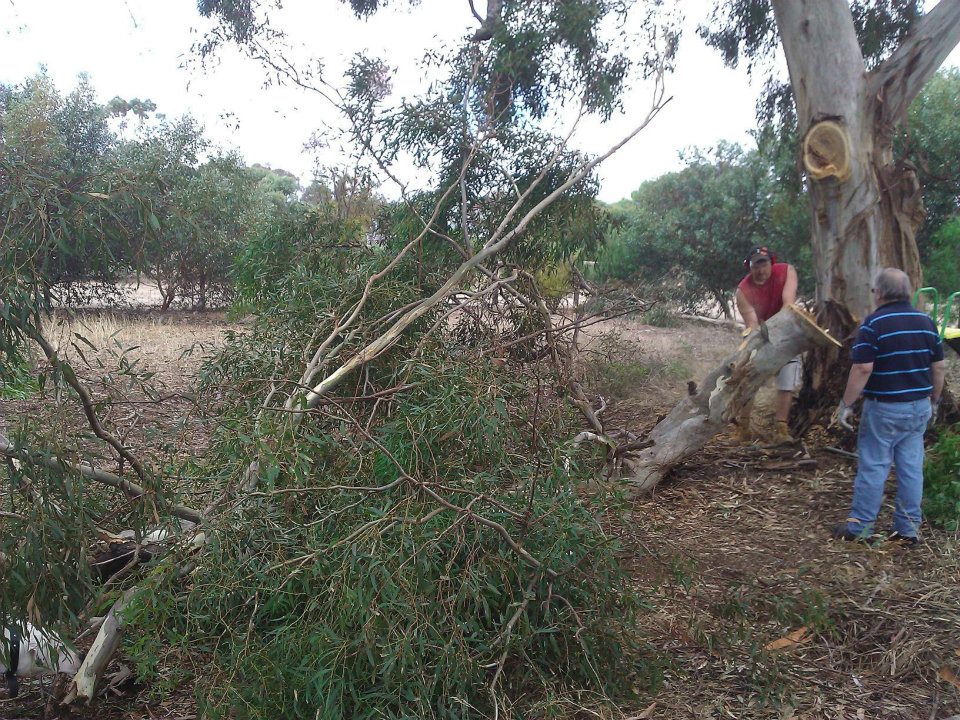
In addition to being a month of machine madness, we also thinned some more trees. This included felling one of the big pines out the back. We have a line of 7 or 8 big pine trees in our back paddock, between us and our neighbour Farmer John. A couple of them are really quite pretty. The rest, however, are horrid. One has already dropped a limb on Farmer John’s shed. That was before we moved in, and in typical country style he just rebuilt the shed and didn’t complain. There are others that are just as dangerous though, and the one we took down was literally leaning to the point where it was double over and touching the ground. It wasn’t anywhere near the largest out there, but gave us a heap of wood.
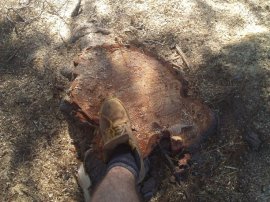
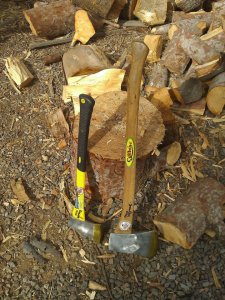
The thing I love about cleaning up all of this wood is that I get to use my axes. Just quietly, I have an axe thing, and find they are the best therapy/work-out you could ask for. Nothing will release stress as well as spending a couple of hours beating the shit out of things with an axe.
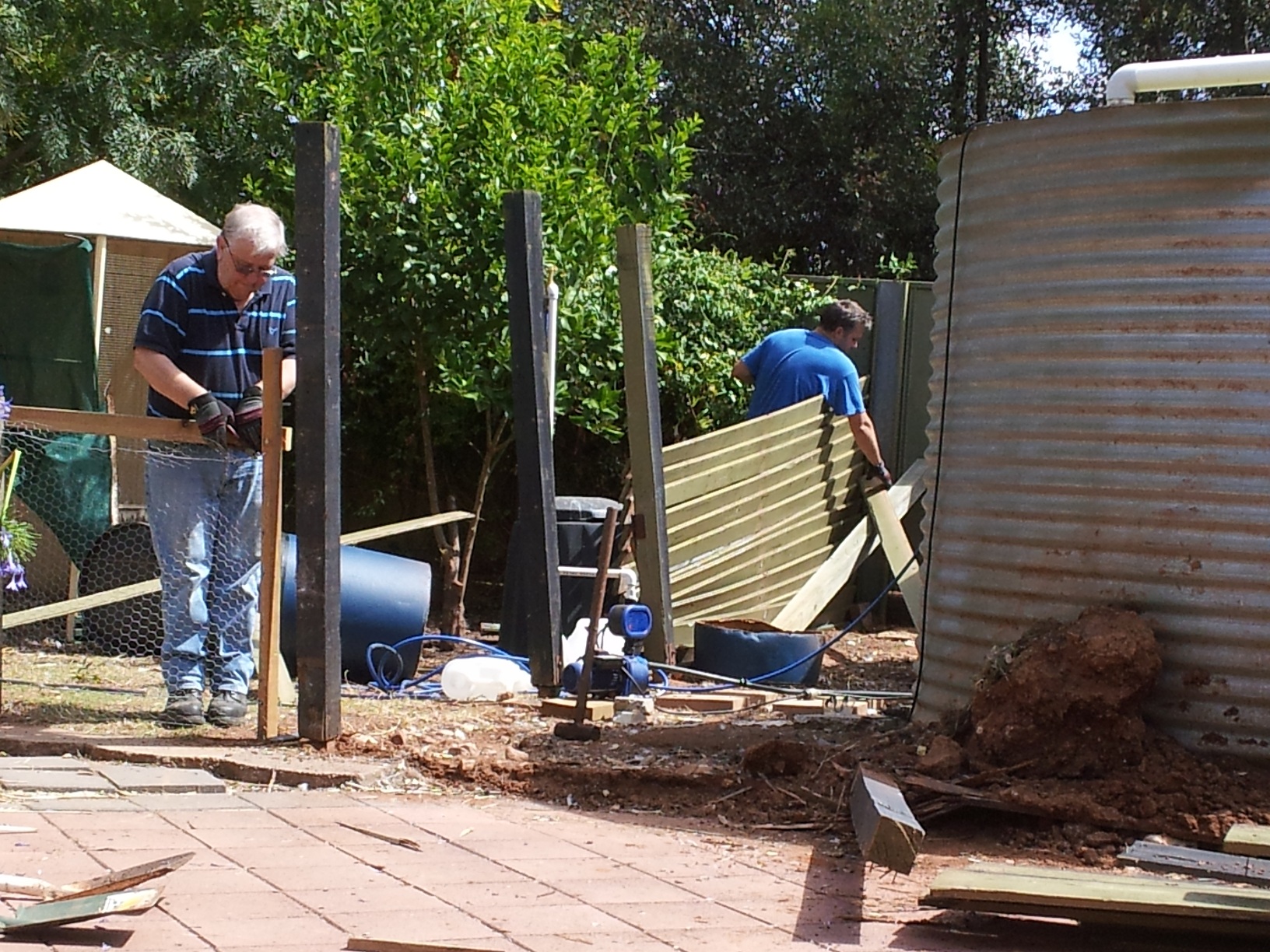
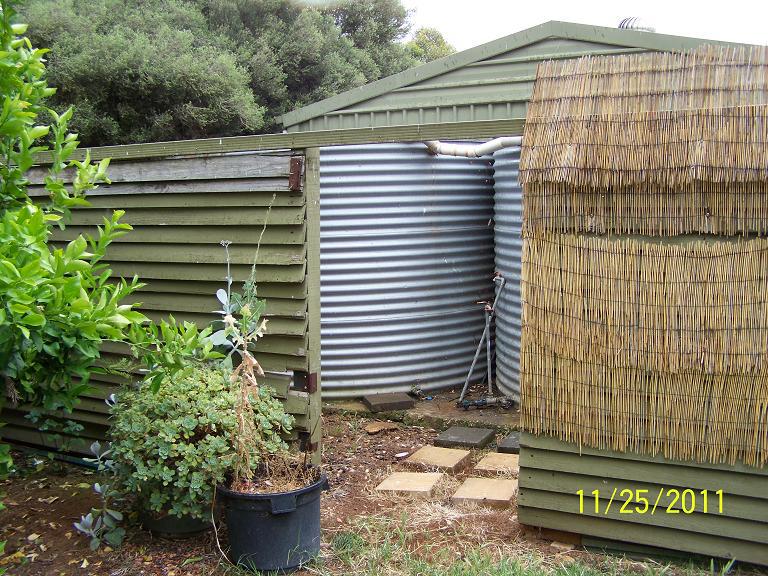
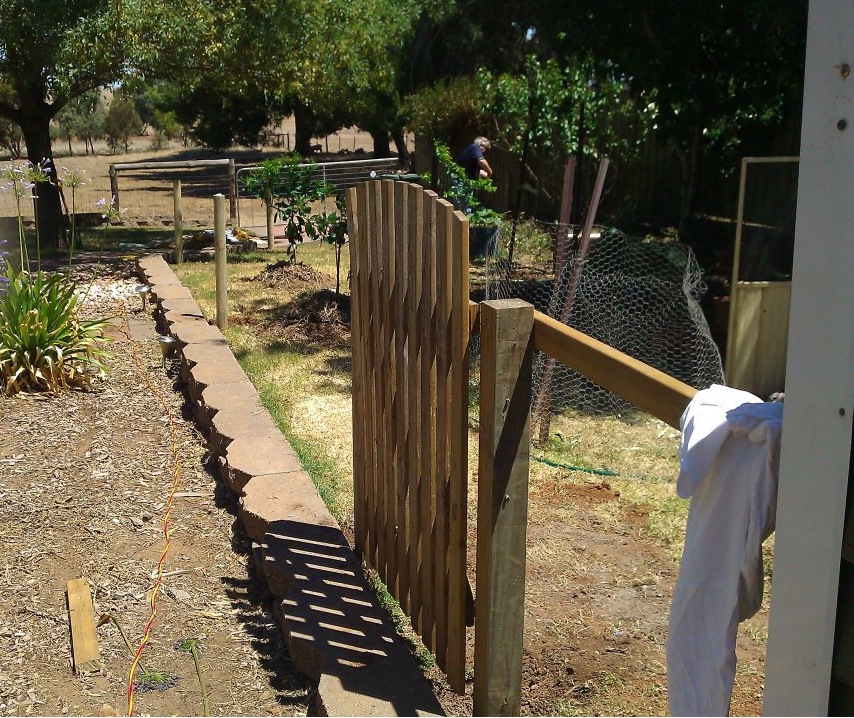
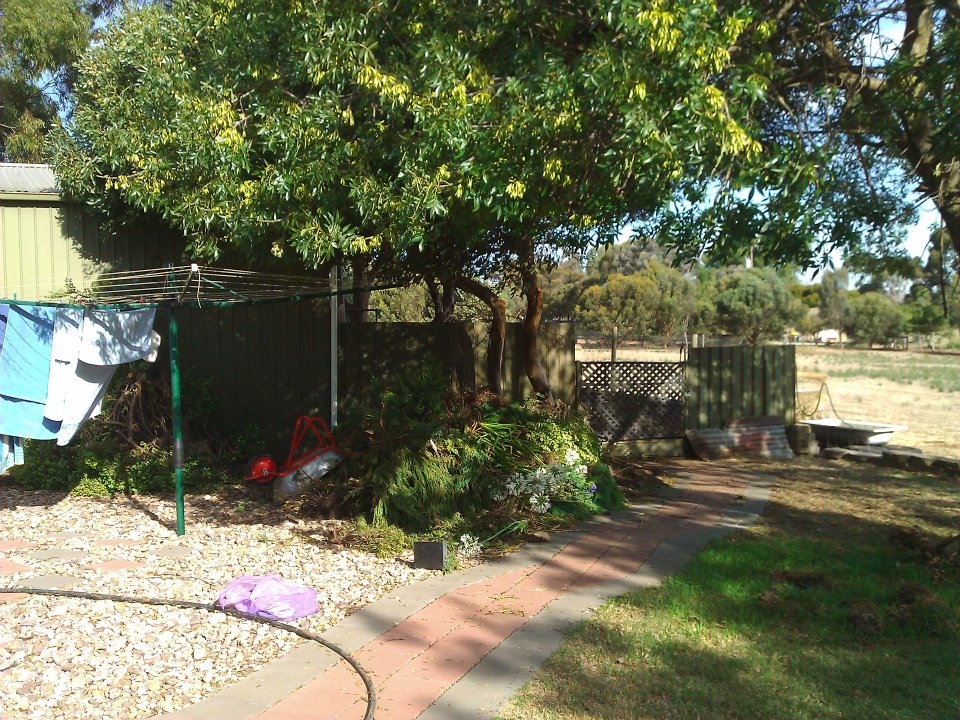
We also finished up the fence around the meat bird/citrus area. This included tearing down the dodgy fence that was around the rainwater tanks, and cleaning up the accumulated piled crap. This included dirt piled against the fence, which had of course rotted the wood and become a pathway for white ants.
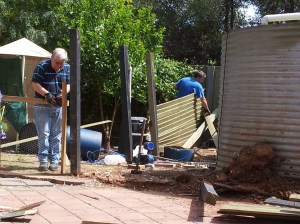
This opened up the entire area, and made it much more attractive. As with all of these projects, we salvaged what we could. In this case we were able to save some 100mm square posts, some of the better boards, and even found some slate piled in with the crap. Even with me being quite anal about keeping every single thing we could that would possibly ever be useful to us, our bonfire pile was steadily growing…
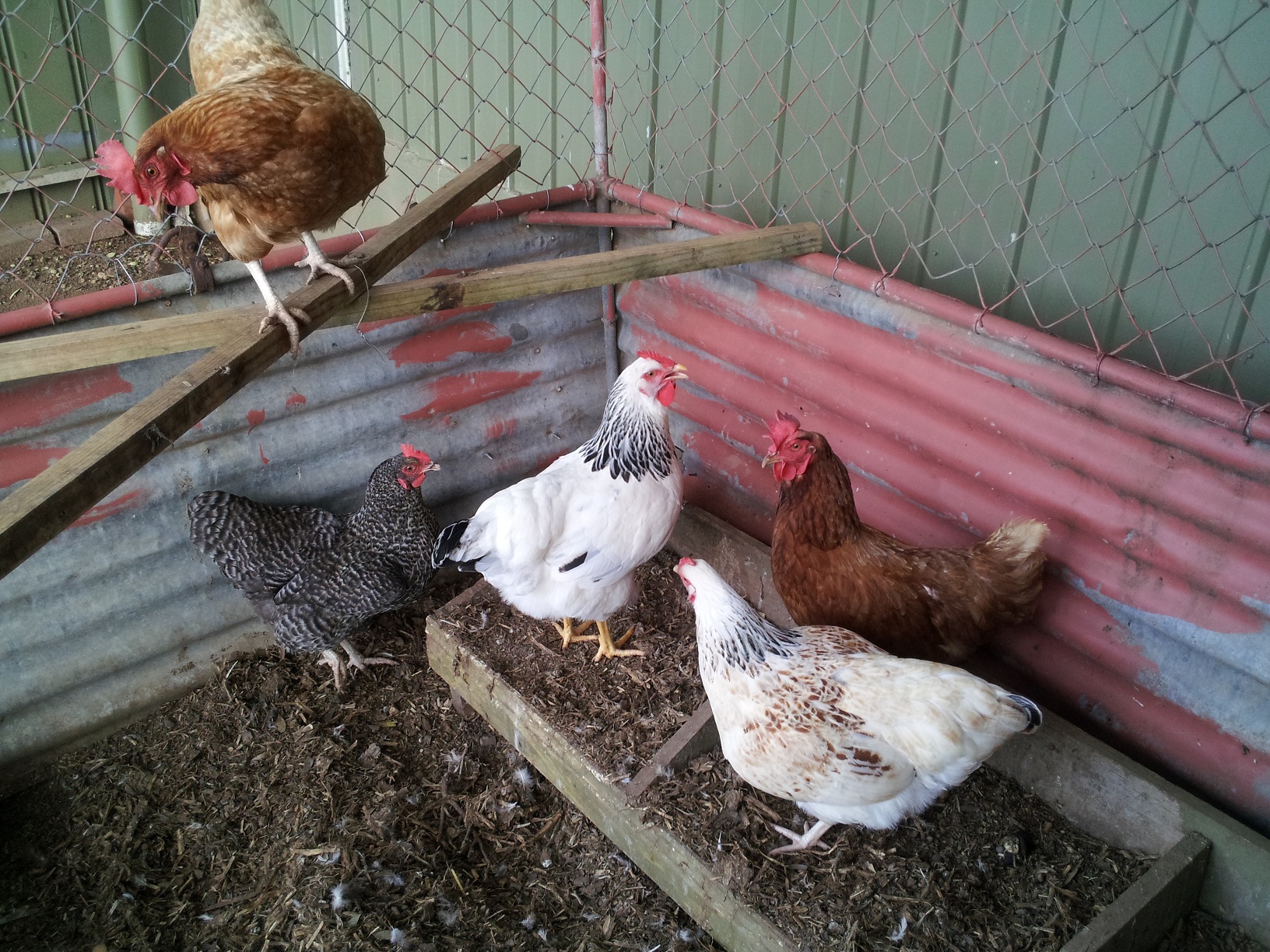
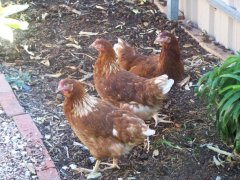
This month saw some new additions to our feather/fur family also. Linhda bought three new egg birds off of Gumtree. She picked them up from a place only 10 minutes from us. They are apparently Plymouth crosses, though I’m sure one is a Maran.
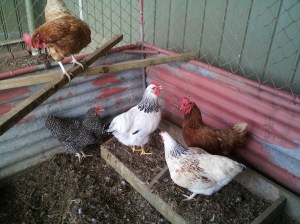
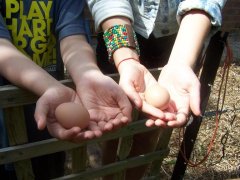
The new chickens are quite pretty, not to mention large. The weird thing about them is that their eggs are quite small. Our Isa Browns are significantly smaller, but lay eggs more consistently and also that are much larger. In fact, one of the new ones has never laid an egg. I think I’ve narrowed it down to the Maran (the black one). The two huge white ones lay quite small white eggs.
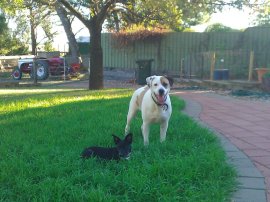
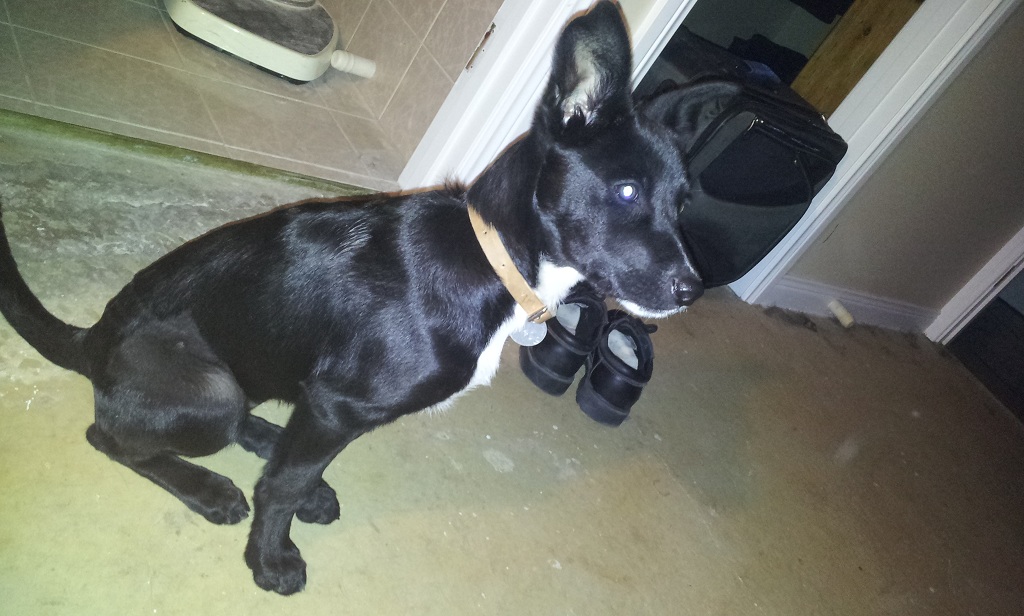
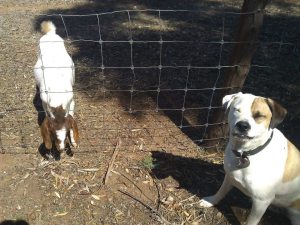
Lastly, and most importantly, we got a new dog! Her name is Tatyl and she was Peyton’s early 18th birthday present. We saved her from the pound and she’s a kelpie cross. To be honest, we were aiming for a lap dog, but she turned out to be quite tall and lanky. She looks like a bit like a large fox or coyote in profile. Her kelpie instincts have also made her… problematic with the poultry. She’s gorgeous though, and firmly part of the family.

The cool thing about Tatyl is that she has the same markings and coat type as Domino. She looks like the product of a kelpie getting over the fence and into Domino.
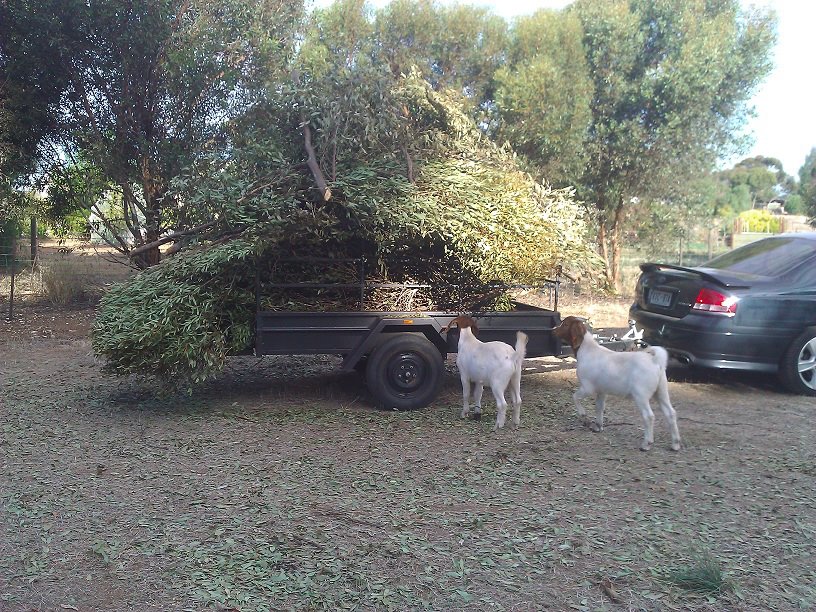
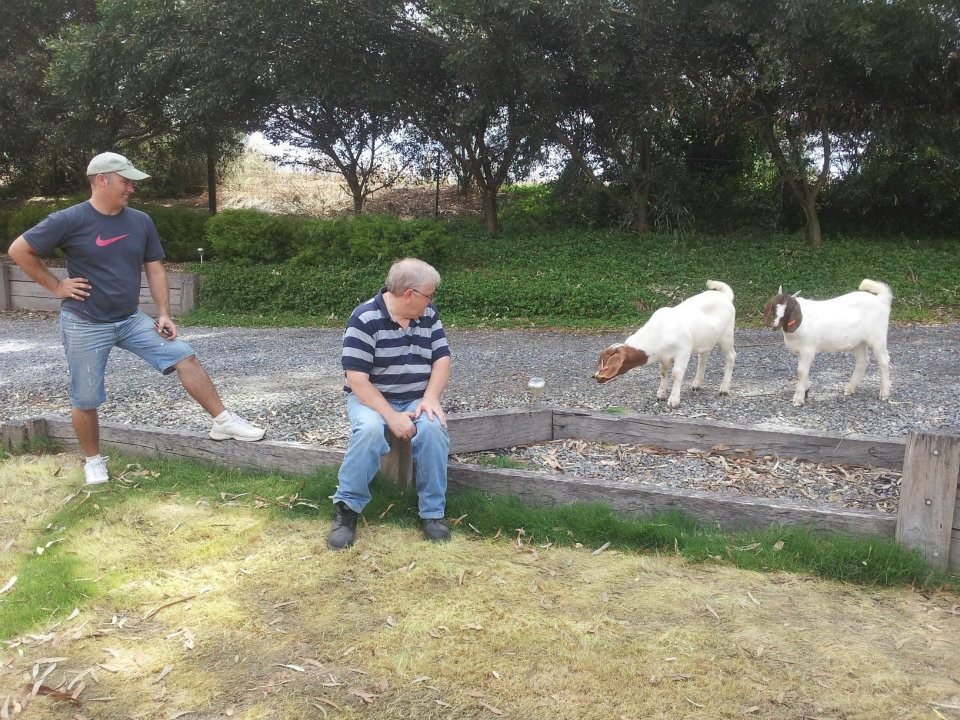
Finally, this was the month that we found out how painful goats can be with fences. We had been expecting pain with them trying to get out, but we’ve never had one escape. Rather, they like to stick their heads through the sheep panel, after which their horns stop them getting out. The really frustrating thing is that they’ll be in a paddock FULL of feed, but stick their head through to nibble some dry gum leaf, get stuck, and then scream at you to come get them out. We worked a way around this, but it didn’t happen in March…
Wood, Goats, Chicken Poop, and Tasty, Tasty Chicken…
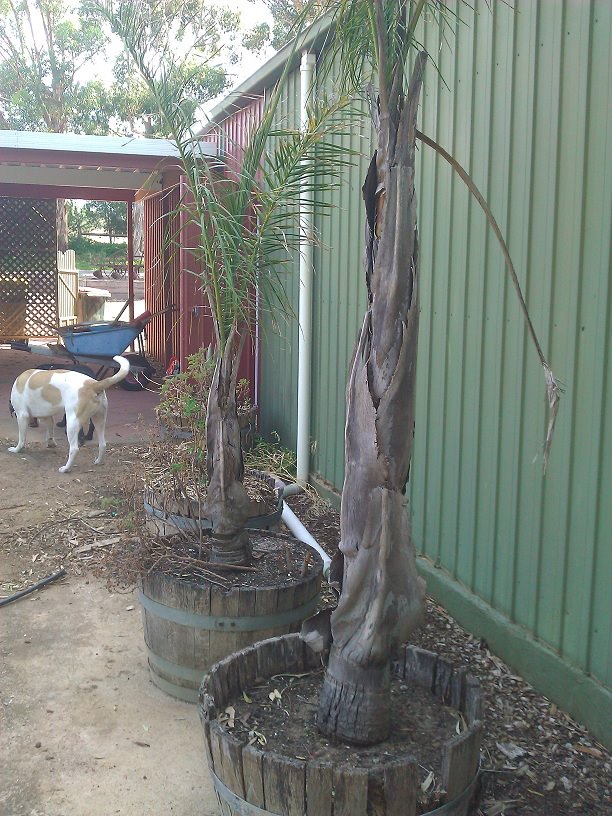
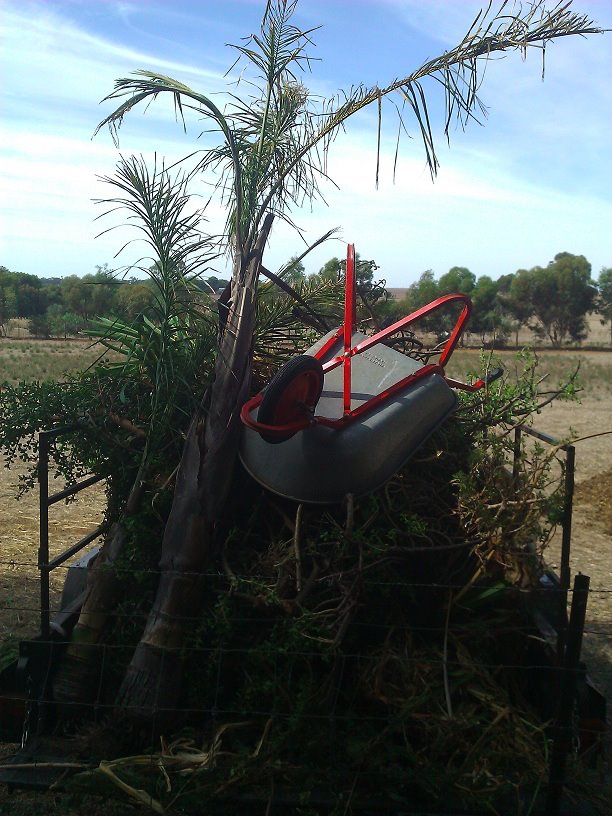
February was a huge month for cleaning up. We were able to rip up more of the crappy plants from the back (seriously, why do South Australians insist on planting palms?!). We also cleaned up and thinned more of the gum trees.
Cutting back the gums, and in some cases taking out the smaller ones altogether, seems a little harsh. However, it really was necessary. There were smaller gums planted in random spots that got in the way of our productive fruit area. We left the ones that were up next to the fences (if they were healthy), or that wouldn’t shade our fruit trees. Also, the flowering gums planted around the border are quite scrubby, with multiple long straight limbs. They end up growing over everything, covering paths and in many cases leaning on the fences. They were in dire need of trimming.
Even the big gums needed attention, as there were some quite thick limbs casting shade where it wasn’t wanted, or at risk of dropping at the wrong time on the wrong things (e.g. sheds).
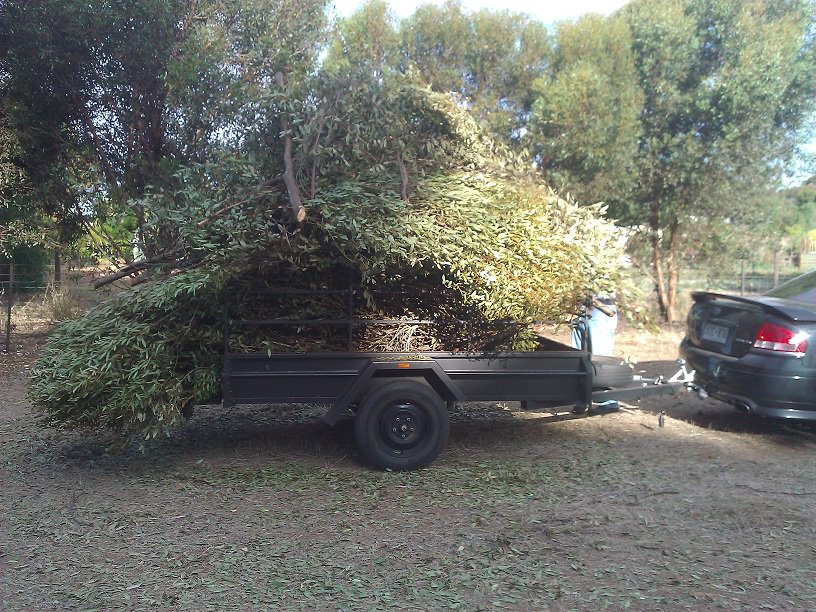
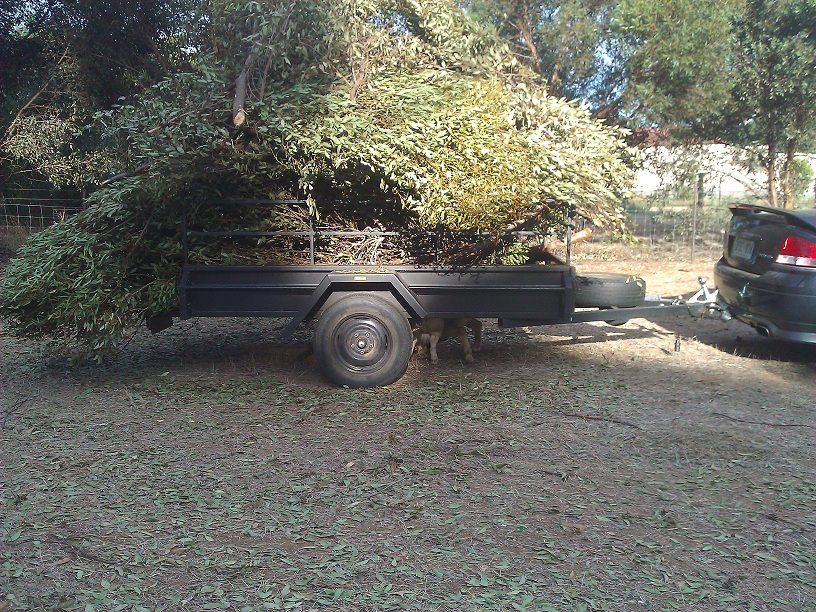
This process netted us quite a bit of fire wood, along with some scrubby stuff for outdoor fires, some thinner stuff we mulched, and anything left over went on our bonfire pile.
We would have moved several tonnes of wood this month, and in some cases moved it twice as we really hadn’t planned our wood pile situation well. We also checked out the price of wood on a trip to a landscape yard, and it ranged from $350 to $450 a tonne! While we haven’t cut any of our trees specifically for wood, the fringe benefit of having fire wood we don’t have to pay for is awesome.
I think it was also around this time that we decided to hire a cherry picker and spend a day or two doing the tree maintenance properly. For one, February is WAY too hot to be out there cutting and lugging wood. Mostly, however, it’s too dangerous to be perched in a tree or hanging off of a ladder with a heavy chainsaw. I really did scare myself a couple of times…
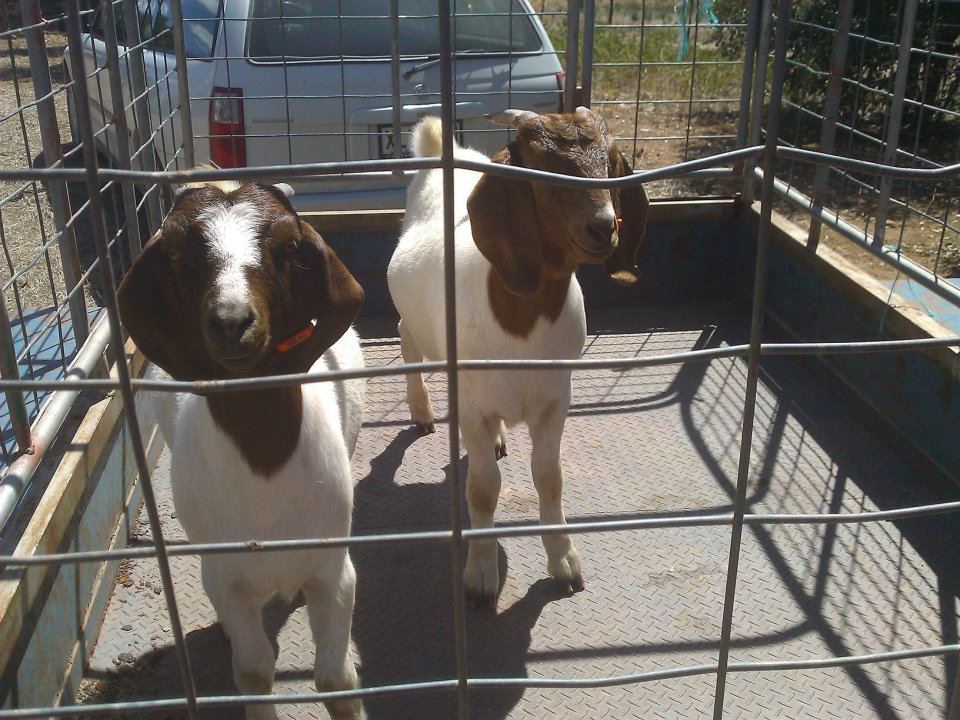
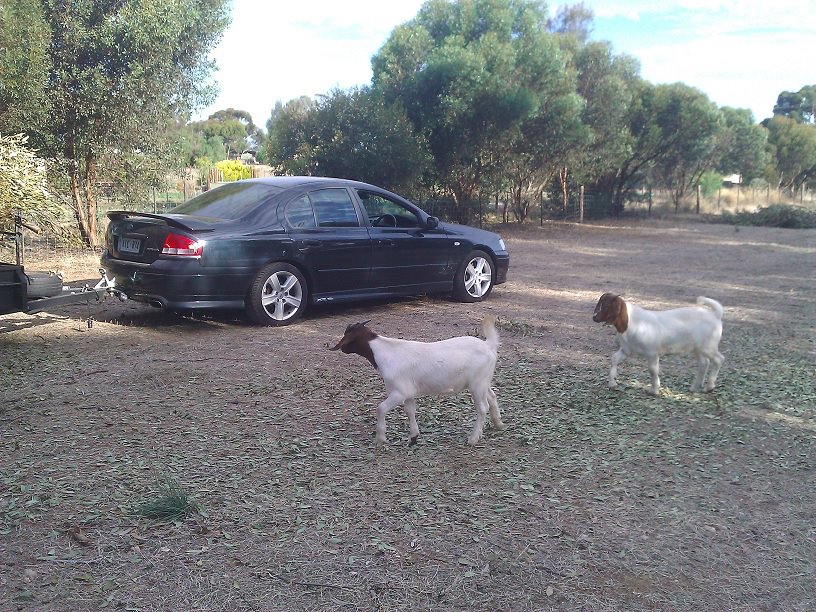
This was also the month when we got our first goats. Linhda has a friend who, as chance would have it, lives all of 2 kilometres down the road and breeds meat (Boer) goats. We ordered two from him, which he kindly delivered.
It took dad and me nearly a full weekend to fix up the fence in the back paddock in readiness of the goats. We followed this with about a day’s worth or work doing the same to the fences at the front of the house. We had to make them goat-proof, which meant tying up any dodgy wire, pinning down stretches they might try and squeeze under, and banging in any droppers that were holding wire too far off the ground. At the same time, we took the opportunity to start trimming back the flowering gums along the border, as some of them were hurting the fence.
My brother visited right after we got the goats too.
We ran into poultry difficulties, mainly due to the volume of poultry we had. We now had egg birds, breeding ducks for meat, and meat chooks, and we had to house them all. We did some shuffling to accommodate the numbers. At the time I put this down to a lack of planning, but now I’m not so sure. It’s a year on and we still run into these difficulties sometimes.
Our poultry problems were mostly alleviated by taking the meat chooks to “the other farm”. This is a different “the other farm” <link> than the one we take the sheep and goats to. We were equally lucky to find a poultry processing place about 5 minutes further on from the country butcher abattoir. The place is a little confronting, as their “kill room” is next to the loading dock where all of their customers first arrive. Still, part of this process is reconnecting with where our food comes from and I see this as an integral part of that. Also, it lets me know definitively that the birds are killed correctly.
We dropped off 23 chickens, and got back 46kg of dressed meat. That’s math even I can do, with an average of 2kg per bird. We estimated that it cost something like $6 a bird from start to finish, and we were thrilled. That’s a very affordable outcome, the birds were big, and we knew they’d been raised correctly with green feed, exercise, time to grow, and no mistreatment. We’ve improved this process even more, and produce birds twice the size for the same cost. I’ll explain that more in the Stock Animals section.
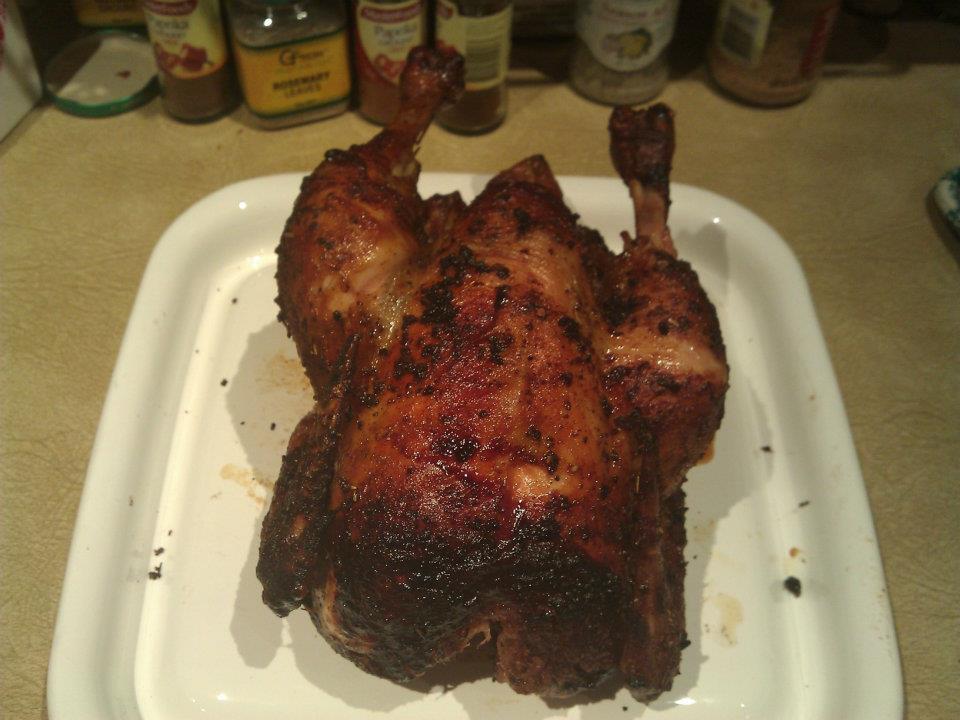
I’ve never been big on doing entire roast chickens at home, mostly because they never turn out anything like the rotisserie birds you can buy. However, we were determined to have entire roast birds, so I went out and bought a rotisserie for my BBQ. None of us had ever done this before, and we weren’t quite ready for the results. Our first try was, hands-down, no exaggeration, the best chicken we’d ever eaten. It’s either a very forgiving way to cook chicken, or I’m some kind of savant roast chook dude, because every one we’ve done since has been as good or better.
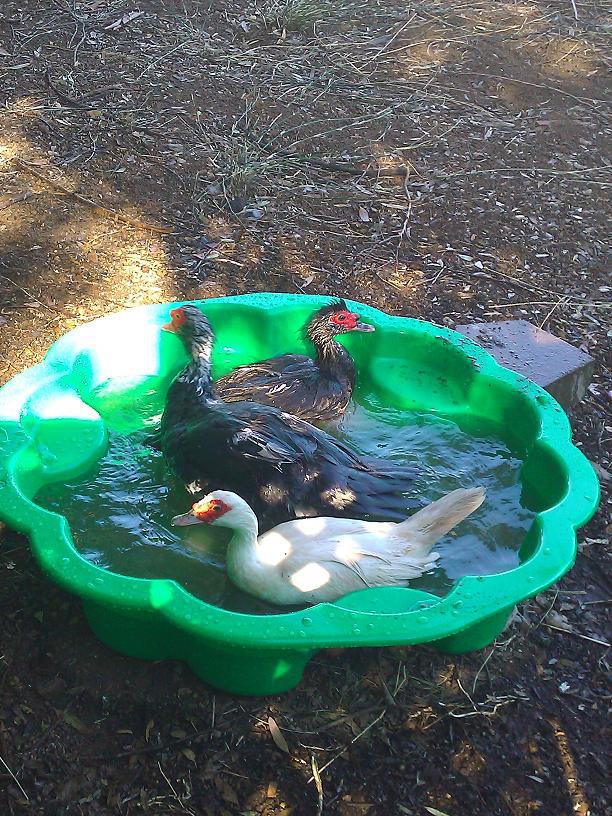
Our final poultry development was clucky ducks! All three Muscovies (Muscovites?) was clucky and sitting on eggs. There weren’t a heap of eggs, but they were definitely nesting on them and protective of them. WooHoo!
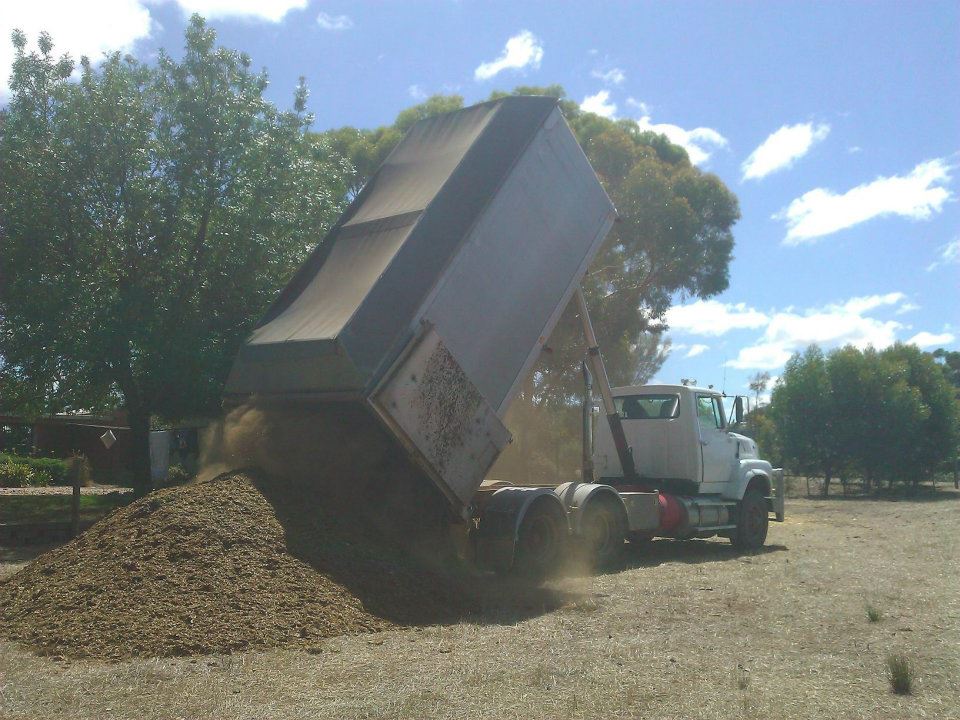
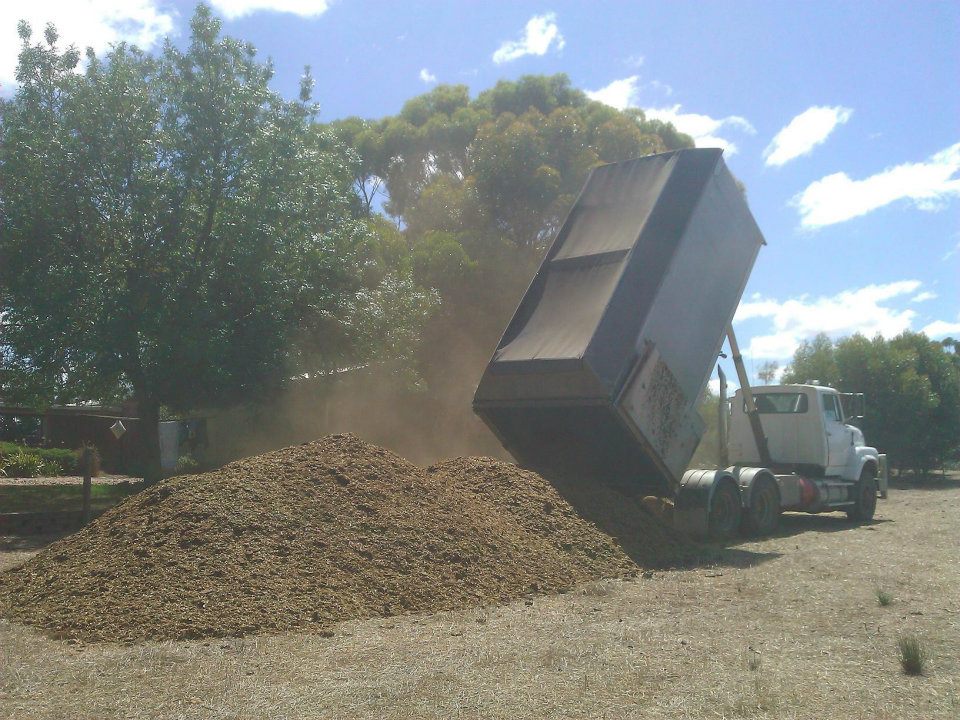
I had planned our veggie patch in some detail. In fact, seeing as we’d had some months before we moved in where I could do nothing on the place, I’d spent an almost obsessive amount of time planning the veggie patch, including the dimensions, rotations system, irrigation, etc. In preparation for that, I wanted to have some manure delivered. I called the manure man (I actually think that’s his business name) and organised to have their largest load of chook poop delivered.
Apparently chicken shit is big business. There are huge commercially run chicken farms all over our area, with a 6 week turn around in chooks. That means a huge turn over in the manure, and this guy was working 7 days a week trying to keep up.
I may have overestimated just how much chook poop we needed. Their biggest load was 28 cubic metres, which is somewhere between 10 and 12 tonnes. At the time that seemed reasonable, but we were later to find that it was a bit too much…
February was also a bit of a sad month. We lost one of our egg chooks. We’d bought Isa Browns in the suburbs, and they really are awesome. They lay almost daily, the eggs are huge, and they’re just lovely birds. The thing with these newer breeds of birds is they’re not as long-lived as the old-school ladies. Back in the day they’d live a few years beyond their productive life. Nowadays, because they’re so prolific, they die a bit younger. From a purely production point-of-view, that’s probably ideal, but it’s still sad to lose them. The lady we lost was named “Henrick”, and she was Linhda’s.
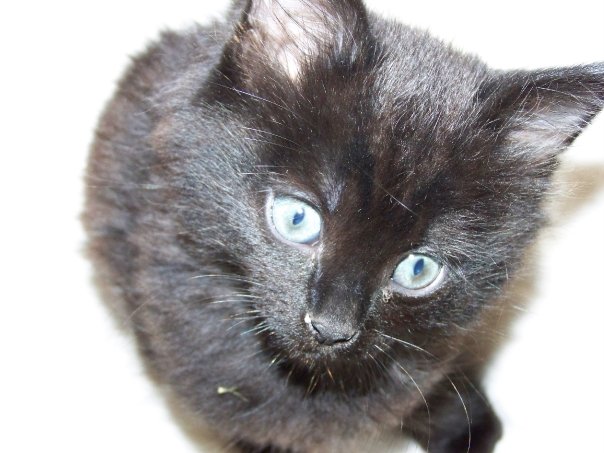
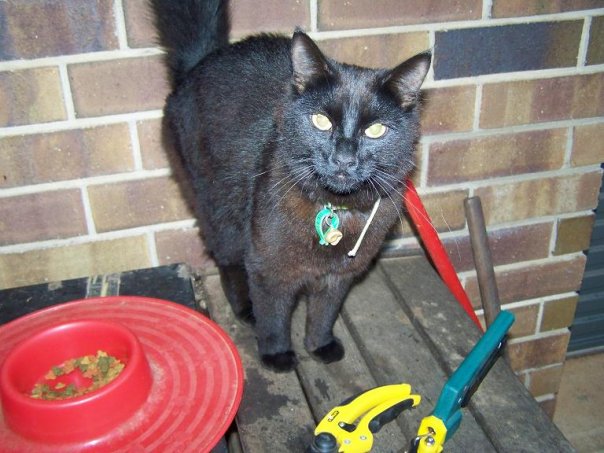
The really sad thing is that Peyton’s cat, Mal, was hit by a car. I’m not a fan of outside cats at all, but Mal had some issues that meant he’d become a shed cat. Early in the month dad found Mal on the side of the road, and he became the first pet in the Atherton pet cemetery. He was more than a little crazy, but Mal really was a sweet cat and we all loved him. He is still missed.
January 2012 Facebook Farm Statuses
I was semi-documenting our activities via Facebook, and want to include some Facebook statuses in each of these 2012 monthly posts. That’s a little self-indulgent, but I’m comfortable with that. 🙂
- Linhda tried to name the sheep we dropped off today “Bessie”. The only problems were that it was a dude, and it wasn’t a cow. Also, it was clearly a “Toby”…
- Peyton just realised that we can’t get home-delivered Chinese food at the farm, and now she’s sad. Bloody townies…
- First snake on the farm. Awesome.
- Half the stupid ornamental garden out the back is gone and replanted with stuff we can eat. Along with a few new fruit trees and a new meat bird area. Yay for progress, even if it feels like slow progress.
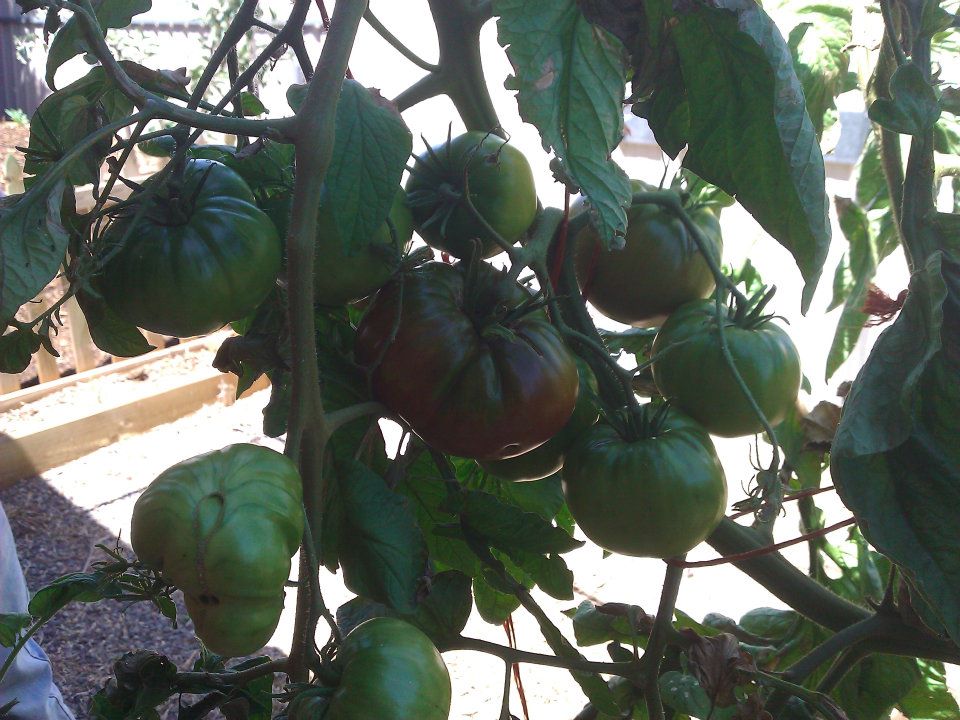
- 12 tomato plants and 18 chilli plants. That sounds like the right ratio to me…
- Just ran into our first problem with raising our own meat. Sheep only have 4 legs, which apparently means only 4 lamb shanks. Those things are freaking awesome! I’m going to invent an 8 legged sheep. It’s a billion dollar idea!
- Built a fence. For my meat chickens. With my dad. Farm-freaking-tastic!
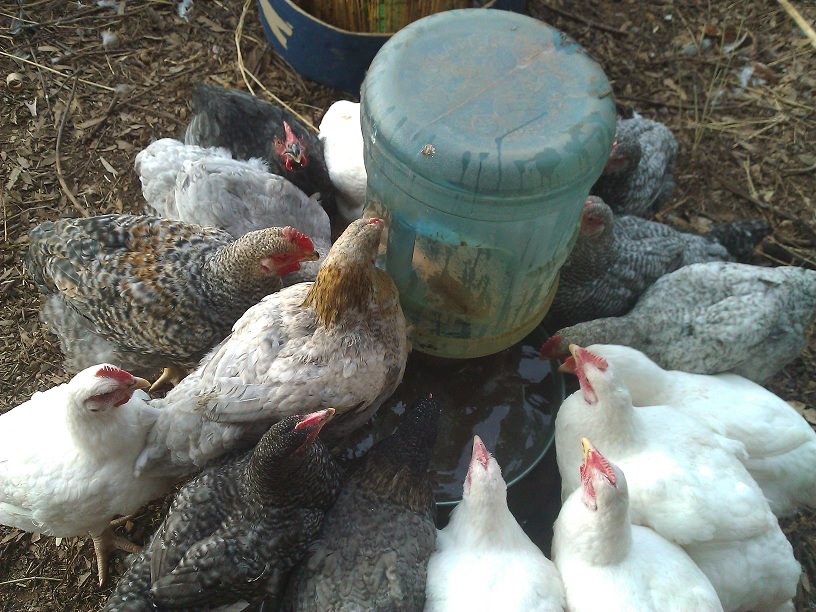
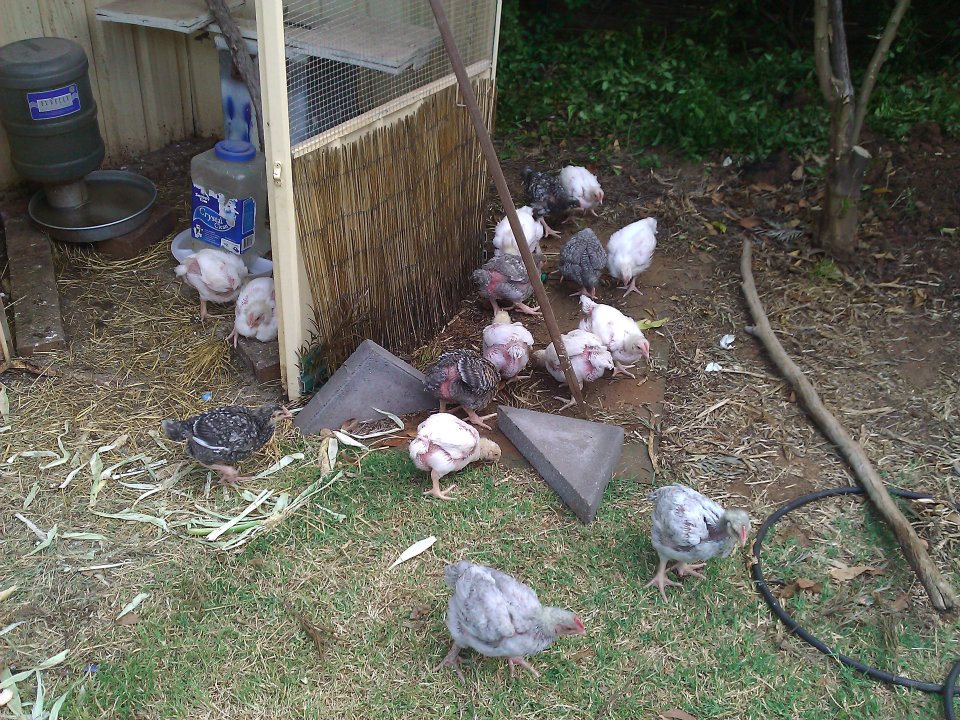
- The meat bird chicks are nearly 4 weeks old. They went from cute day-old chicks to ugly-as-sin within 2 days. Now they’re getting cute again dammit! AND they’re trying to bond with me! Stupid, cute, tasty animals…
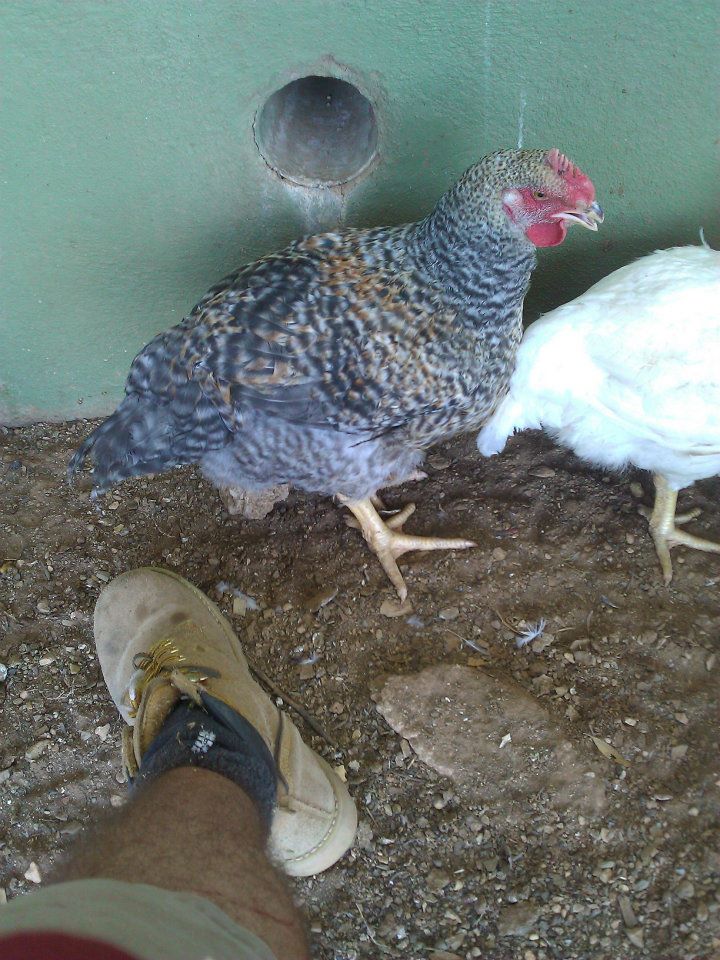
- The meat bird chicks have decided two things. Firstly, I’m a source of food and therefore should be followed around at all times. Secondly, the hairs on my legs are tasty and should be pecked at all times. Seriously, it’s like a scene from an Orson Wells movie every time I set foot in there!
- Today I got to use my angle grinder. On metal. With sparks. Inside. Loudly. It was a good day.
- Second snake. Awesomer.
- Fun Farm Fact #78: That “pebble” in your boot may very well be sheep shit.
- Today, after watching our new drake get three of the other ducks to… give him piggy back rides, and all before breakfast, I decided to name him “Ron Jeremy”. He’s a little fat guy who gets lots of action. BooYah! In related news, Linhda named her favourite duck “Bubbles”. Feel free to heap scorn on her.
Post Move In
Our first full month in the house was incredibly hectic. This was made more so by the fact that I was offered a big promotion right at the start of the month that had me travelling a bit more. I spent most of the month interstate, though was home for the weekends.
We did a heap of standard maintenance type stuff, including:
- Fixing rain water drainage that had been let go.
- Fixed some more plumbing. I swear that every tap on this property, both inside and out, leaked when we moved in.
- Trimmed trees and stacked fire wood.
- Had our new machinery serviced.
- Welded up our trailer.
- Made feed/water containers for the stock.
- We were able to reclaim some stock sheds that had been left in the back paddock.
- Generally cleaned up the shit that had been left behind.
These are basic farm day-to-day chores that we do all the time; however, that first month was full of this kind of work. The place had been a rental for several years and then empty for nearly a year, and was in dire need of some TLC.
We had some nice early self-sufficiency wins, specifically in terms of water, raising meat, and our veggie/fruit areas.
WATER
We have two rainwater tanks situated at the back of our “little” shed. They collect the water off the shed, car port, and maybe a quarter to a third of the house. We estimate that they total about 27k litres of water, which isn’t much more than a tenth of what the property can collect.
I bought a pump for them, and we worked out how to both use the tank water for the lawn and veggies and also how to hook it into a drum so we can fertilise out of it.
We also organised some grey water capture, but found that there’s already a system in place that takes much of the grey water straight out to the lawn area. That works poorly, but at least is better than dumping that water.
One note on the lawn: I hate lawn. With a passion I hate it. I can’t think of a more wasteful use of resources or my time. However, we have dogs and my beautiful girlfriend is determined that the dogs have grass to crap on. My compromise is that I only water it using grey water or rain water, and care for it as little as humanly possible. I want to reclaim some of it for veggies, but it has two big trees in it that make it too shady.
MEAT
We took our first sheep to “the other farm” right at the start of the month. “The other farm” is what Linhda calls the abattoir we use. We were really very luck in that we found a butcher with its own abattoir about 20 minutes from where we live. We book the animal in, drop it off on the weekend, and then go back a week later for the meat. It’s also super-affordable when you’re talking about things like sheep and goats.
This was quite a big step for us. We hadn’t had this sheep for long, but we’d still hand fed and bonded with it. We’ve always been a family that is top-heavy with pets, and keeping our own meat animals was something I’d seen as a big challenge for us. However, it all went well and within a week of moving in we had our own farm-reared meat. To be honest, the sheep was too small and we should have left him for a month or three longer. We were a little impatient though.
We also got some more ducks, specifically to breed for meat. We chose Muscovy as the breed, which is actually a breed of goose rather than ducks. Either way, they breed without human intervention, lay nice eggs, and are pleasantly ugly.
VEGGIES/FRUIT
My kids got us a couple of citrus trees for Christmas, so we created a citrus area. We fenced it off to use as a meat bird area, allowing them green forage while keeping them away from the dogs. This is also where the existing fruit trees are, of which an apricot, lemon, and the big mulberry survived. This means some nice windfall fruit for the birds also.
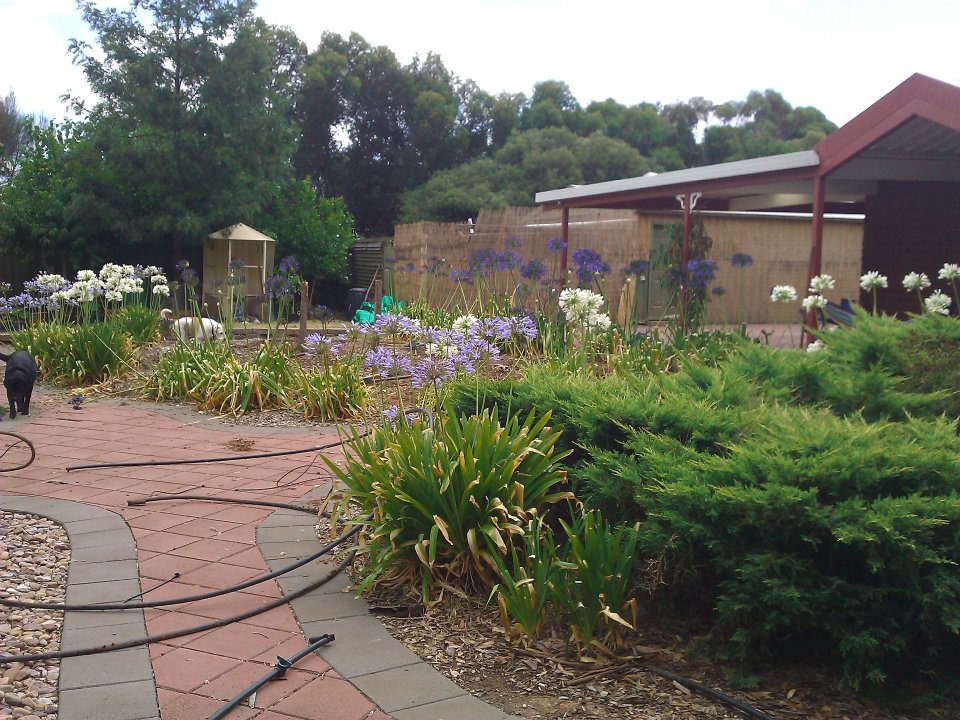
The big job for this month was reclaiming the horrid ornamental garden as productive area. It was full of privet, bitey prickly conifers of both the prostrate and standard varieties, geraniums, and agapanthus. The vendor hadn’t even been able to tell us exactly where the septic tank was because they’d allowed this horrible garden to grow over everything.
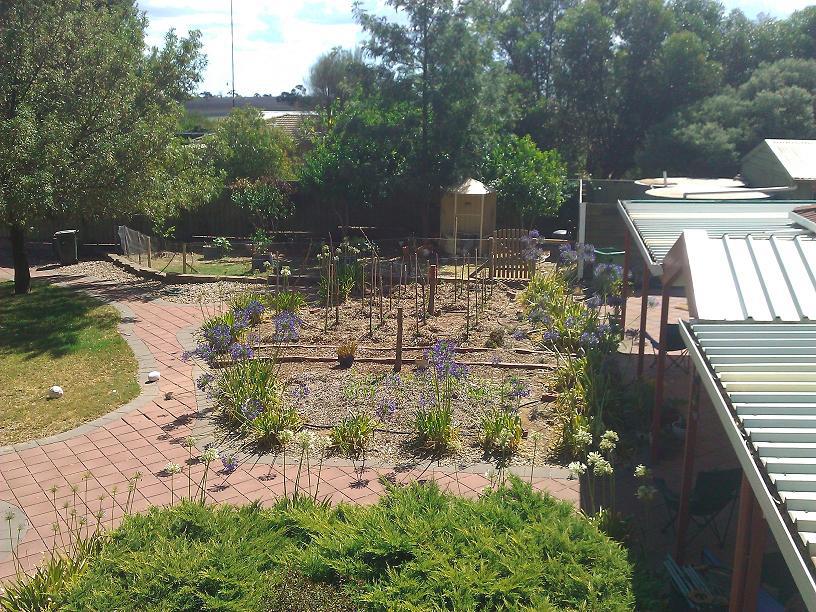
Reclaiming this part of the garden involved lots and lots and lots of digging, chopping, and grubbing. There was nothing for it but to manually drag all of the crappy plants out, after which we carted in nice organic loam. The soil here is thick, sticky clay, so we opted for raised beds.
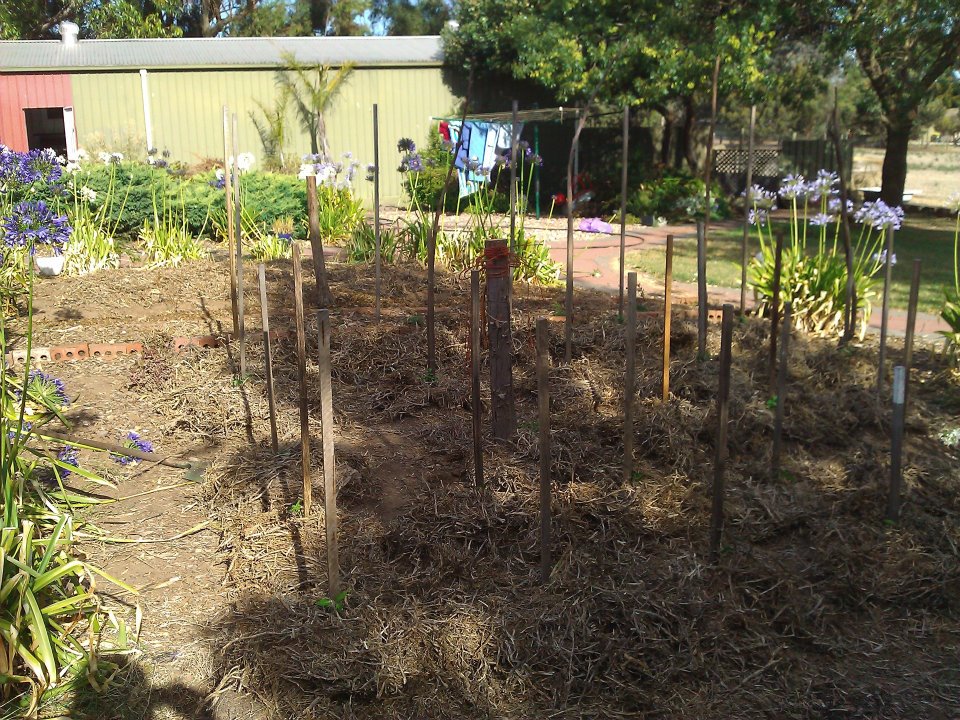
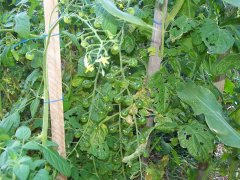
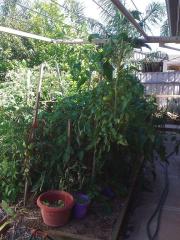
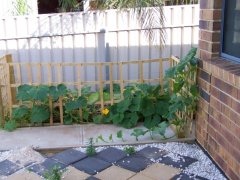
It took a long time, over the hottest part of summer, but we ended up with the largest bed, which would be a big veggie patch in any suburban garden, turned into a productive bed growing corn, carrots, tomatoes, and chillies.
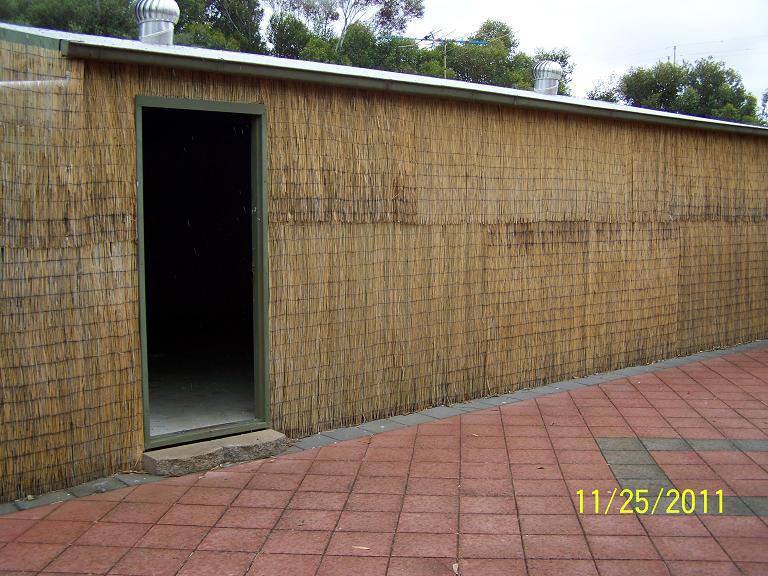
There were also some miscellaneous things of note to happen in January. Firstly, we moved dad in. This went quite smoothly, though his 3m x 3m shed did fall on him as we were moving it. Don’t worry though – I was able to get some good pictures before I dragged it off of him.
Secondly, we experienced our first snakes. In fact, we had three. They were eastern browns, and are the second deadliest land snake in the world. The really curious thing is that our neighbour, who has lived in the area for nearly 60 years and who has lived next door for nearly 25 years, hadn’t seen a snake for a few years.
Pre-Move In
We had the keys a few weeks before moving in. This gave us a chance to get some things done, and let us have Christmas without any moving stress. For a couple of weeks before Christmas we did things like:
- Fix external plumbing. The big shed is fully plumbed, but the water was turned off. All we could get from the vendor was that a pipe had been cracked, and rather than fix it they’d isolated the shed and left it. We also had vague directions as to where the isolation valve/tap was. It took some digging, but we uncovered a heap of pipe work and found a ball valve a couple of feet down in the chook run. Seriously, the pipe had been cracked, they’d turned off the tap and then buried it! It took a while to work that out, after which we fixed the original leak, fixed some taps in the shed, and then had water back
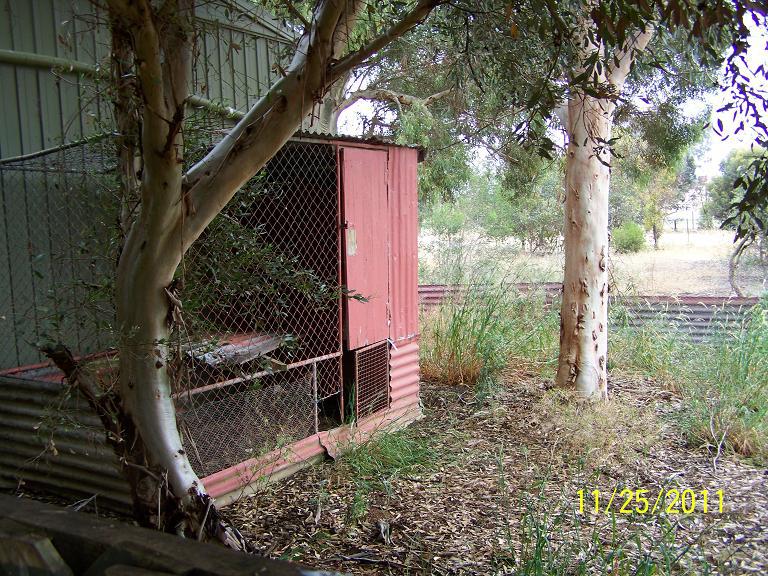
- Fixed the chook coop. It’s a nicely built coop and run, but I don’t think it had been used in many years. It has corrugated iron running length-wise along the bottom, and then chook wire up to 6 feet or so. The wire was falling down, the iron was coming away from the uprights, and the gate was knackered. I had estimated that it’d take 2 hours to fix, and it ended up being a 10 to 12 hour job. I was in there on Christmas morning, before I got my kids, finishing it up.
- Get some stock.
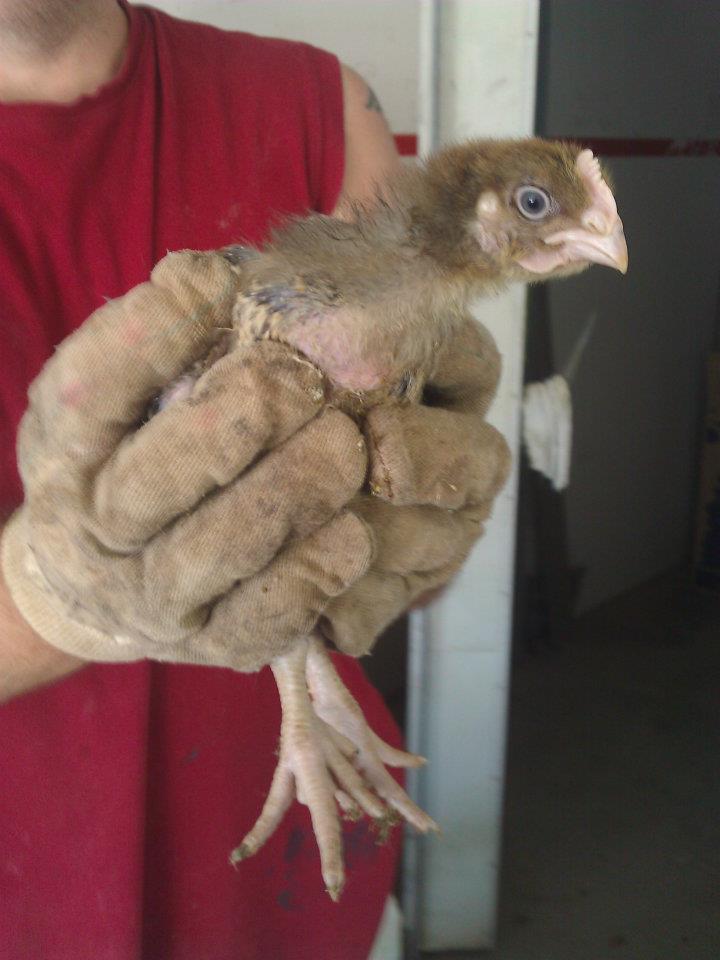
- I picked up some meat chooks and got them situated in the big shed in my snake’s old vivarium. I was expecting about a 50% mortality rate as I’d never done this before and baby birds are fragile. With that in mind I ordered 20 as a starter, but the factory gave me 23. I suspect that they don’t count as much as they estimate them by the handful. Either way, we got 23 expecting about 10 to make it. Spoiler alert: all 23 made it.
- Get some sheep. We bought 4 sheep from a guy out near Mallala. They were merinos or merino crosses, and so not specifically meat animals.
- Organise feed for the stock.
- Thin some trees. There are many, many trees on the property, and some are planted in completely random spots. For example, there is access to the rear paddock down both sides of the property, but a couple of big melaleucas had been allowed to grow up in the middle of one, making it useless. We’ve spent a lot of time fixing that, and that started before we moved in.
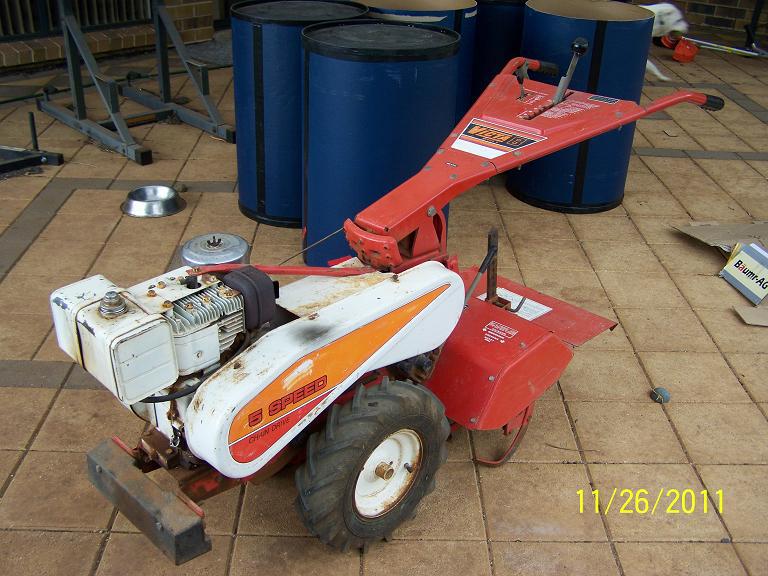
- Get some machinery, including a trailer, chainsaws, a rotary hoe, and an awesome mulcher.
- I also did some inside work, including painting, ripping out carpet, replacing the air conditioner etc.
Searching, searching, searching…
I had started looking at houses in the country pretty much as soon as I moved back. In fact, it became a hobby for me and my youngest daughter, Gemma. We’d look online just about every weekend, and then rush out to any open inspections we could find. The suburb we were in wasn’t bad, but the suburbs by definition just give me the shits. Seriously, I can’t stand them. The cookie-cutter houses, the yards full of lawn and palm trees, all morphing into the same yard repeated ad nauseam. There was a distinct lack of soul in both the houses and their gardens, and I wanted more.
It wasn’t the people so much. I actually made a huge effort to get to know my neighbours. Too often people live on top of each other and yet are completely alone. I find that a little sad, and so got to know at least the three people surrounding us. I even used the garden and the poultry to help, giving our neighbours home-made jam, produce, and eggs. In the end, one of our neighbours was saving all of their scraps and feeding the chooks and ducks over the fence. They even went so far as not killing the giant orb-weaver spiders that sprang up every year, because they knew that we refused to use insecticides.
None of that changed the fact that I had a burning desire to not be there. Our biggest barrier early on was financial. I had a great job, but was paying a lot of extra support for my kids and interest rates were threatening to go through the roof. That made my first requirement a financial downgrade – I wanted to find a cheaper place. Luckily, that’s not hard to do when you’re making a tree change.
My second requirement was to find a house with character. My real problem with the suburbs, apart from suburbanites, is that the houses have no imagination or soul. Seriously, they all look the same. The old houses we saw in the country, however, could be gorgeous! They were often quirky and oozed character.
Our country house search and garden design/redesign in the suburbs went on in parallel. Half-way through we also found permaculture and revamped our productive garden. As our garden evolved, so did our house search requirements. We started looking at small houses (2 bedrooms, small blocks).
We evolved to more normal sized houses, and quarter to half acre blocks.
Within a couple of years we were looking at places with around an acre.
By the end we had looked at countless places, some great and some truly horrible. The size of the blocks was tending up, and the focus was changing from the house to the land. The place that pushed us over the edge was in Kalbeeba, just East of Gawler. It was on a hectare, which was bigger than we’d really seriously considered before. More than that though, the people who owned it opened our eyes to raising our own meat. If you believed in fate you’d get all goose bumpy at this part. It’s still a cool story even if you’re smart enough to know that fate is crap.
The Kalbeeba place had sheep and these giant chooks. We got to chatting with the owners, and found that they raised these animals for their own consumption. The sheep were dorpers, which is a meat breed that sheds its wool. The chooks were cobbs, and the guy explained where he got them from and how they worked.
I’m going to blog about the stock separately, and will try and remember to put links in here when that’s all sorted. Either way, raising our own meat had never really occurred to me before. Doing veggies and fruit on a larger scale had been at the forefront of my mind, and I’d always assumed raising meat was tough. As it turns out (spoiler alert!) raising meat is the easy part. Seriously, things like sheep and beef are pretty much fire-and-forget. Pigs and chooks take a bit more work, but it’s all fun, and the results are fantastic!
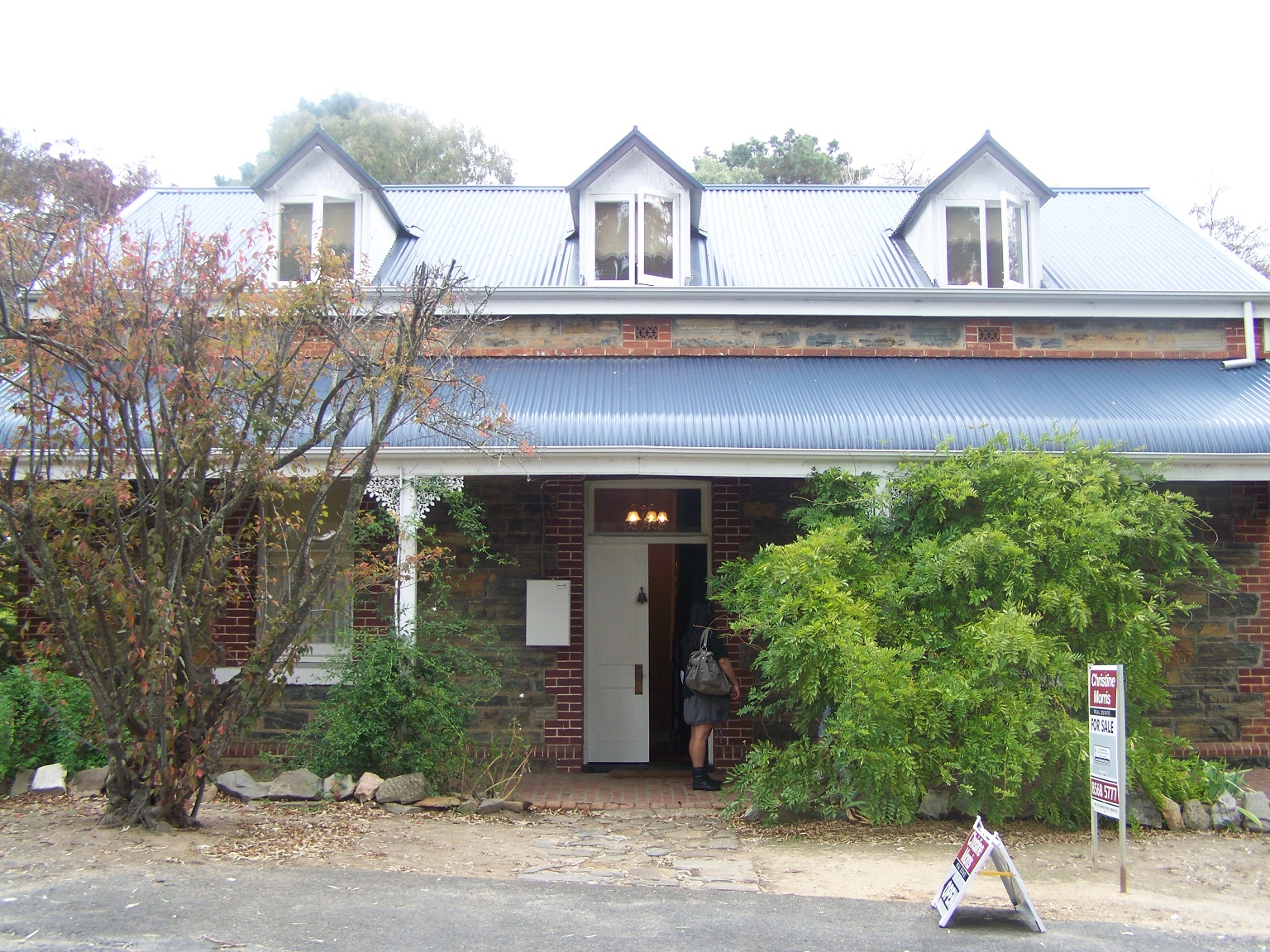
Anyway, the result was that we expanded our focus – we wanted enough land to raise stock and veggies/fruit. We could have done it at that Kalbeeba place, but a week later found our current place. Our place was almost a full $200k cheaper, was more than a full half-acre larger, and has two big sheds, one of which is truly huge and fully lined with refrigeration panelling. I’d started looking at two-bedroom places on postage stamp sized blocks with a focus on quirky and character-filled house, and ended up with a large house, still quirky but relatively modern, on three acres with everything we needed for full self-sufficiency.
Inviting Nature In!
One of the points that Josh Byrne makes when talking about permaculture on Gardening Australia is that it “creates a habitat for life around us”. He talks about it more on the DVD, and refers to permaculture as inviting nature in. This is something that we’ve noticed, both in our suburban yard and in our country place.
Our suburban house was surrounded by other, uninspiring suburban houses, which were surrounded by uninspiring suburban yards. Seriously, how many agapanthus, diosmas, and ugly palm trees can one suburb have?! Over several years we transformed our yard and made it as productive as we could. It took a while to notice, but the wildlife increase was huge! We had a heap of extra insects, which led to a multitude of birds.
I think the thing I noticed first was the spiders. I understand that spiders are a sore point for some people, but I’ve always found them fascinating. Being Australian I have a healthy respect for them, and the damage they can do, but they really can be quite beautiful. Over a few years we noticed waves of orb weavers cropping up in our yard. They even started to spill into our neighbour’s yard, much to their disgust. 🙂
Now we’ve noticed the same thing on our three acres. A year ago we moved in and had a heap of sparrows and starlings. Apart from an owl we saw one time, there were no birds of prey. Our three acres had never been used productively, and had a grand-total of 4 fruit trees on it, 3 of which had been mutilated to the point of being nearly useless.
A year on and we’ve changed it so that most of our three acres is now productive, with two acres under crop, an orchard area with somewhere near 60 fruit-bearing plants, around 400 square metres of veggie producing area, along with chooks, ducks, goats, pigs, and cows (at present). The difference to the wildlife on the place has been amazing! We have wattle birds, honey eaters, rosellas, galahs, other-parrots-I-don’t-know-the-name-of, willy-wag-tails, magpie larks, and magpies, none of which were here a year ago. Better than that though, we have birds of prey! We have both kites and falcons hanging around.
This change would be subtle if we didn’t know why it was happening and if we hadn’t experienced it before. We’re slowly conditioning the soil and making habitats for the things that the birds and rodents prey on (the creepy crawlies). In turn the things that prey on them show up.
Of course, we’ve seen an increase in things we don’t want to see. We have a rabbit where our neighbour tells us there hasn’t been any in years. We also have some destructive insects to deal with. However, the benefits FAR outweigh the negatives, and it’s freaking fascinating seeing a tangible response on an ecosystem scale to what we’re doing here.
Finding Permaculture!
I’ve always been passionate about gardening in a way that was both environmentally sound and sustainable. To me, gardening with a lot of harsh pesticides or herbicides is counter-intuitive. It’s like you’re trying to beat nature into submission, and is simply not for me.
My gardening ethos revolved around things like companion gardening, composting, and waste reduction/reuse. Then we found permaculture, which incorporated just about everything I’d ever found on my own, along with a myriad of other practices.
Permaculture is a bit of a buzzword, and it’s tough to say whether it’s a process, design/modelling system, or ethos. I think that it’s pretty much all of those things, and can be as complex or simple as you like.
Permaculture has three overarching ideals:
- Take care of the earth.
- Take care of the people.
- Share the surplus.
Under these are twelve design principles:
- Observe and interact.
- Catch and store energy.
- Obtain a yield.
- Apply self-regulation and accept feedback.
- Use and value renewable resources and services.
- Produce no waste.
- Design from patterns to details.
- Integrate rather than segregate.
- Use small and slow solutions.
- Use and value diversity.
- Use edges and value the margins.
- Creatively use and response to change.
Principles 3 through 8 had been pretty much my approach all along, so I felt right at home with this larger approach.
The information above is ripped off entirely from this site. It’s awesome.
My introduction to permaculture wasn’t plunging head-long into an approach with 12 complex principles. Rather, it was via Josh Byrne of Gardening Australia fame. You can find out more about Josh here and here. We love Gardening Australia, and I was lucky enough to get a DVD box set a few years back. At the risk of sounding wanky, it really did help develop our gardening approach, leading directly to a desire for self-sufficiency and where we find ourselves today.
Josh’s permaculture approach is described here. I’d also recommend the DVD where he takes a year or so to convert a quarter acre suburban Perth garden into a permaculture paradise. I think it might be this one. You can get that in a box set too. Mine is signed by Josh. I might have a bit of a gardening man crush on him. I’m not even joking.
Josh explained permaculture a lot more simply than the permaculture principles web site does. He basically said that it’s a way of thinking globally but acting locally for environmental sustainability. He also listed the fundamental aspects of a permaculture garden, and these were the things that we immediately adopted (if we didn’t have them already):
- Planning
- Poultry
- Worm farm
- Drip irrigation
- Grey water recycling
- Composting
- Mulching
We changed our own gardening to match the permaculture philosophy (I still see it as a philosophy) and the results were impressive.
We incorporated poultry, which is something every gardener should do, even if you’re in the suburbs. Your waste is just about eliminated by definition, as there’s very little they don’t eat. What they produce is pure gold, be it of the culinary kind (eggs) or the gardening kind (poop). Seriously, I see chooks as being one of our best gardening decisions ever.
We made a worm farm. This can be done quite simply, and there are all kinds of guides on how to do it. Mine is quite small, but one of our next farm projects is expanding it to be bath sized. I’ll post about that when it happens.
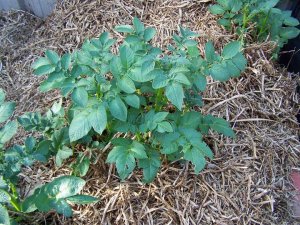
We changed our garden designs, reclaiming much of the yard as productive area or using available space to do things like grow potatoes under straw.
We ended up with bumper crops all the time. Well, we ended up with bumper crops in summer. Winter was more of a challenge as our entire back garden was shaded, and that learning experience was fed directly into the design of our giant veggie patch in the new place.
This surplus is what led us to a couple of realisations. Firstly, we didn’t have to just eat this stuff seasonally, but could preserve it.
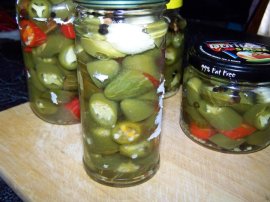
Secondly, we were producing enough of certain things that we’d never have to buy them again. For example, we eat a lot of chillies, and with little effort had enough chillies of the pickled, dried, and popper kind that we were chilli self-sufficient. We also had enough preserved fruit, jam, eggs, and even things like pumpkin to last us until the following season. We were self-sufficient for a heap of stuff, and I wanted more!
At the same time we had been looking at houses for four years or so. That started with me and my kids, and expanded to me and my gorgeous girlfriend Linhda. I should also mention that Linhda was a big part of the preserving that we experimented with, and are still experimenting with years on. She’s an amazing cook and is why I’m free to grow the things I grow.
Anyway, we’d been looking at houses for a while, and our desire for a self-sufficient lifestyle completely altered our house requirements. All of a sudden it wasn’t about the house in the country; it was about the land.